

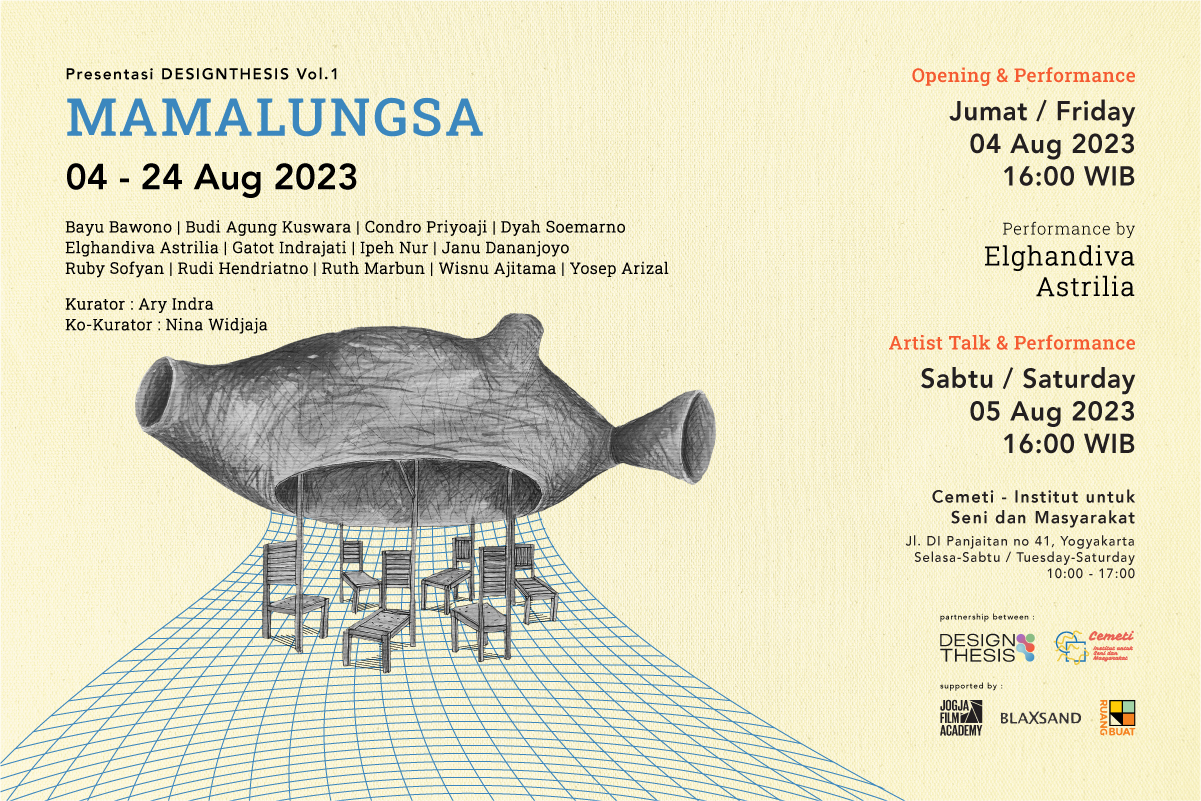
MAMALUNGSA
4 – 24 August 2023
Ary Indra (Curator)
Nina Widjaja (Co-Curator)
Bayu Bawono
Budi Agung Kuswara
Condro Priyoaji
Dyah Soemarno
Elghandiva Astrilia
Gatot Indrajati
Ipeh Nur
Janu Dananjoyo
Ruby Sofyan
Rudi Hendriatno
Ruth Marbun
Wisnu Ajitama
Yosep Arizal
Opening:
Friday, 04 August 2023 | 04:00 PM
Public Program:
Artist Talk & Performance
Saturday, 05 August 2023 | 04:00 PM
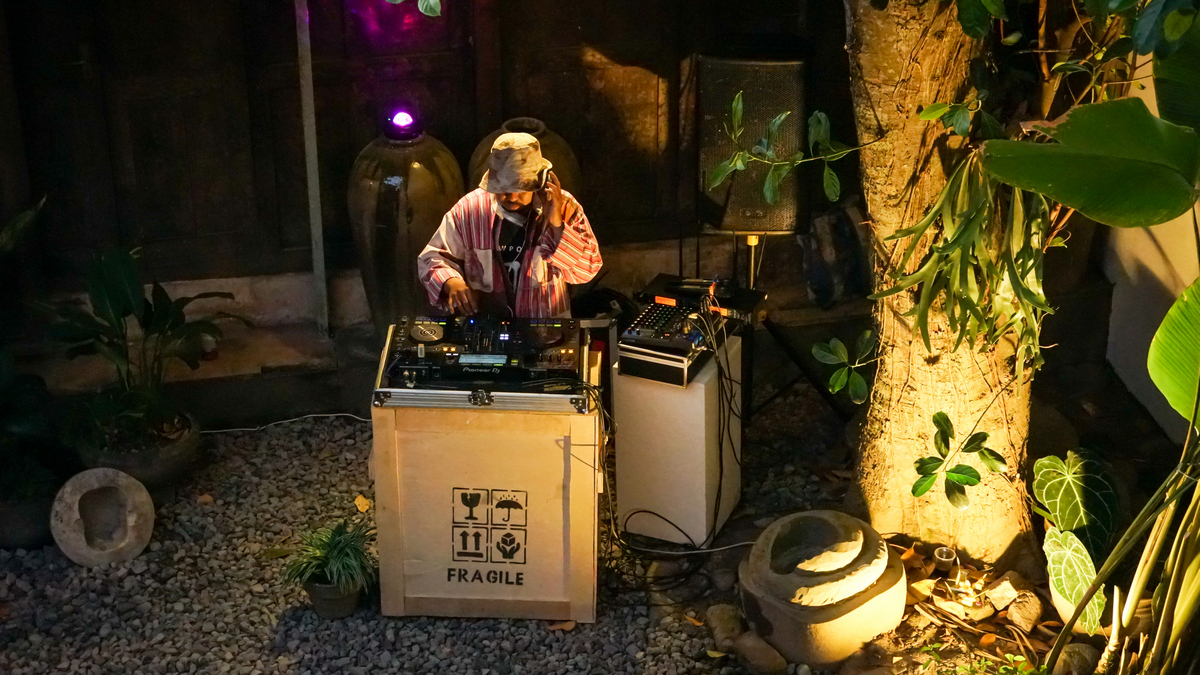
Performance by Elghandiva Astrilia
Cemeti – Institute for Art and Society
Jl. D.I. Panjaitan 41, Yogyakarta
10:00 – 17:00 | Tuesday – Saturday
DESIGNTHESIS Vol. 1 Presentation
Departing from ourselves and the evidence of our existence: humans and the archive of human lives. How have humans evolved differently from other mammals, and further, where have mammals branched off from the other vertebrates? Should archives merely revolve around artefacts and documentation? Are there living archives? Here we are, human beings living with our cultures, customs, and behaviors. It is the choreographies of daily lives that become living archives of plays that have passed, been desired, passed on, and replaced.
What then, are the distinctive key choreographies of us humans? It leads us in the search for actions that are deeply rooted from our humanness. Like playing a game with its own specific rules, human choreographies are full of significance. Each enacted behavior has its own implied meaning.
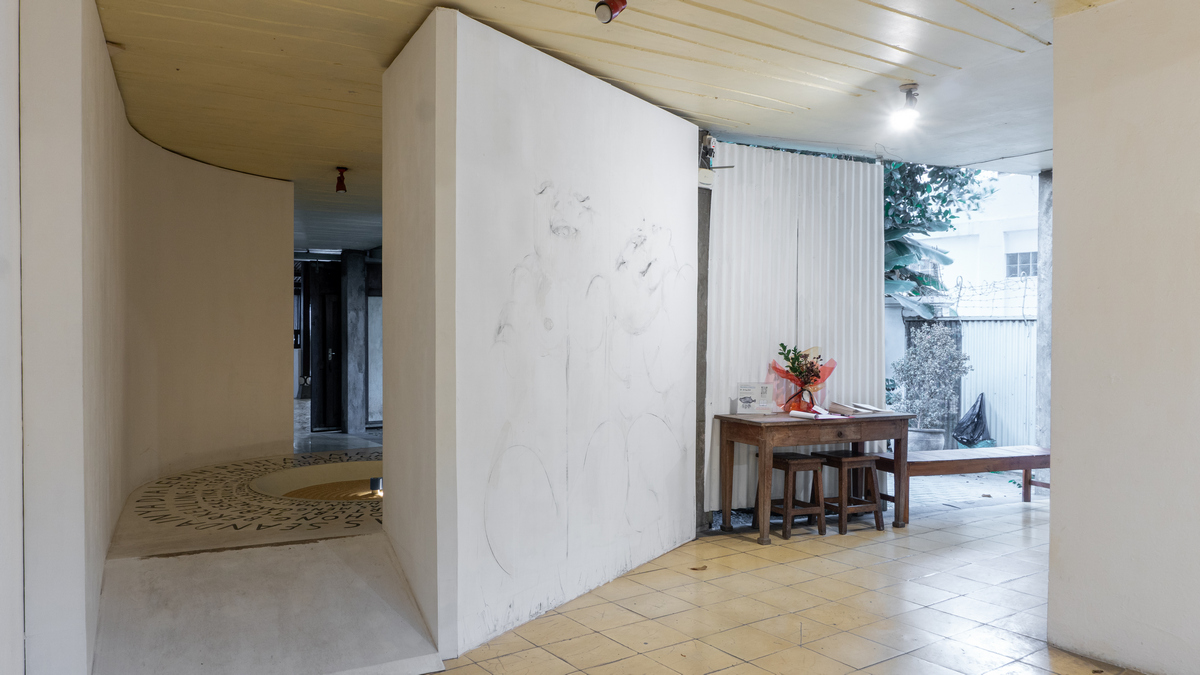
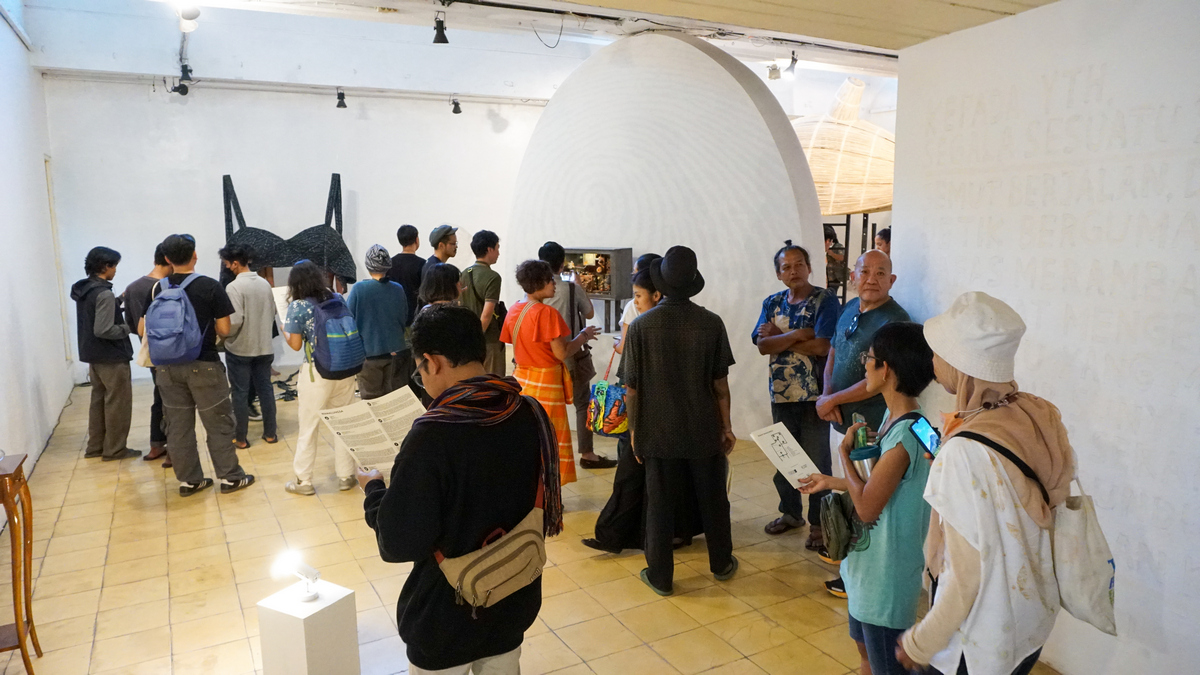
Through the Mamalungsa exposition, these choreographies are embodied in an imaginative reality to stimulate audience exploration in reflecting on the behaviors, subconscious reflexes, and automatic movements that shape our humanity today.
The scenes are interpreted by each artist in their own expressive style, and presented in different visual languages. Each artwork becomes the manifestation of its creator’s personal archive. In other words, Mamalungsa is a celebration of life’s experiences.
In our vernacular, we can summarize this entire exploration into an expression:
mamalia lakuning manungsa
(Mammals enacting humanity)
MAMALUNGSA
Artworks Images
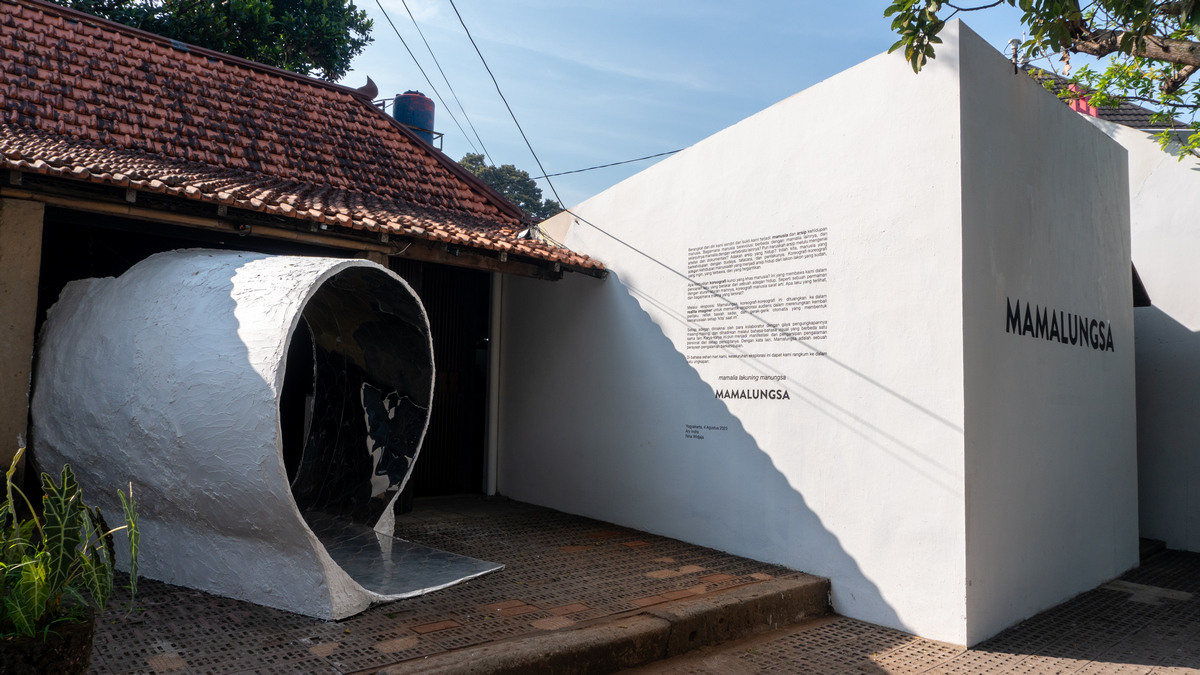
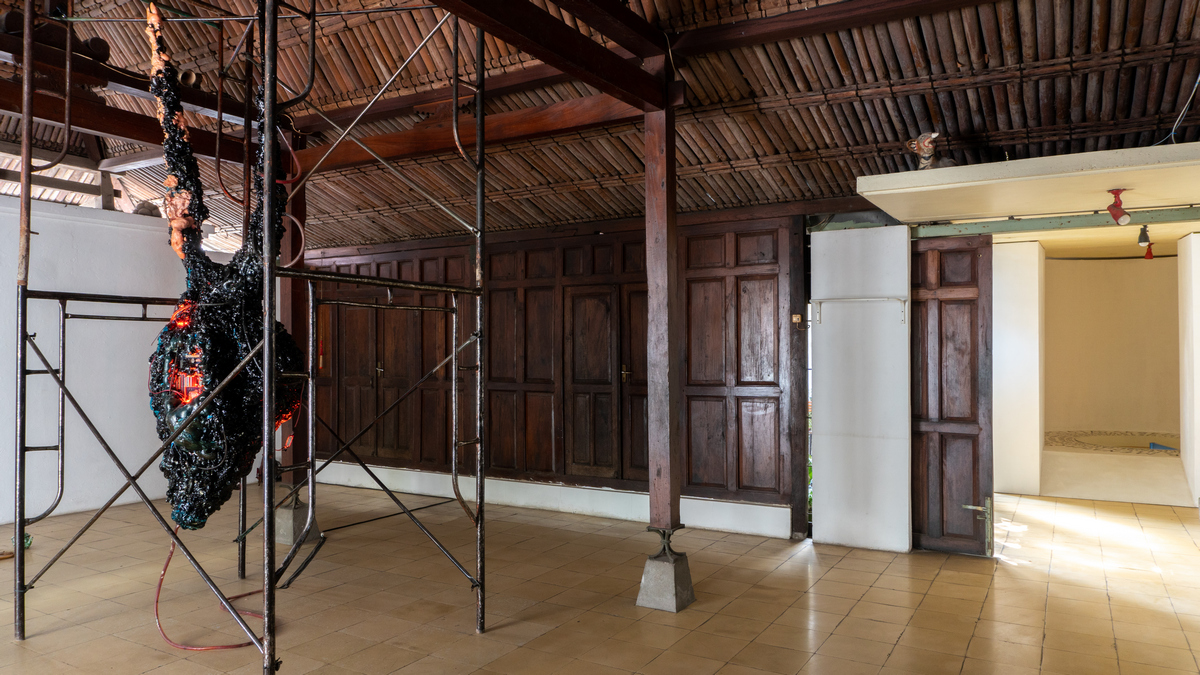
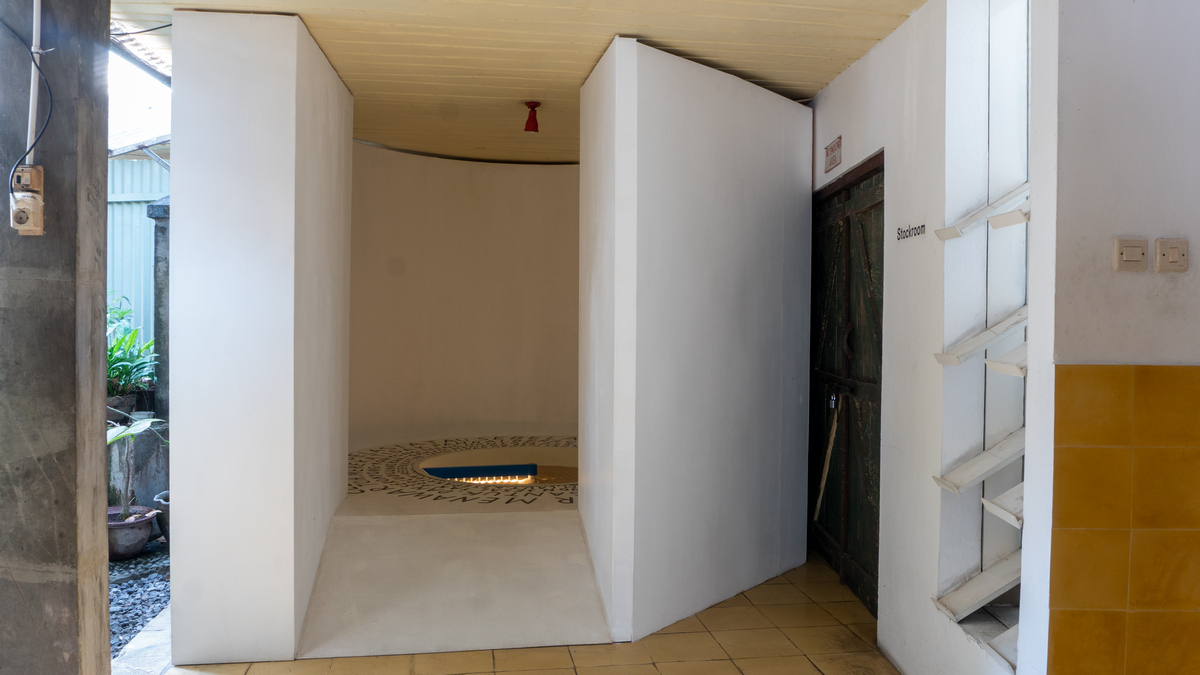
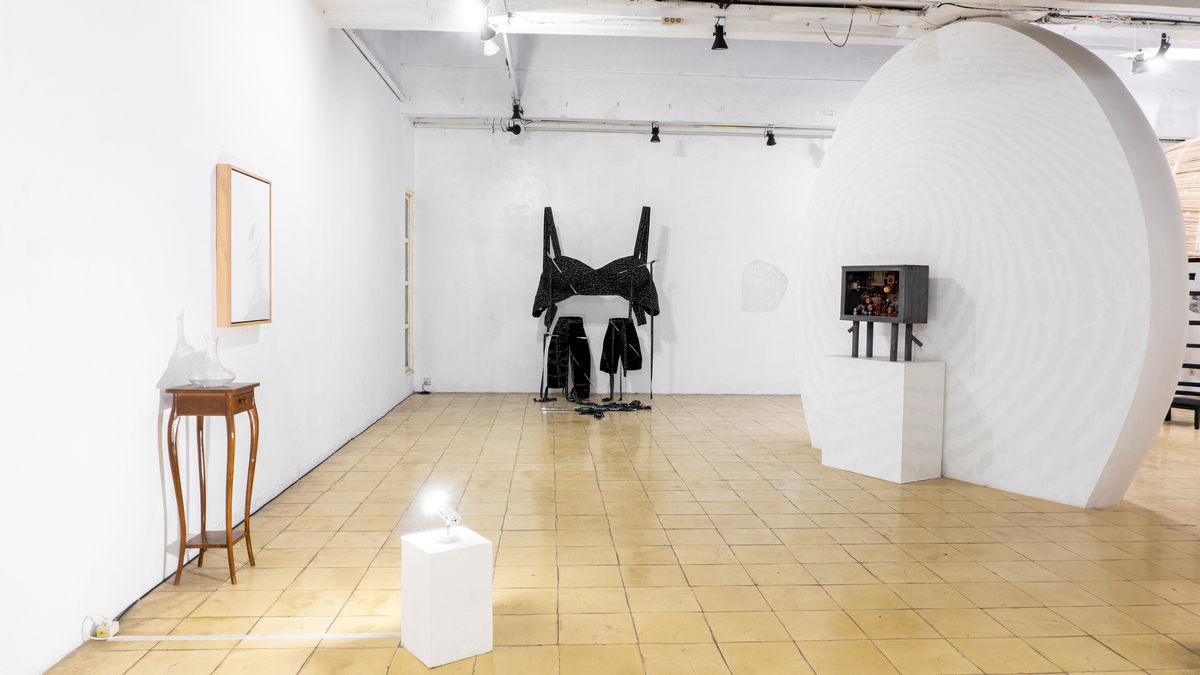
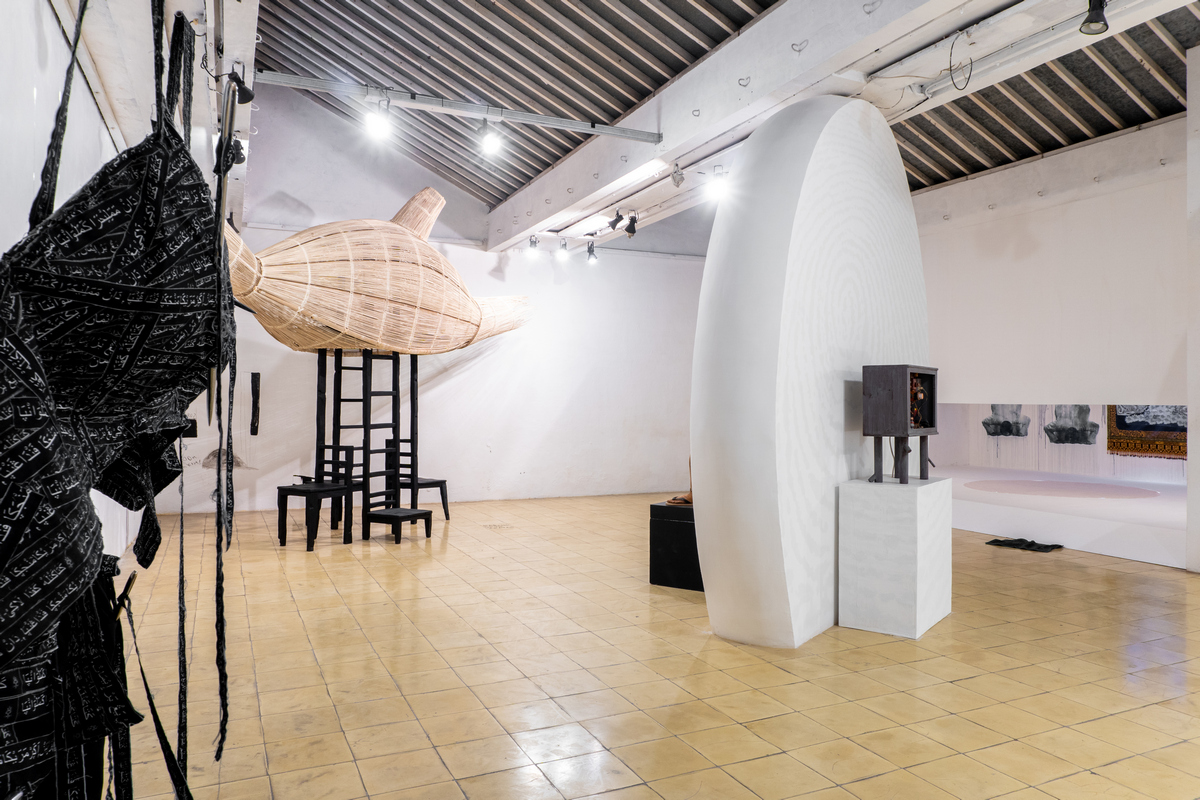
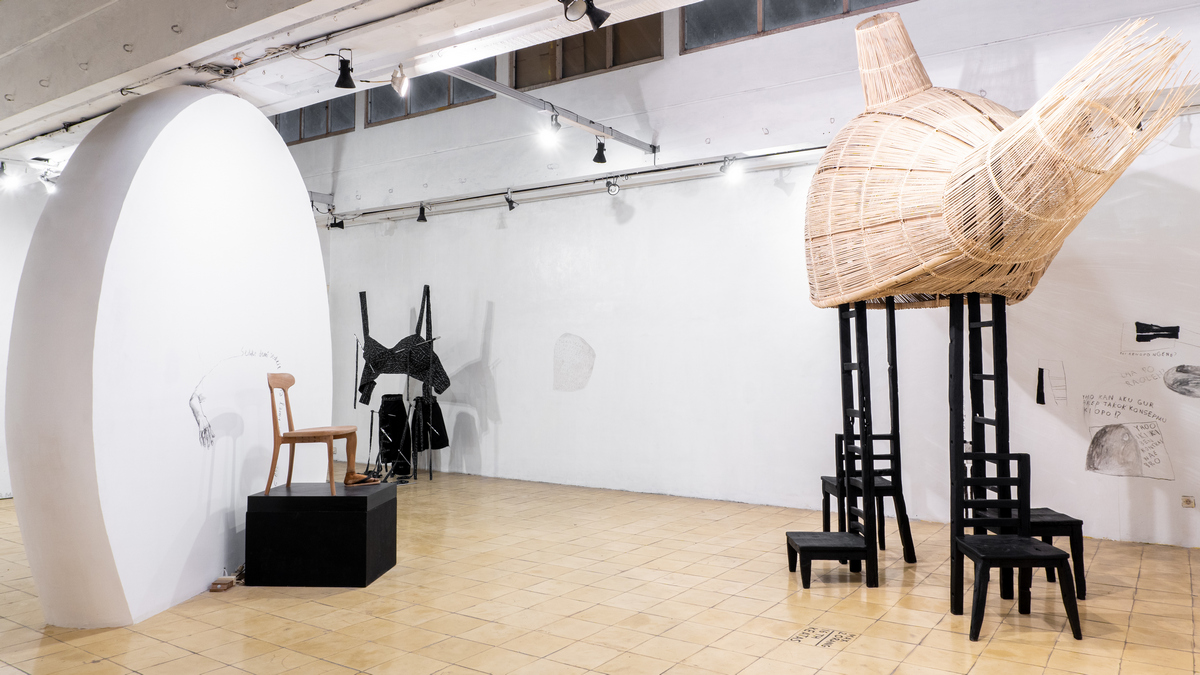
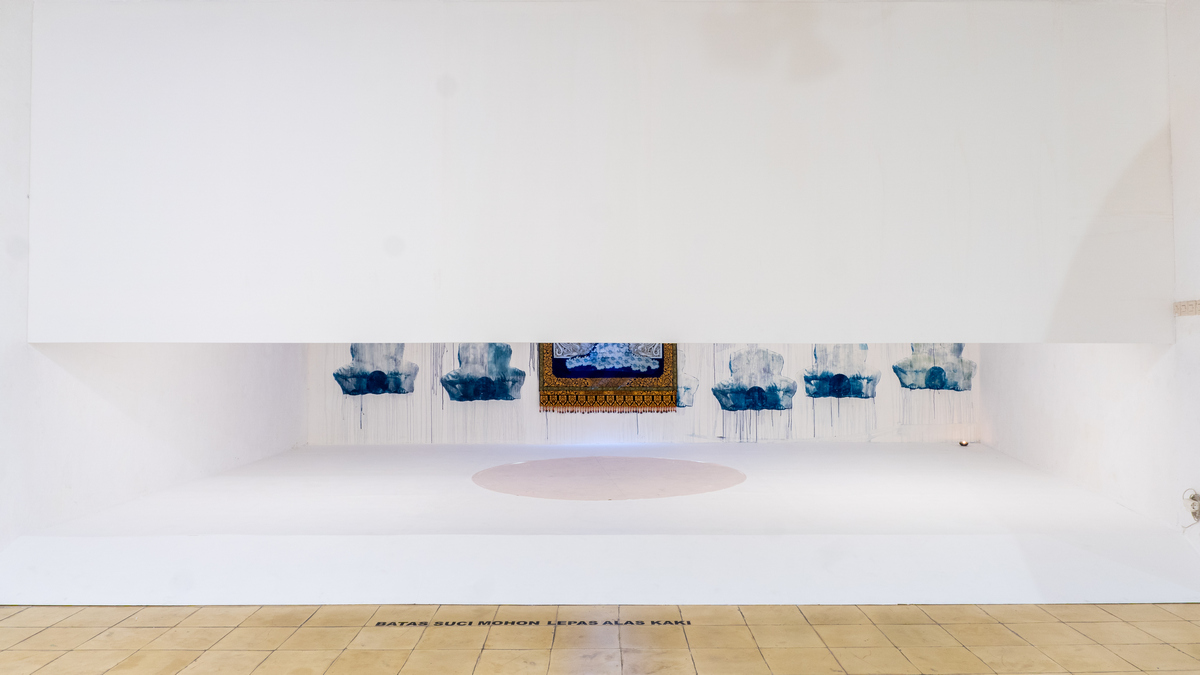
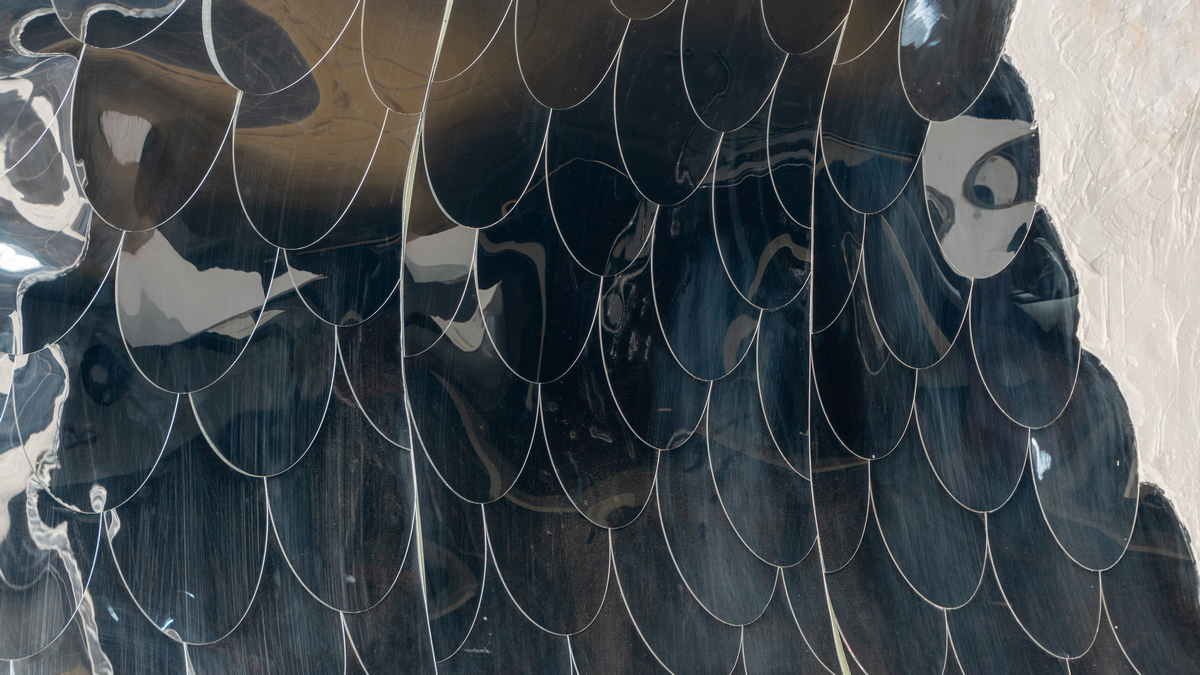
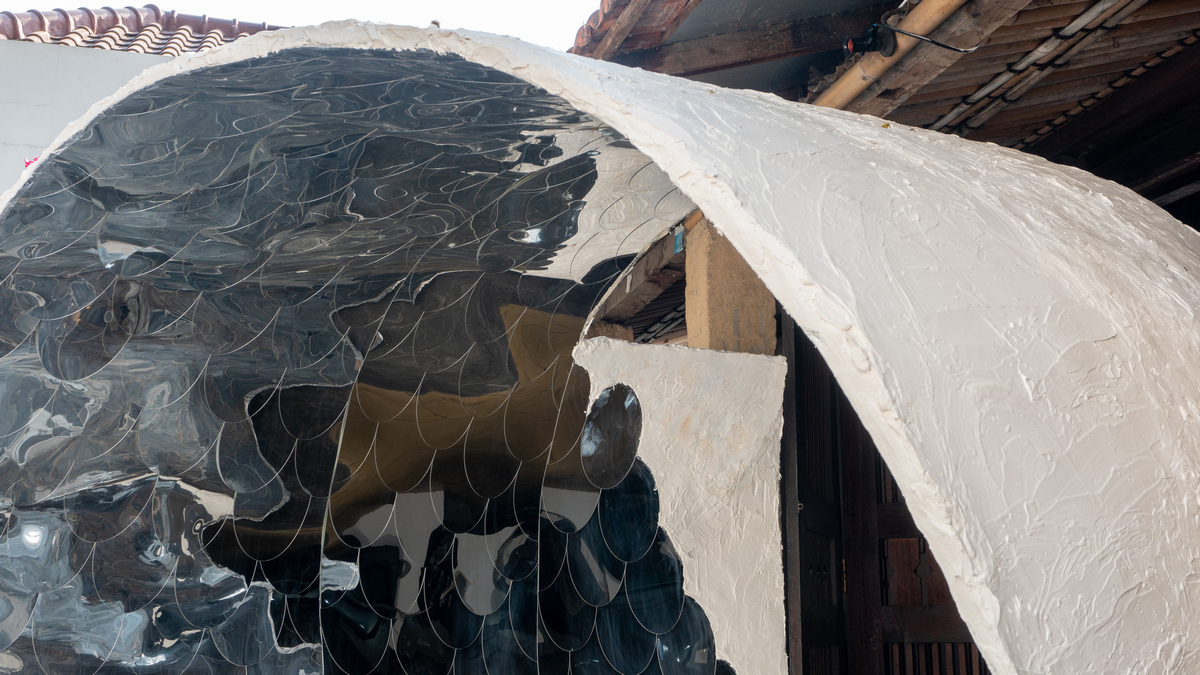
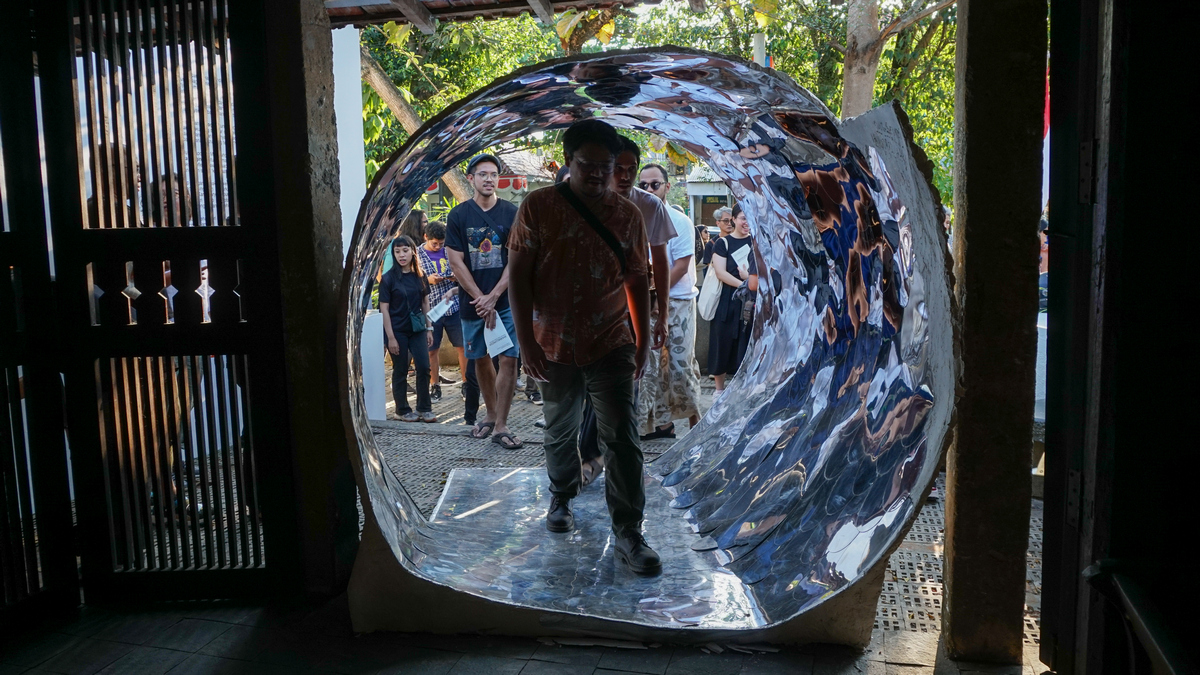
Pangela Elo
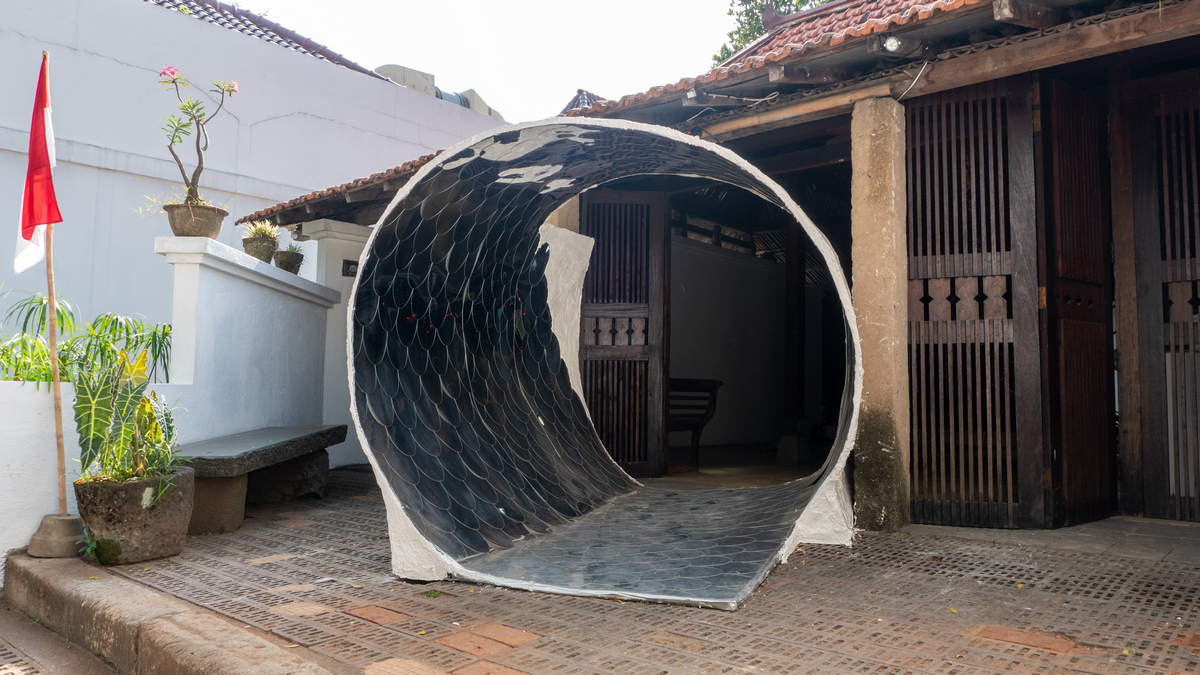
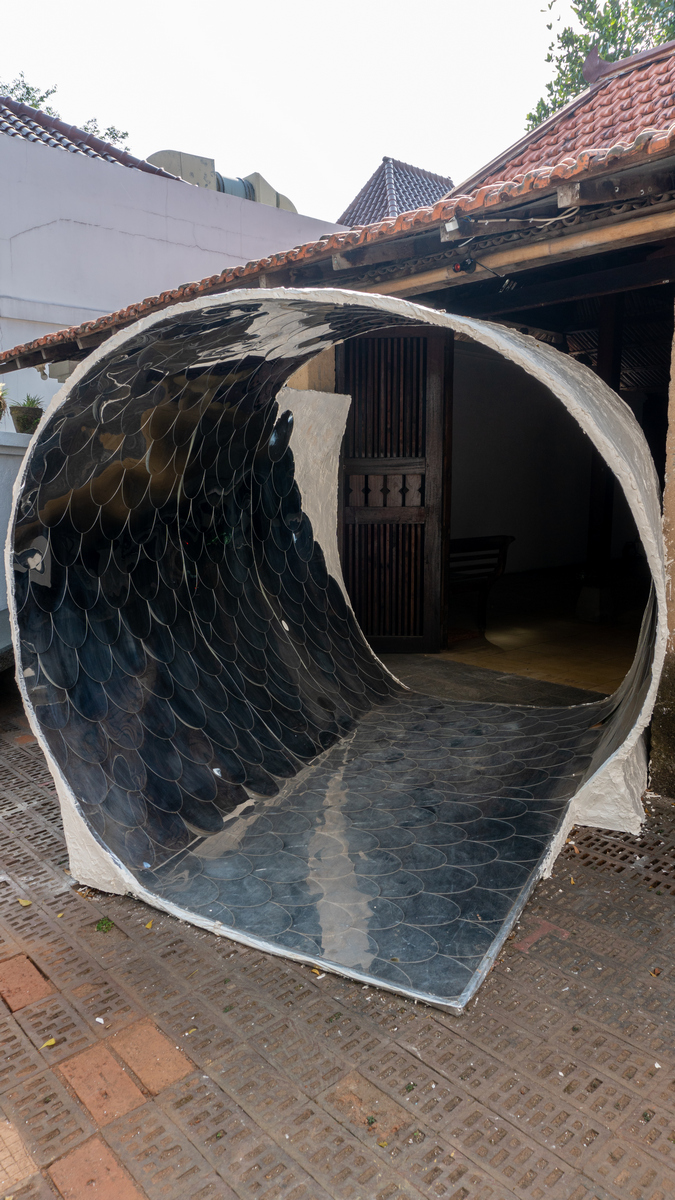
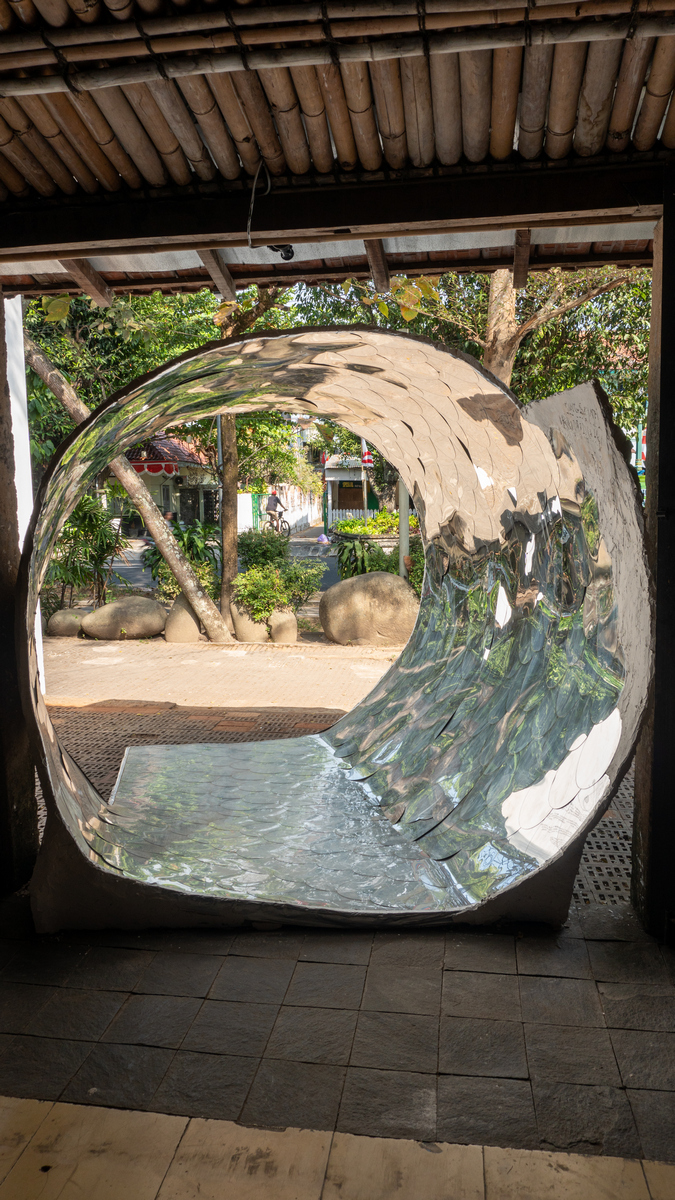
Janu Dananjoyo
Legacy
mirror vinyl, wire mesh, hollow iron, zinc
250 x 200 x 230 cm
2023
Before entering the “game play” area of MAMALUNGSA, the audience is invited to see themselves through a game of pengilon-ilon. This game can disguise complex realities, as it makes us see only what is visible in the mirror. Human culture or traditions that exist in society are relics of previous social structures that are the result of complex relationships between individuals and ‘society’. As explained by Margaret Archer (sociologist) through her Morphogenetic theory, Archer emphasizes the need for a bridge between individual agency and social structure in explaining social change. It shows the importance of individual reflection and social interaction in shaping new patterns in society.
Janu’s work is the antithesis of the theme of legacy. How can “I” be eliminated? Specifically, human subjectivity is in the head. The absence of me, produces unity. The mirror becomes a reflection of who we really are? The “I” is transformed to become one with other individuals, other subjects and other materials, eliminating the ego until it reaches the order of the unity of “I” energy, there is nothing but self.
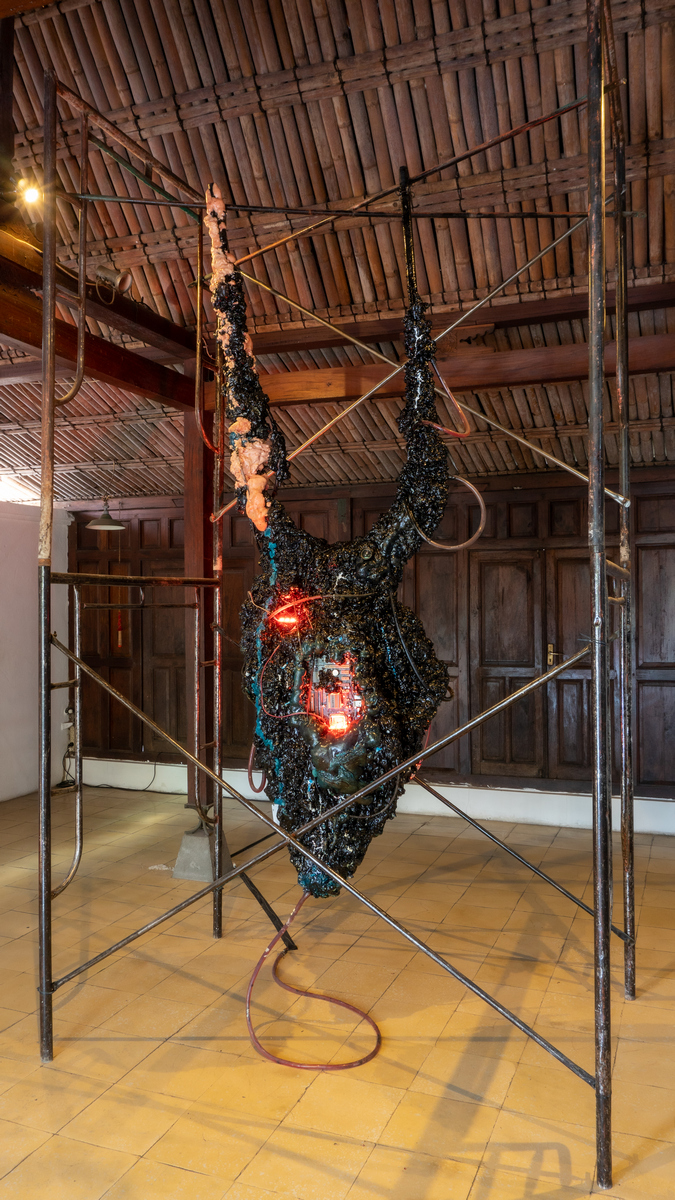
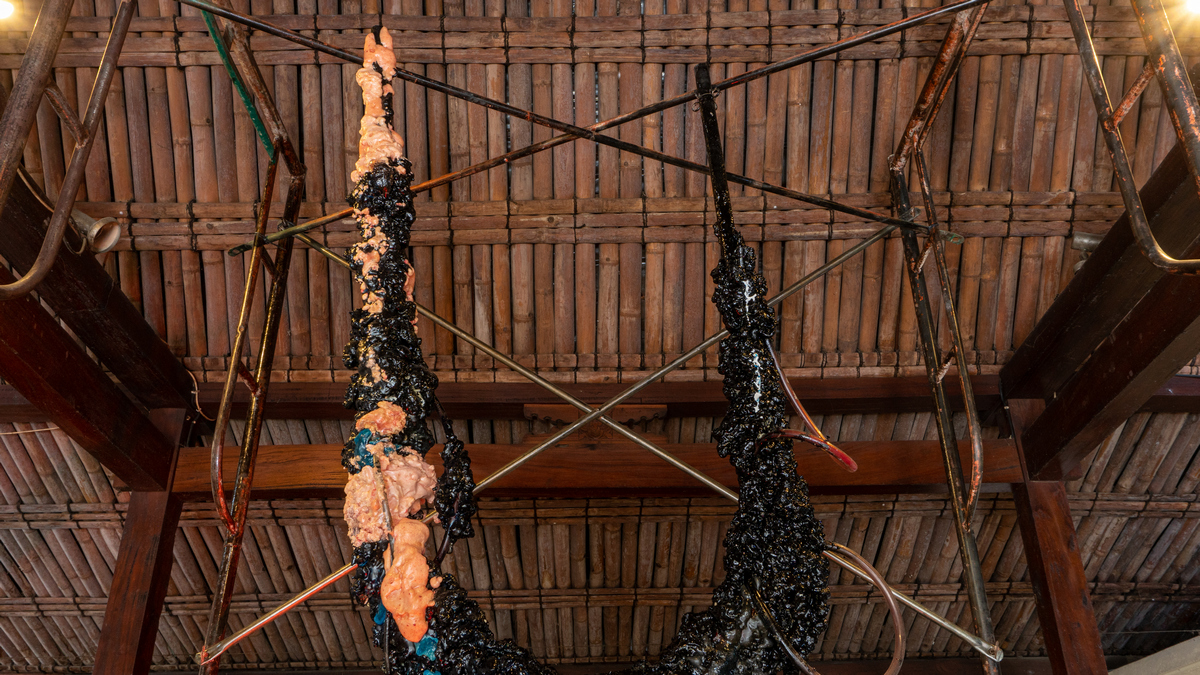
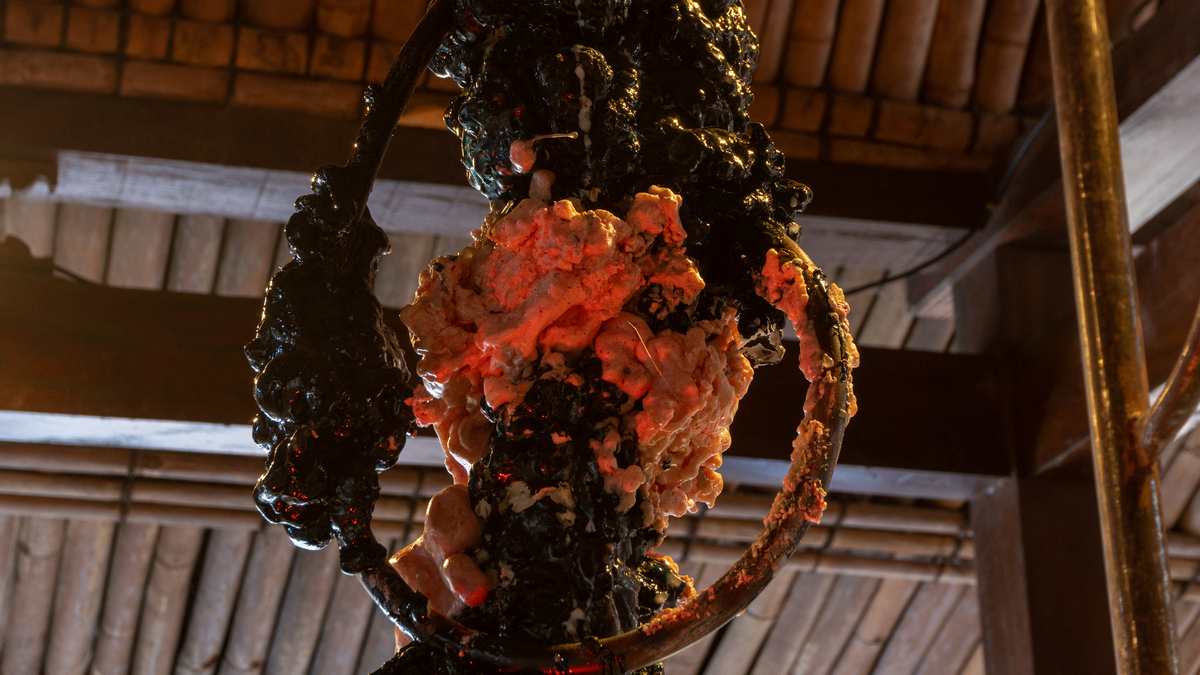
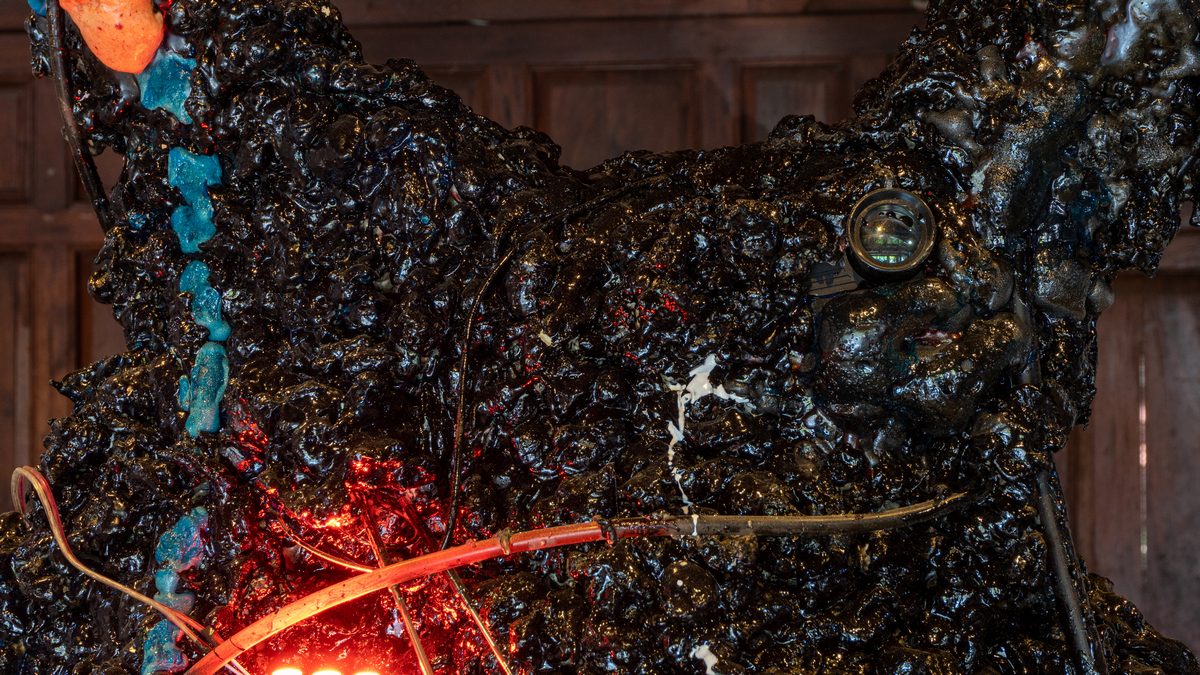
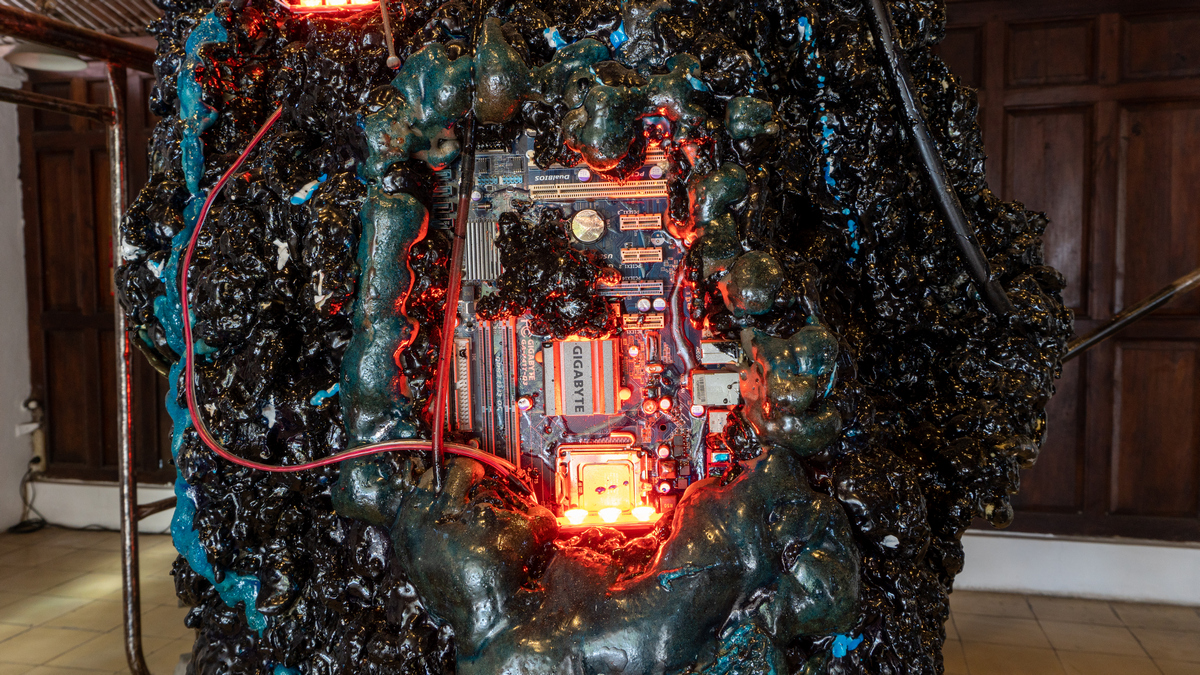
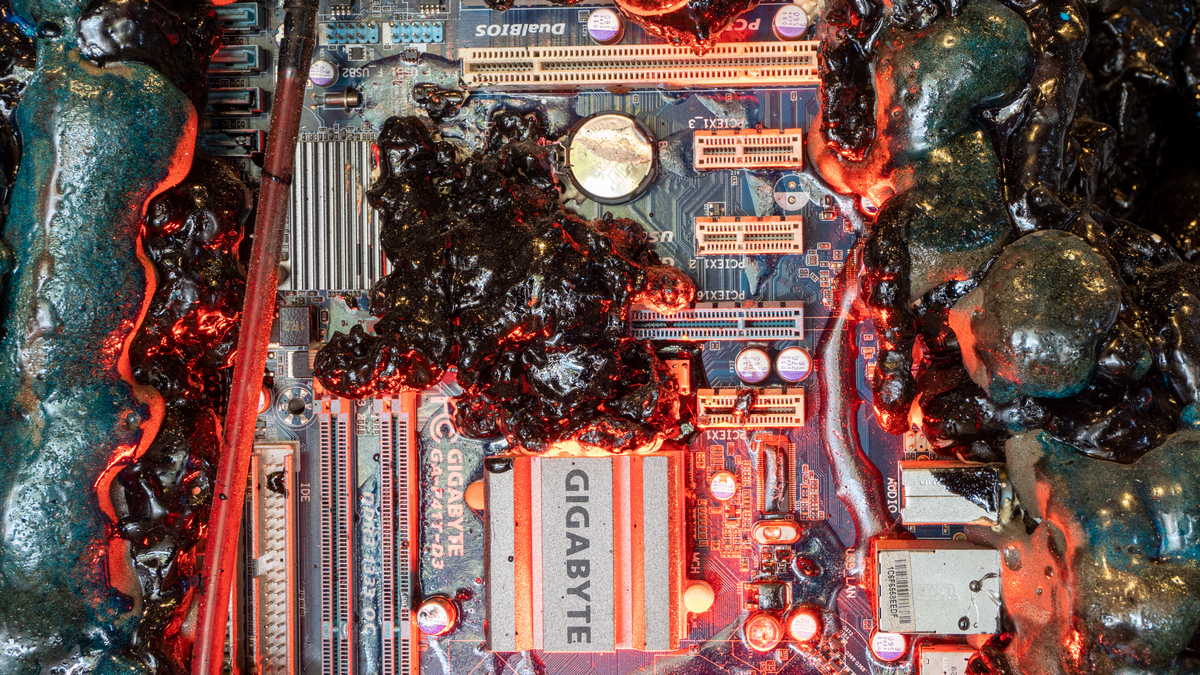
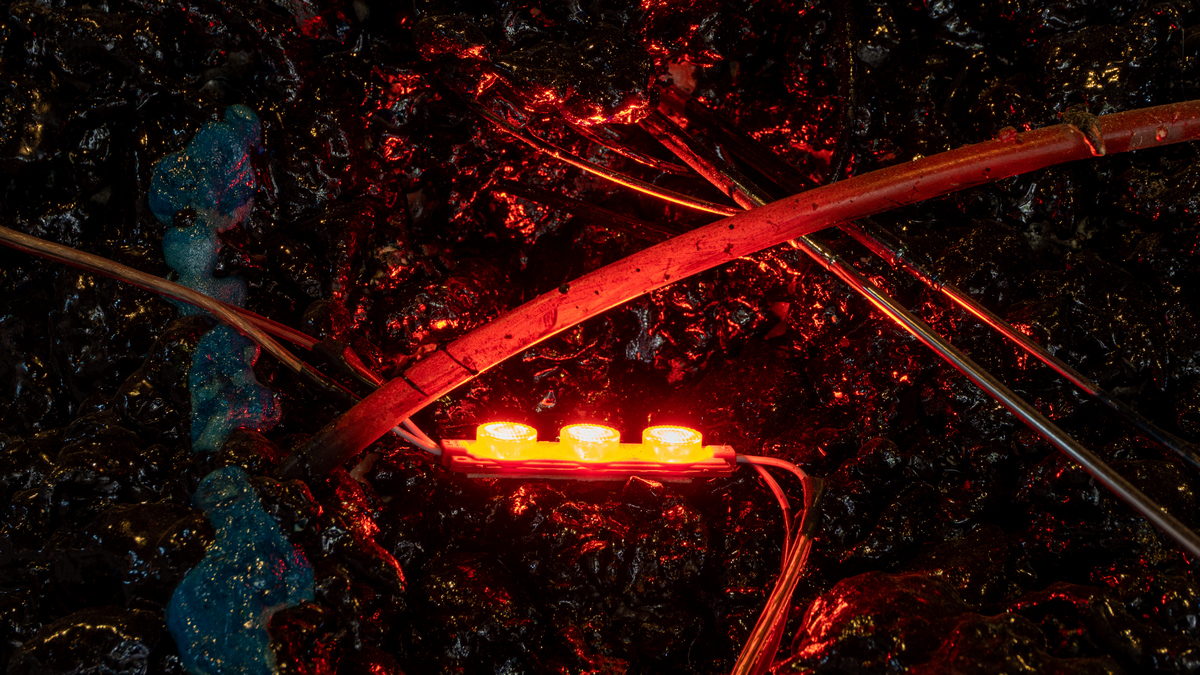
A Season in the Esophagus
Wisnu Ajitama
Dieting – Orderly prey
polyurethane, tech tools, hose, and iron
50 x 180 x 120 cm
2023
The esophagus is like a muscular tube in vertebrates through which food passes from the mouth into the gastric cavity. However, the pushing process of food through the mouth and into the esophagus is sometimes disrupted by the presence of foreign objects. This ‘catastrophic’ event in the esophagus is a side effect of failed filtering. Therefore, special treatment is required so that the process of consuming food can be resumed.
The exploration made by Wisnu in embodying the theme of dieting or preying in an organized manner is analogous to this momentum in the esophagus. Problems that can arise from greed and/or carelessness in the act of “consuming”. Taking without sorting out all kinds of resources is a routine event as humans who are supposedly mammals when forcing their desires.
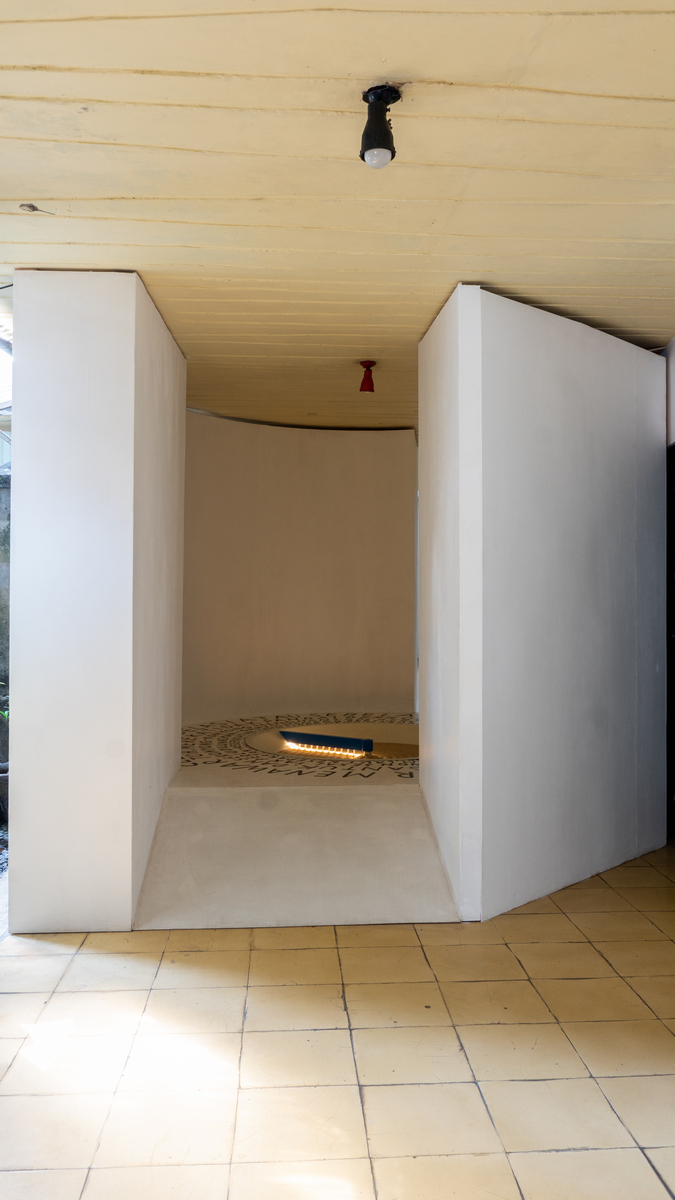
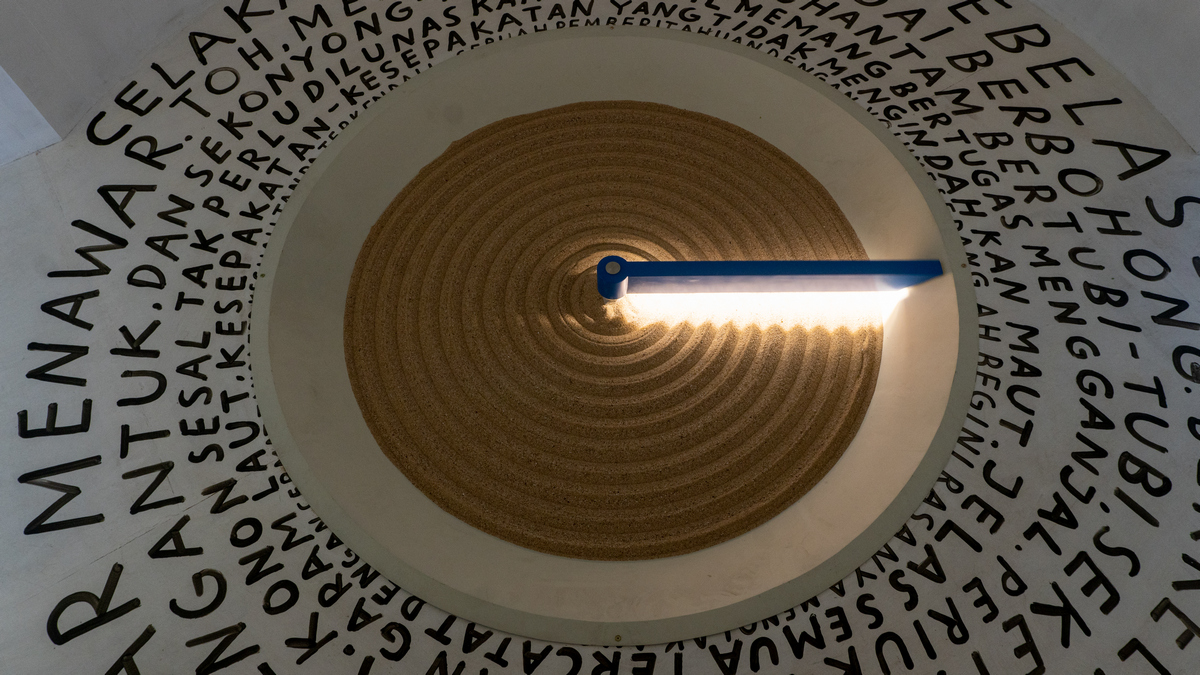
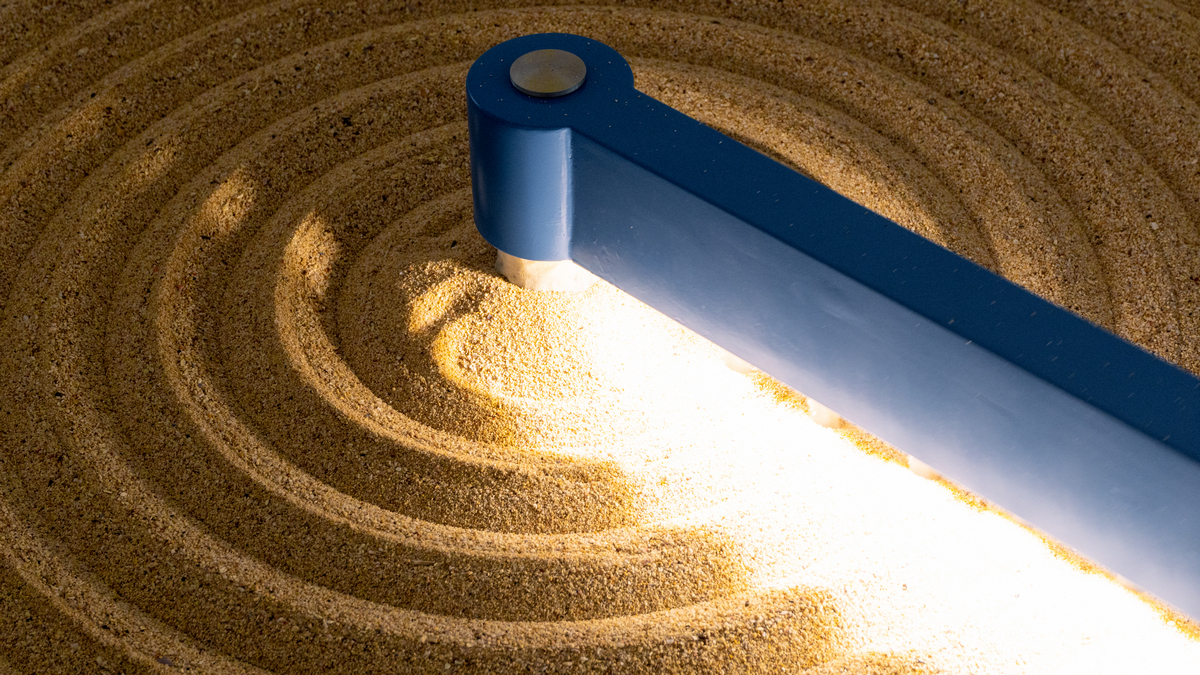
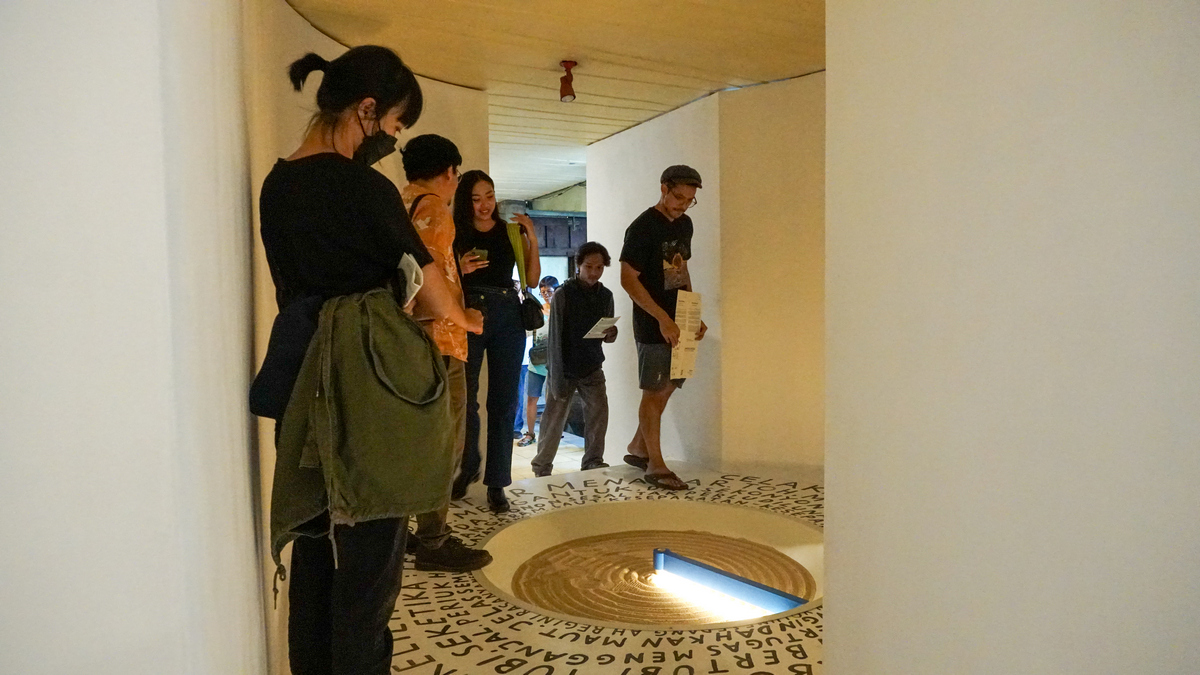
Coming and Fading
Bayu Bawono
Time
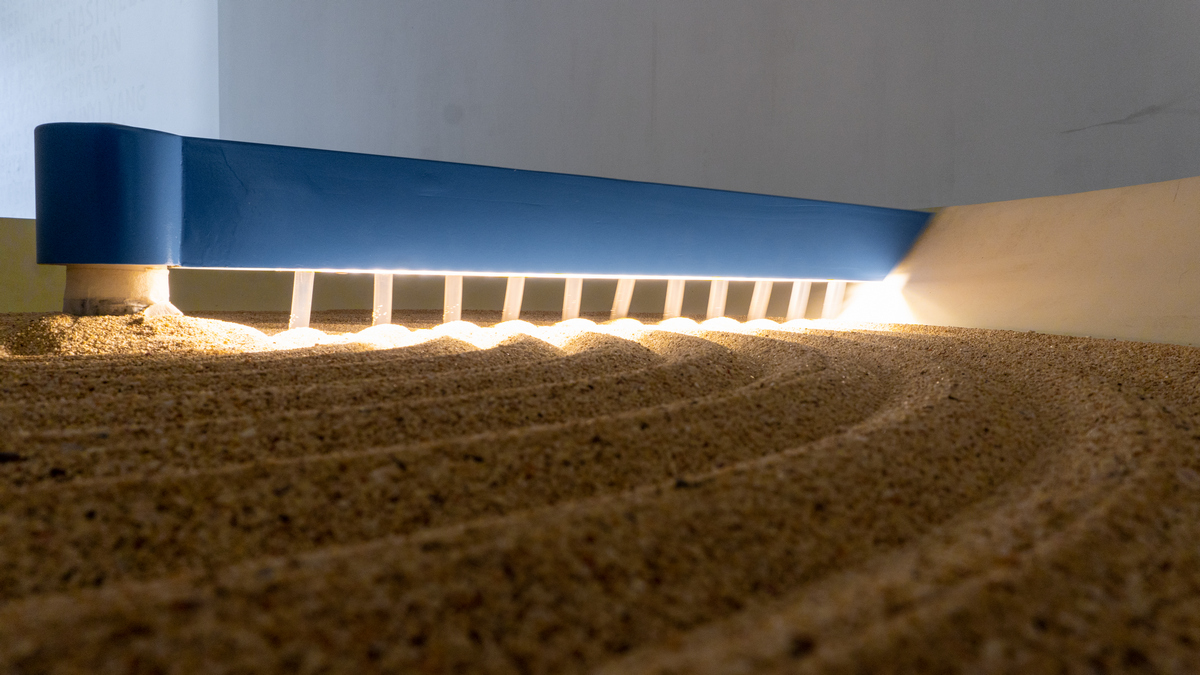
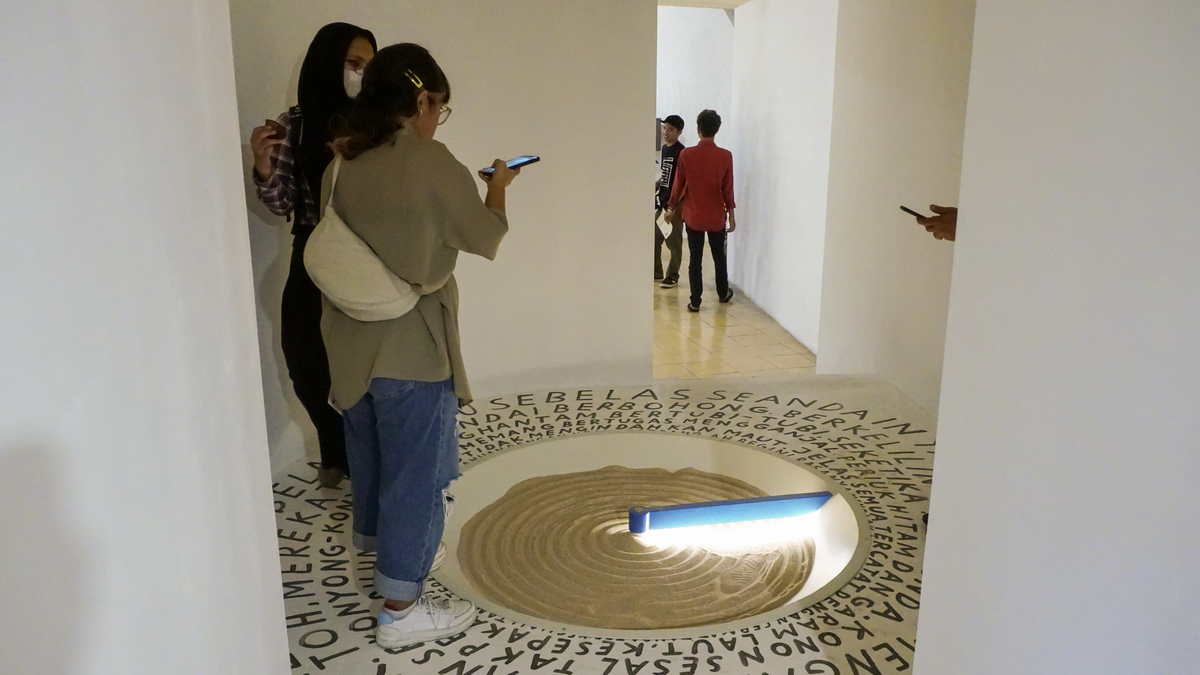
metal, plywood, beach sand
300 x 300 x 260 cm
2023
Bayu Bawono is an interior designer who is involved in many new media art projects by providing visual illustrations of experimental project concepts involving technology. One of them is radio astronomy that can capture space signals. From that experience, the will to create a four-dimensional work where the fourth dimension is time grew. How to translate time? Where time becomes very relative, it does not depend on seconds, minutes, and hours.
In a general context, four-dimensionality refers to the concept that the world we live in consists of four dimensions: three spatial dimensions (length, width and height) plus one dimension of time. This concept is related to Albert Einstein’s special theory of relativity, which combines time and space into a single entity called spacetime. In the theory of relativity, time is not a constant and absolute parameter as we perceive it everyday. Time is a variable that can change depending on speed and gravity. The theory of relativity states that time can slow down or run faster depending on the relative speed of one object to another. In this work, the traces of steps are swept away by the moving needle, but the traces are not always completely erased, resulting in motifs that prove the existence of time itself.
Empty Vase
Condro Priyoaji
Making love
mixed media
variable dimension
2023
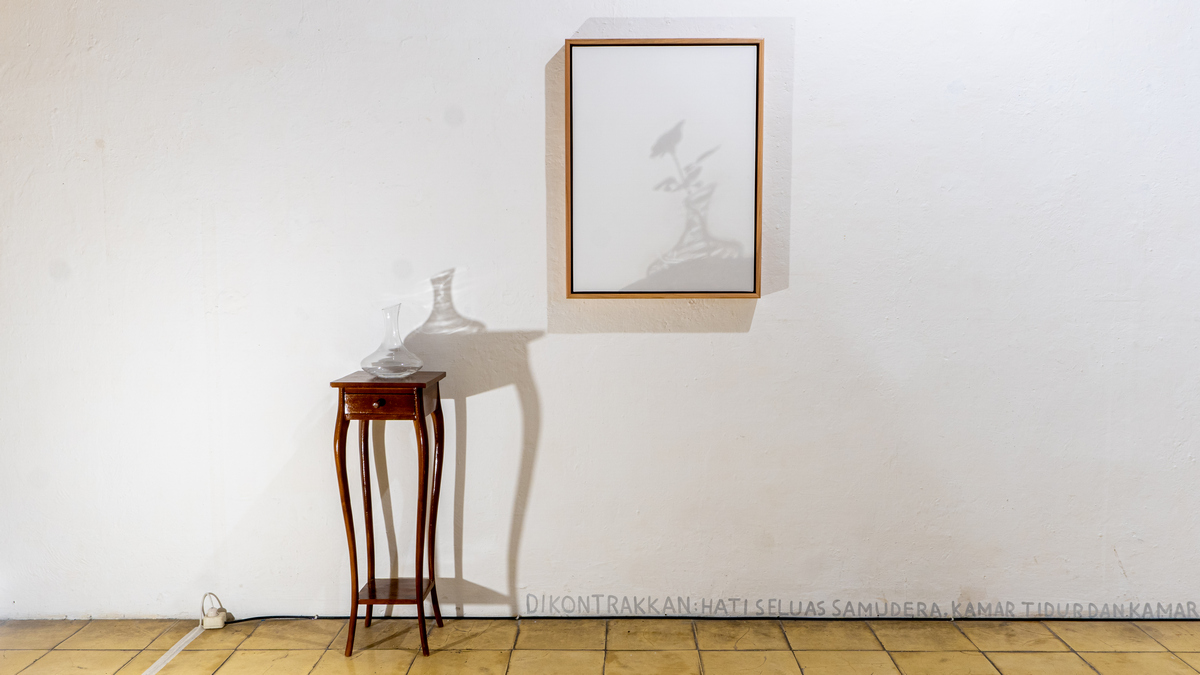
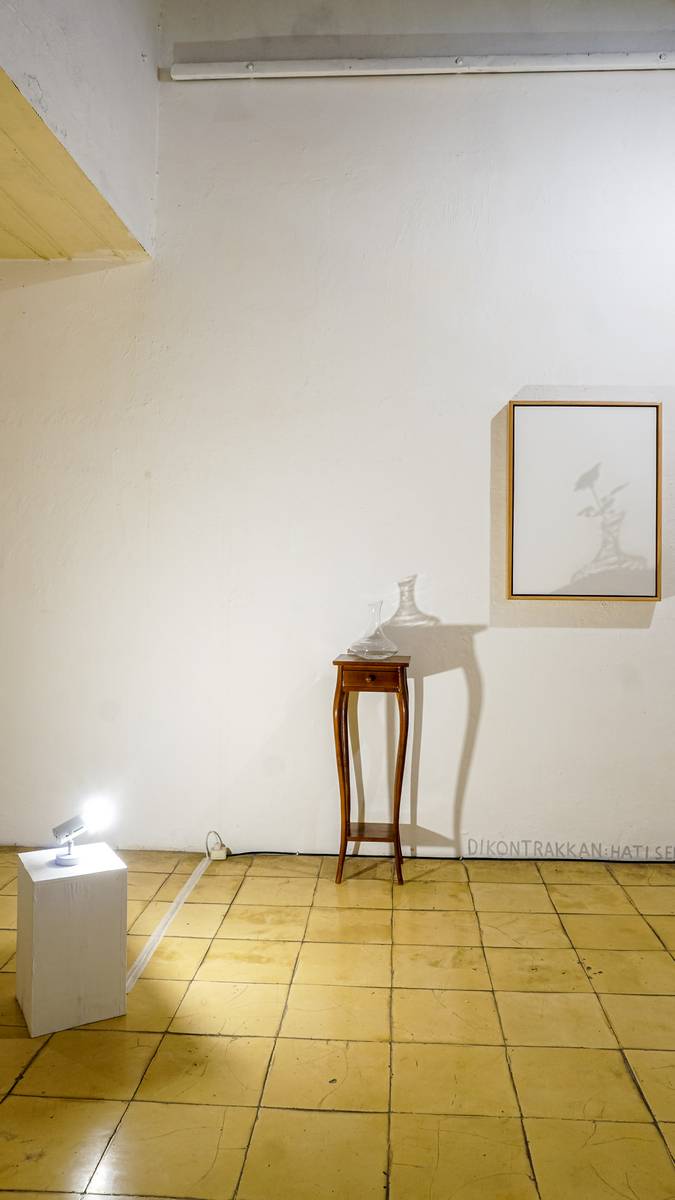
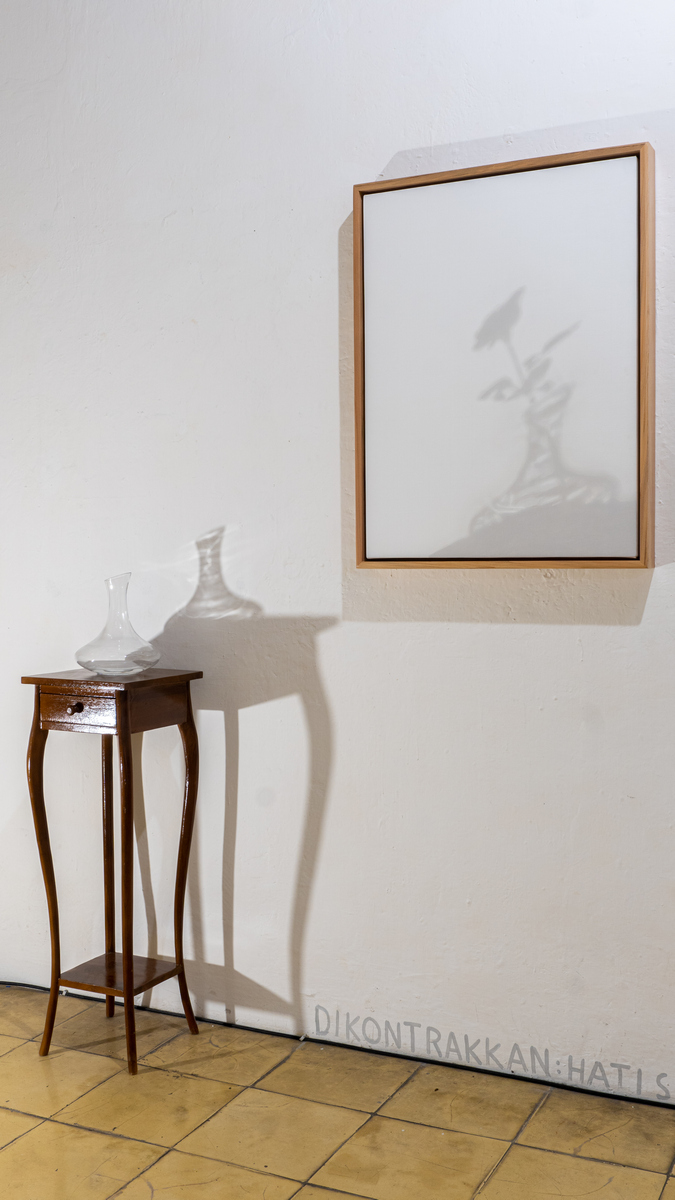
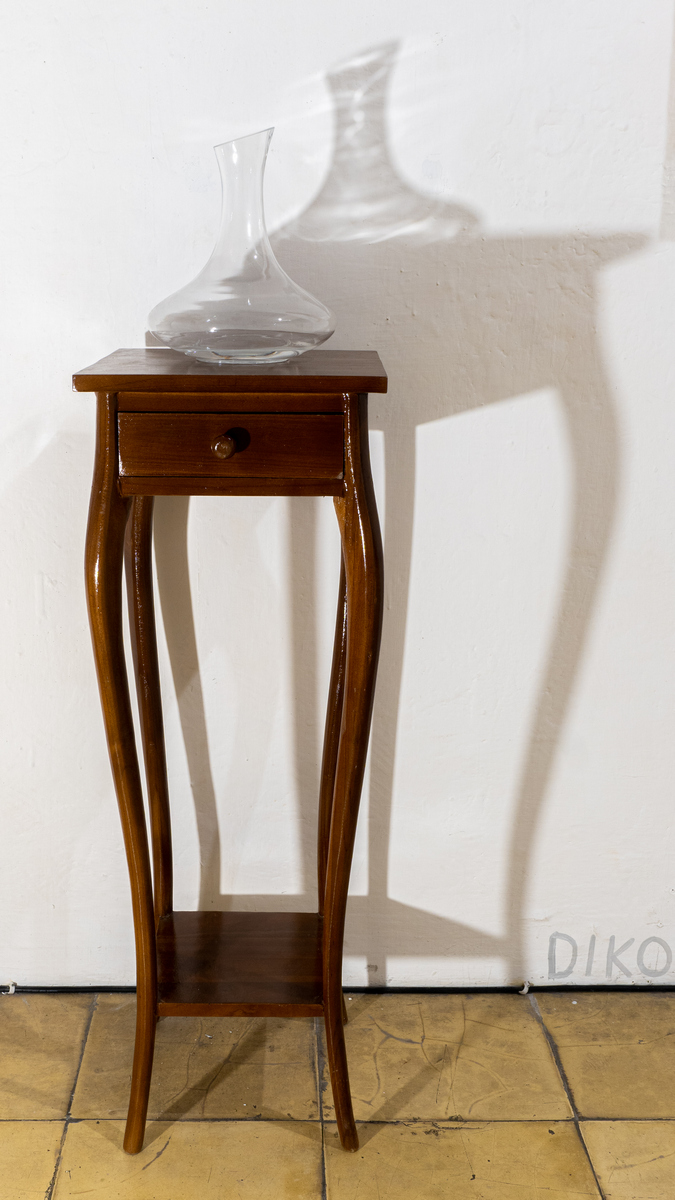
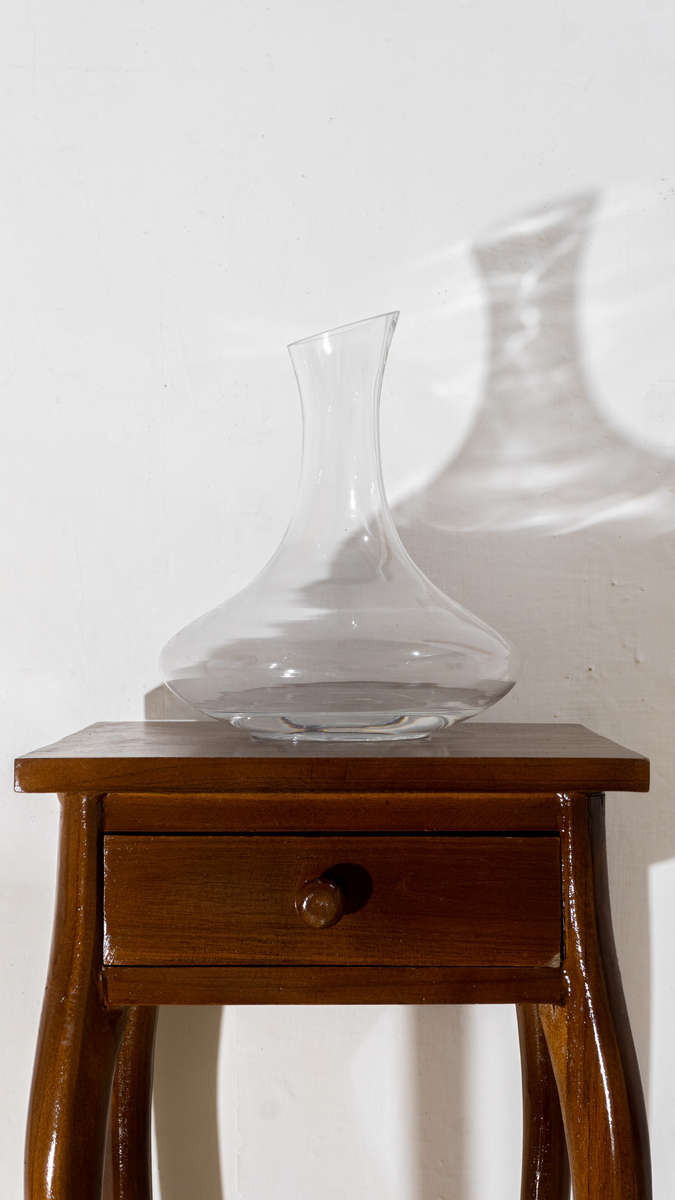
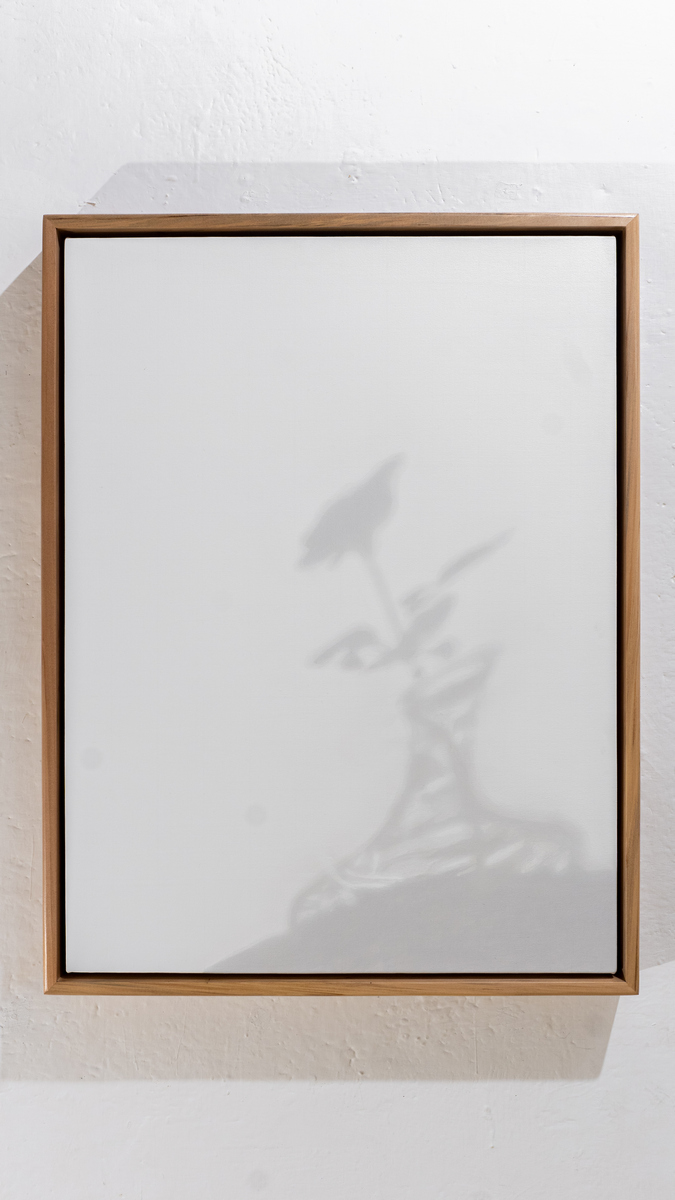
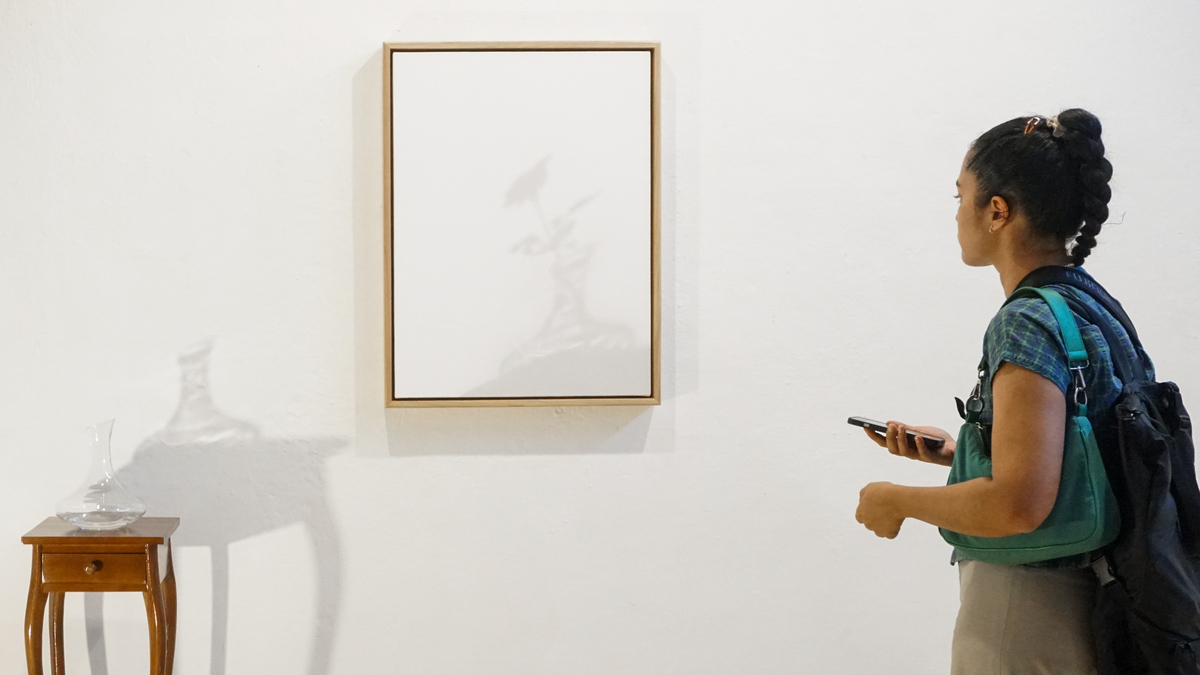
Mamalungsa who make love and loving, what are the feelings that are revealed through the record of memory, the contact of textures and smells towards the beloved? One of the experiences of making love is feeling the loss, sorrow and heartbreak. Then, how to visualize a trace? Something that once existed, which is now gone. Shadows, to Condro, on the one hand illustrate the presence of an object, and at the same time also record the trace of an object at a moment.
Condro, who is used to working with large two-dimensional planes in Mamalungsa’s scenarios, experimented with creating an installation work to depict the intimate nature of love: hidden, cryptic and emotional.
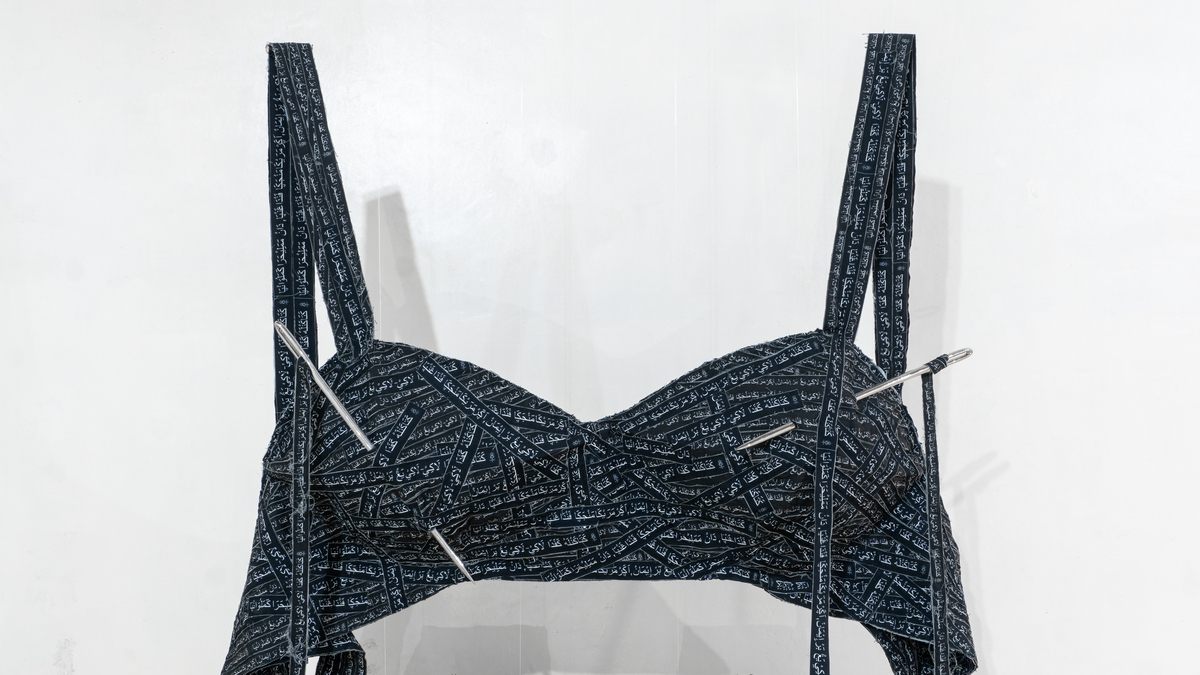
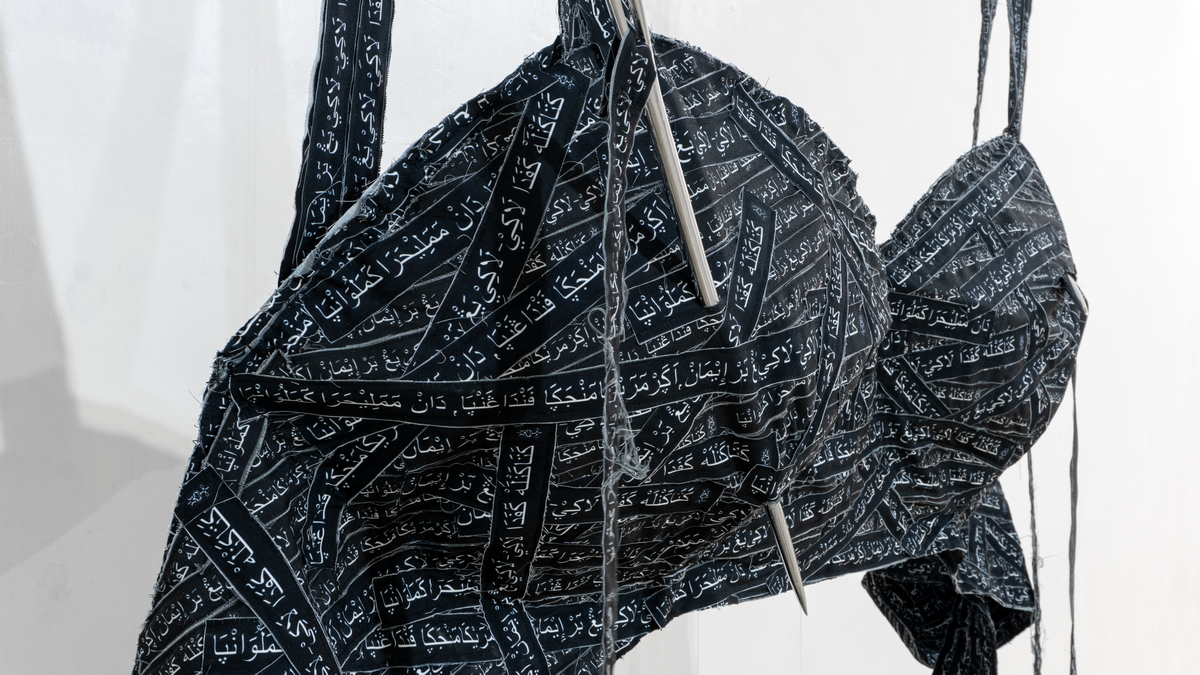
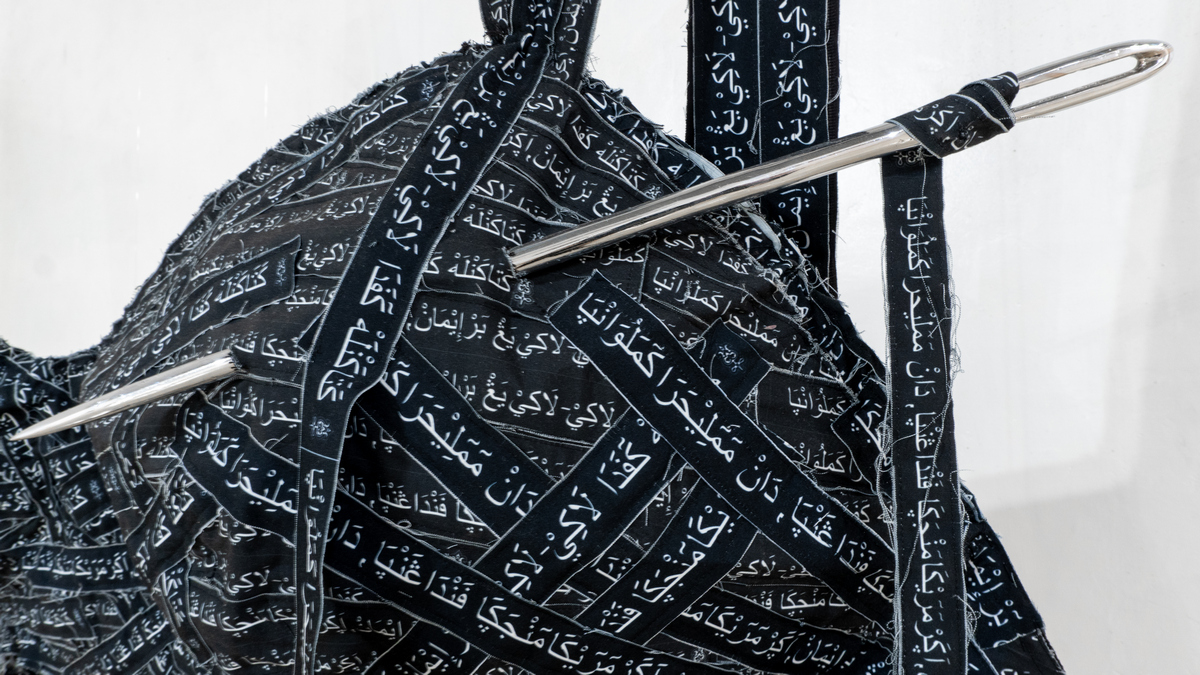
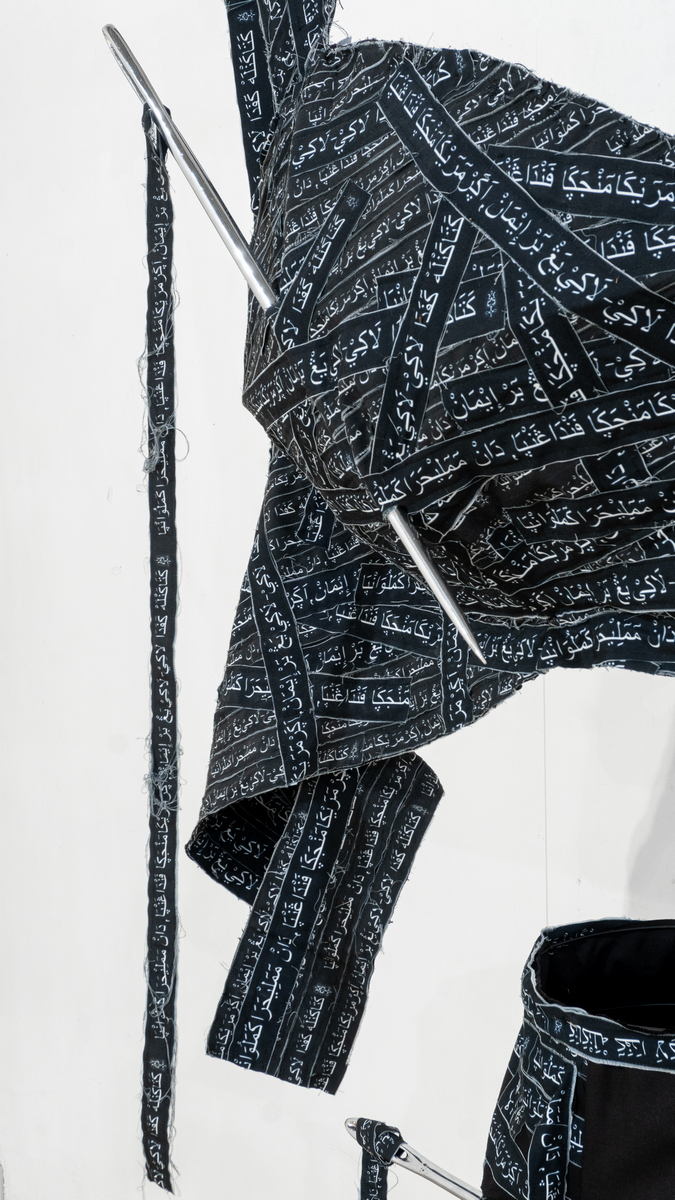
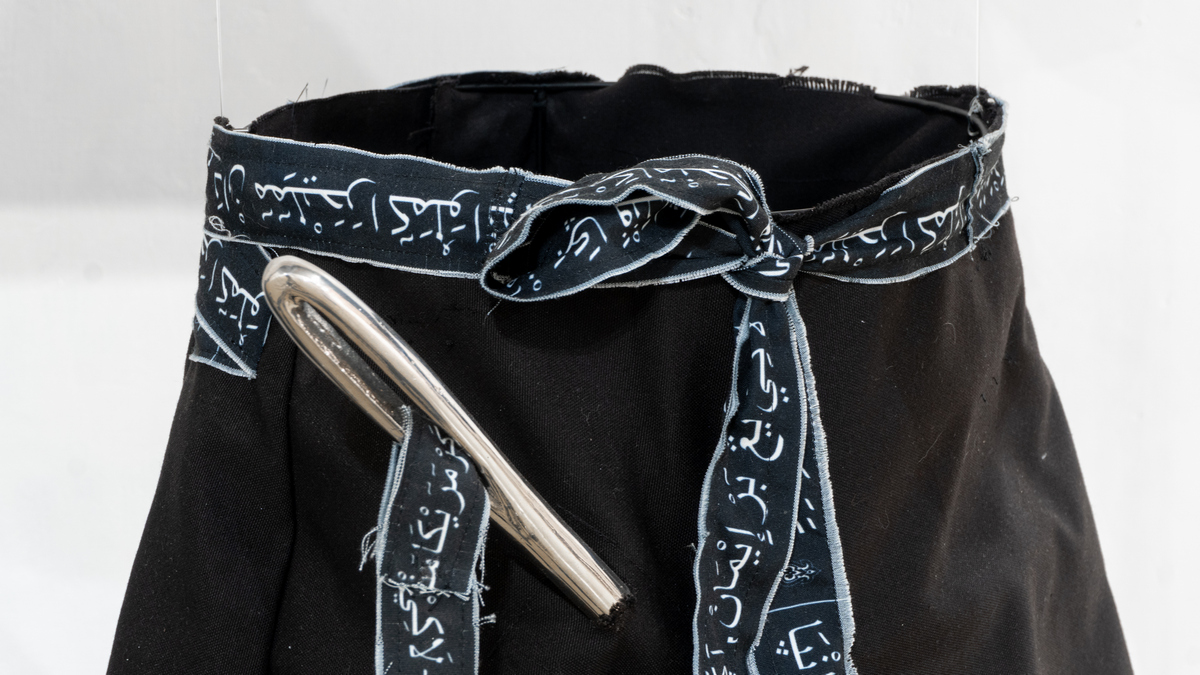
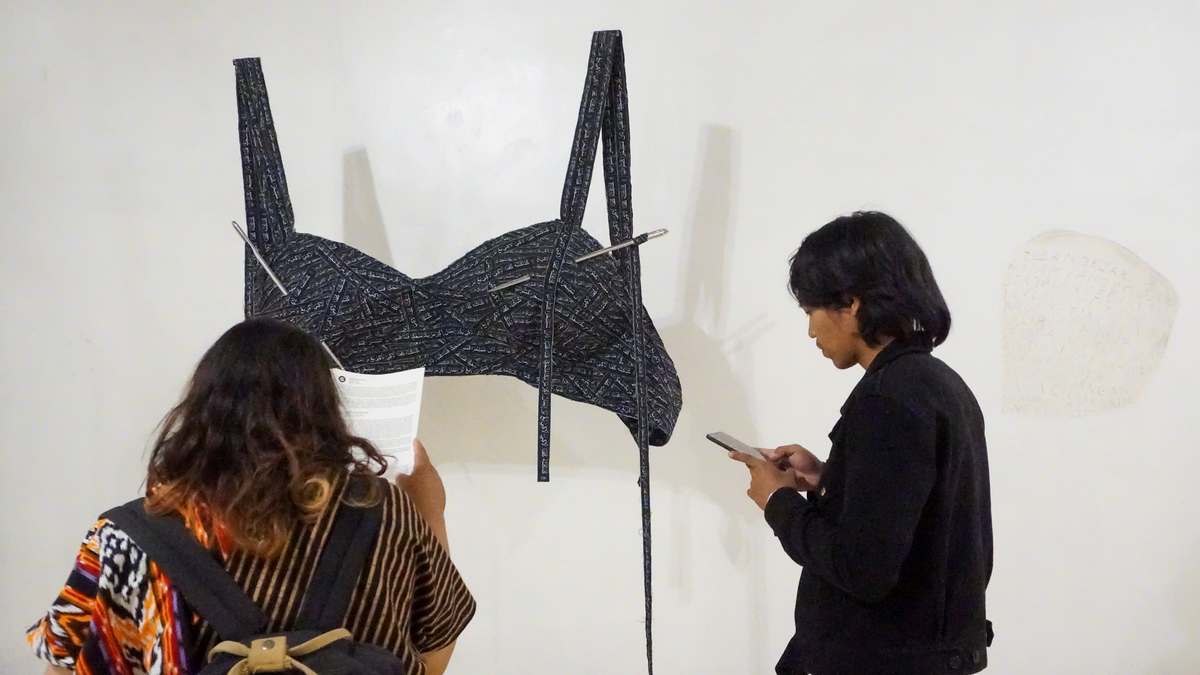
Eyes Needle’s Eye
Yosep Arizal
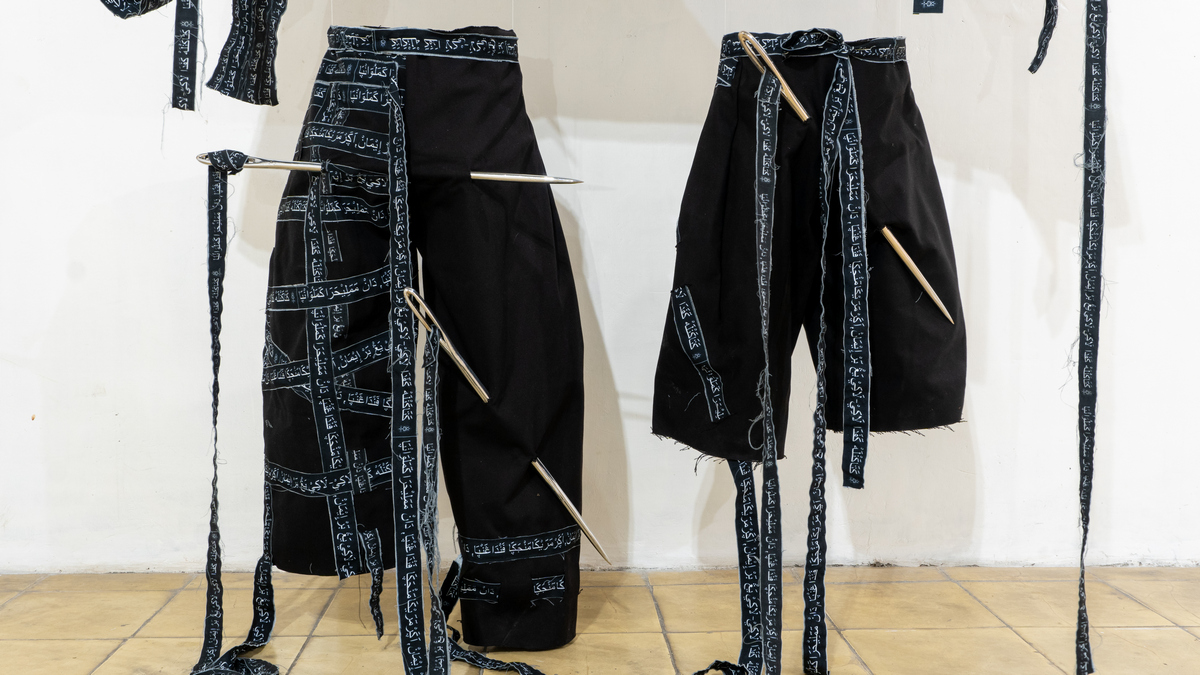
Ideology
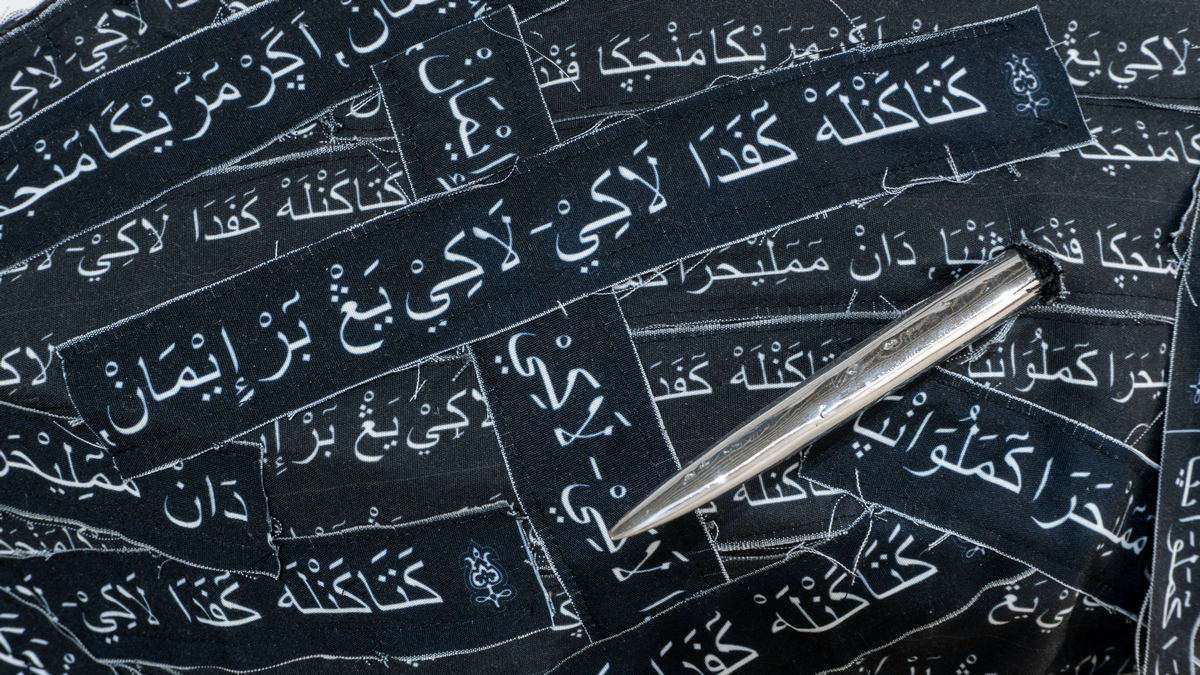
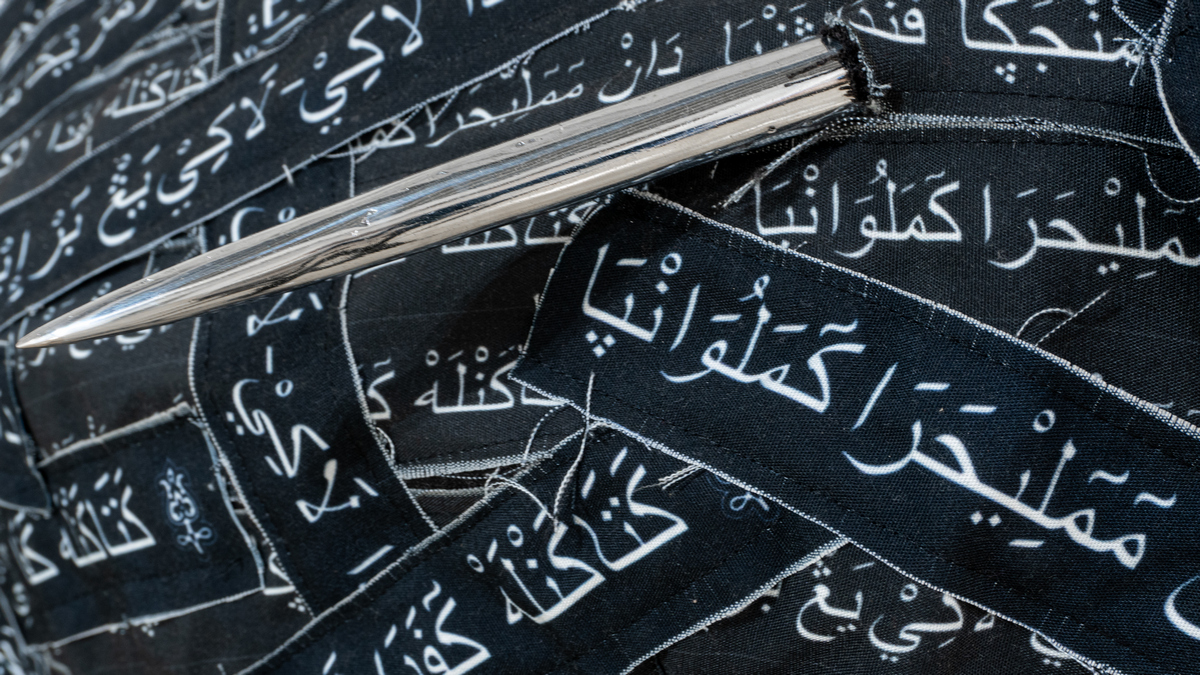
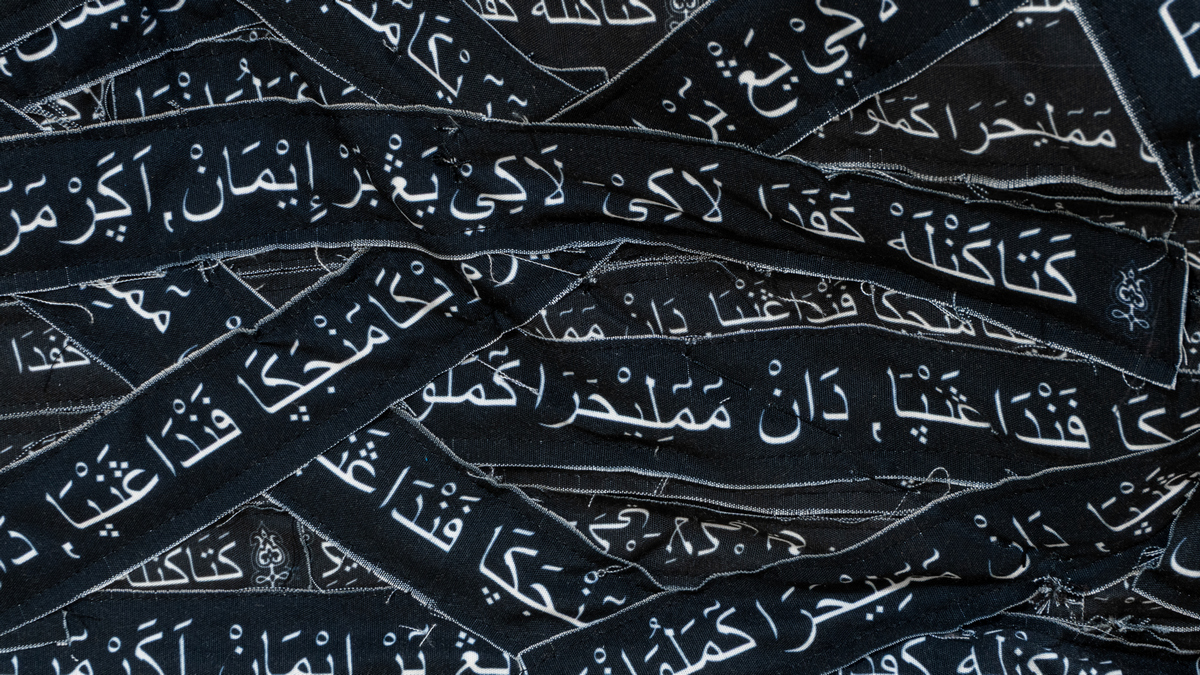
sand casting aluminum, fabric
variable dimension
2023
“Tell the believing men to lower their gaze and guard their chastity”
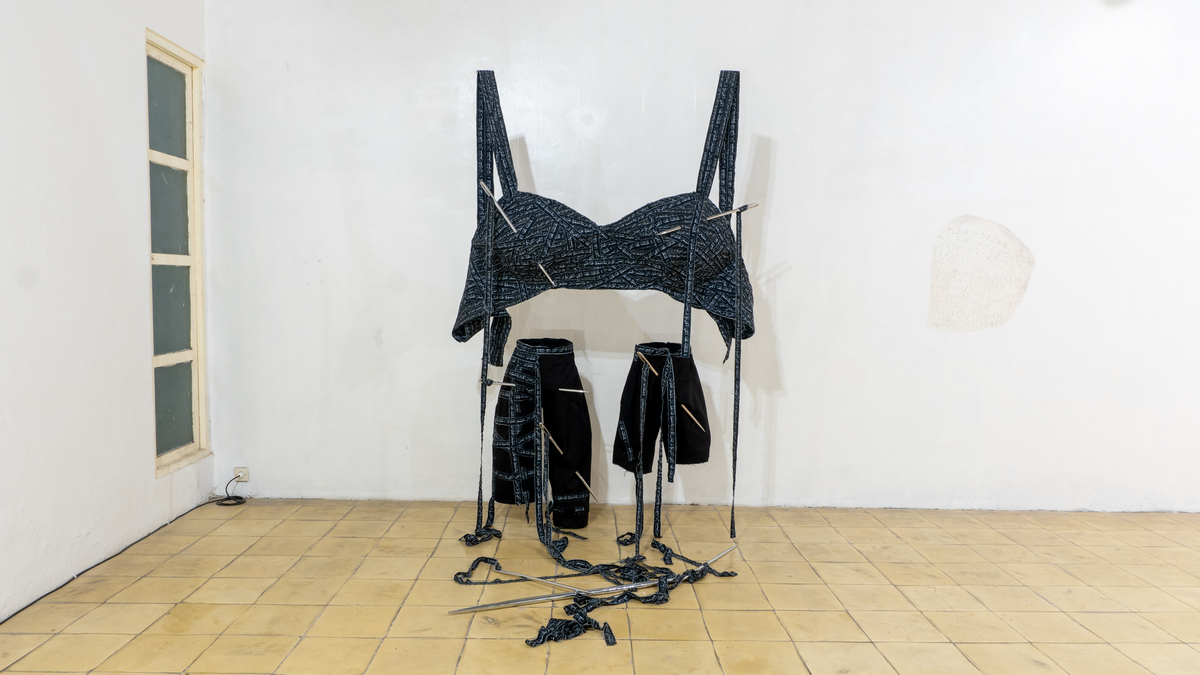
The above quote is taken from a verse of the Qur’an, Surah An-Nur verse 30, which Yosep sees as a hidden verse because it is rarely studied in religious and general discourse. It is different from the verse that shackles a woman’s manners in behavior or dress in society that is so often discussed. It is as if the dogma on women should be emphasized more than on men. However, in the verse quoted above, we can clearly interpret that even men who are ‘religious’ must keep their eyes and awrah and not carelessly express their lust.
The visual concept presented by Yosep in this work is the needle as a symbolism of male ‘weapons’. The needles are stabbed on the kutang (women’s underwear to cover the breasts) which depicts the ‘harassment’ carried out by men to women. In addition, if we think more deeply about the needle, we will find that there is a dualism in the shape of the needle. The shaft of the needle is male, and the eye of the needle is female. This work was made to articulate a phenomenon of dress codes that restrict or judge women based on gender as a form of control and strict gender stereotypes.
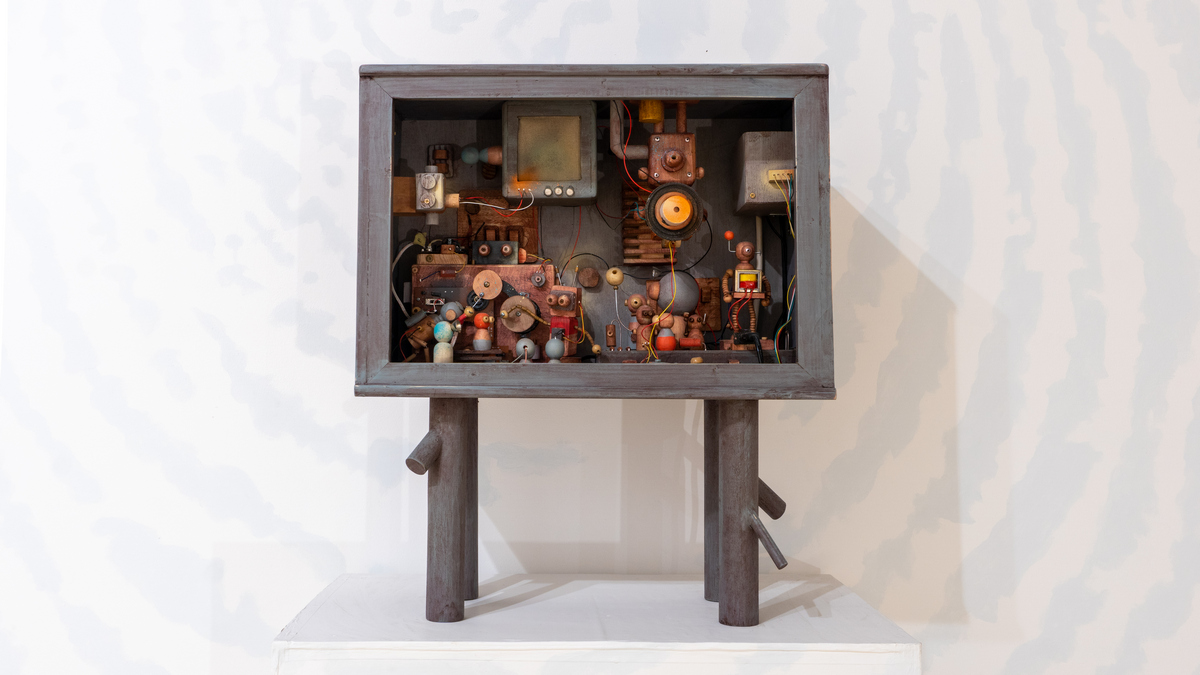
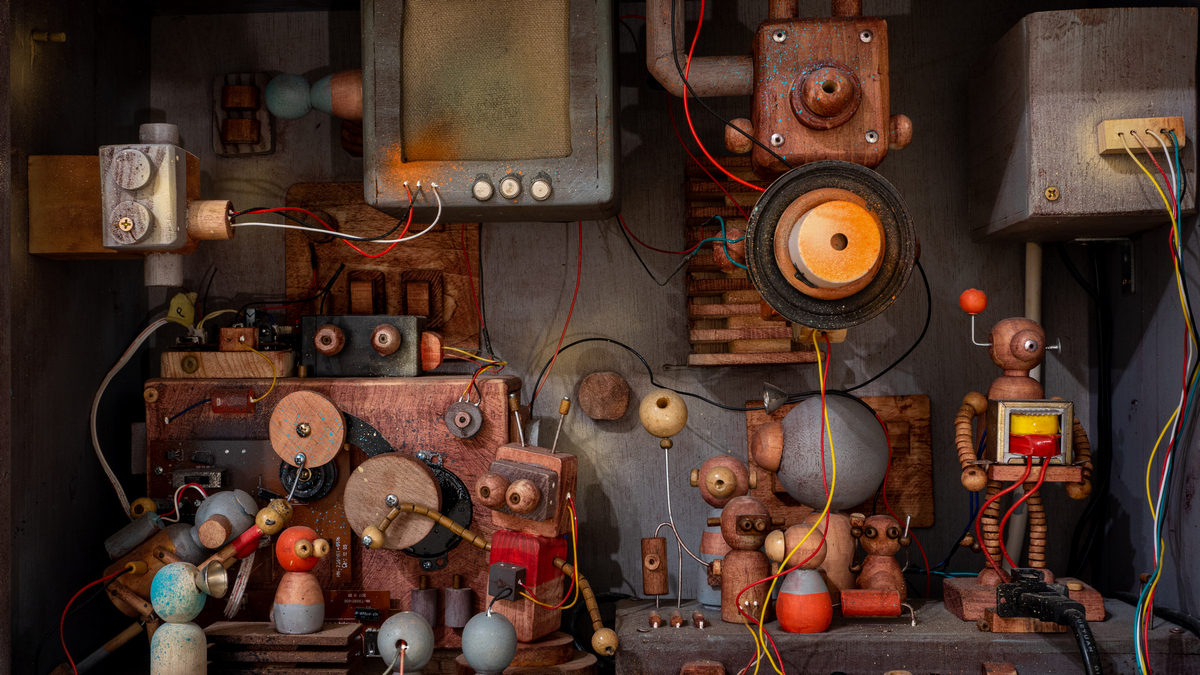
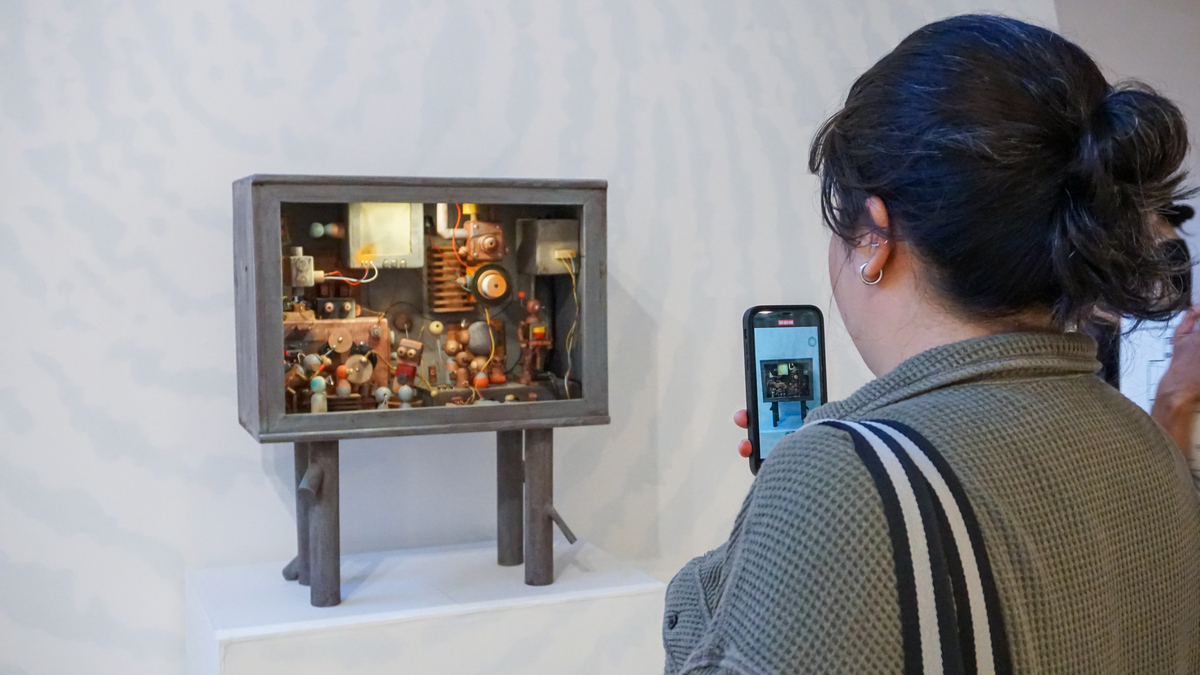
Radiorama
Gatot Indrajati
Thumb Dexterity
mixed media
60 x 26 x 70 cm
2023
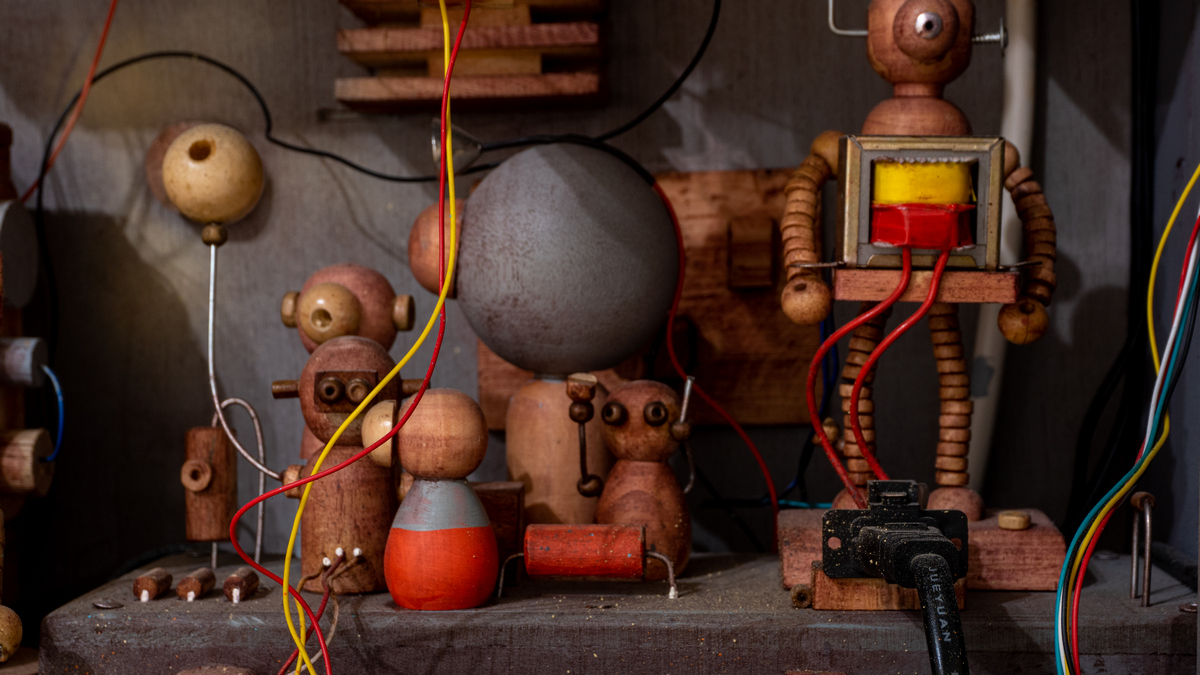
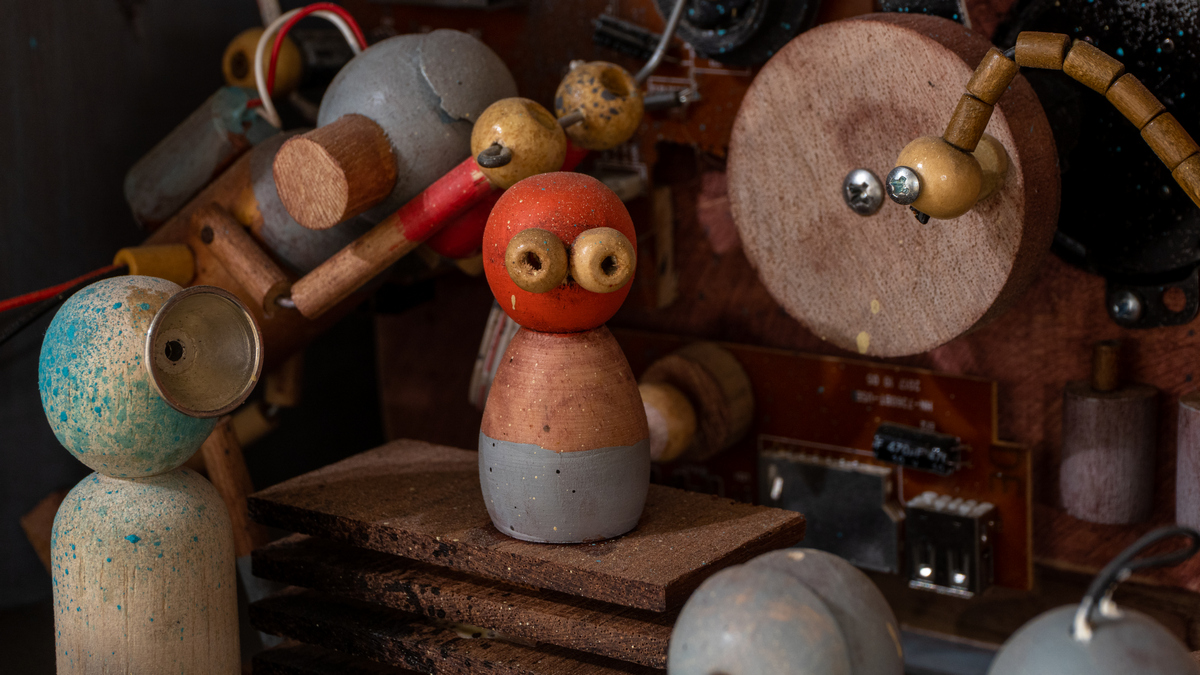
Thumb dexterity is an ability that uniquely belongs to humans, where they can move their thumbs with great strength and agility, allowing them to grasp and manipulate objects with precision. This agility then makes it possible for humans to create tools, machines, writing, etc., resulting in an acceleration in human civilization.
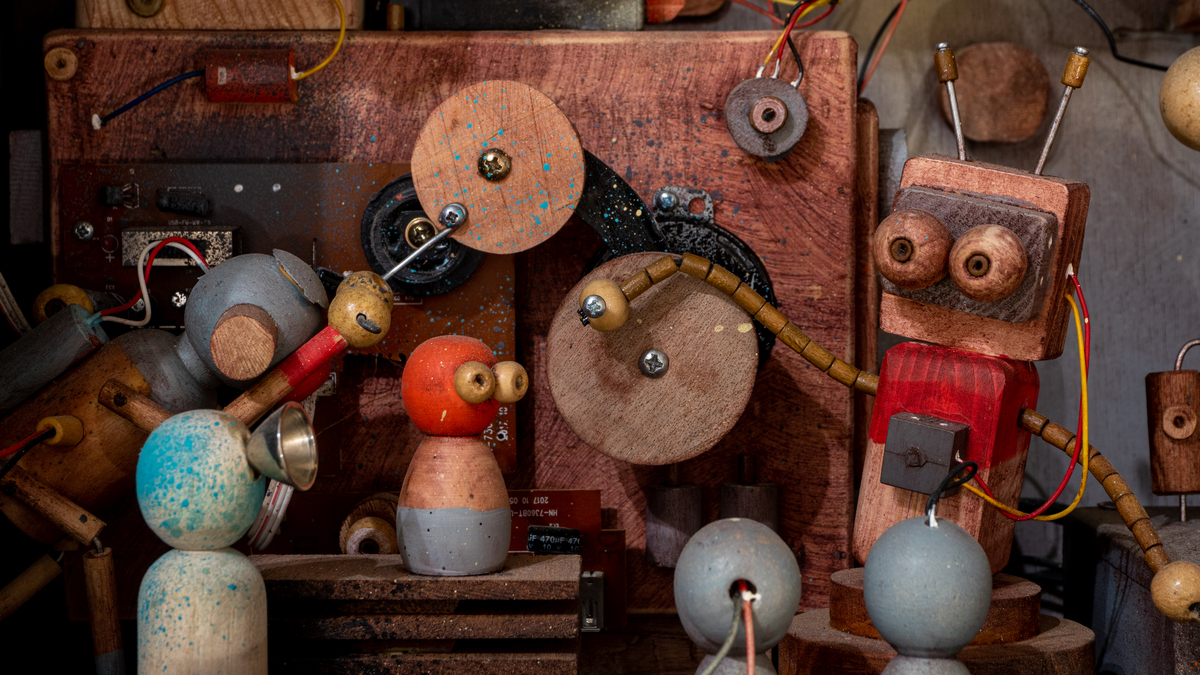
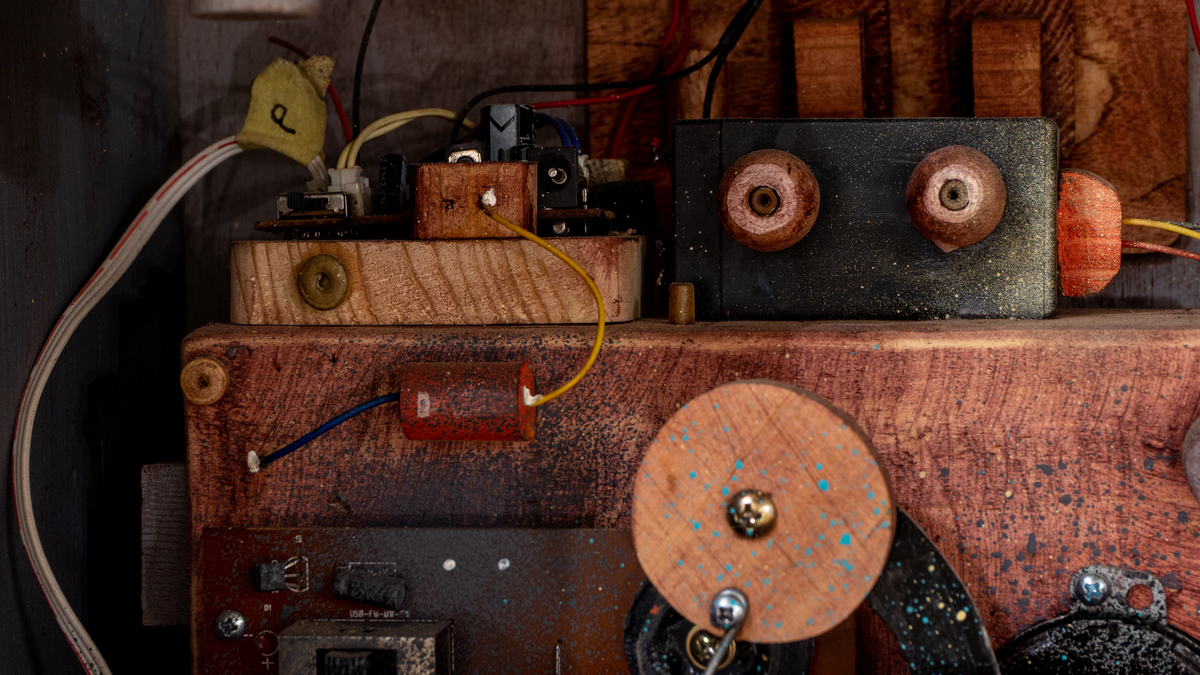
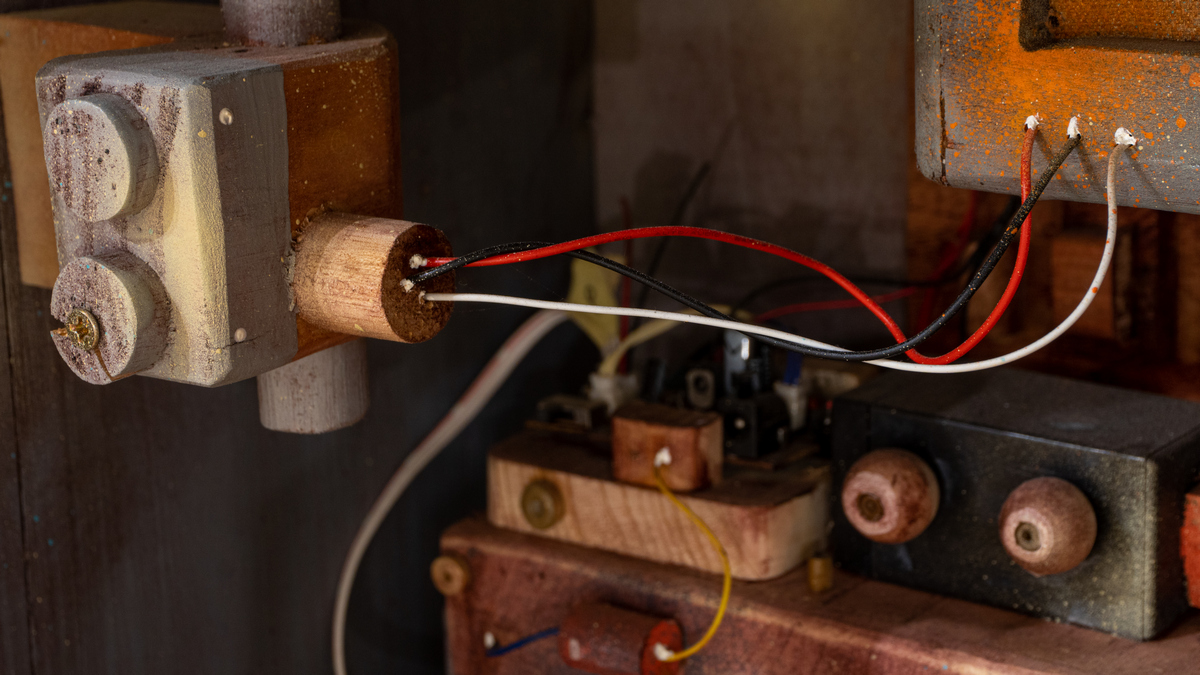
Gatot connects the theme of thumb dexterity to his childhood memories who loved tinkering on machines, disassembling their components, but was unable to restore them back to their original state. This work illustrates the excitement of robots tinkering with machines in the radio. The little robots represent the artist’s fingers. Unlike little Gatot, this time he is disassembling a radio while studying each of its components so that he can make it reusable in the form of a work.
This work is also a critique of the question of the agility of human thumbs today. Humans who were once very agile in using their fingers in the use of tools and making, are now replaced with humans who are good at pressing buttons.
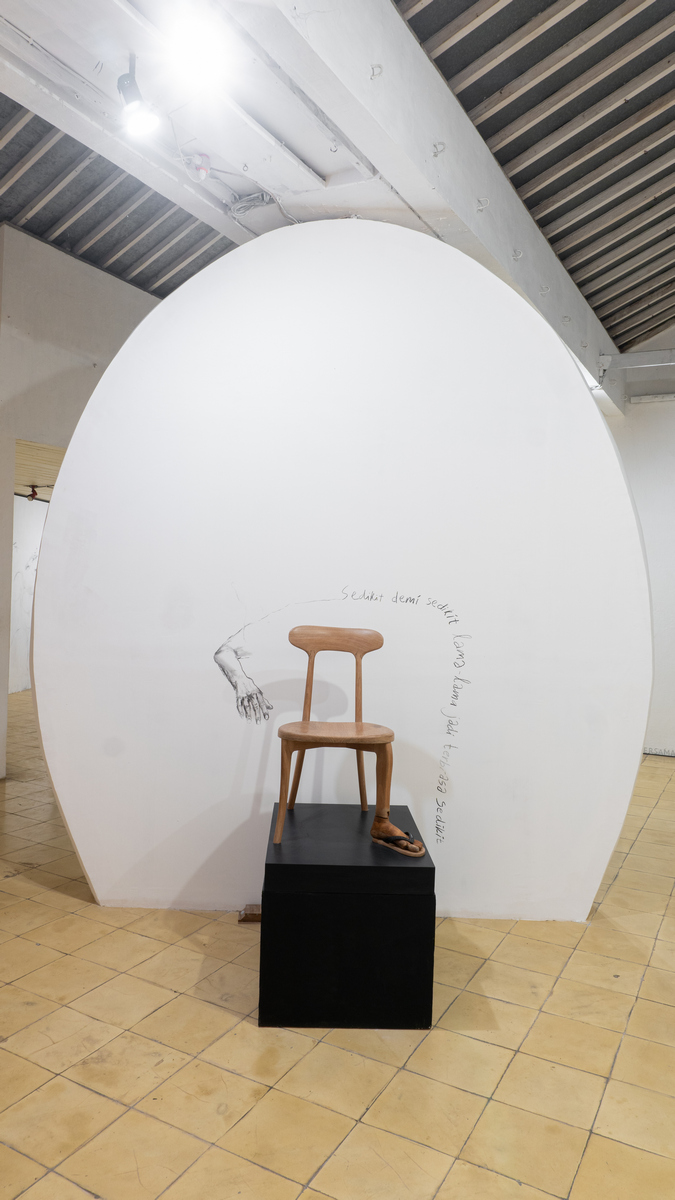
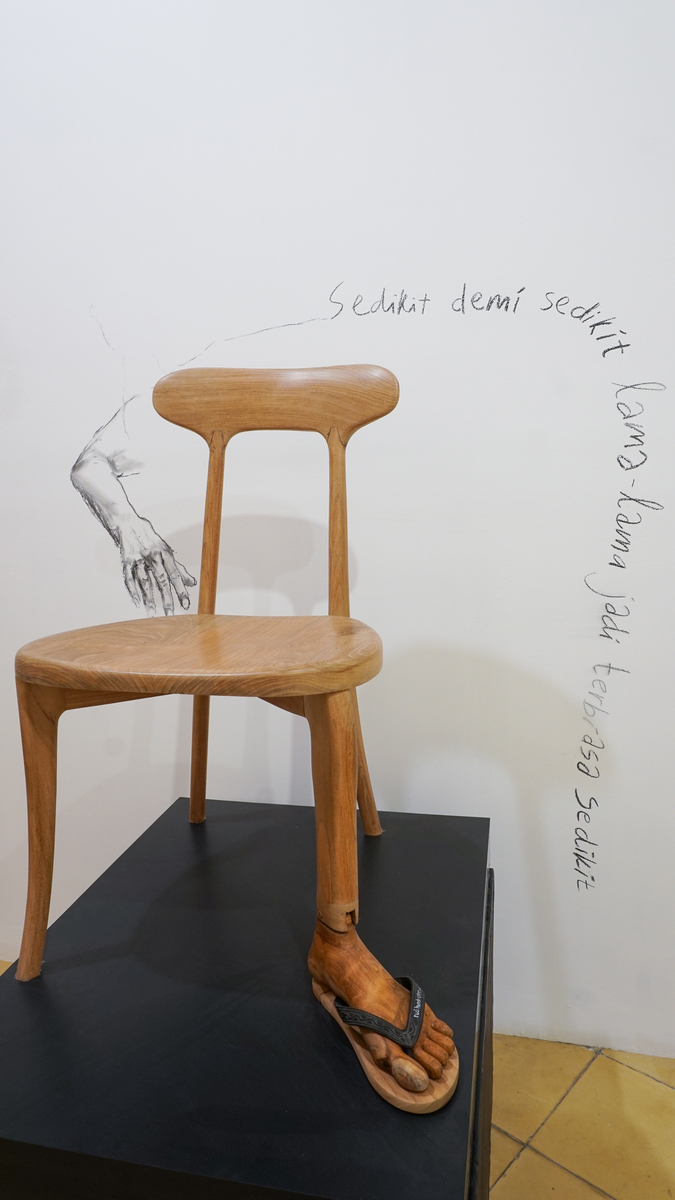
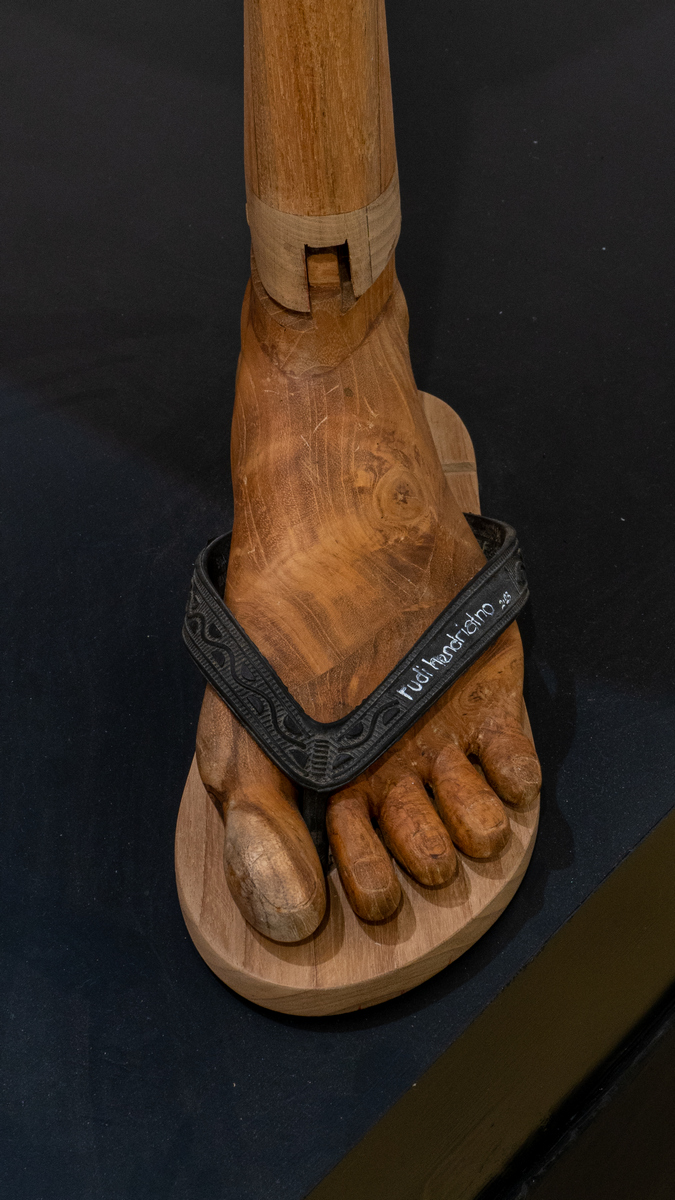
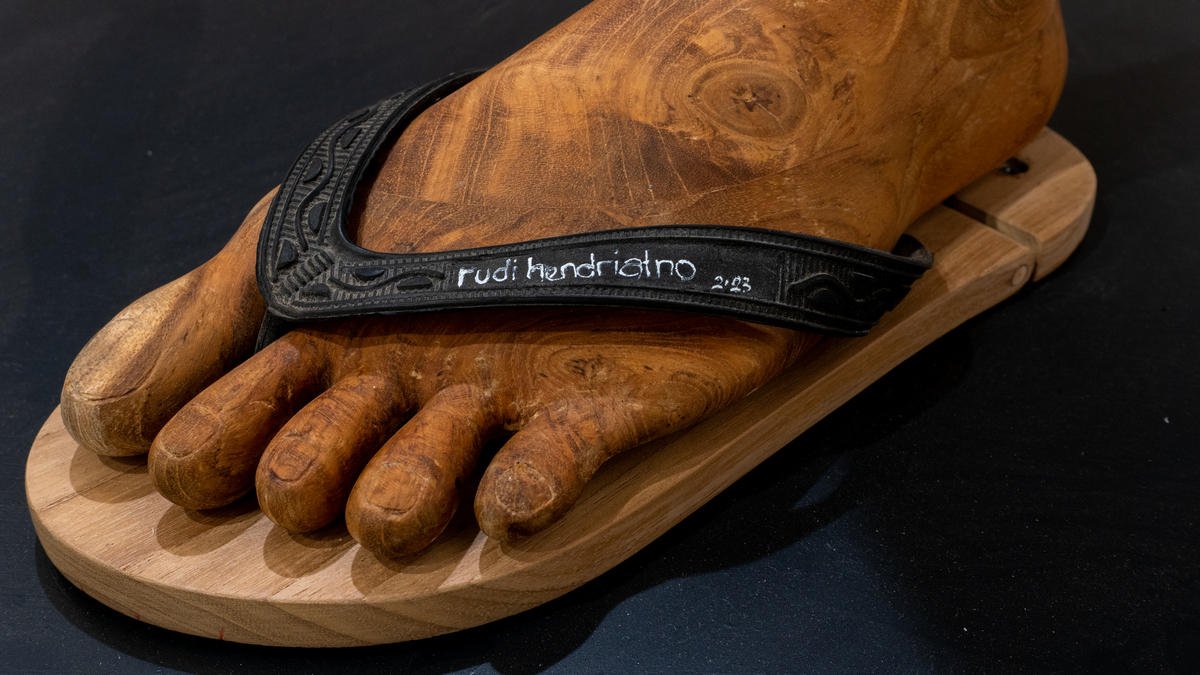
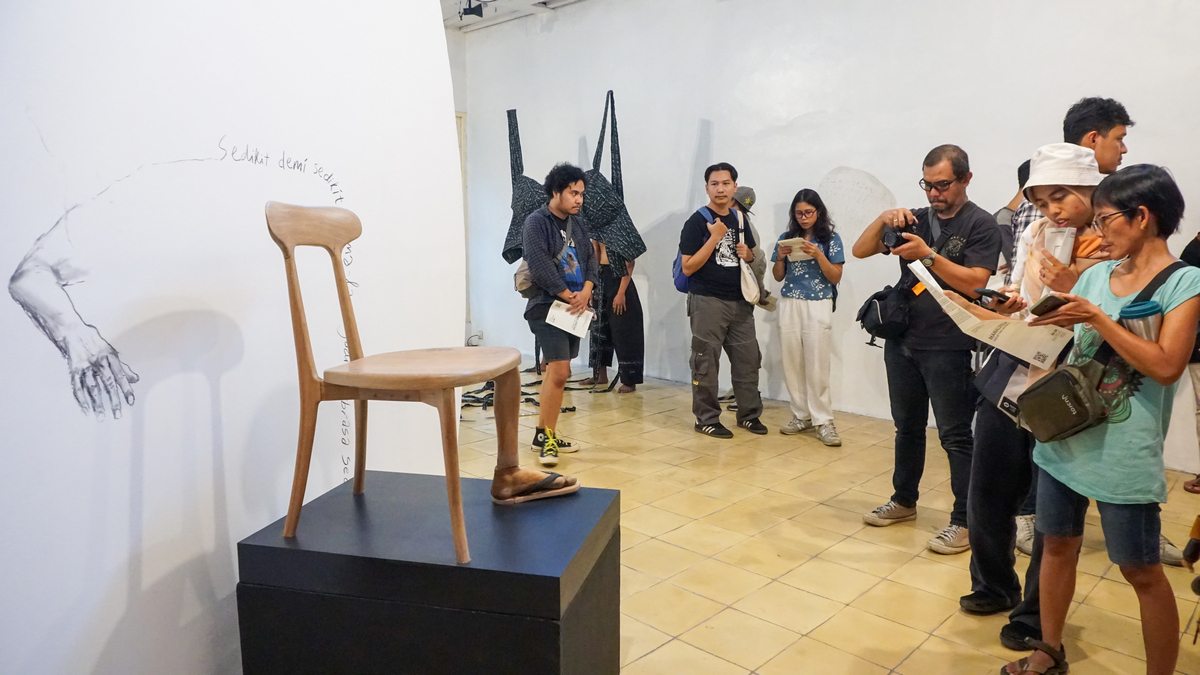
Seated to the Beat
Rudi Hendrianto
Language
Teak Wood
80 x 60 x 90 cm
2023
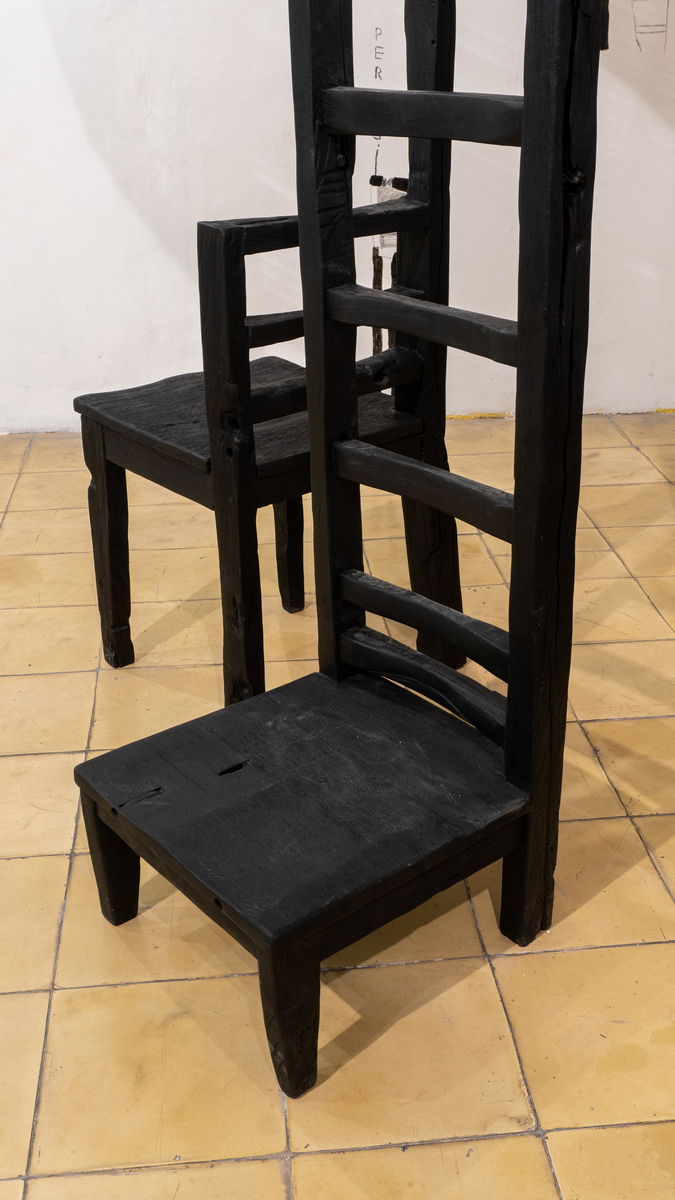
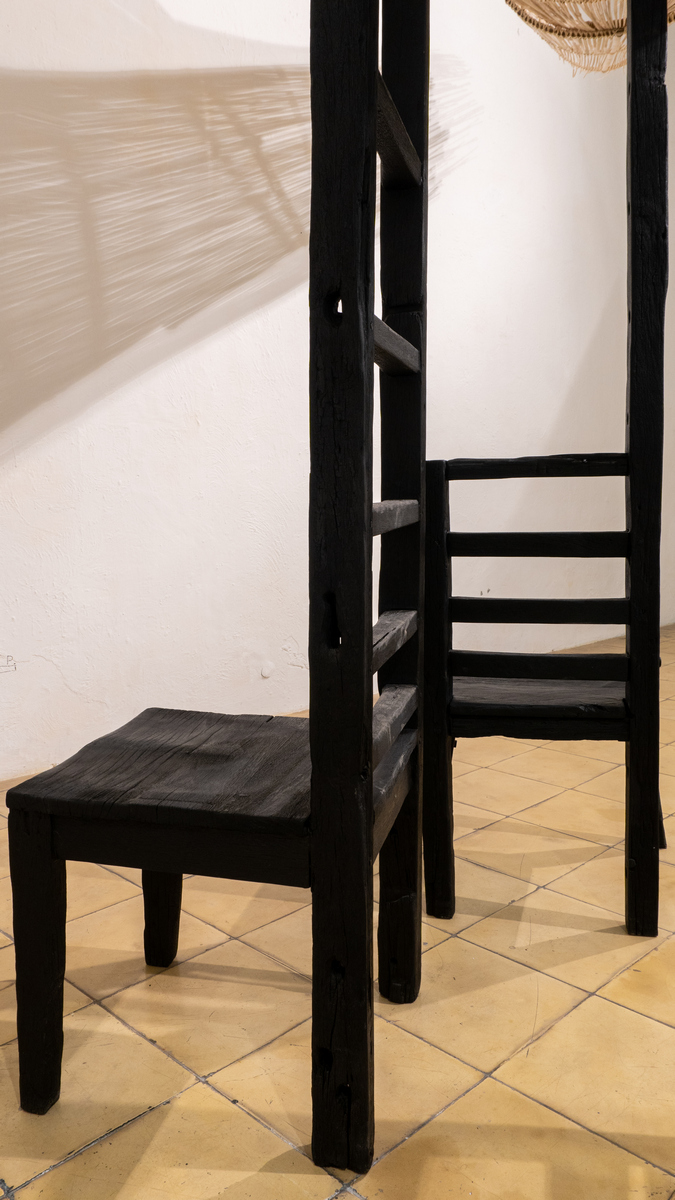
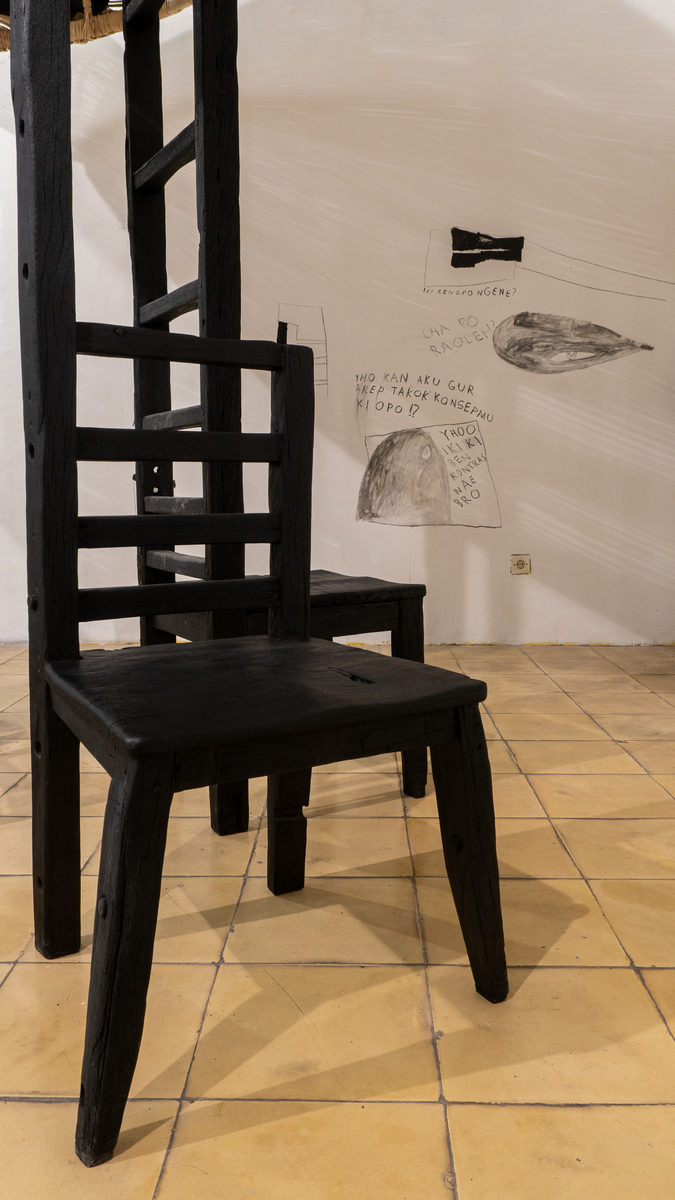
Rudi’s works are rooted in life experiences that are expressed visually in a game of words. He often uses parables or proverbs, which are visualized through his works. This depiction also brings new meaning to the proverbs that are often heard.
The speaking mamalungsa is intended as human creativity in using language. Where other species use language to communicate momentary things (“there is danger approaching!”, “there the food is!”, “I am here”), humans use language to talk about past experiences, future desires, as well as to visualize abstract ideas that are not physical. Rudi translates the theme of “speaking” by transforming the form and meaning of an everyday object, as well as how it can produce sound, as if it is saying something.
A chair, a tool for sitting, can be used for resting, contemplating, feeling anxious waiting for something that never comes. What if the chair is personified, what makes it settled? What gestures does it make when it settles? What kind of feelings does the gesture try to represent?
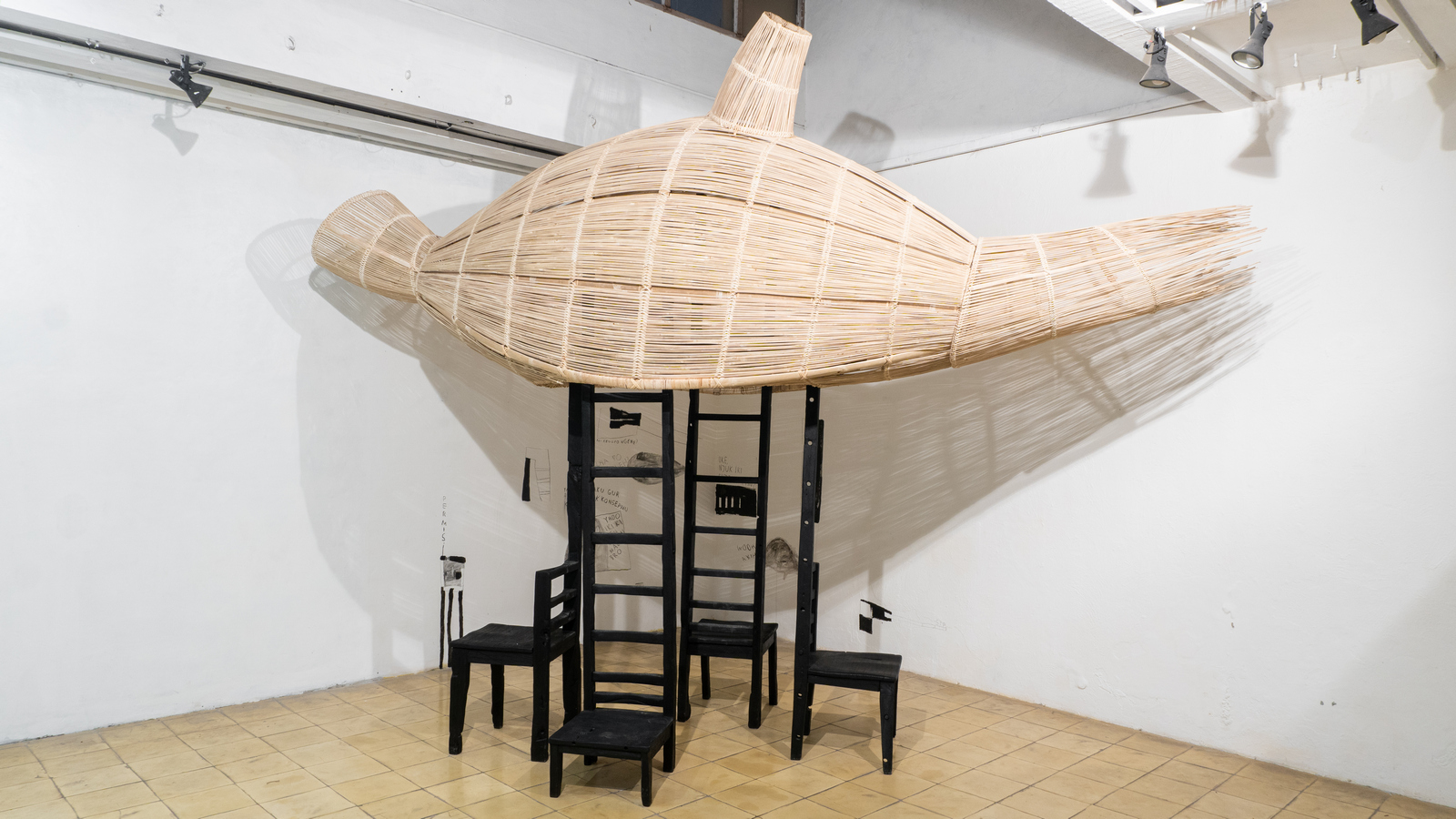
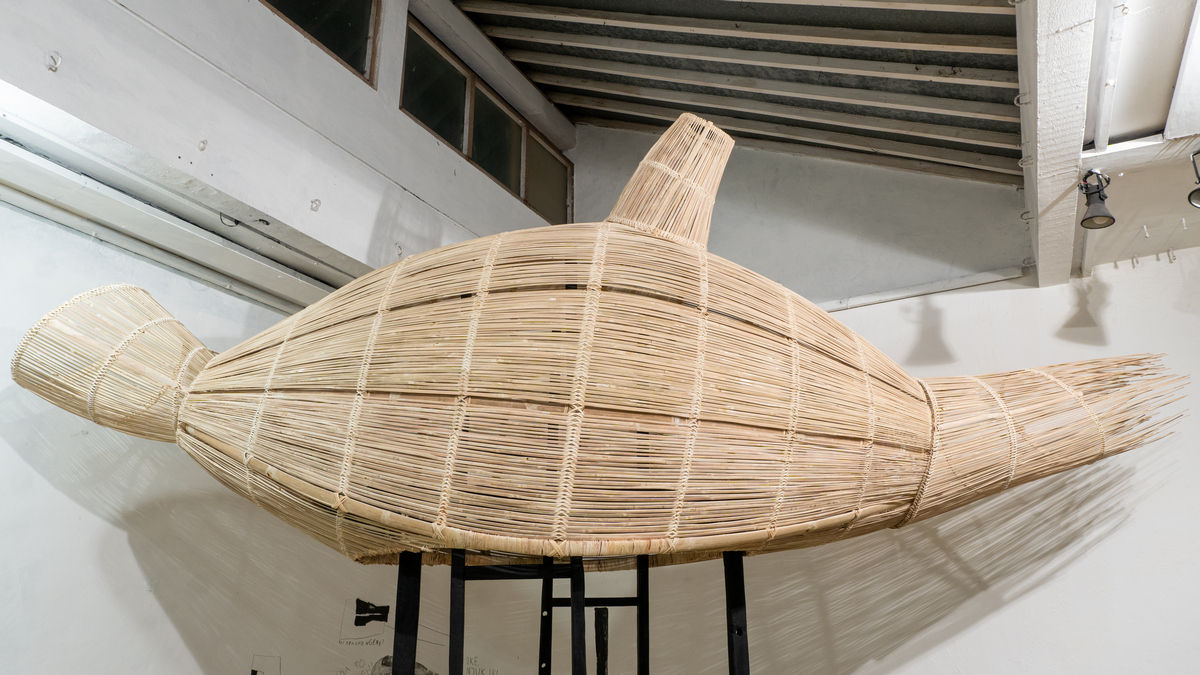
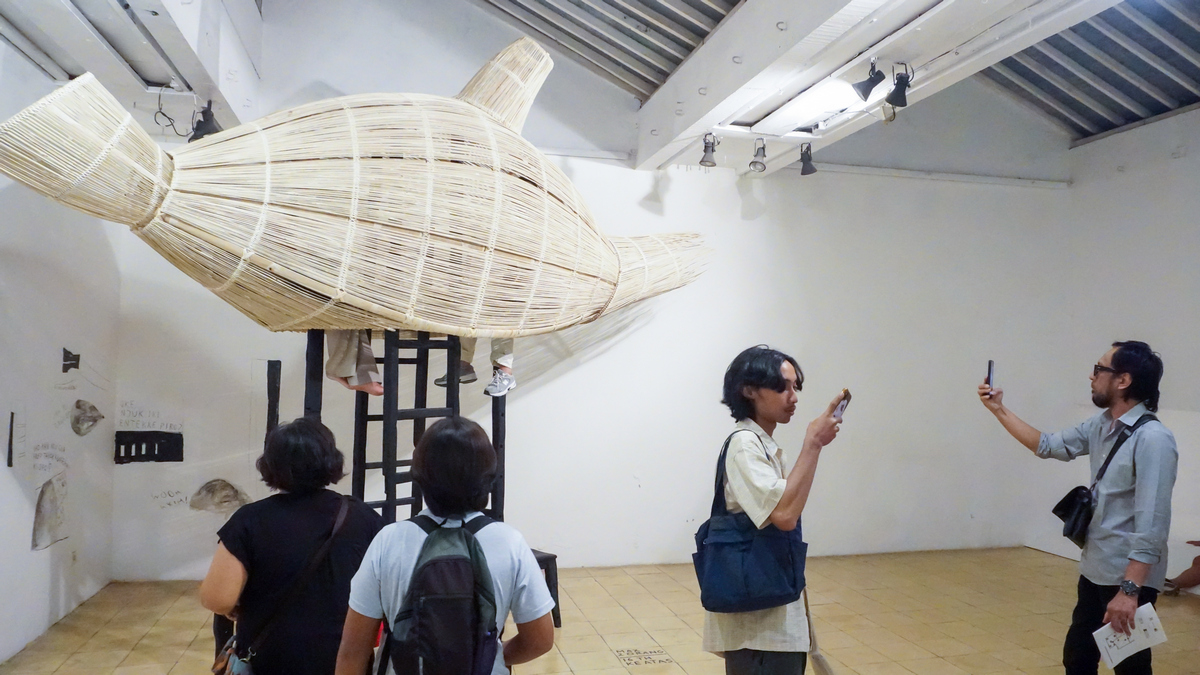
Covered in a Trap
Ipeh Nur & Dyah Soemarno
Resilience
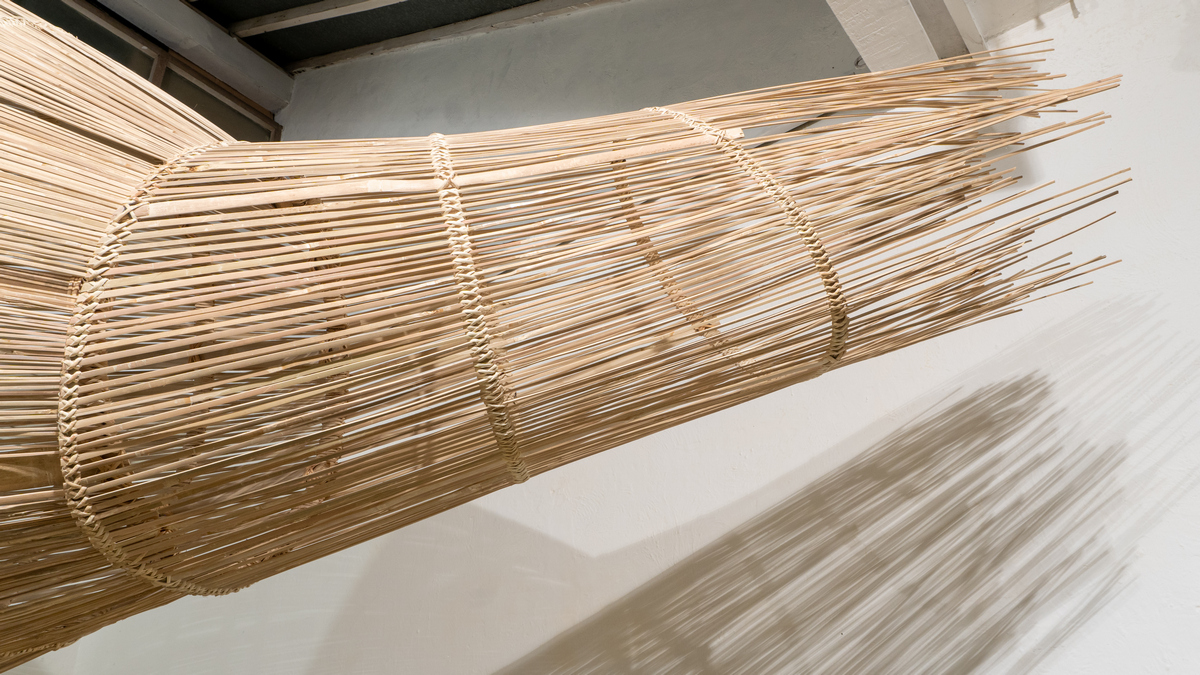
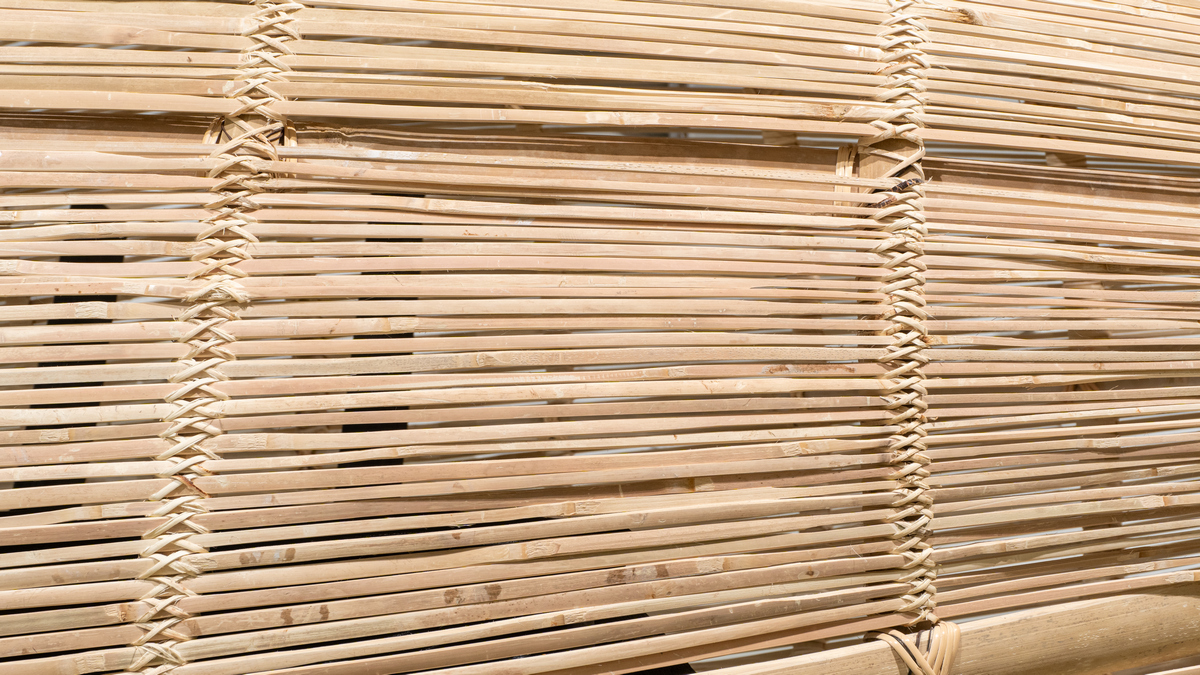
bamboo, recycled wood
400 x 400 x 300 cm
2023
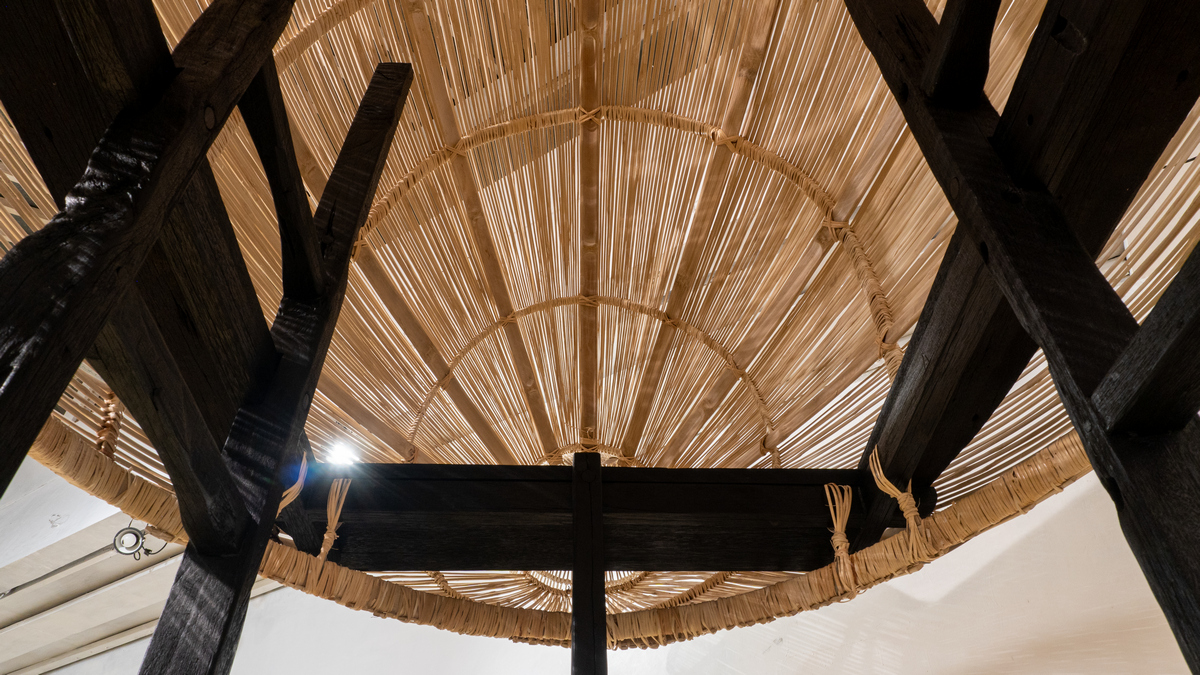
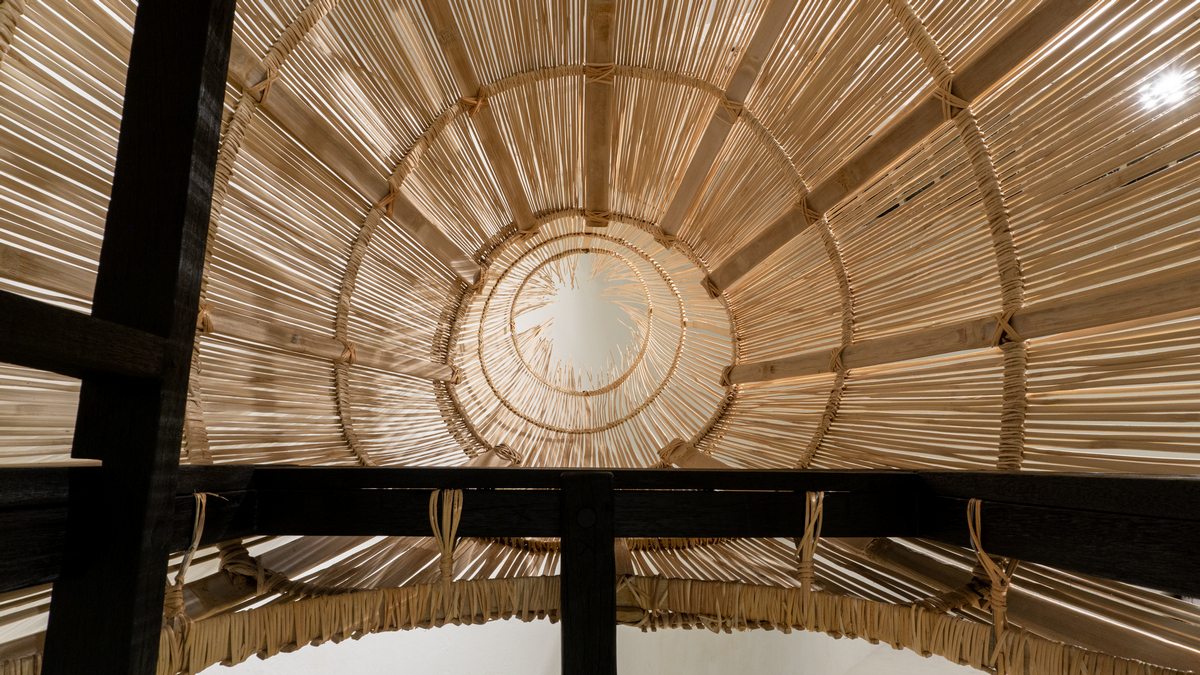
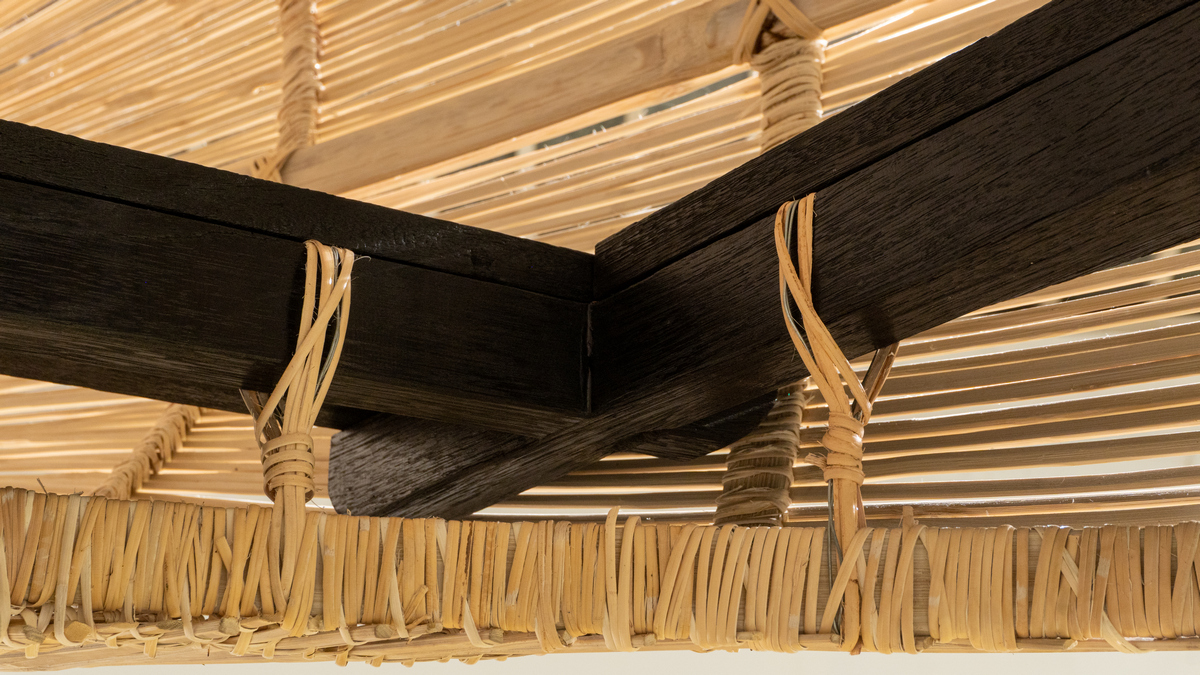
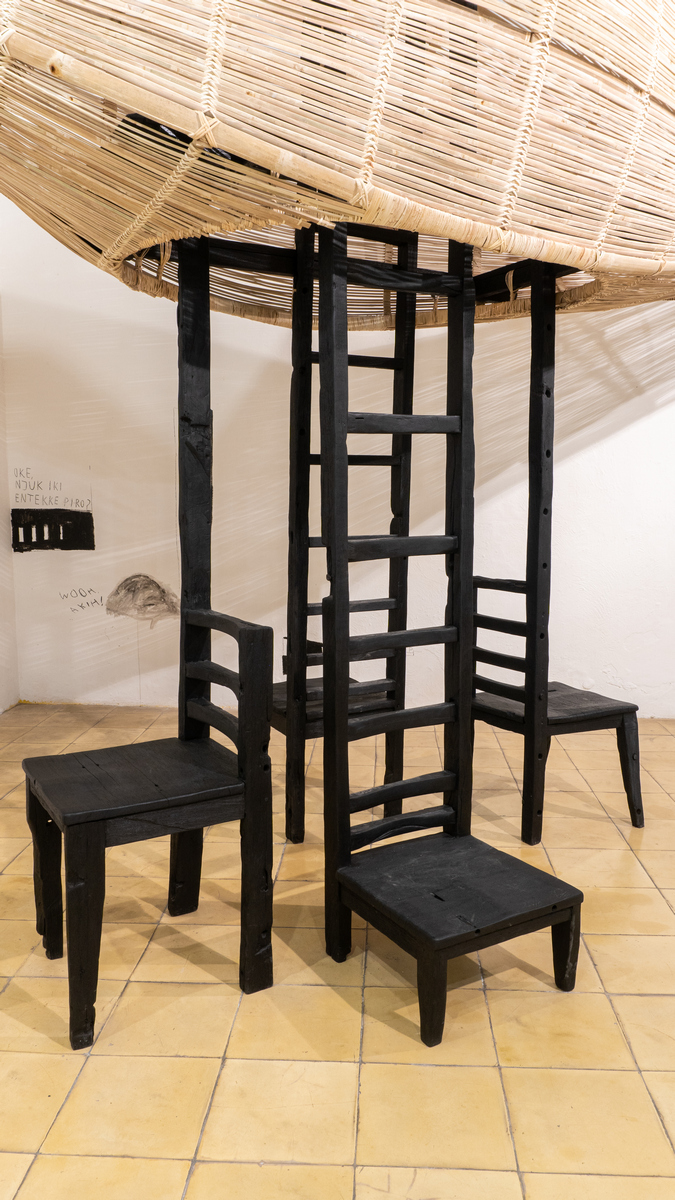
The collaboration began with a meeting and discussion about each other’s interests and creative journeys. Ipeh Nur, a visual artist, had recently traveled to a coastal village and was fascinated by the rites of passage of coastal society and the challenges they faced. Meanwhile, Dyah Soemarno, a product designer who focuses on upcycling materials, has explored designs using scrap wood from sunken ships and other marine litter. From this background, the idea of bringing together the data collected by Ipeh with the materials explored by Dyah was created.
The theme of resilience eventually also became very close to the data and materials that became their references. Ipeh and Dyah tried to present resilience or survival in the form of space. The shape of the high-level space that resembles a bubu (fish trap) is an illustration of a safe space built by humans to sustain their lives. Bubu or buaro commonly used by Mandar traditional fishermen actually has two functions, which are trapping and egg-laying fish. Ipeh sees these as two opposing traits. Meanwhile, the chair, which is made of worn-out wood and appears to be an extension of the bubu, represents social space. A kind of dualism visualized in the form of a three-dimensional object.
Coming, Surrendering in the Way of Worship
Ruby Sofyan & Budi Agung Kuswara
Posturing & Breastfeeding
mixed media
variable dimension
2023
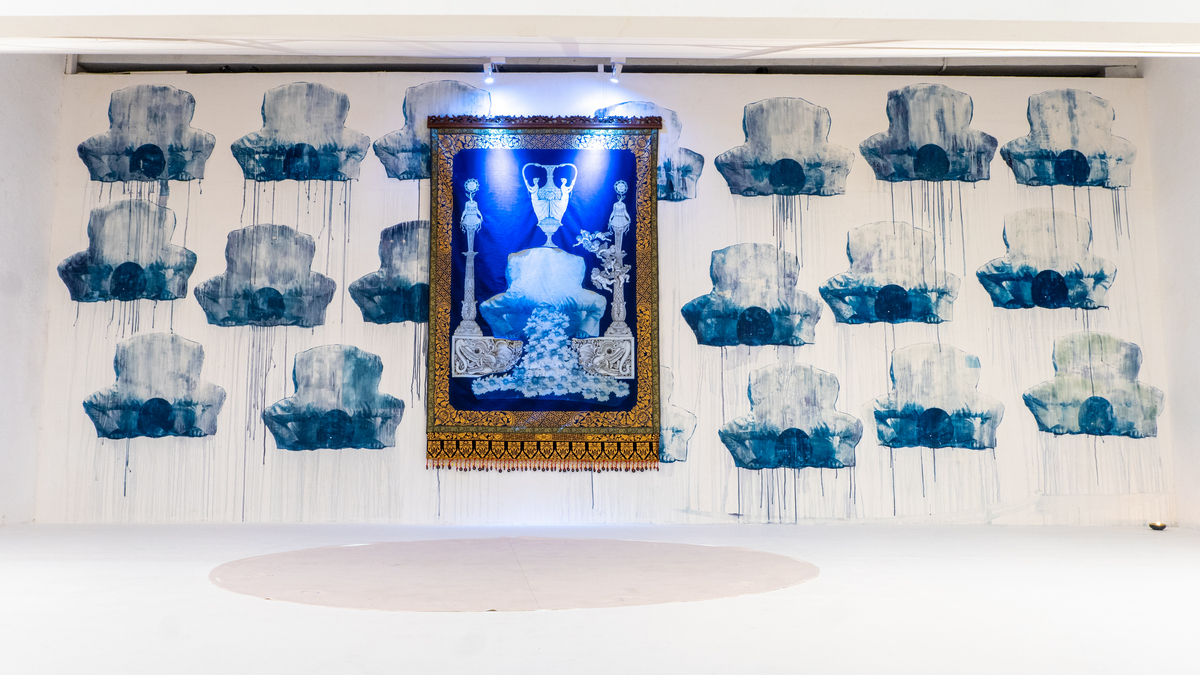
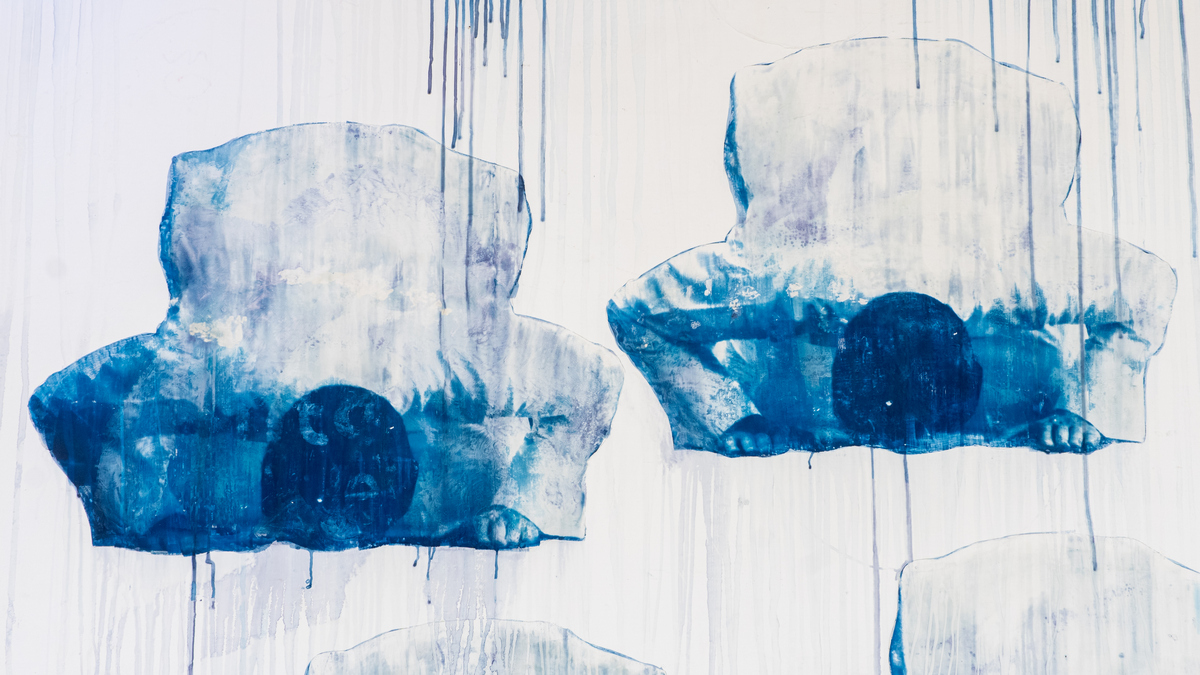
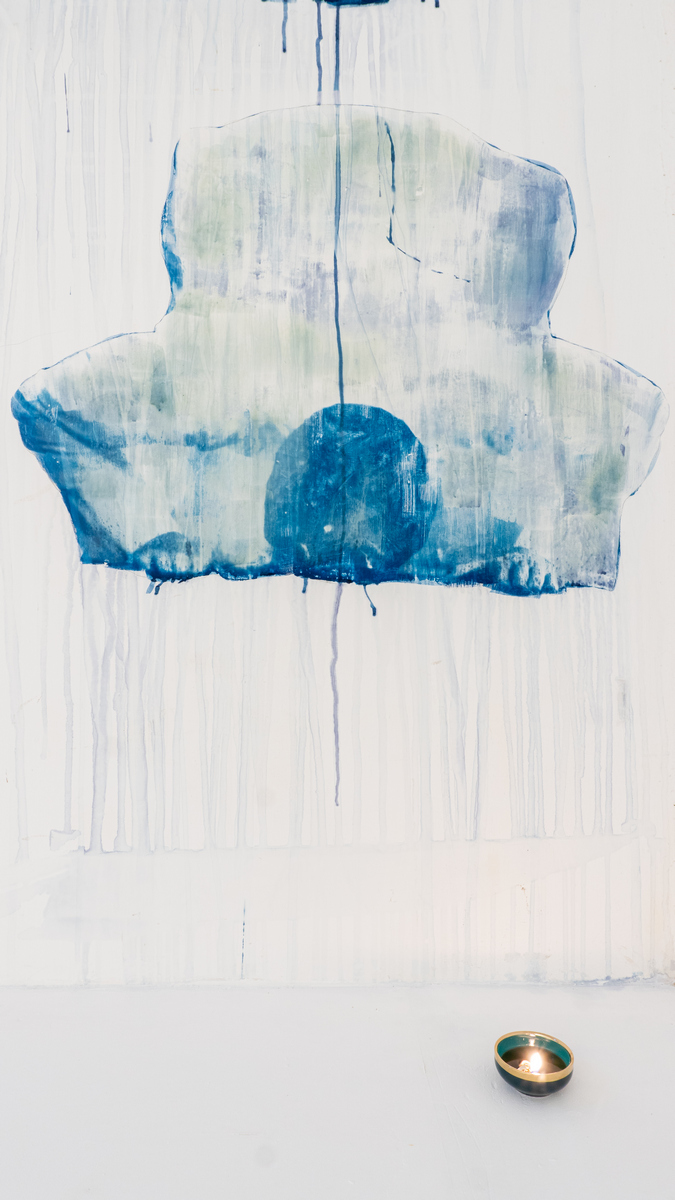
This collaborative work translates the Posture (pose) and the Nurture (breastfeeding) as a unity in accessing grace combined in one installation format. How a work can be experienced as a whole through the five senses and packaged in a design work that breaks through value and function so that it becomes imaginative and multi-interpretative.
The prostrate pose that is present in every spiritual and religious practice becomes a universal language for an expression of submission and gratitude to the universe (masculine) which is the source of all growth of all life (feminine). This work unpacks the trapped feminine and masculine qualities of gender identity and underlines that these qualities are present in every gender.
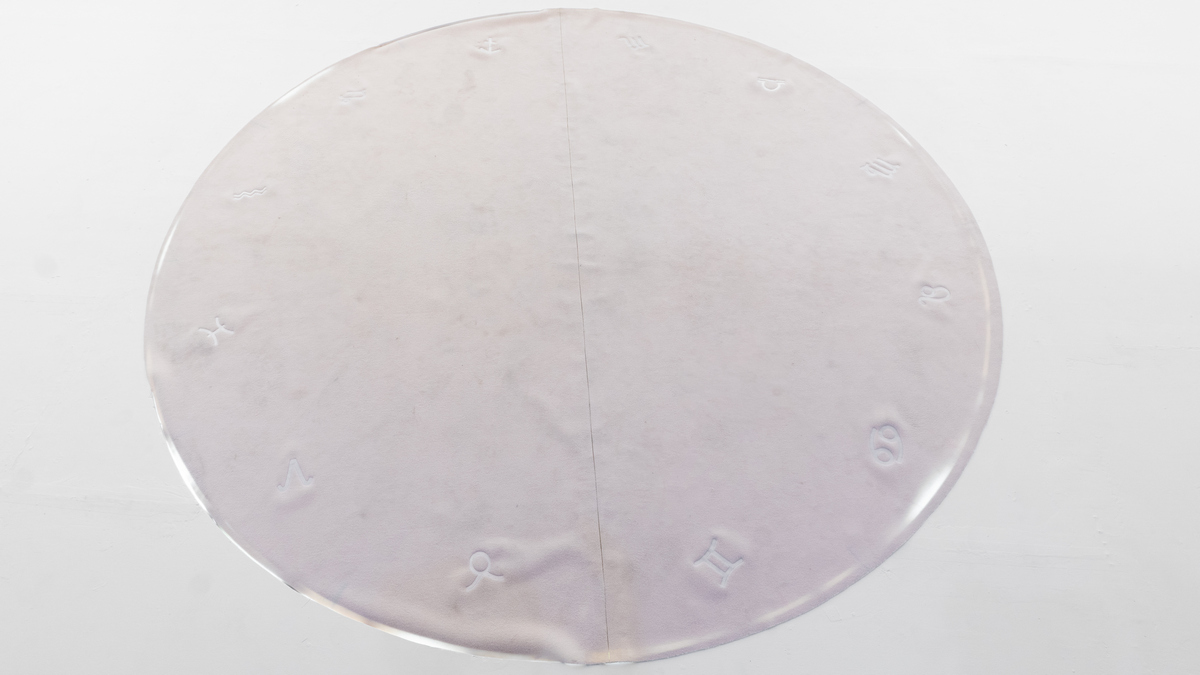
The constellation element is presented as a symbol of human life. This work interactively invites the audience to reflect on surrender when confronted with challenges in life. Even in a position of surrender, humans can survive and rise.
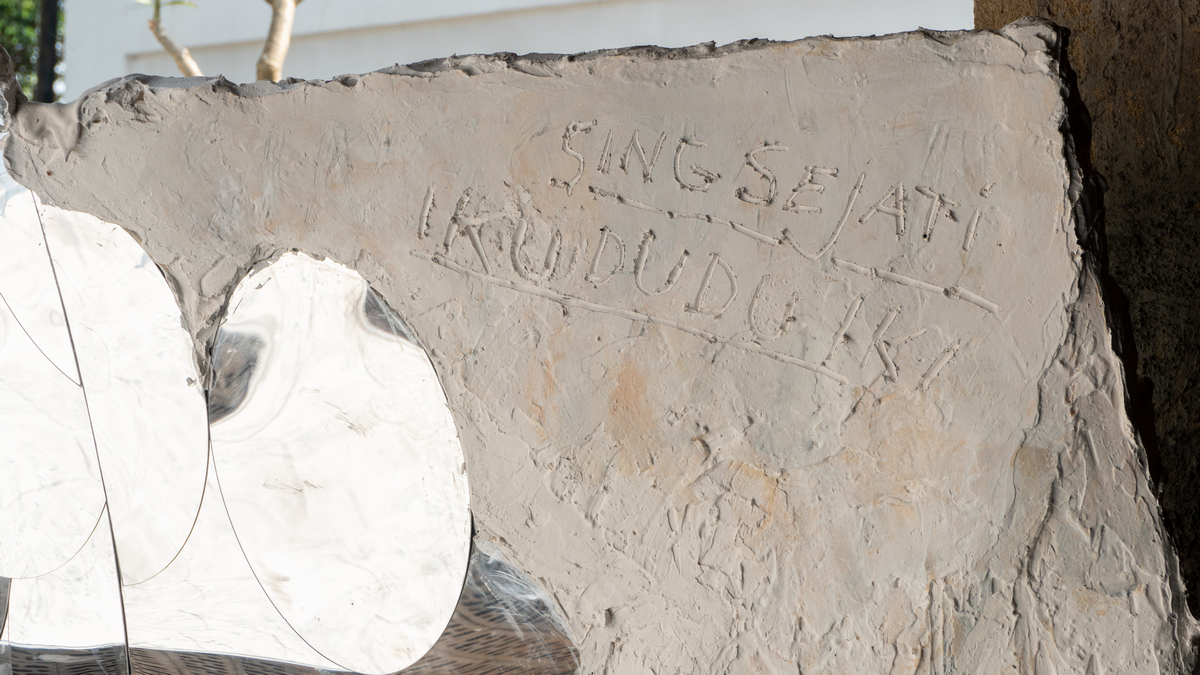
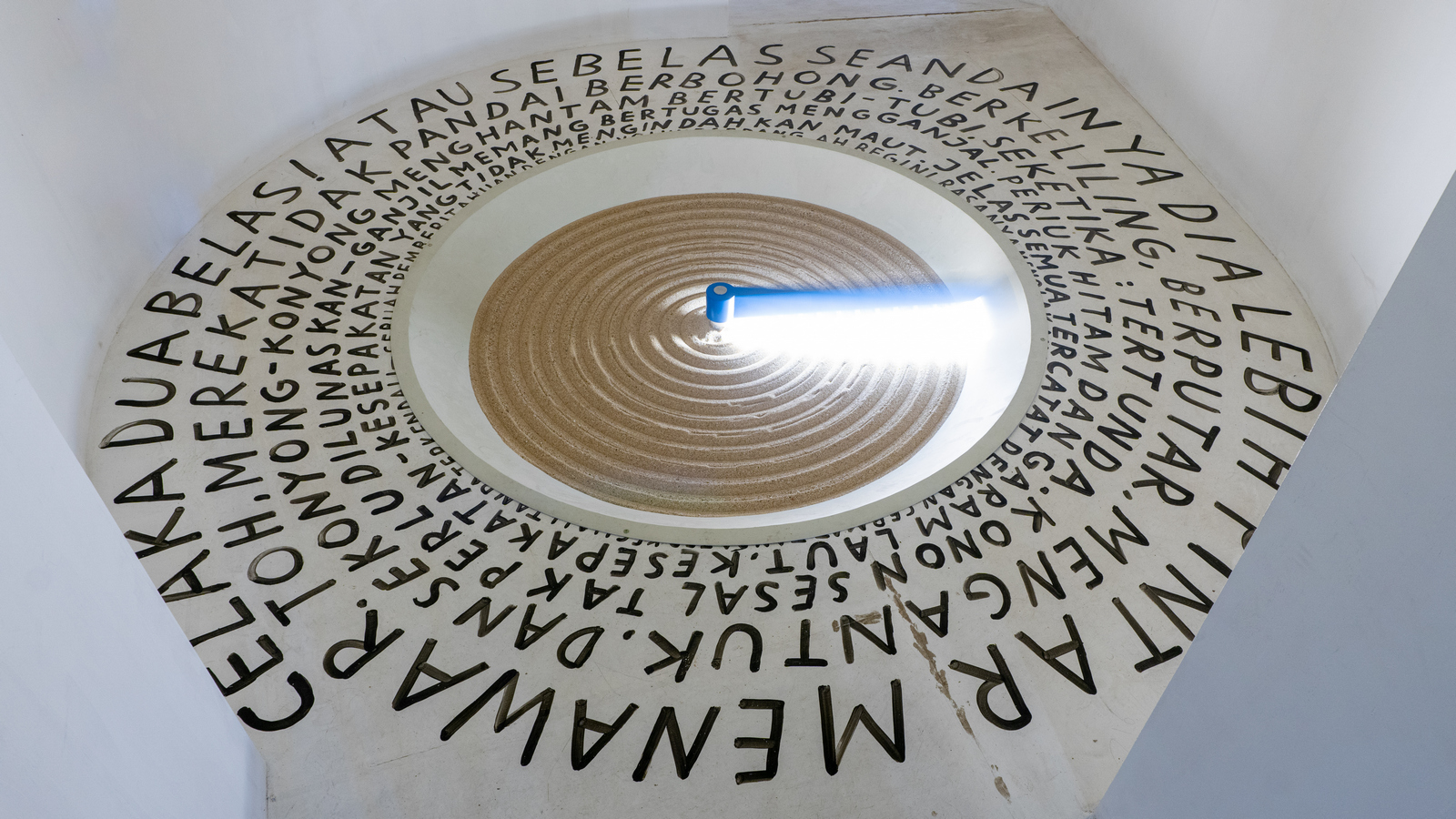
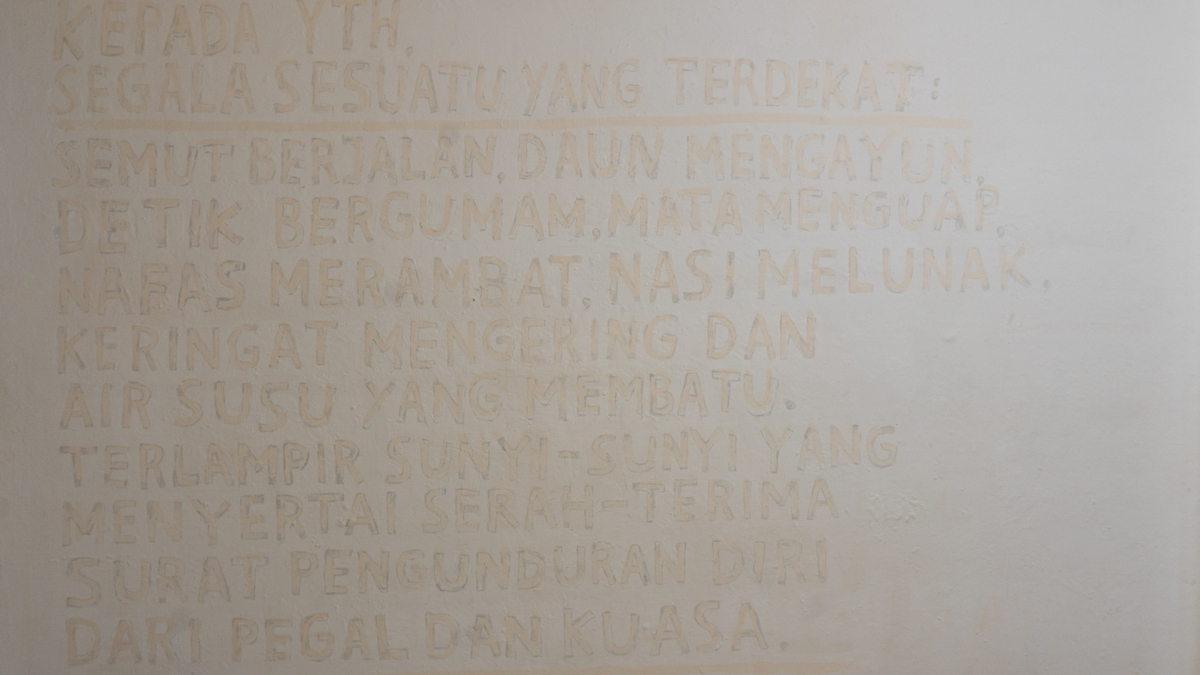
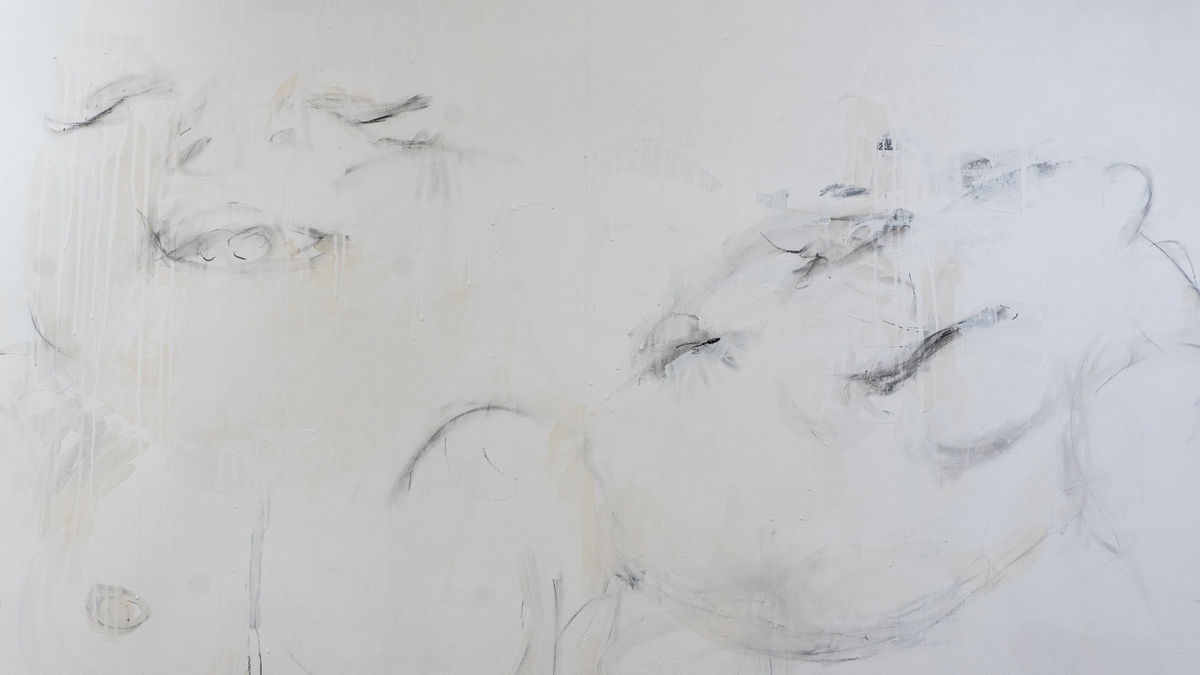
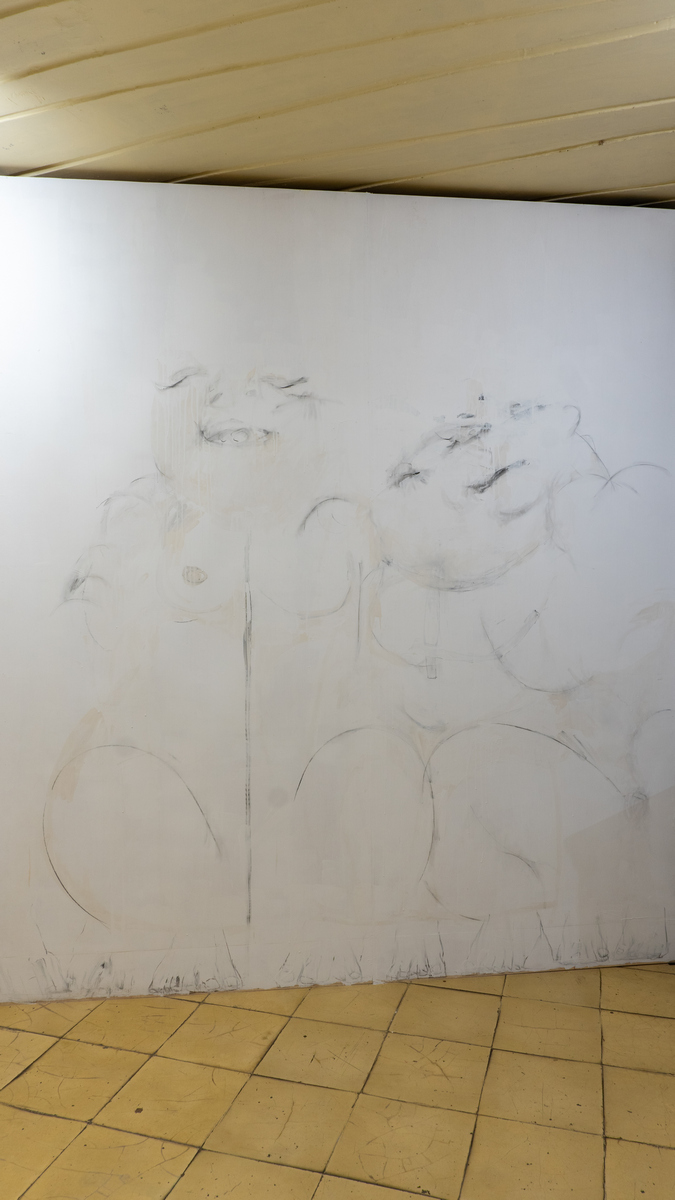
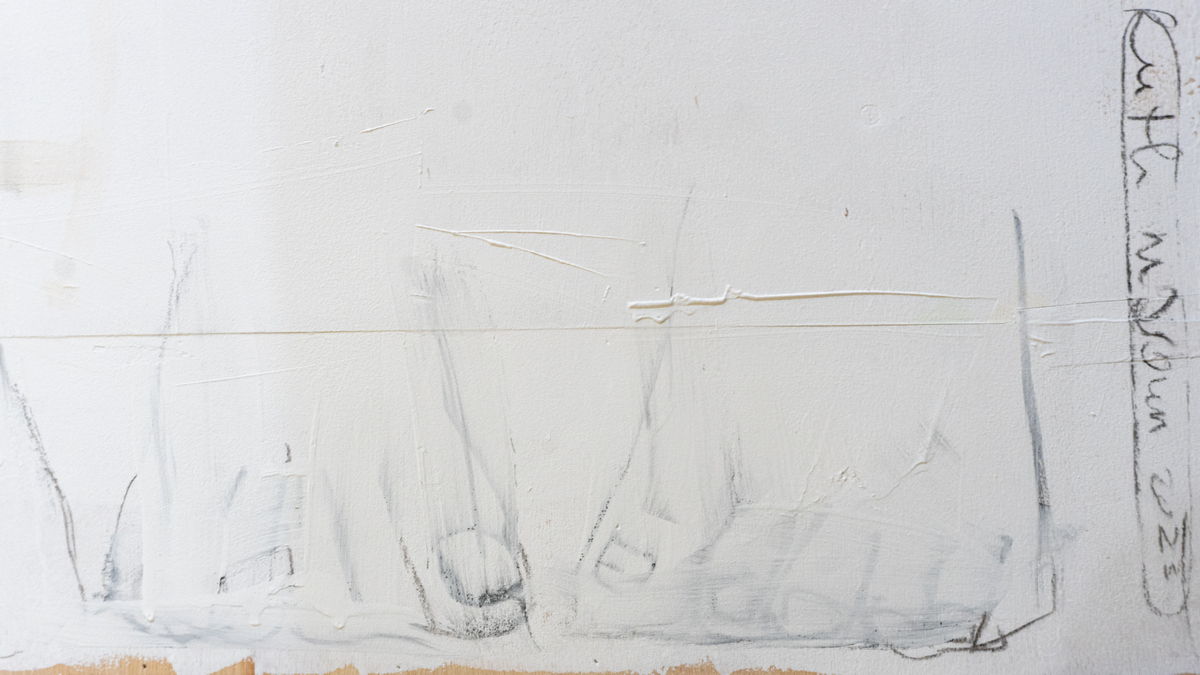
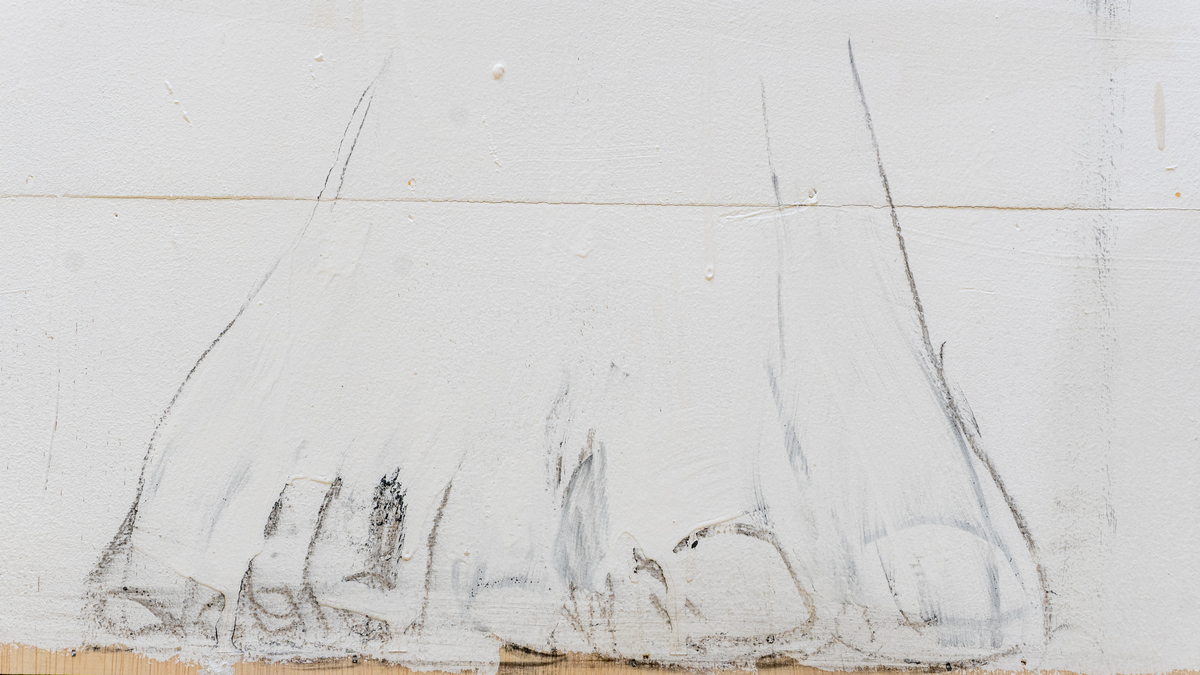
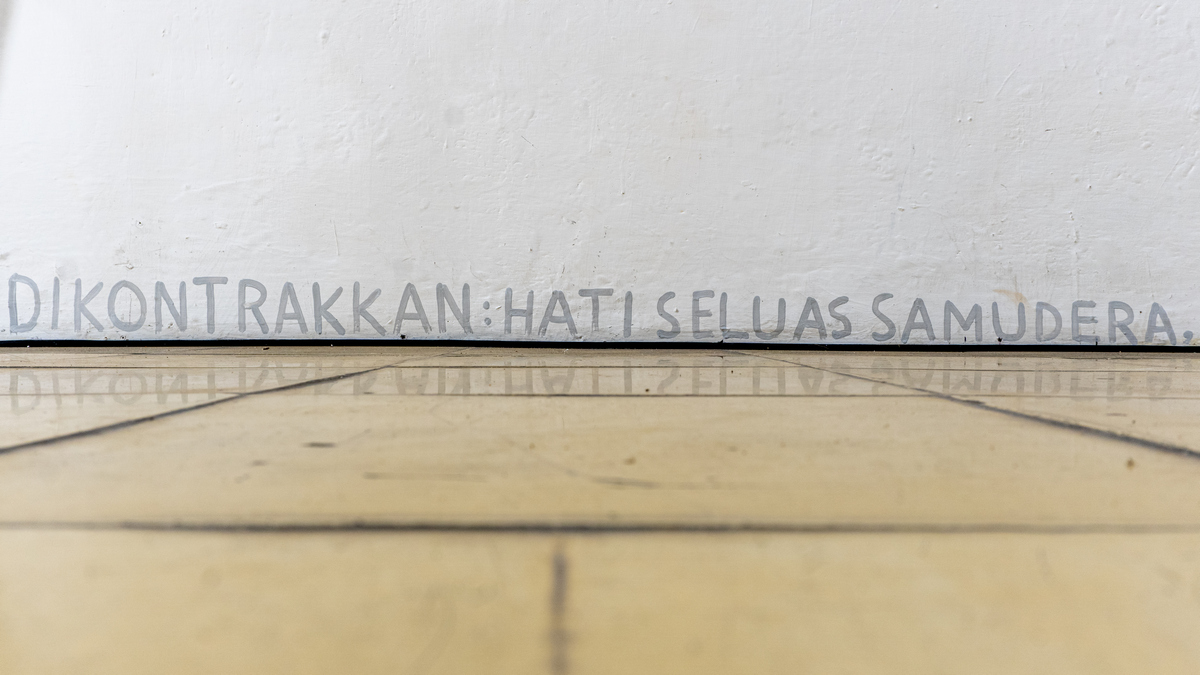
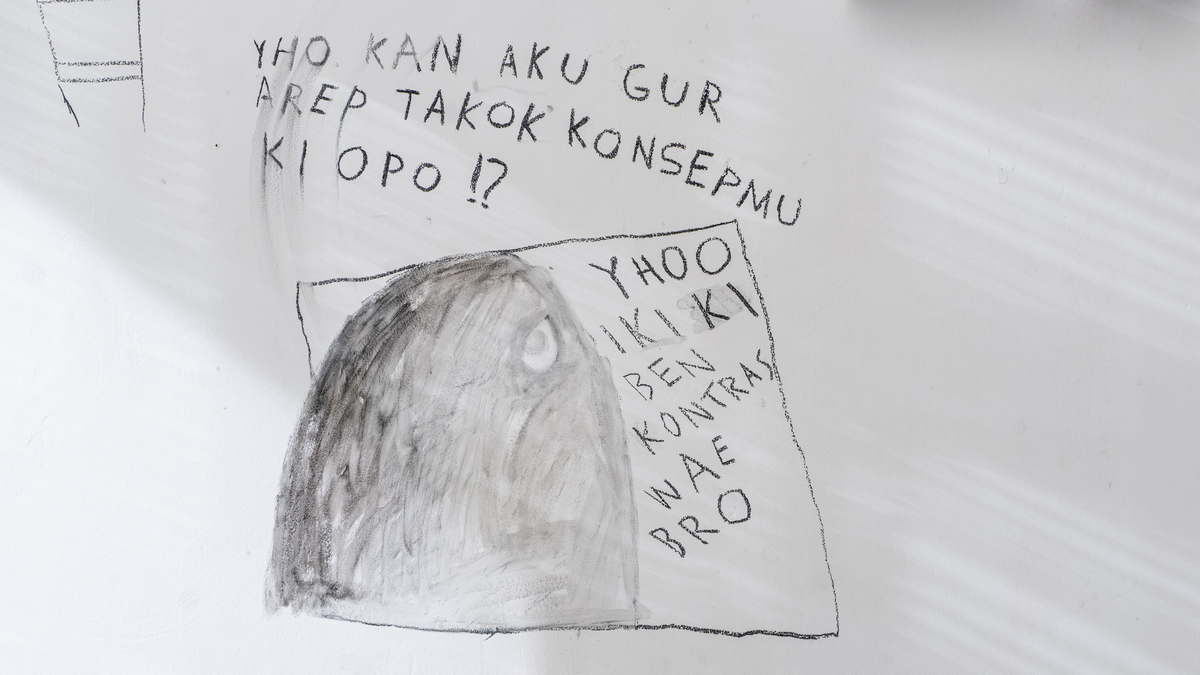
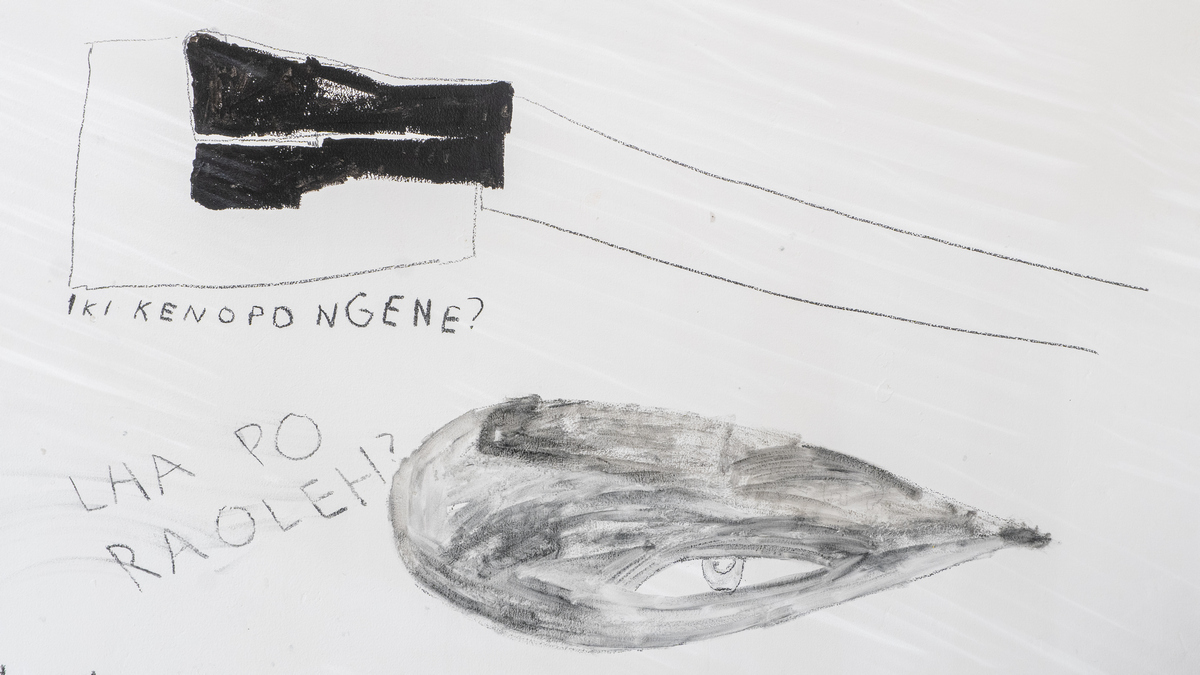
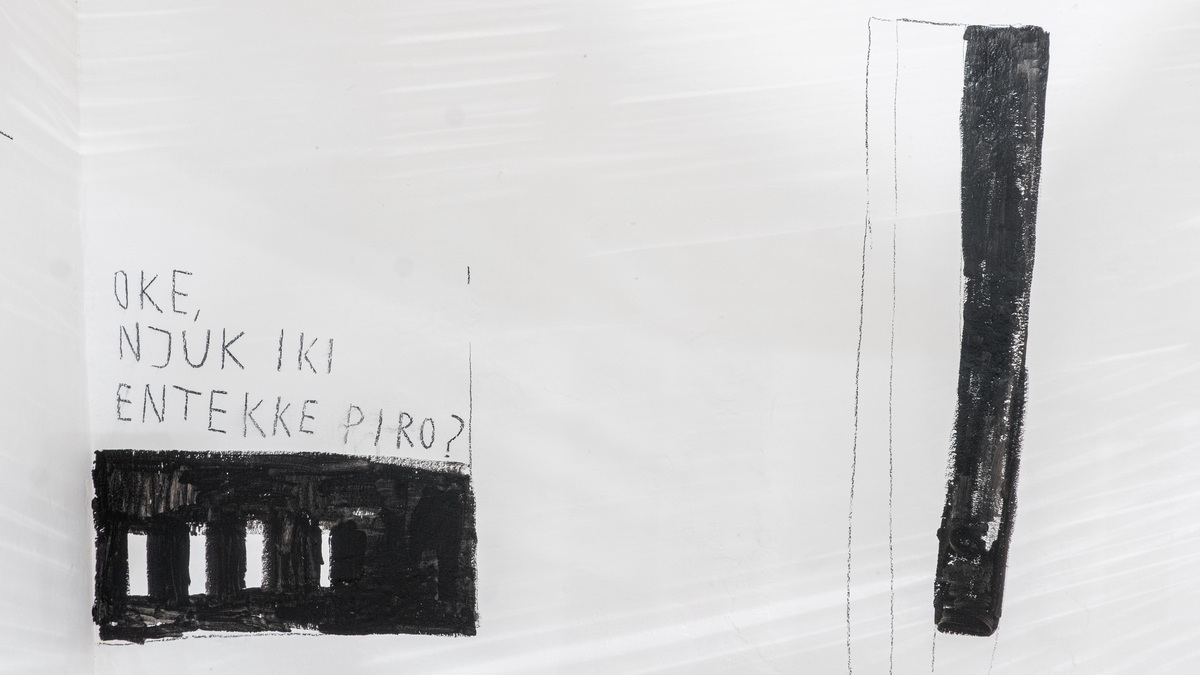
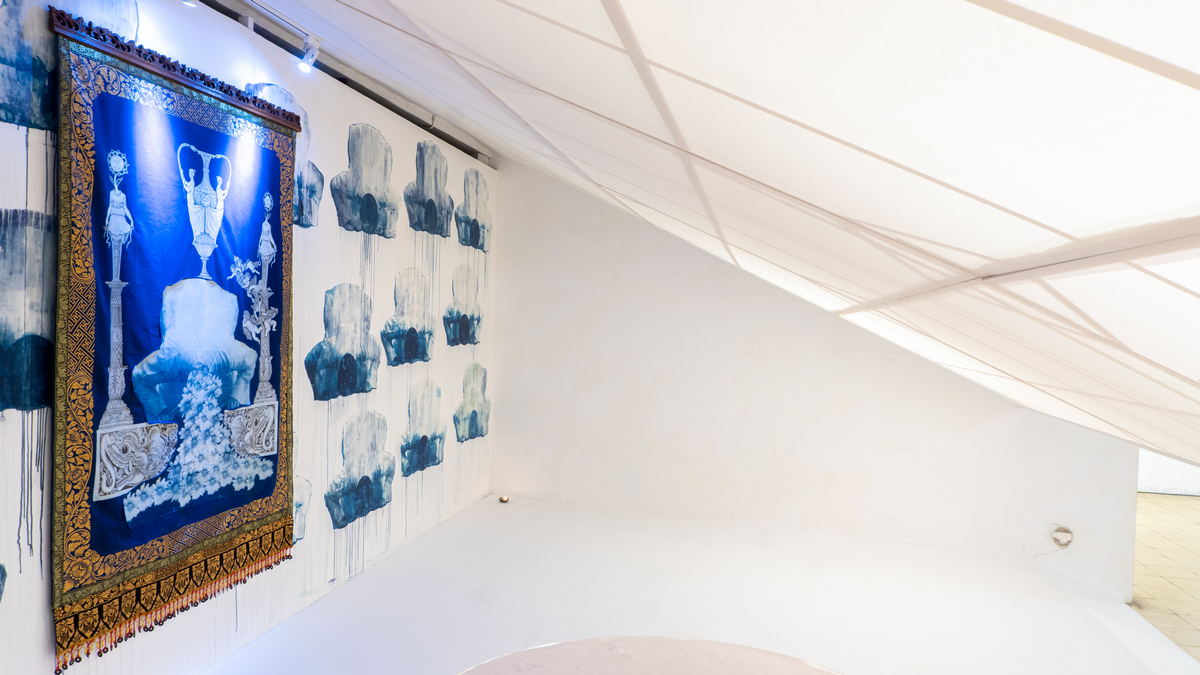
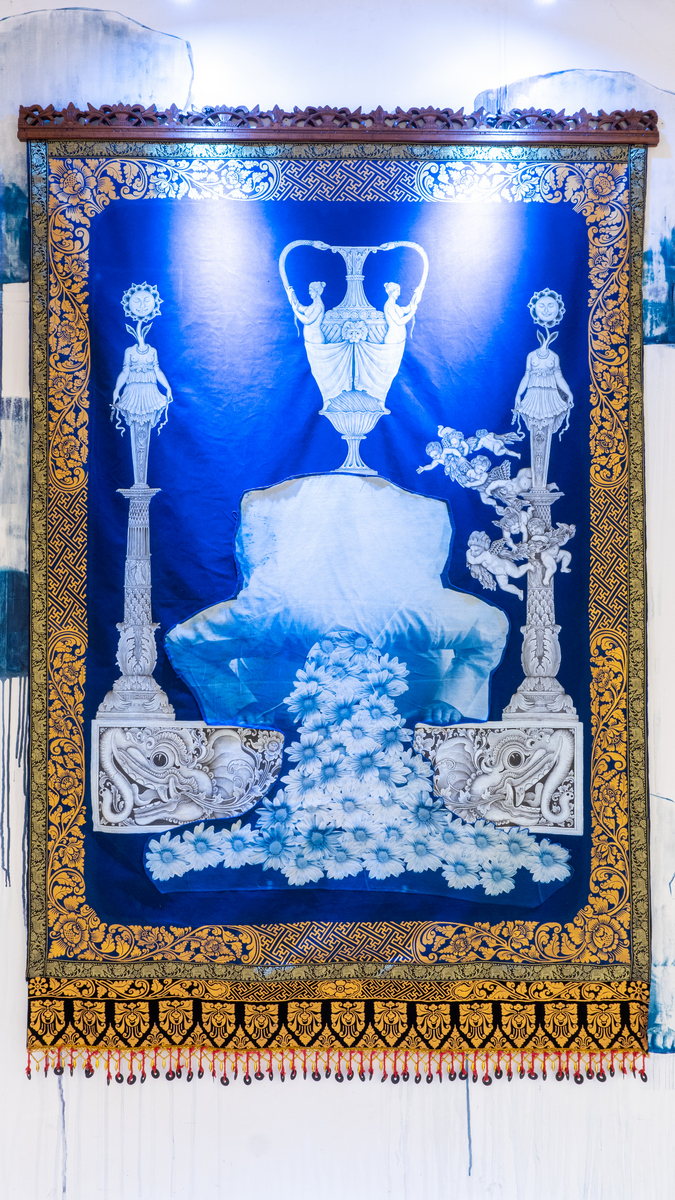
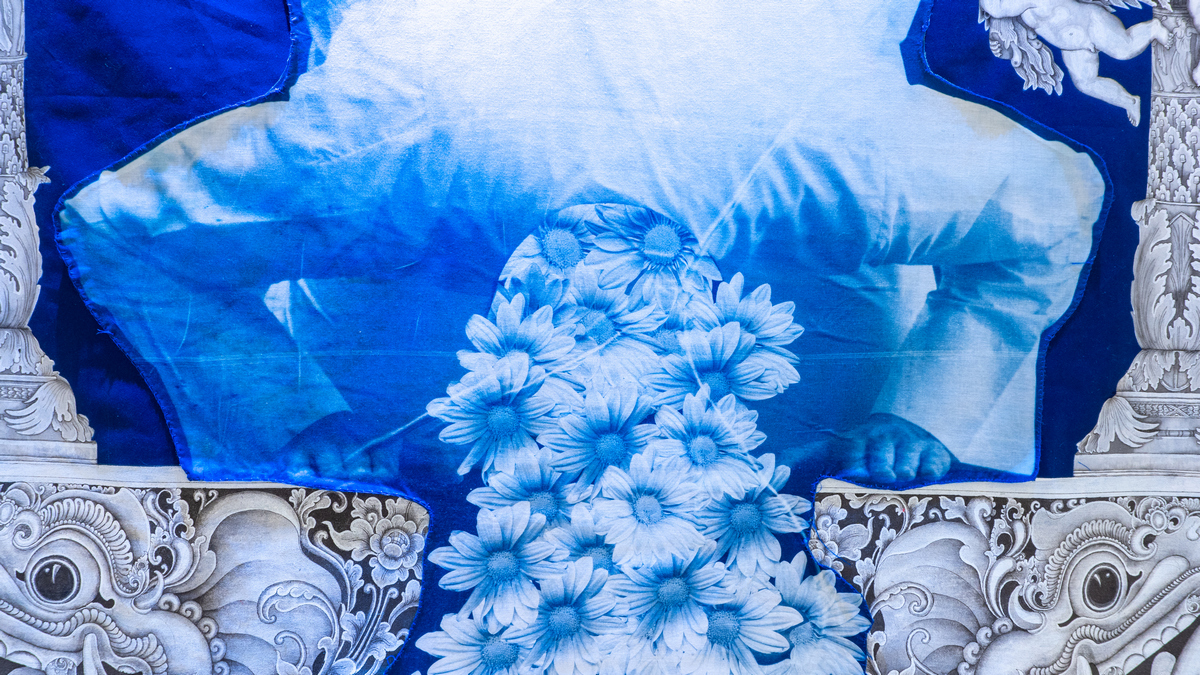
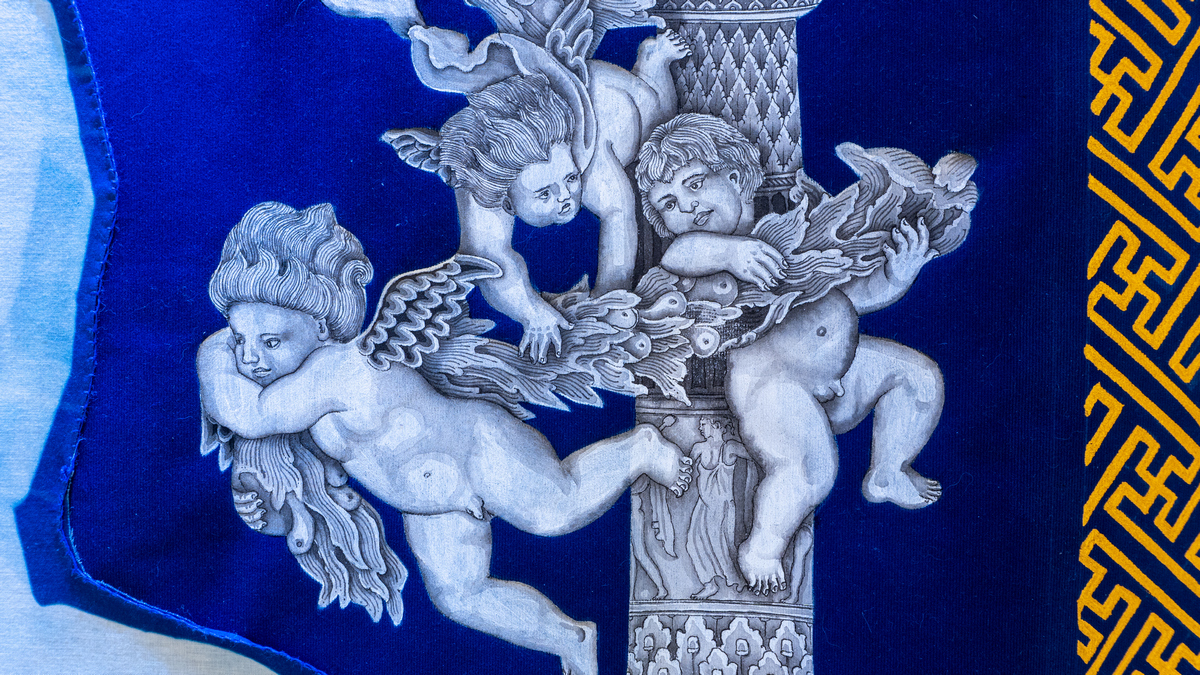
Just call it You (not a real name)
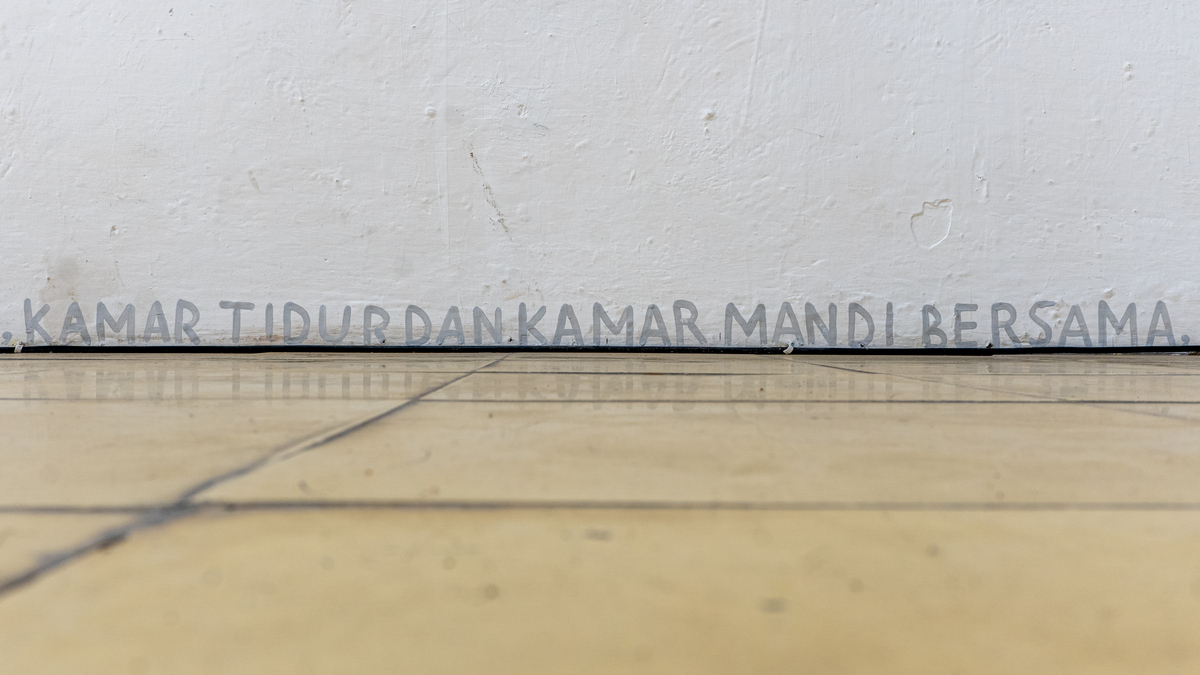
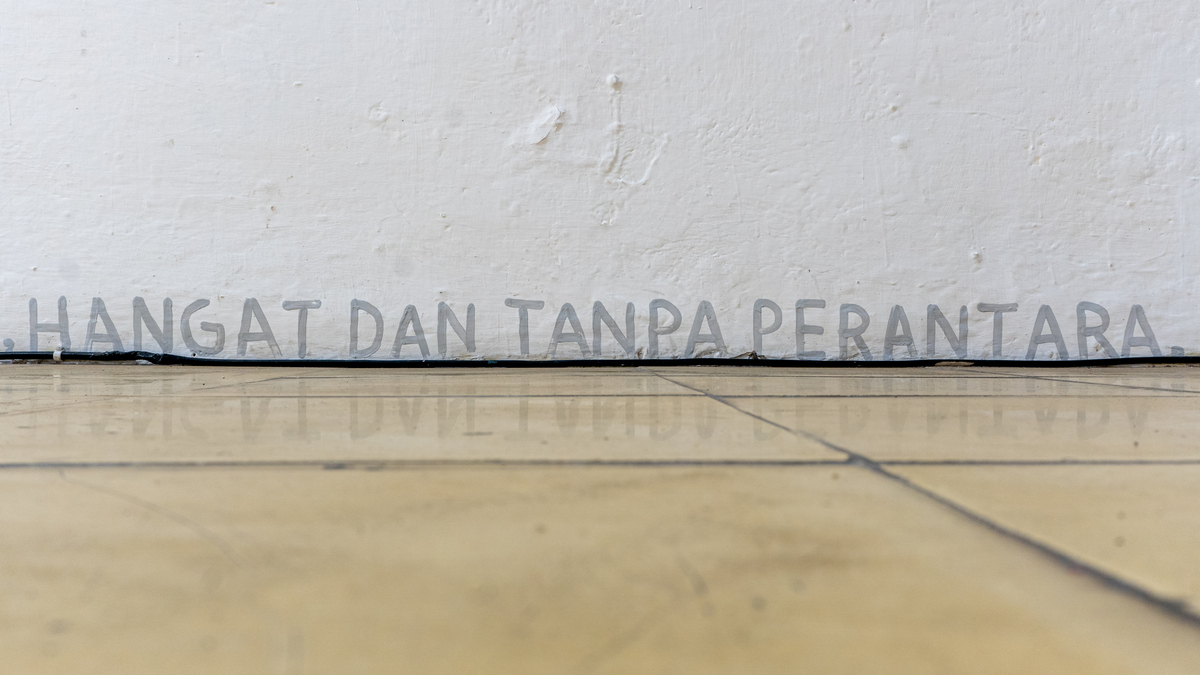
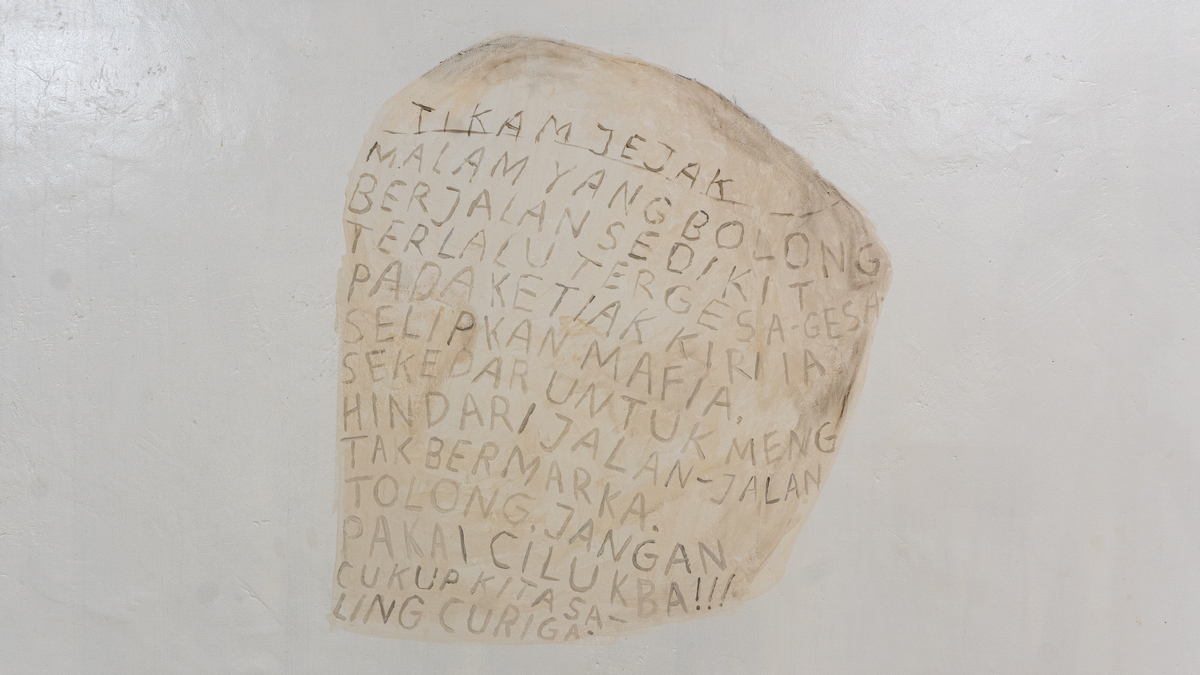
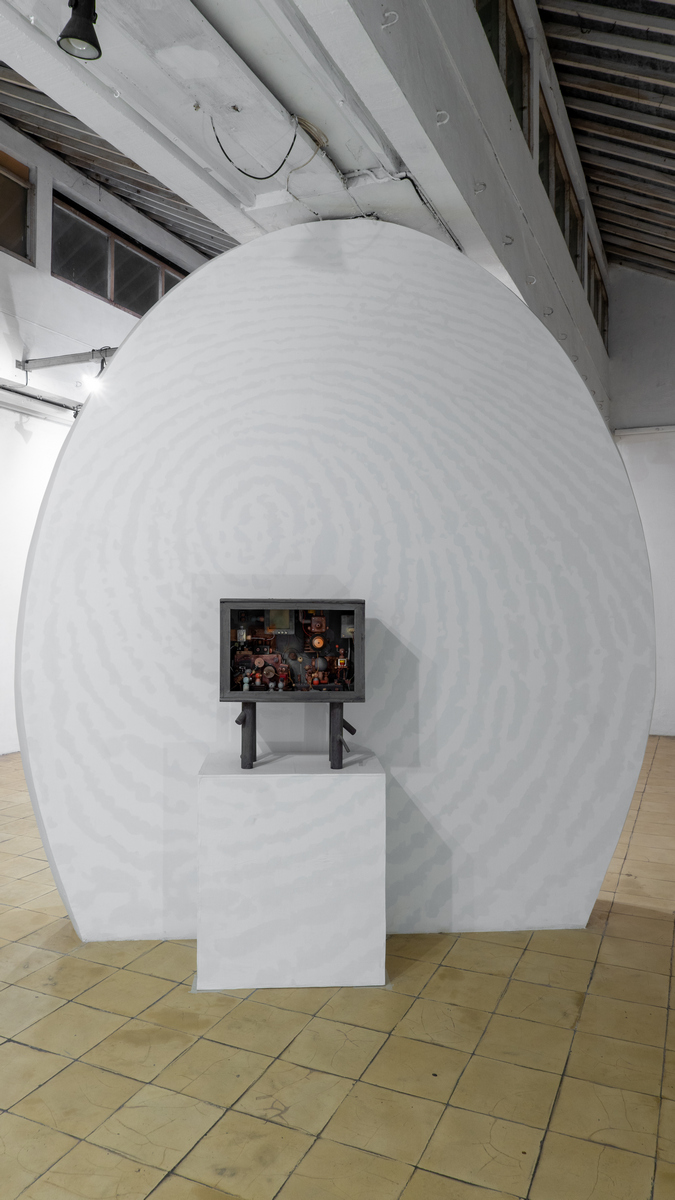
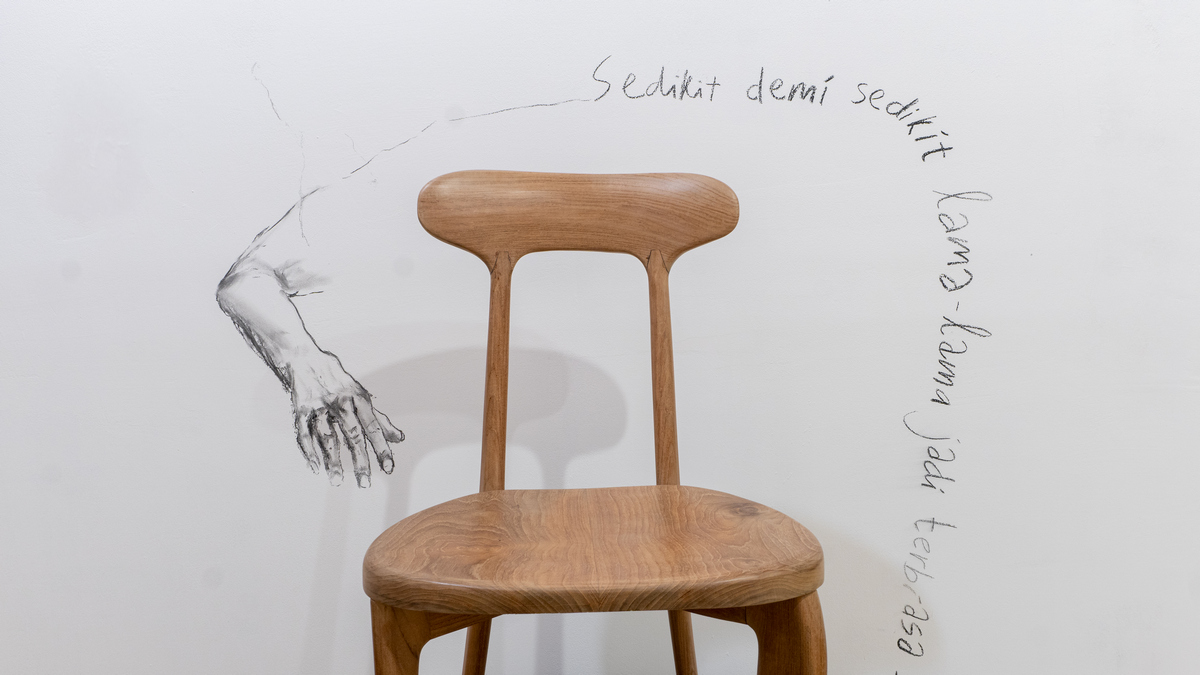
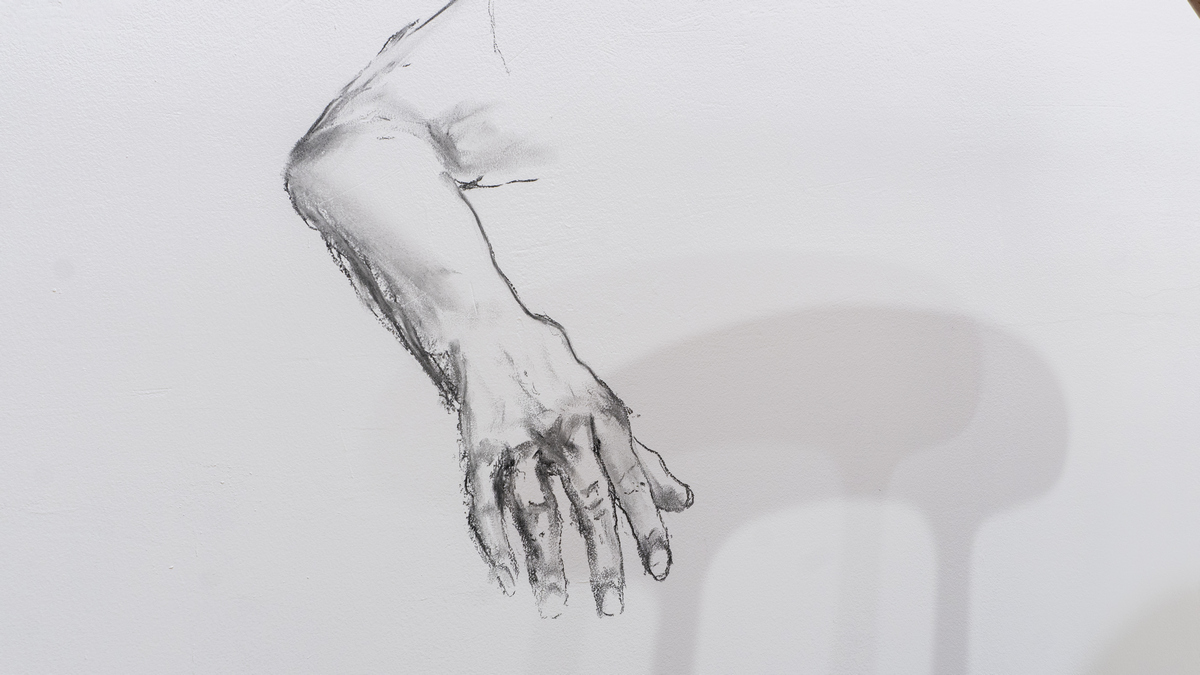
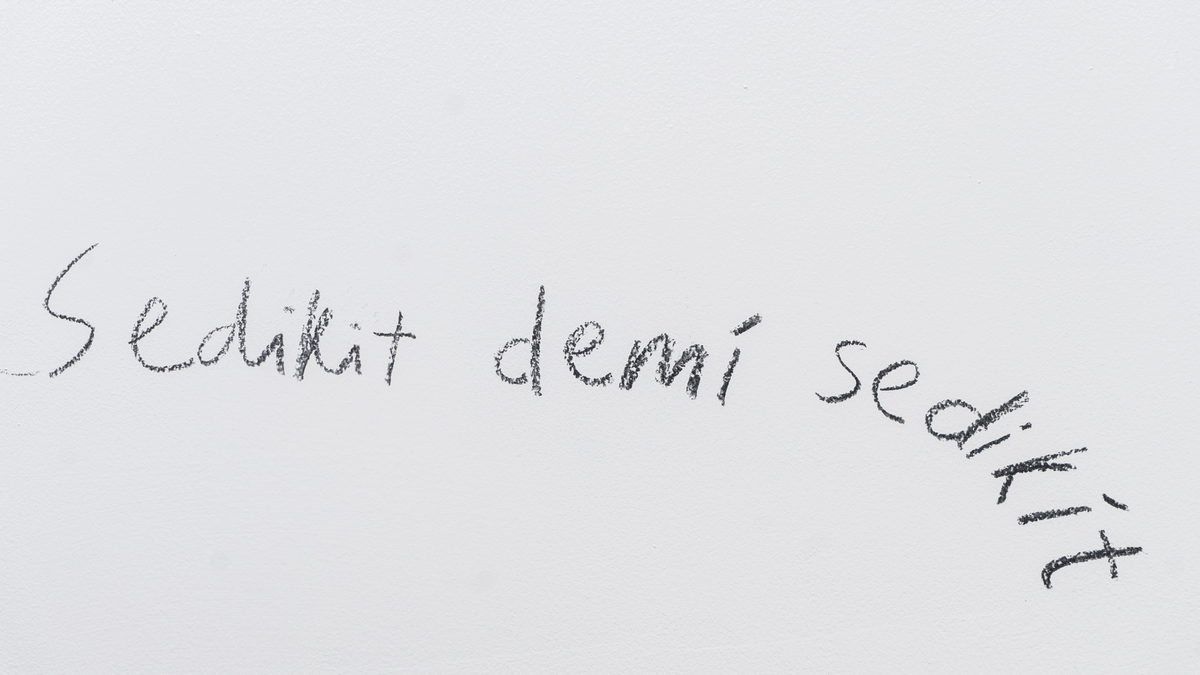
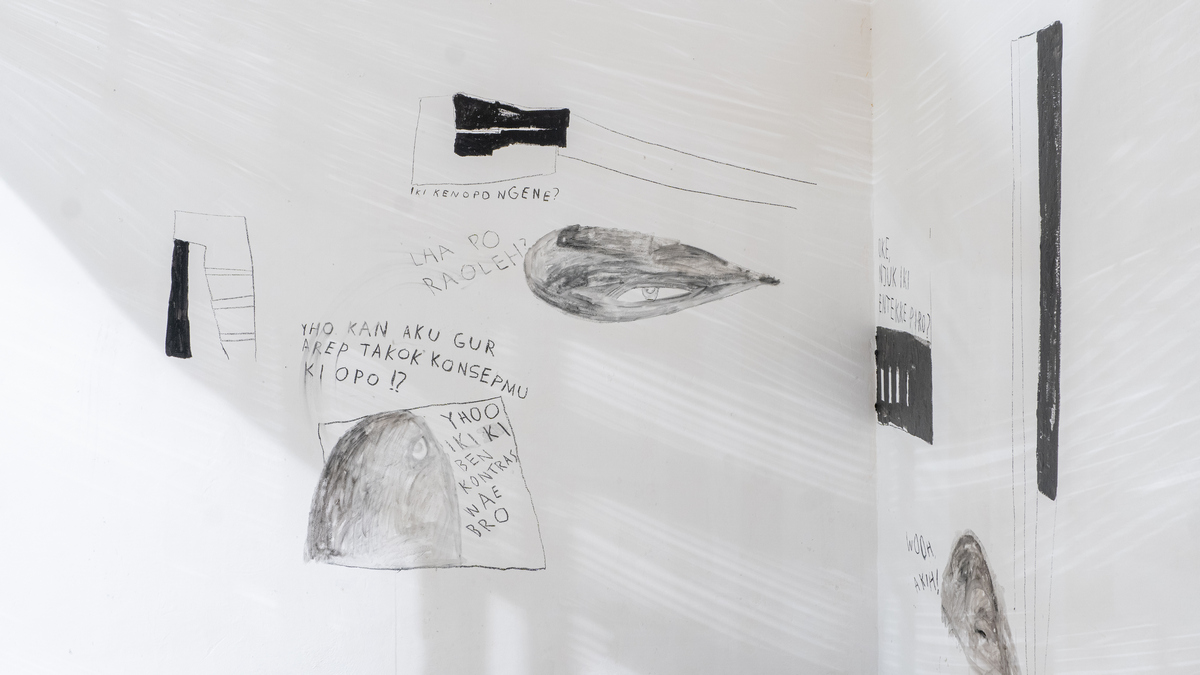
Ruth Marbun
Perspective
mixed media
2023
You are a well known figure, although not that familiar.
The hobby is to mumble and find out a little.
What you sow, you are reluctant to reap.
You are a one-way trip.
Attached are short notes that you have pinned.
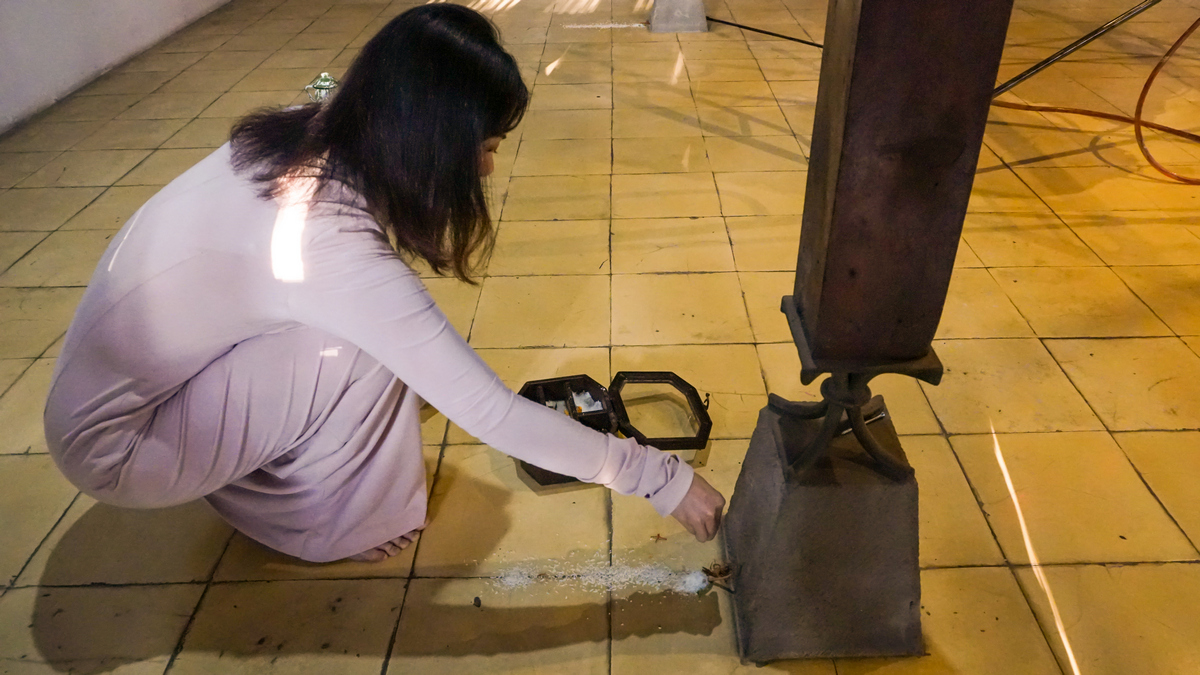
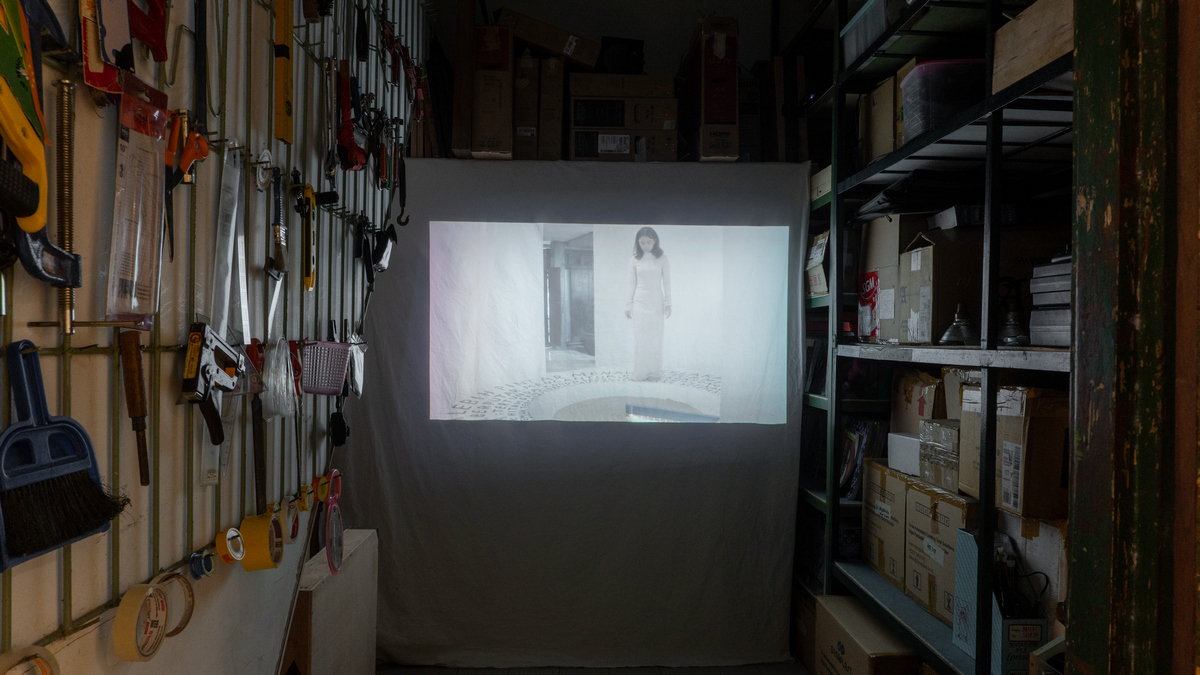
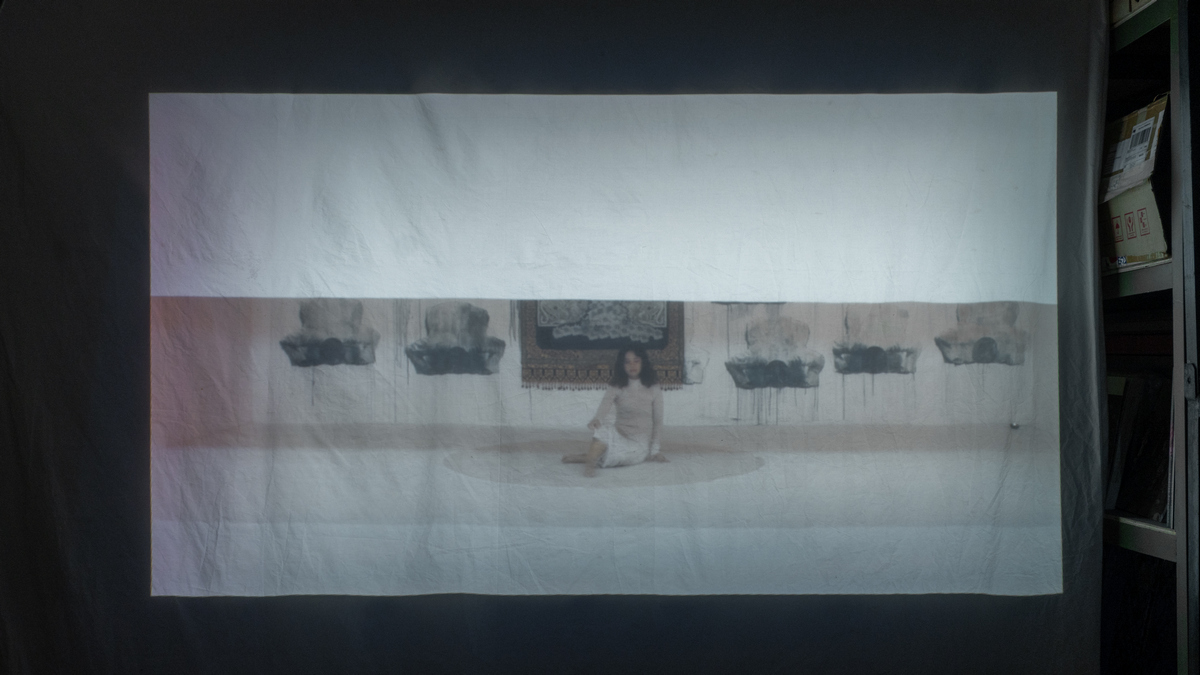
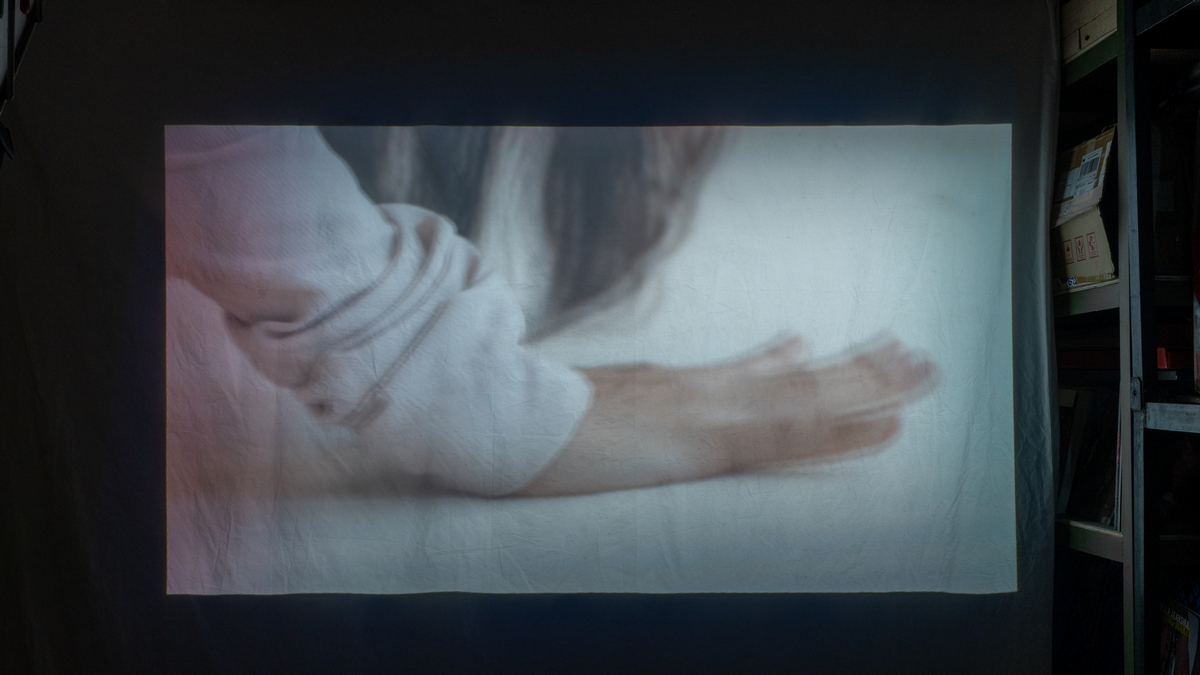
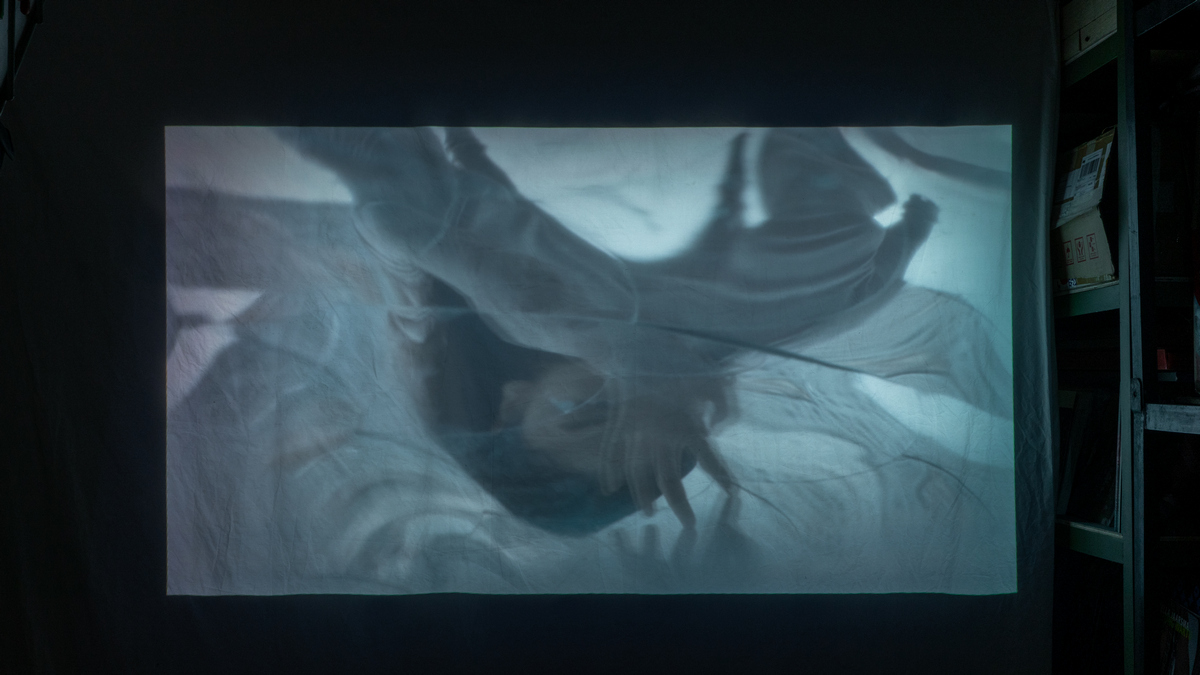
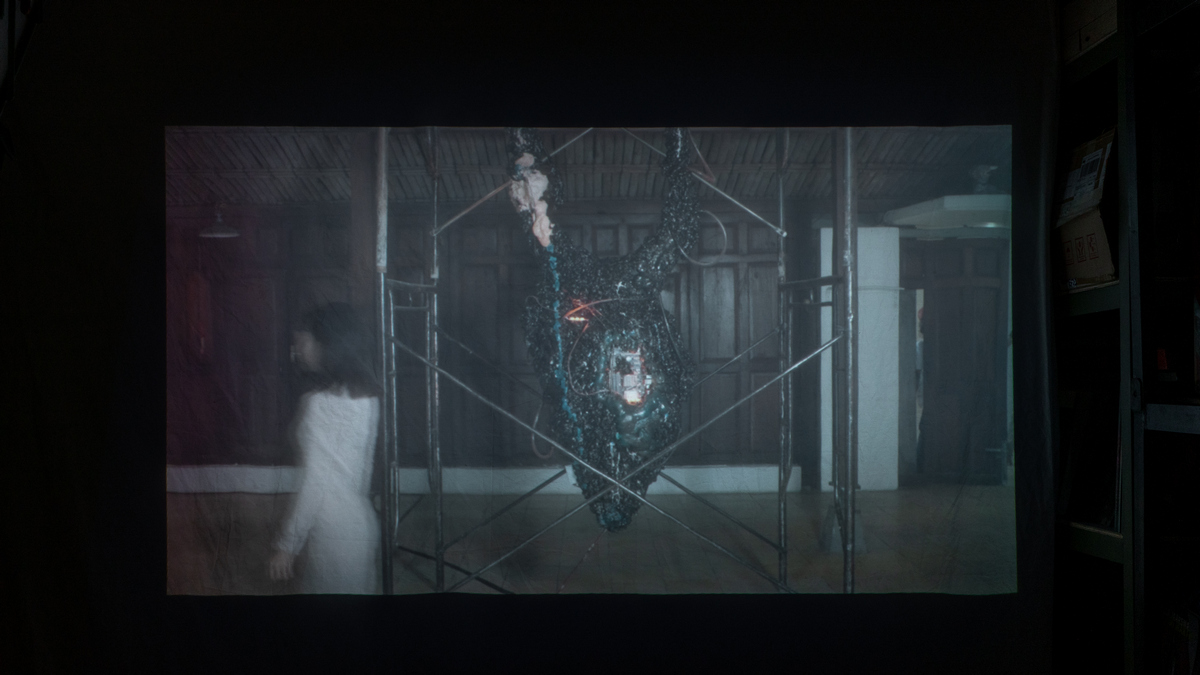
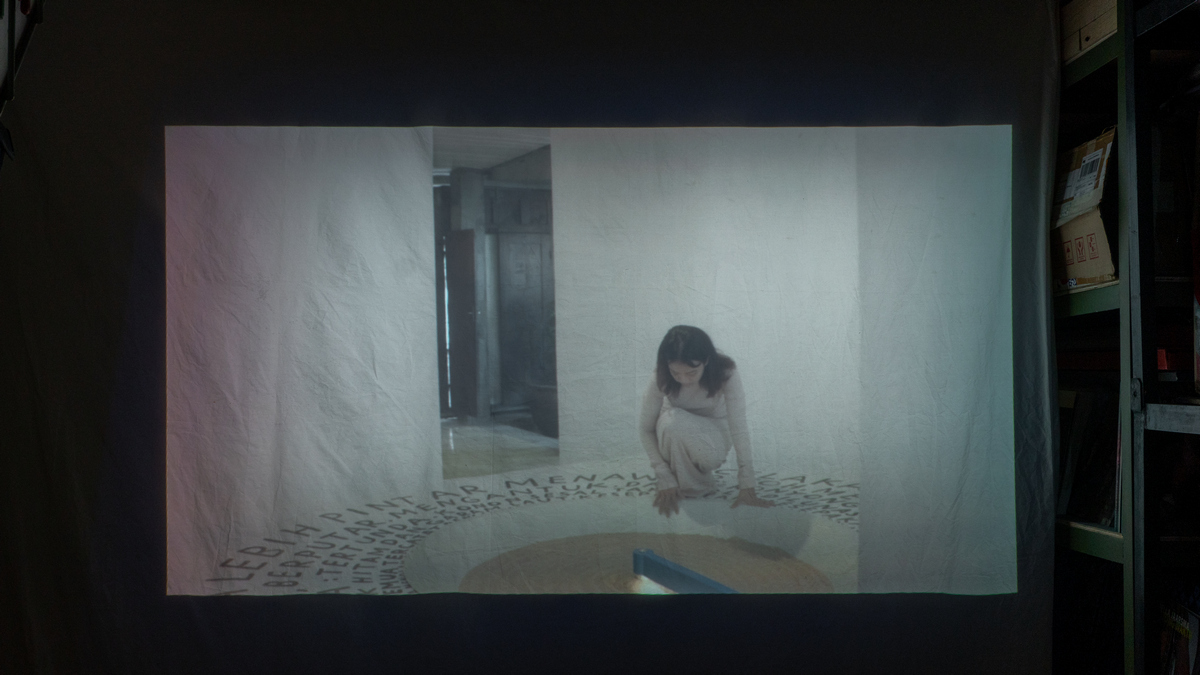
Manungsa
Elghandiva Aprilia
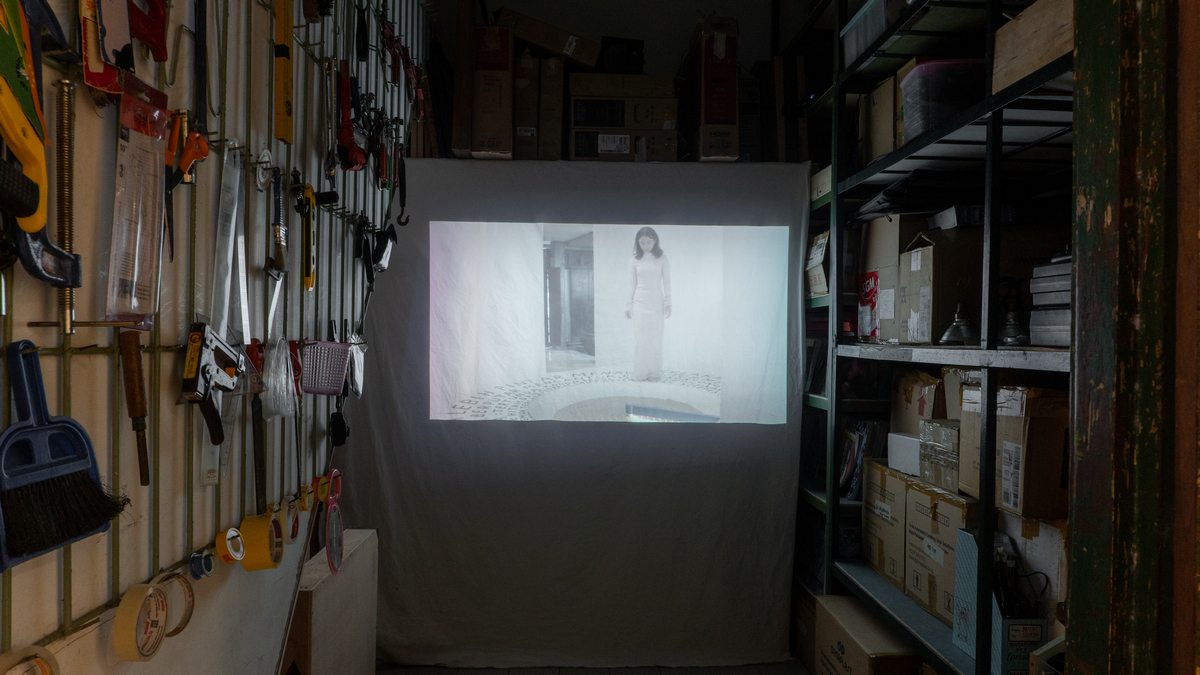
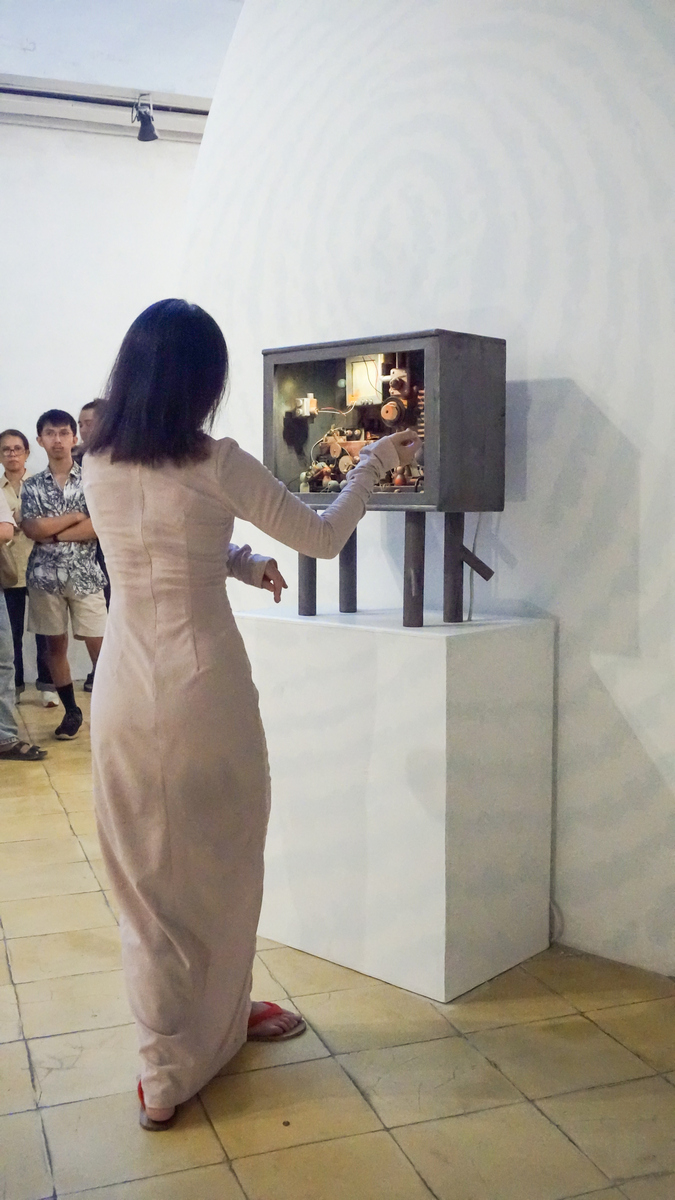
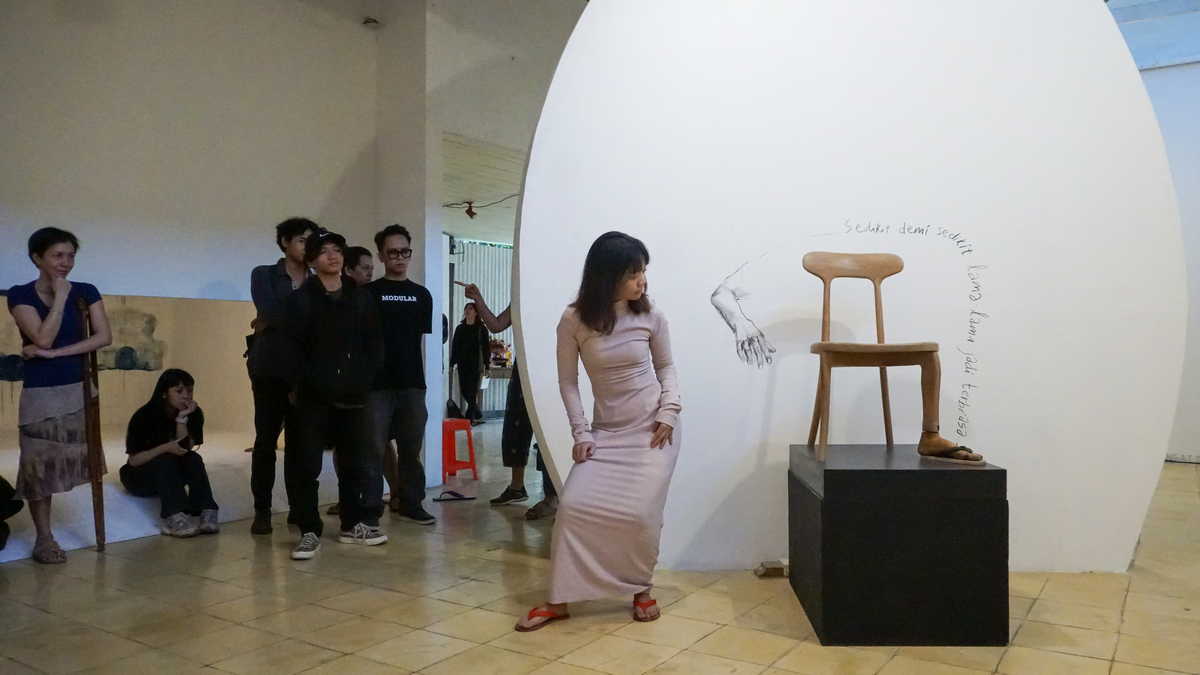
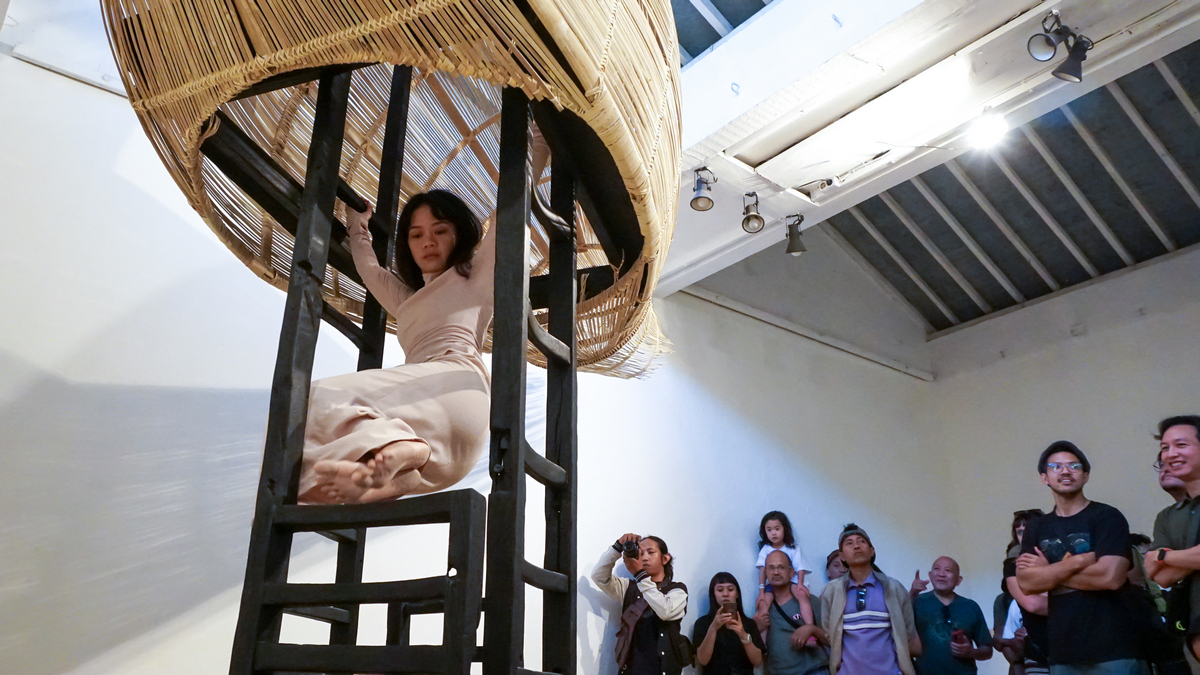
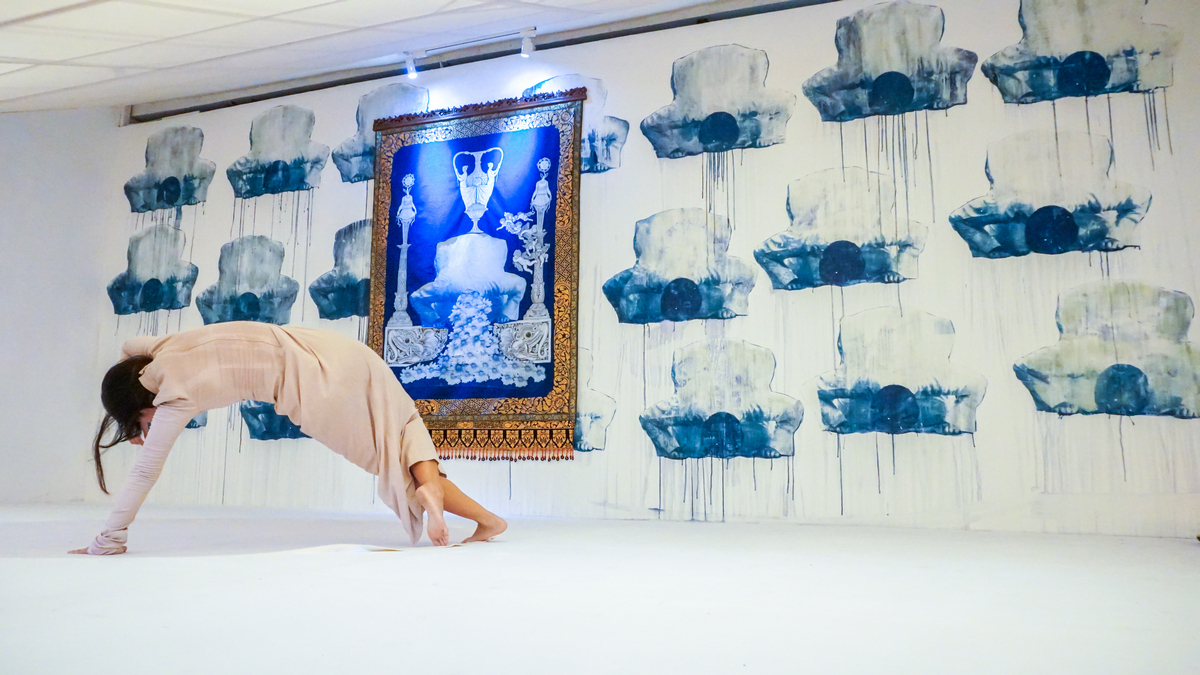
Performance art & documentation video
2023
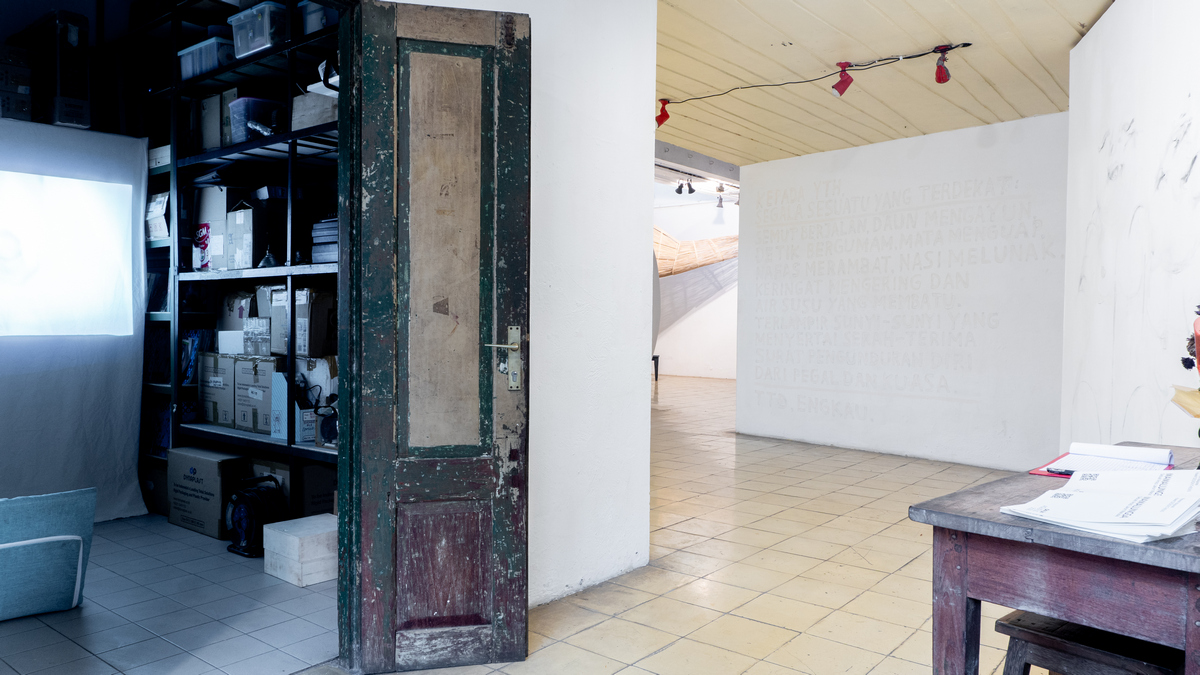
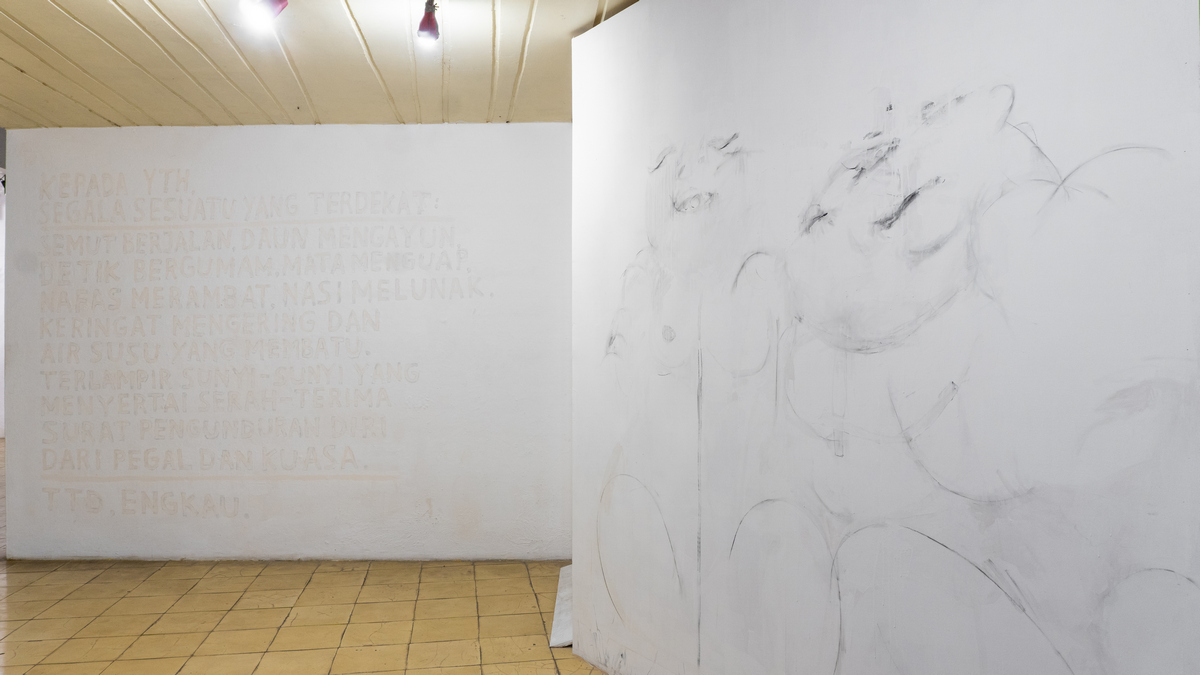
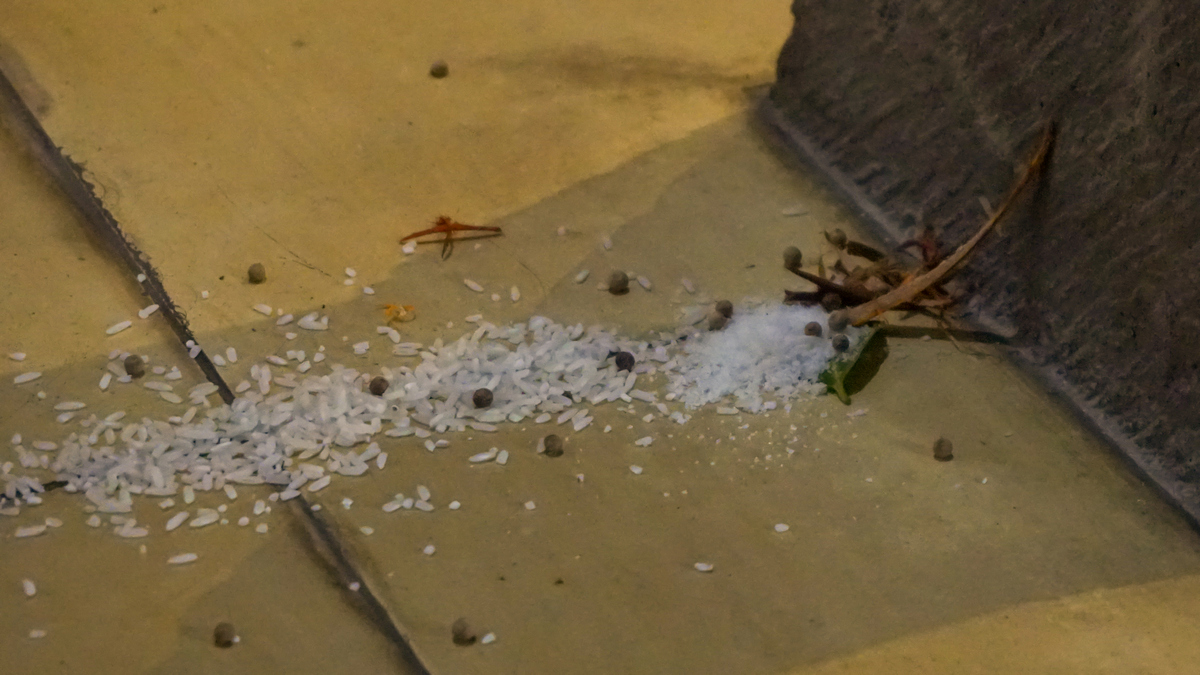
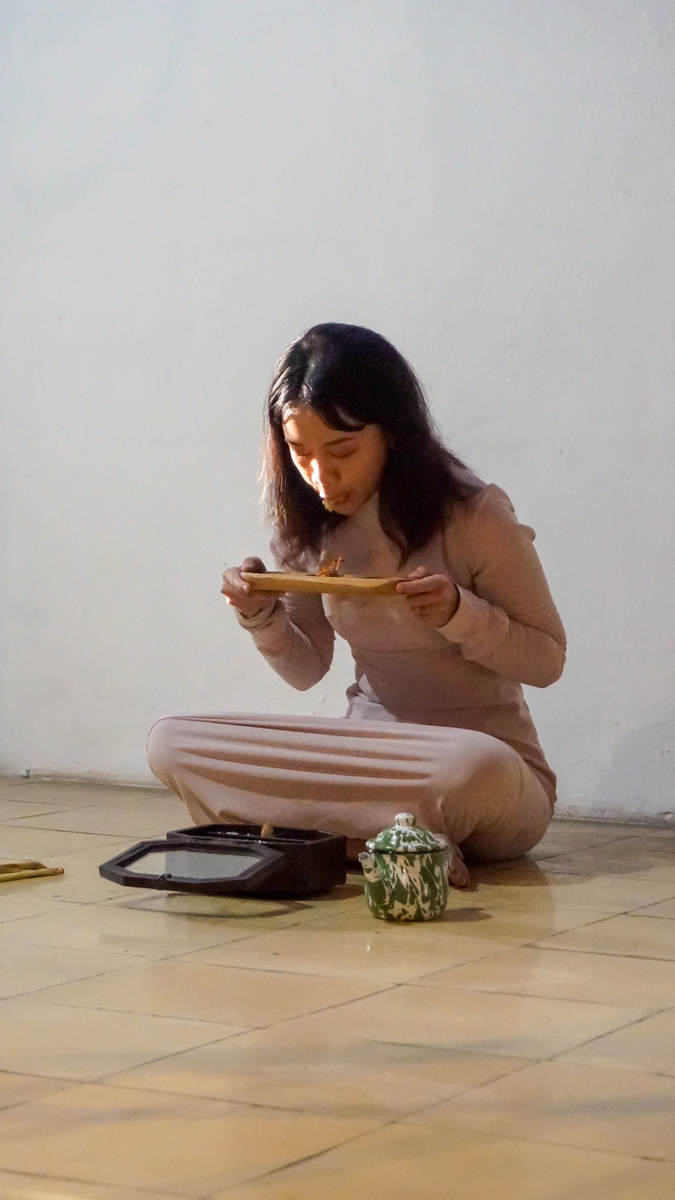
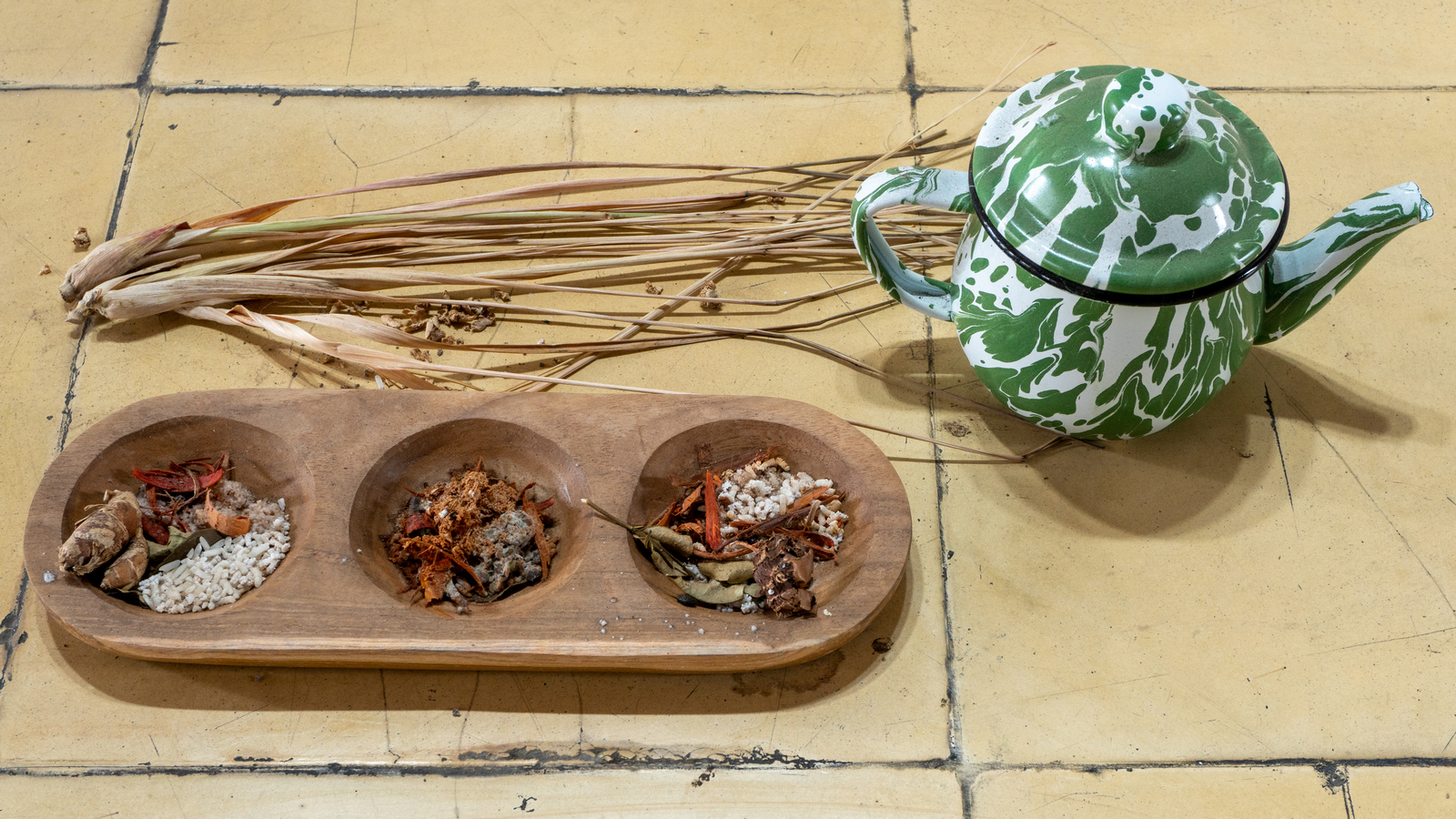
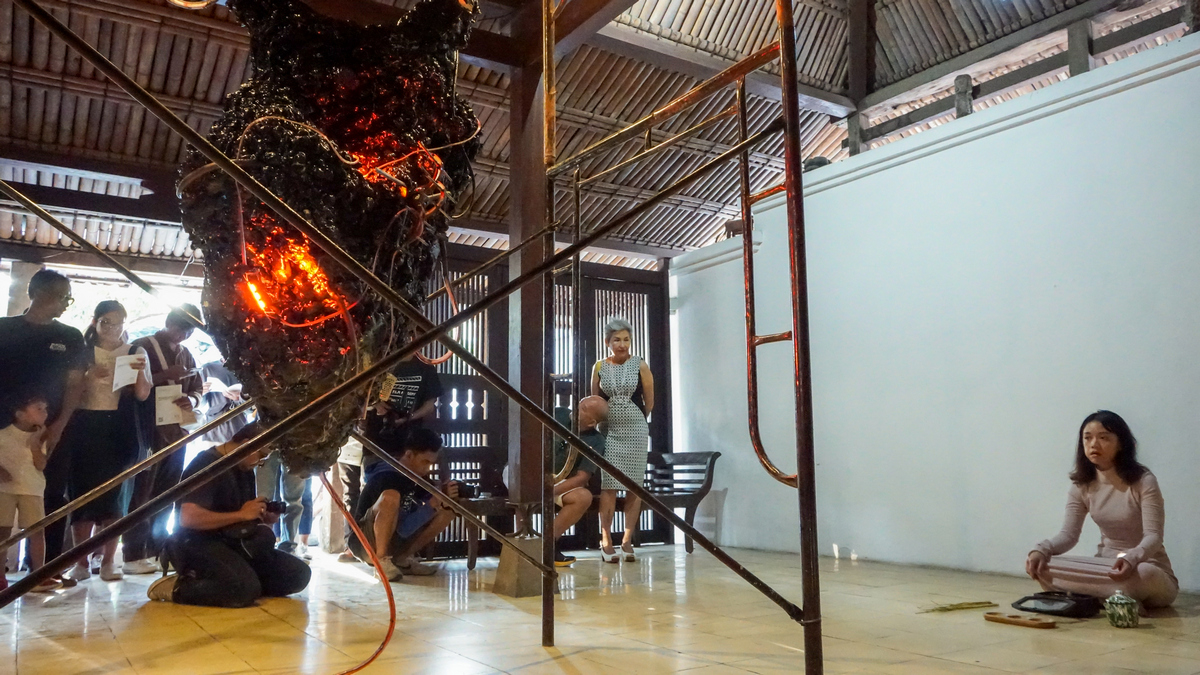
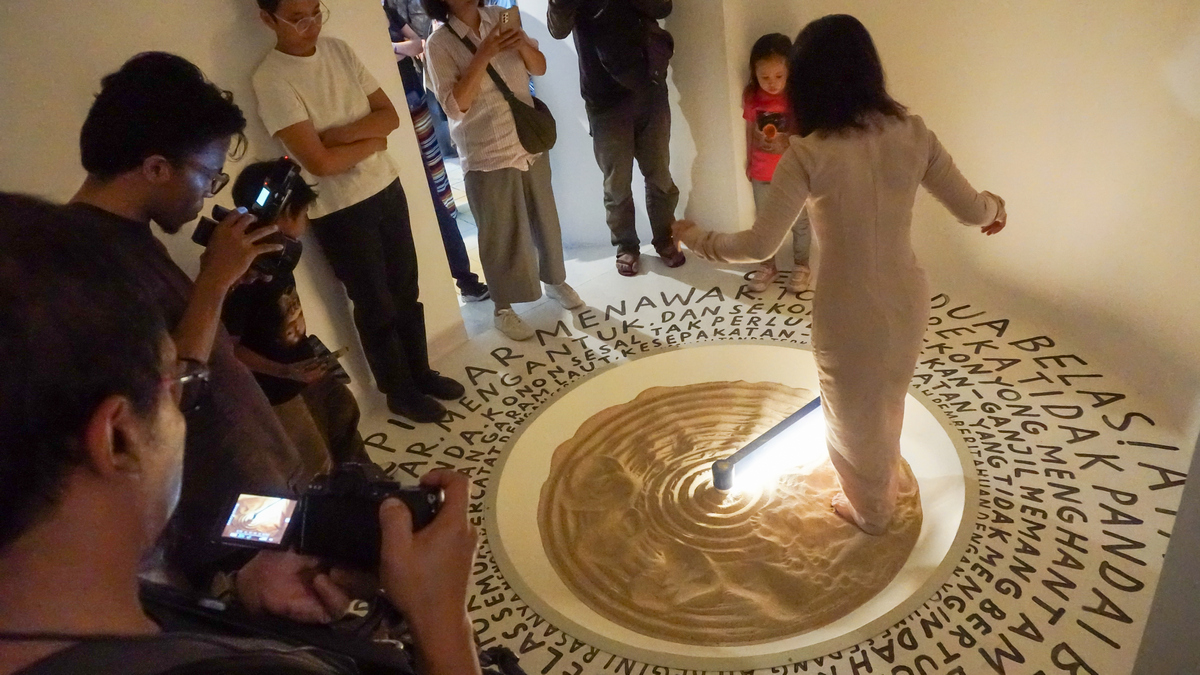
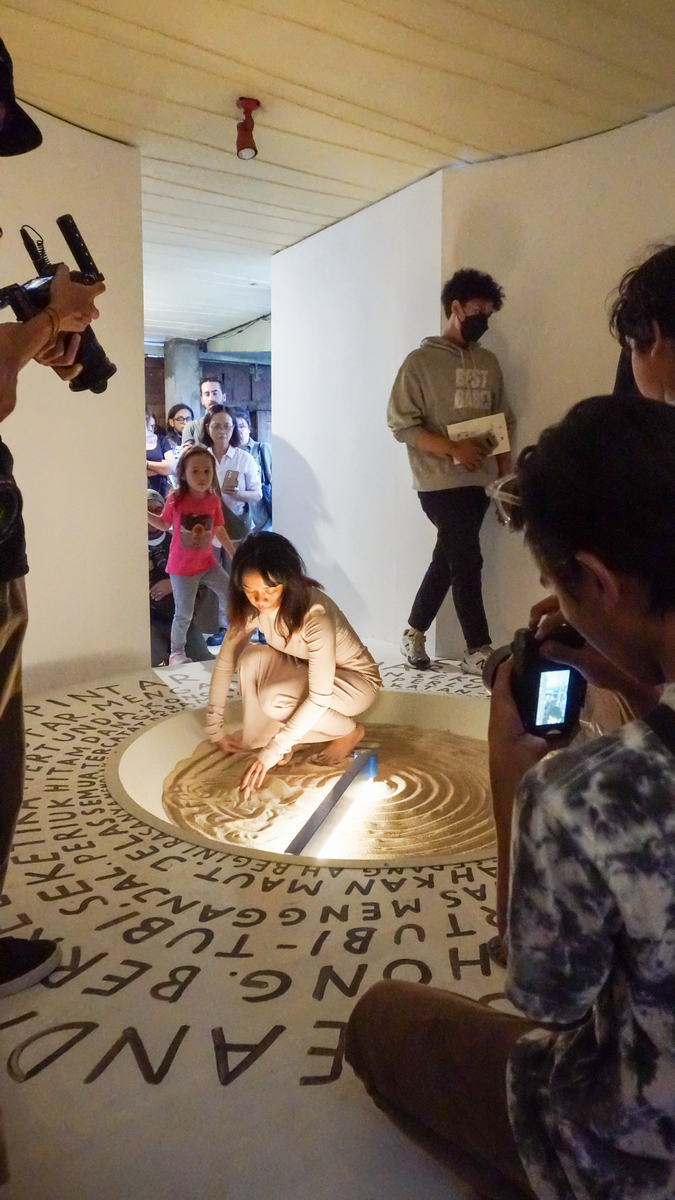
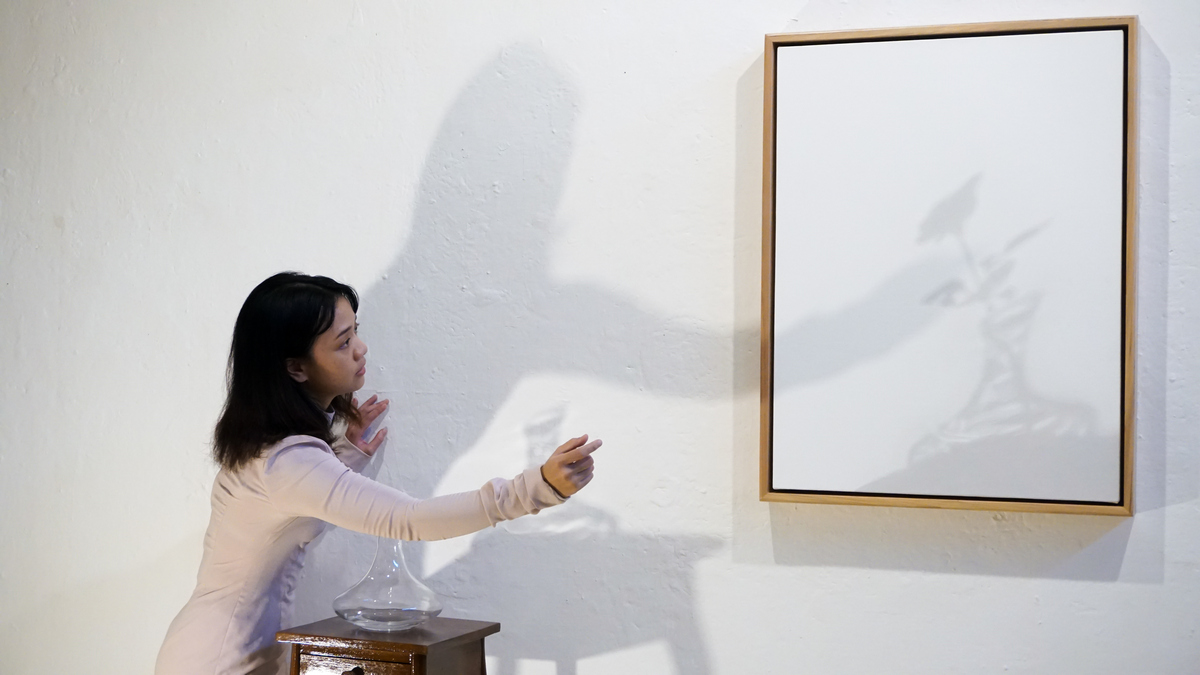
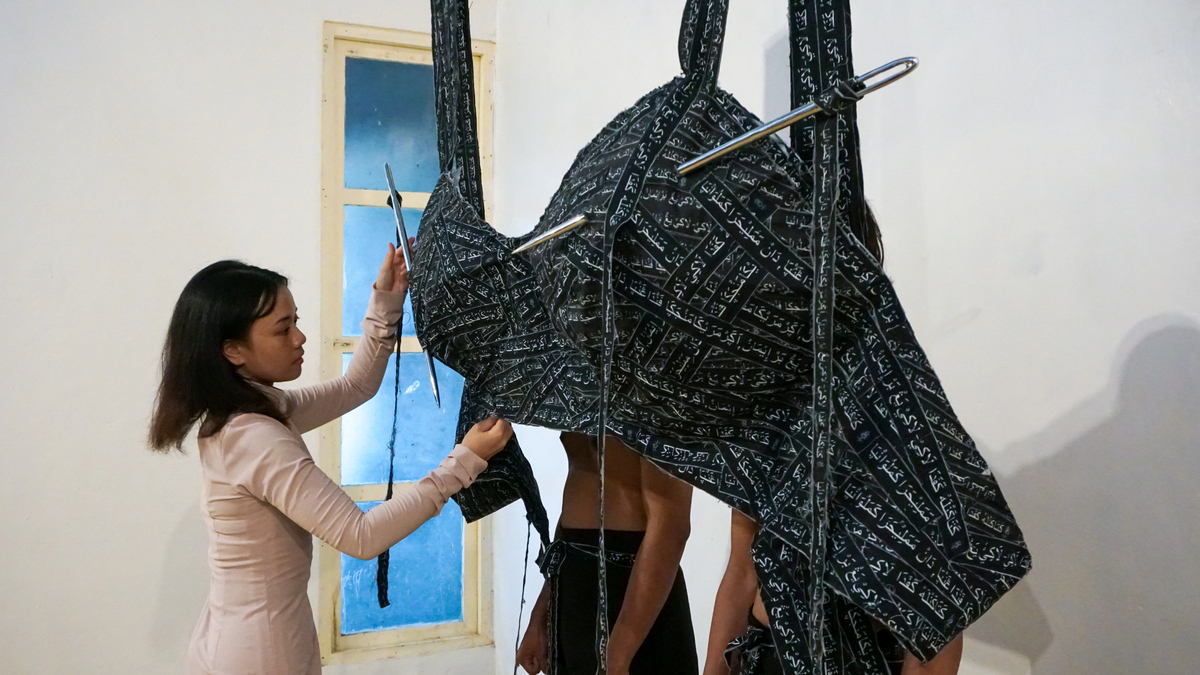
Imagining Cemeti as a habitat for Mamalungsa, how does it “make its home”? How do the combined themes of Mamalungsa create a scene of life?
As long as humans live, we are always adjusting the way we behave. The act of performing a procession becomes an ever-changing scene. For example, an act of note-taking used to be done by carving symbols in stone, then replaced by the alphabet system and various kinds of writing tools, and now by moving thumbs on a smartphone. This change happens gradually, little by little and slowly, without realizing it.
Elgha responds to Mamalungsa’s works with an exploration of body movements, How does the Mamalungsa exhibition trigger new processions? Obviously it doesn’t really change, but it provides a space to reflect on the personal choreographies that we do every day, and also opens up space to create different choreographies.
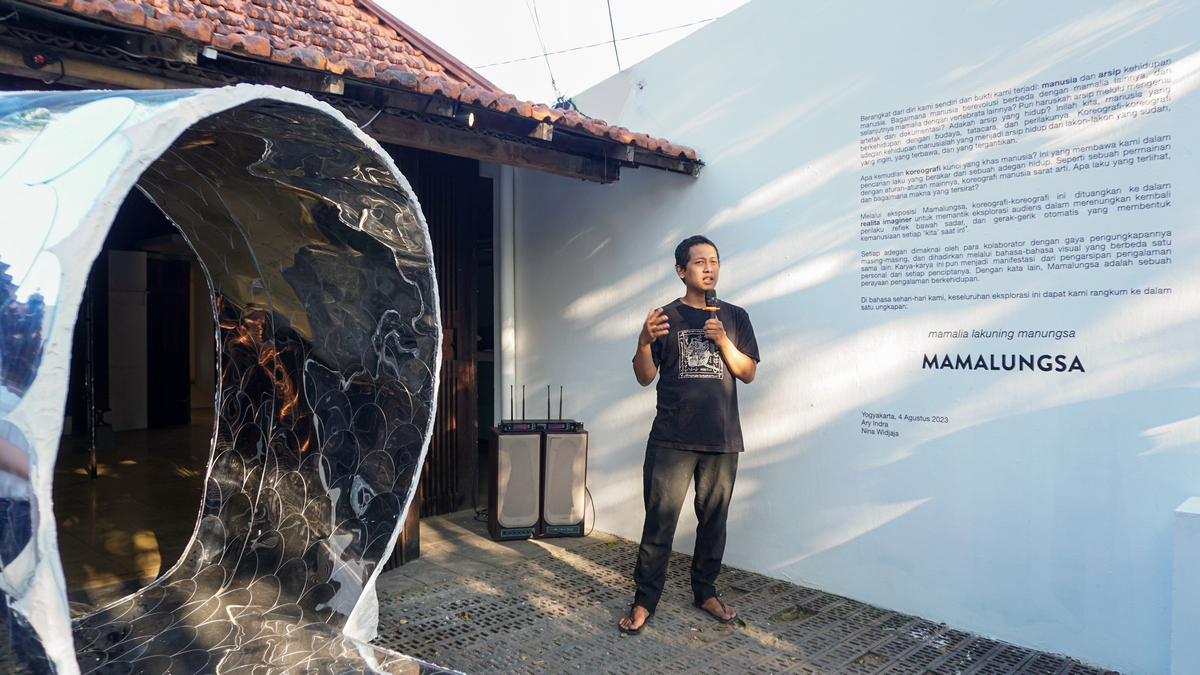
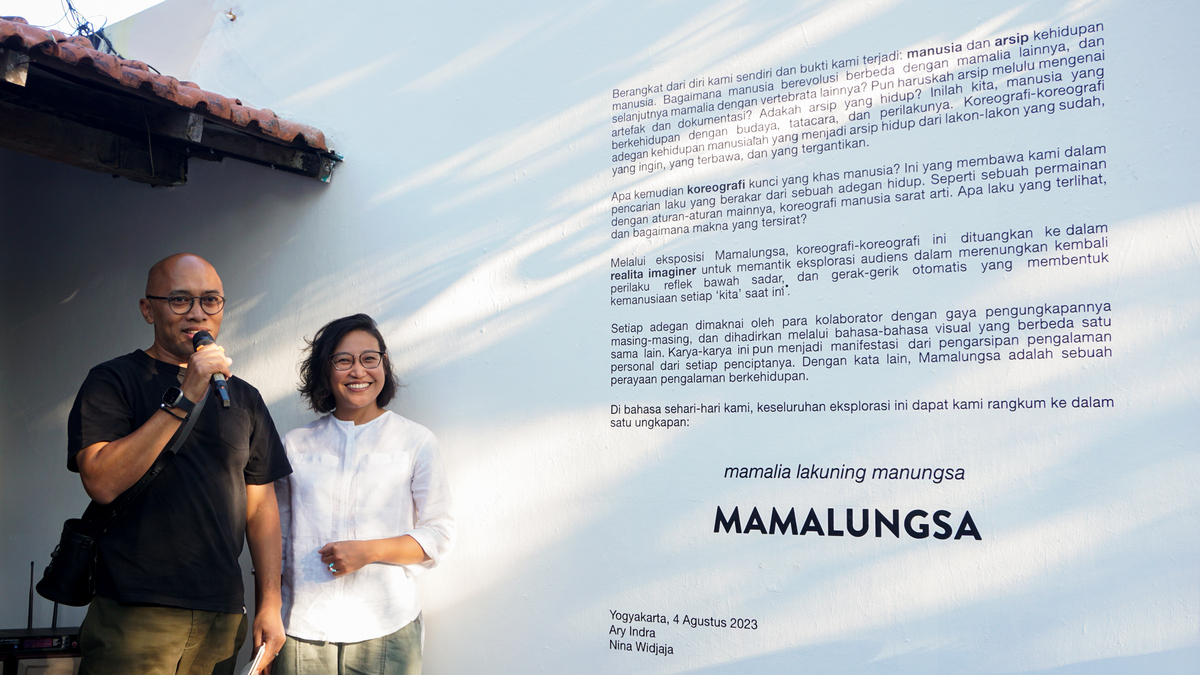
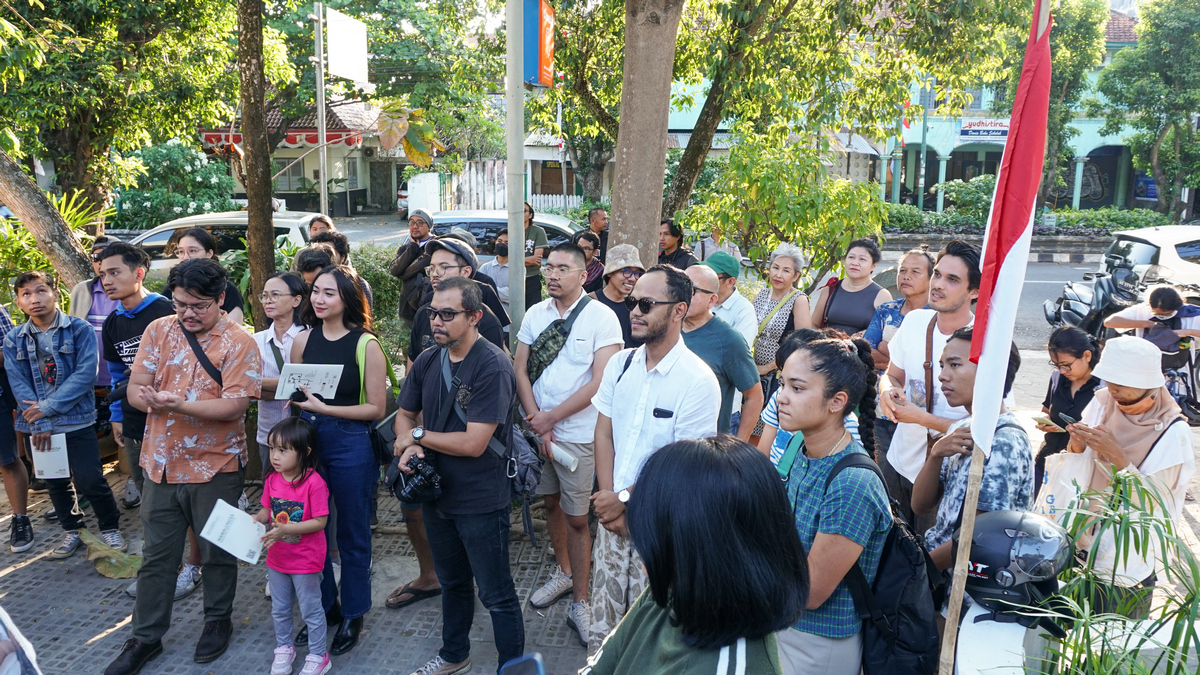
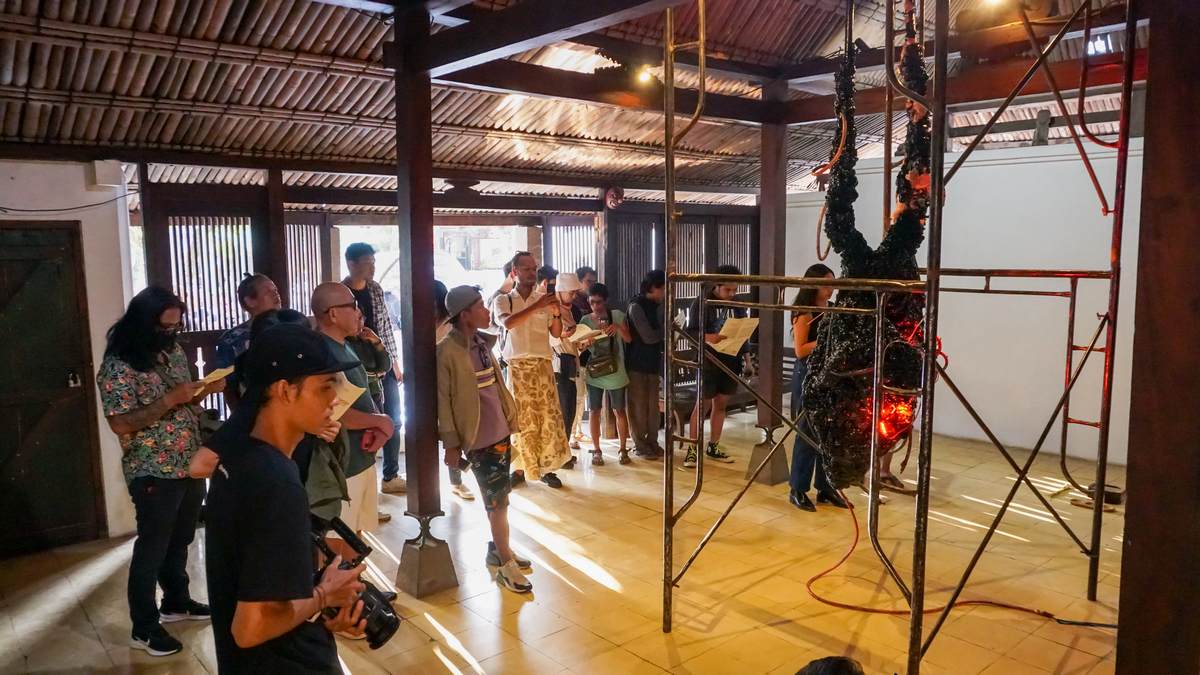
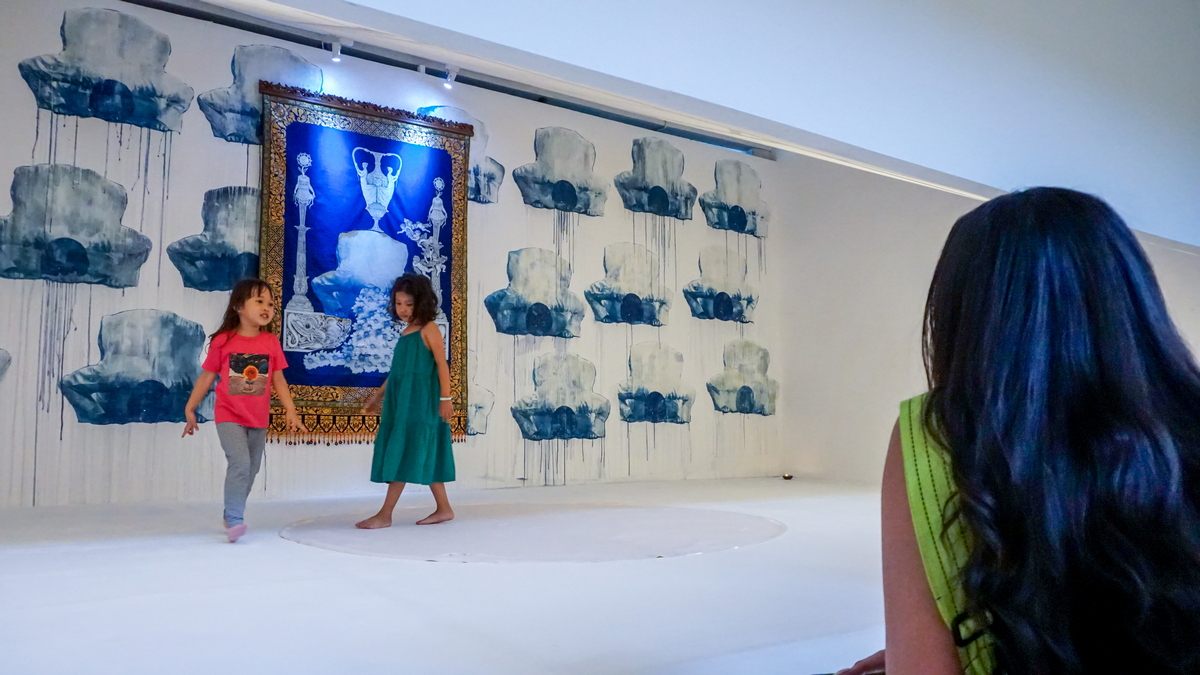
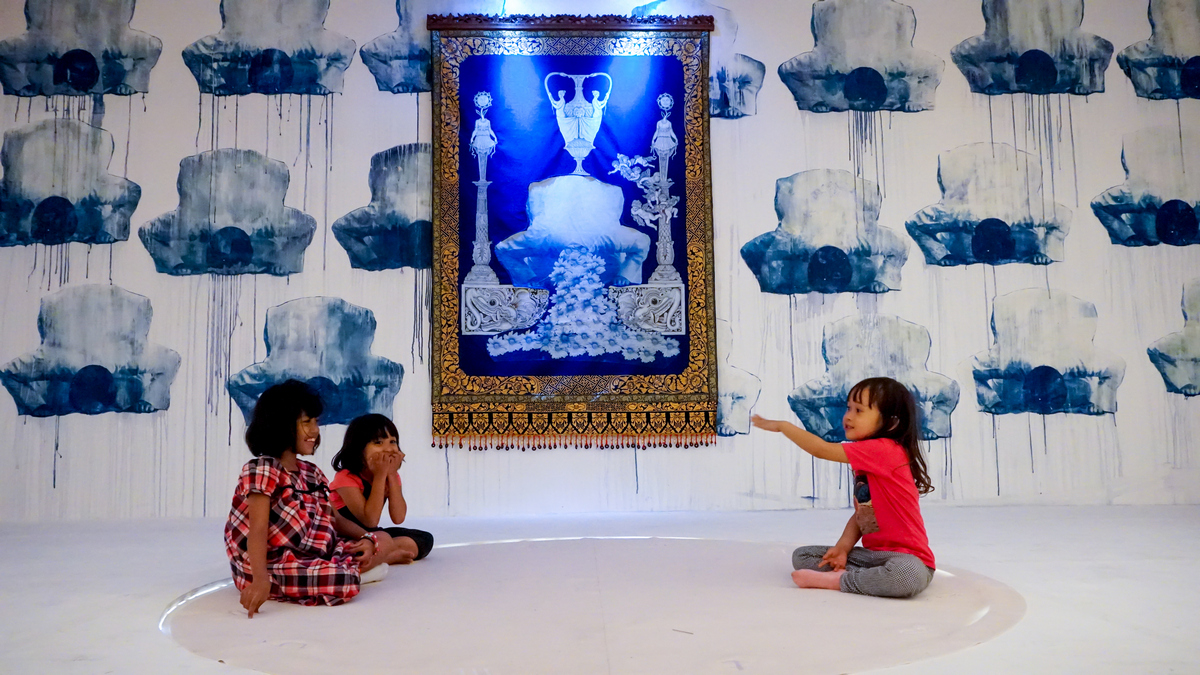
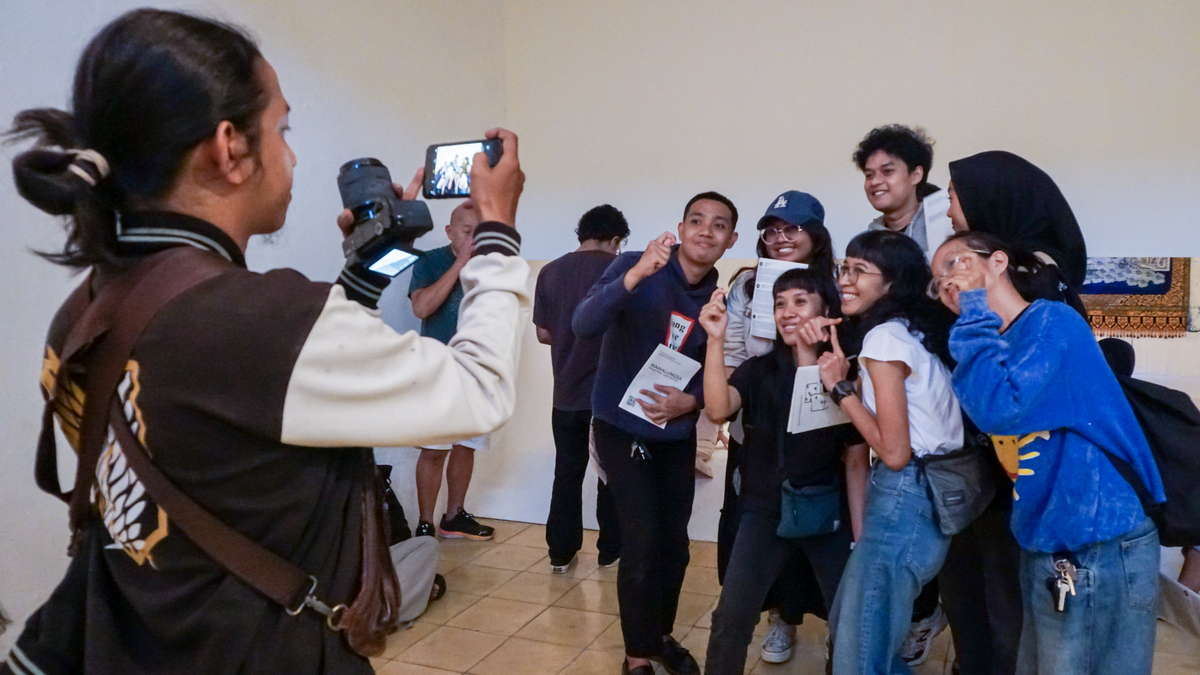
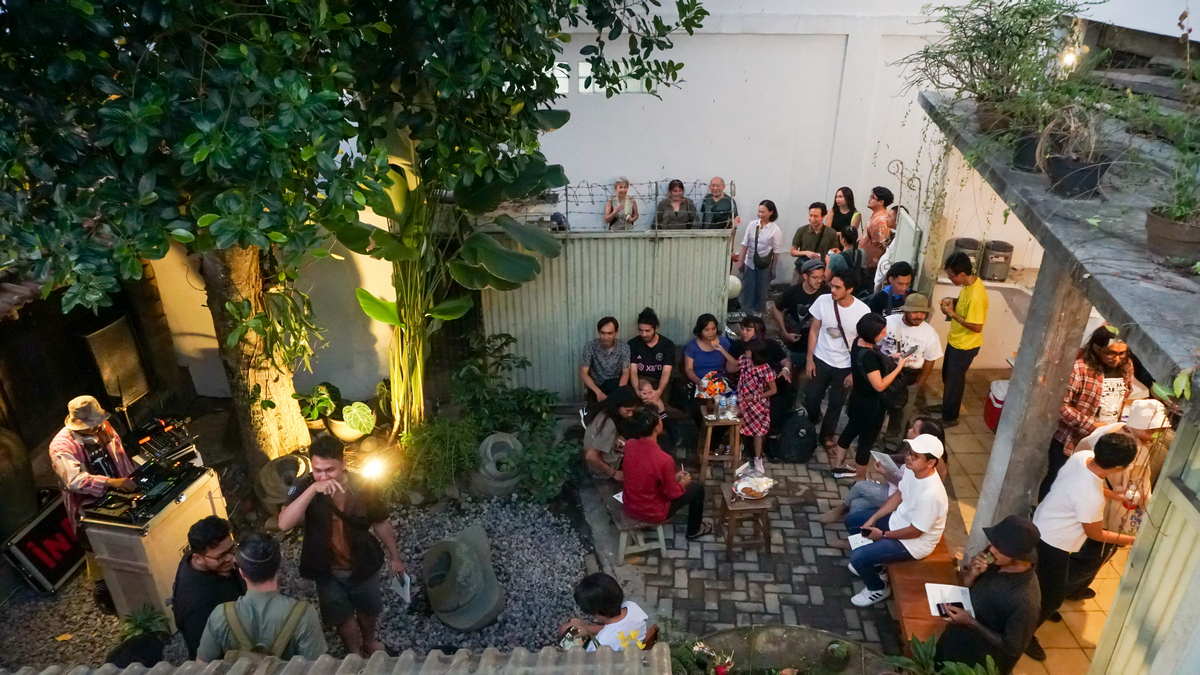
Documentation
Biography
Designthesis DESIGNTHESIS is a collective involving designers, artists, architects, craftsmen, and art management practitioners, who are focused on applied art-based creative works.
Through functional-artistic objects, DESIGNTHESIS aims to explore the possibilities in examining the interaction between the development of design and visual arts in Indonesia. Exploring visual, form, craftsmanship, material and concept.
Through our activities, we explore the questions below: How, by deconstructing function and form, can we give familiar objects new identities and characteristics? How can artworks not be limited to the visual spectrum but also engage other senses such as taste, touch, hearing and smell? And how can we create works that take the audience to the next stage, where the extension of this process becomes a unique or personalized sight or sensation?
This collaborative approach from various perspectives is manifested in the form of art exhibitions that we hold annually, starting with an inaugural exhibition titled Mamalungsa.
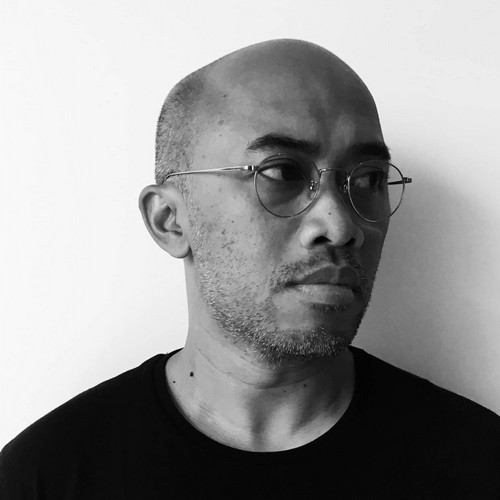
Ary Indra Born in Madiun and received his architecture degree from Universitas Brawijaya Malang, Indonesia in 1995. Since then he has gained 15 years of qualification experience in architecture. Before establishing Aboday in 2005, he worked for AXIS Architecture Planners in Singapore from 1998 to 2006, where his last position was as head of design school. He has a broad interest in residential, hotels, institutional and industrial architecture which has recently become his subject. Aside from being an architecture practitioner in his daily life, he is also a freelance writer for several architecture and lifestyle magazines columns in Indonesia.
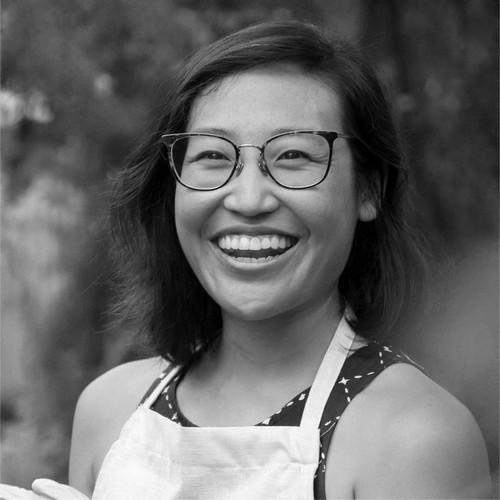
Nina Widjaja Researcher, creative practitioner and art enthusiast. Graduated from the University of Calgary in Canada with her Master of Arts in Linguistic Research in 2010. Her interest in the use of research methods to address daily issues led her to conduct independent research on fungi and mycelial networks, tropical rainforest trees and seeds. Her research process has created Artesana Project, a natural product development based on archipelago oil research. In 2021 she co-initiated and co-managed Ruang Buat, a creative space in Yogyakarta, Indonesia.
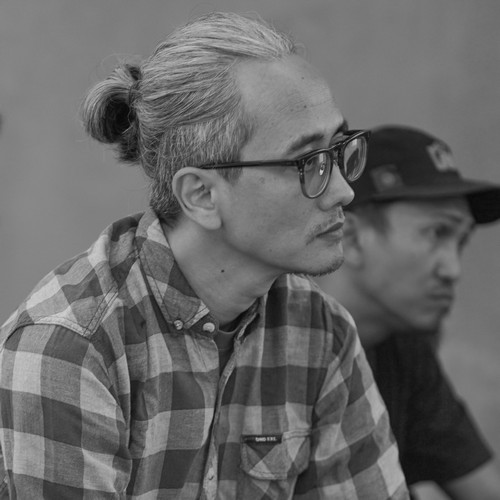
Bayu Bawono Born on 22nd January 1975 in Salatiga. Bayu completed his studies at the interior design program, Faculty of Visual Arts and Design, Institut Seni Indonesia Yogyakarta in 2000 and started his career at Karpenter Indonesia (furniture) from 2004-2015. He participated in several furniture design competitions & was awarded in the category “The Best Ergonomic” at IFDC 2011. Active and focused as an interior & product designer based in Yogyakarta, he regularly works on art collaboration projects and holds exhibitions with several artists both at national and international level. Along with that, Bayu also has an interest in music. Currently, he is also active as an Assessor at LSP Furnicraft Yogyakarta.
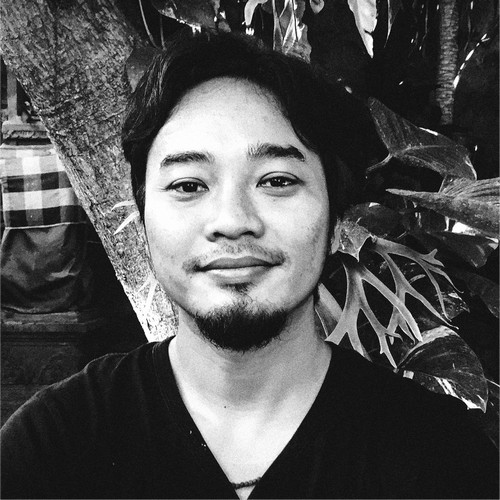
Budi Agung Kuswara Born in Bali in 1982 and graduated from Institut Seni Indonesia Yogyakarta. As a contemporary artist, he has exhibited at Ubud Writers and Readers Festival, TAKSU Gallery, Asian Civilization Museum and NUS Museum in Singapore. He was also invited as an artist-in-residence at Fukuoka Asian Art Museum, TAKSU Kuala Lumpur and Bambu Curtain Studio. He perceives materials as living characters that are not limited to objects or subjects, and the technique of showing as a means of representing the character of each material used, including visual archives that speak of history. In the last 9 years, he has been questioning the function of art beyond aesthetics which then led him to conduct art-social experiments in Ketemu Project.
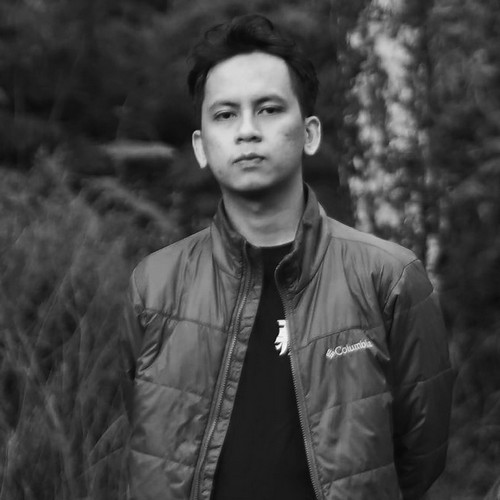
Condro Priyoaji Bandung based artist Condro Priyoaji (b.1993) graduated from Bandung Institute of Technology (ITB) with Bachelor of Visual Arts in 2016. Using two color-producing elements, his works mostly use pigments and lights. Influenced by his past that is surrounded by familiarity with street art. Condro is also interested in making spatial-themed works. His current interest in the concept of color is also influenced by his favored medium of painting. Subsequently, he’s also interested in shadows. In his opinion, shadow is the most subtle existence of color. He imagines that shadow is a darker pigment on a surrounding surface. Lately, he has realized that painting shadows gives new concepts to his works such as the trails of time, color intensity, and many other interesting things.
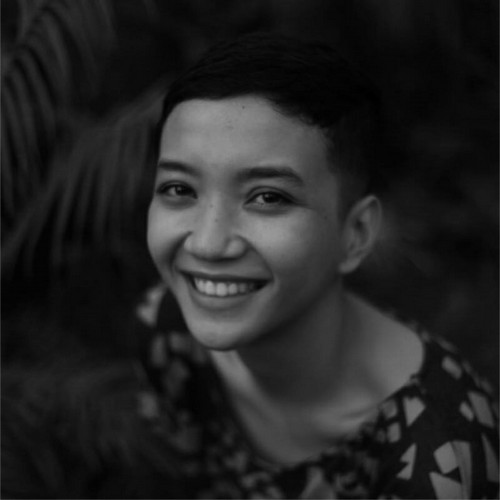
Dyah Soemarno Born in Salatiga in 1986, and graduated from Universitas Sanata Dharma with a Bachelor’s degree in Psychology. Dyah has a great interest in art and design. Since she was in college, she has worked in various art and design projects and in 2013 she founded a lighting brand called NOORSIDE and became the production director of the furniture brand BLAXSAND in 2015 to date.
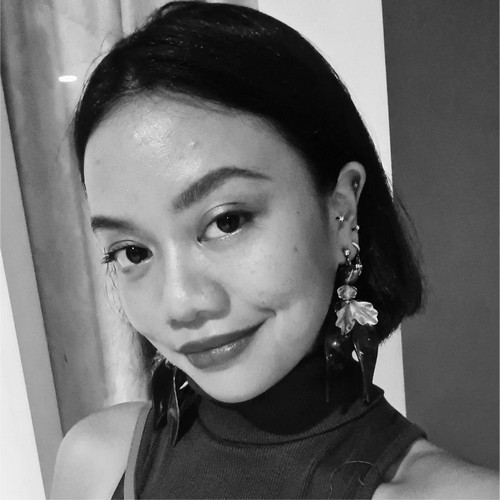
Elghandiva Astrilia An artist who works with performance, movement, sound, writing and visual communication. Her art practice evolves into an exploration to find, learn and experience balance, connection, unity and harmony. In 2019 she founded Rasasastra, an art collective and curatorial platform focusing on experimentation and contemporary art. By late 2022, she co-founded Moksa Soundsystems, an experimental band that fuses Southeast Asian music traditions with electronic sounds. Elgha completed her BA in Visual Communication Design at Universitas Pelita Harapan (2012) and graduated from The Royal College of Art with an MA Contemporary Art Practice in Performance Art (2018). She is currently a lecturer at the Visual Communication Design program, School of Design, Universitas BINUS Jakarta.
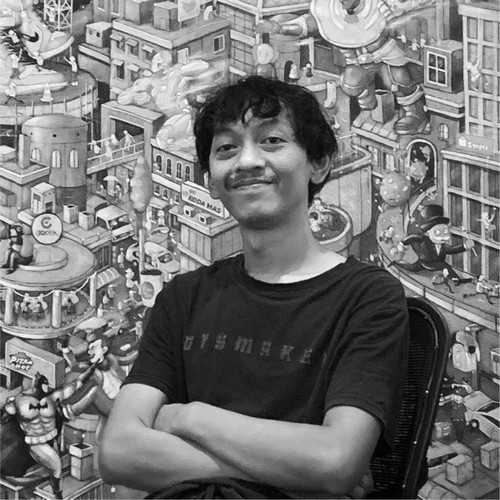
Gatot Indrajati Gatot Indrajati was born in West Java and studied Fine Arts in Institut Seni Indonesia. He is the only artist to have won the UOB Painting of the Year twice: in 2011 and 2016. Not only did he win the award for the second time, but his work Right of Wrong Home, was also selected as the regional Painting of the Year. His depiction of wooden toys on canvas are his critiques of society. Dolls and toys become metaphors for those who are the playthings of others, something that exists but is not often acknowledged in society. His works give a “second life” to the toys, as well as a medium for him to express his opinions on the social issues he observes.
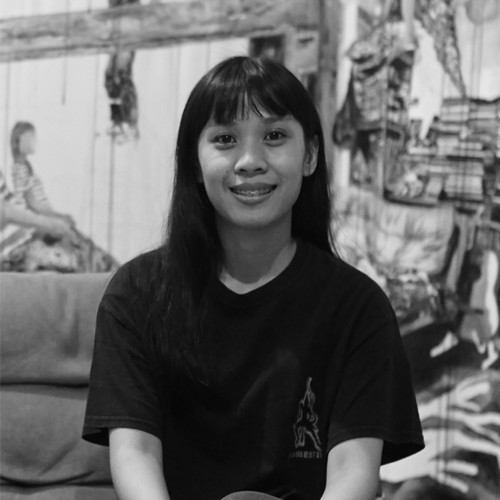
Ipeh Nur Born in 1993 in Yogyakarta, Indonesia. Graduated from Institut Seni Indonesia, Graphic Arts department. Ipeh’s works are based on personal experiences, daily life issues, memories and history as the background of events. Ipeh likes dramatic visuals, creating interaction in the work, like a stage, there are several plots/narratives in a picture. Most of her works are black and white drawings on paper. Ipeh also uses other mediums and techniques in creating her works, such as batik, ceramics, screen printing, etching, sculpture, resin reliefs and murals.
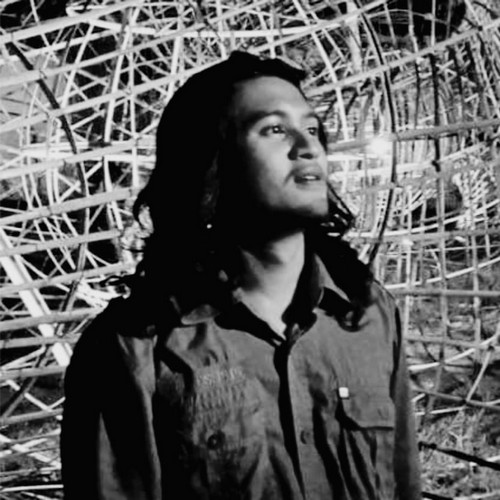
Janu Dananjoyo Born in Yogya in 1993 and graduated from the Architecture department in Universitas Gadjah Mada in 2016. Since he was a student, he began a series of journeys to rediscover his interest in the life of childhood. His craftsmanship and artisanship became his architectural foundation as he studied with the archipelago’s architectural maestros. He is also active in several contemporary theatre arts groups, a learner of gastronomic food arts, and a student of meditation. His exploration of the interconnectedness of energy space and materials is a common thread in all of his work.
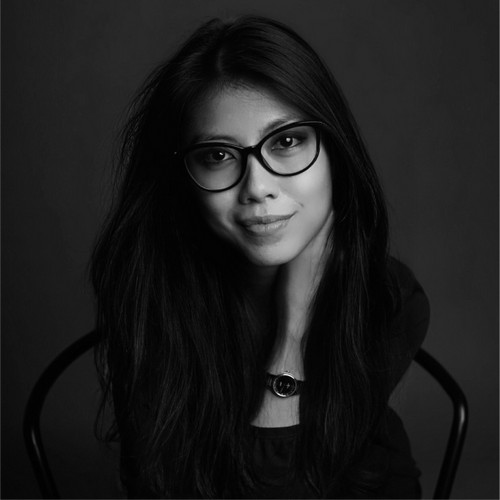
Ruby Sofyan An interior consultant and furniture designer with over ten years of experience. She has collaborated with prestigious companies in Indonesia such as Santai Furniture, producing innovative designs for interior and furniture projects. She also dedicates herself as a design lecturer at both her alma mater – Indonesian Institute of the Arts Yogyakarta and Duta Wacana Christian University, focusing on developing sensitivity and sustainability in interior and furniture design.
Driven by a desire for knowledge and growth, Ruby is currently exploring the realm of spiritual wellbeing. Drawing inspiration from her personal experiences, she incorporates this new motivation in her works. By intertwining spirituality and design, she endeavors to create meaningful and enriching spaces that resonate profoundly with each individual.
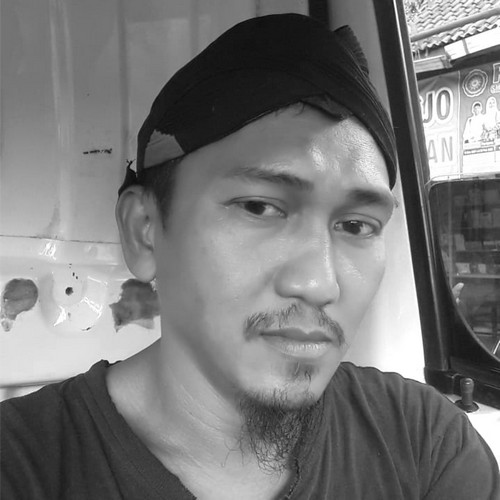
Rudi Hendriatno Born in Padang, Sumatra in 1980. He studied Craft at Institut Seni Indonesia, and then focused more on woodwork. In 2013, he received the Indonesian Art Award and his works have been exhibited in national and international galleries. Rudi’s name is a familiar one among the local contemporary art scene for his innovation and mastery of materials in manipulating wood and creating kinetic works without metal. Wood is his personal style of choice because of its proximity to nature and human daily life. Also, as part of the process, Rudi does not sketch before starting a work, but intuitively processes with the material he works with.
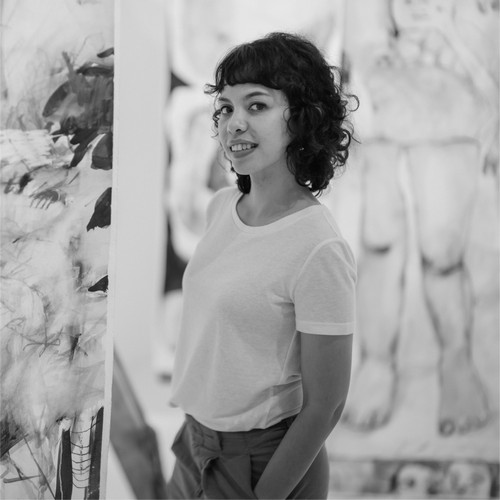
Ruth Marbun Ruth Marbun is a visual artist based in Jakarta, Indonesia. She started her career in fashion before entering visual art. Ruth is deeply interested in the relationship between humans and its environment – the ability of homo sapiens to adapt and survive. Ruth views imperfection as a humane and relatable language, which she often communicates through texture and figure deconstruction in her works in various mediums such as painting, textile works, drawing, animation and installation. She actively exhibits in various cities such as Jakarta, Yogyakarta, Singapore and Australia.
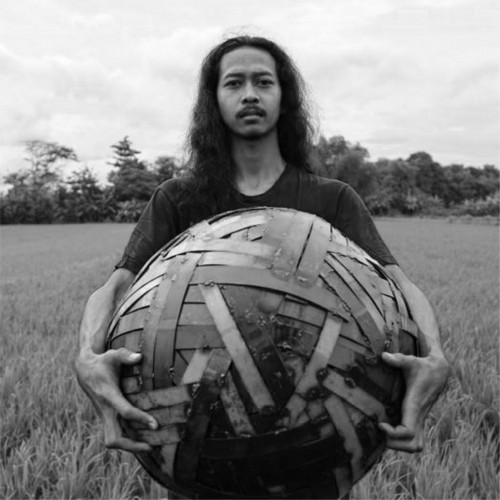
Wisnu Ajitama Graduated from Visual Arts Education at Yogyakarta State University (2016), Wisnu continued his postgraduate studies in Fine Art Creation at the Institut Seni Indonesia. Starting from his hobby of mountain climbing and caving, his works address social issues concerning the relationship between nature and humans. He responds to materials found in nature, such as roots and plants, to be reprocessed into large-scale installations. He works in hidden spaces (such as forests, mountains and rivers with a minimum of human activity) and public spaces. In each work, he responds to the philosophy of each location and involves the cooperation of the local society. Some of Wisnu’s works can be found at Mount Pengger (Dlingo, Bantul) and at Mount Watu Payung (Gunung Kidul). In 2018, he was involved in the Geumgang Nature Art Biennale and Nature Art Cube in South Korea, and also held a solo exhibition at Bentara Budaya Yogyakarta entitled Environmental Art-LENG.
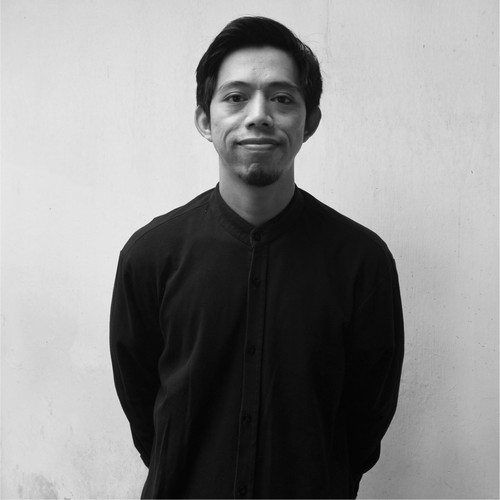
Yosep Arizal Born in 1991 and received his BA in Visual Arts Studies, Department of Fine Arts, Institut Seni Indonesia Yogyakarta in 2016. His works highlight gender issues, taboos, historicity, and its intersections with religion, tradition, and cultural identities. He presents his creative ideas in the form of drawing, painting, installation, video, and movement art. His works have been exhibited in Jogja Biennale XV (Jogja National Museum, 2019), Pameran Besar Seni Rupa: Panji 2019, UOB Painting Of The Year 2019, Study Club: Clothing As A State of Power 2020, Festival Kesenian Yogyakarta 2021, Rasasastra: Union Art Festival 2022, Babad Lembana 2022, and Queer Muslim In Conversation 2022. In 2021 Yosep participated in the residency of the Innovation and Professional Development Program for Performing Arts organized by Padepokan Seni Bagong Kussudiardja, and in 2022 was awarded the Seed Awards from the Prince Claus Fund, Amsterdam.