

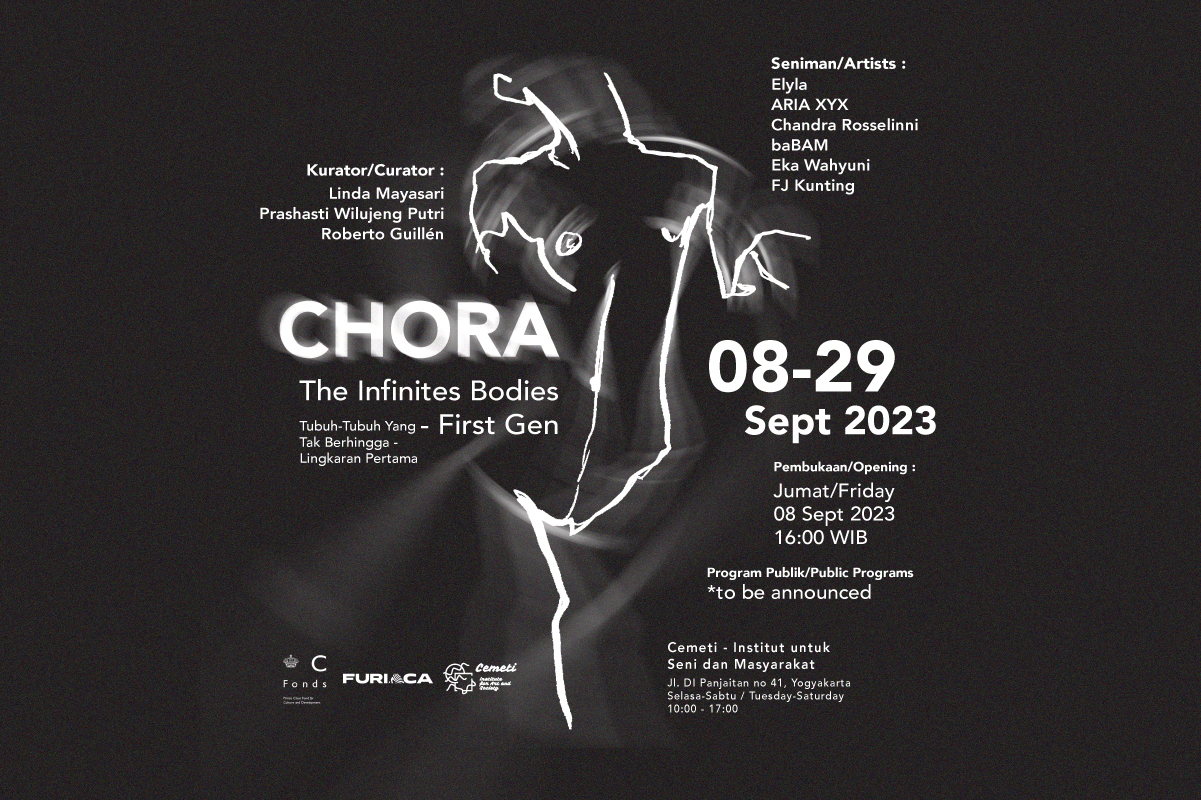
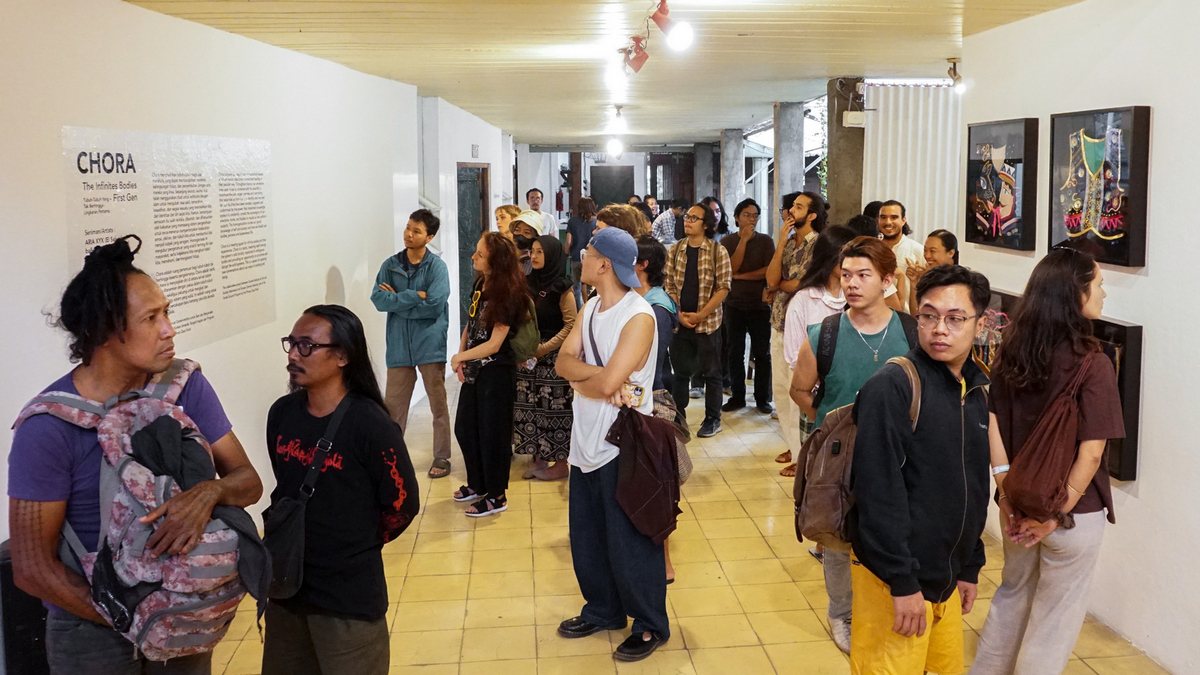
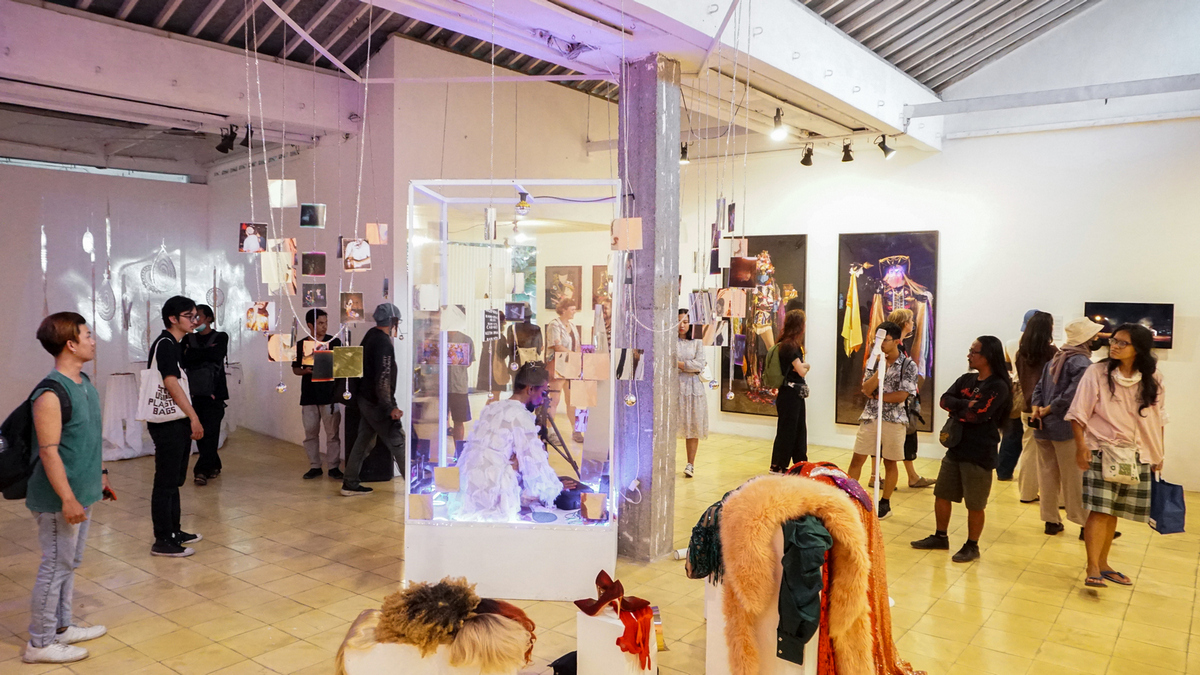
CHORA: The Infinites Bodies – First gen
8 – 29 September 2023
ARIA XYX (El Savador)
baBAM (Yogyakarta, Indonesia)
Chandra Rosselinni (Yogyakarta, Indonesia)
Eka Wahyuni (Berau-Yogyakarta, Indonesia)
Elyla (Nicaragua)
Fj Kunting (Kediri, Indonesia)
Linda Mayasari (Indonesia)
Prashasti Wilujeng Putri (Indonesia)
Roberto Guillén (Nicaragua)
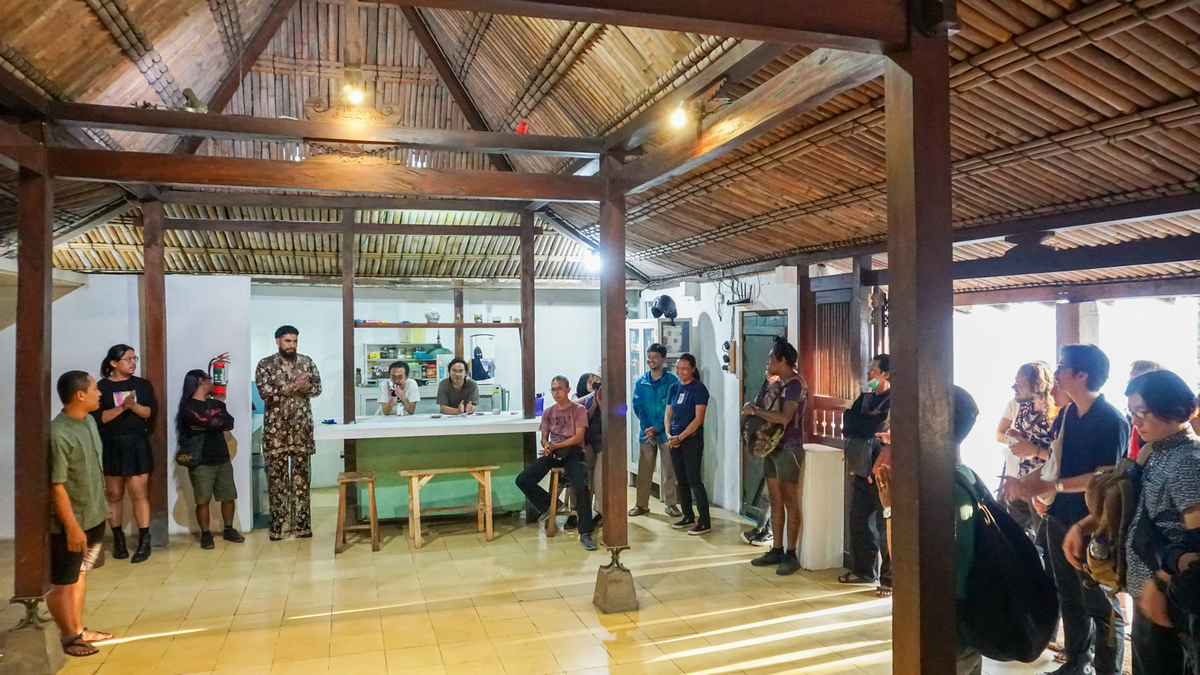
Opening:
Friday, 08 September 2023 | 04:00 PM
Public Program:
*to be announced
Cemeti - Institute for Art and Society
Jl. D.I. Panjaitan 41, Yogyakarta
10:00 - 17:00 | Tuesday - Saturday
The collaborative project between Cemeti-Institute for Art and Society (Indonesia) and Furiaca (Central America), part of the Fertile Ground Program by the Prince Claus Fund.
Whether we realize it or not, we are all in the process of becoming. In this process of becoming, Connell (2009) marks two positions of the body that are in tension with each other; on the one hand, the body occupies a position as an object of constructed social practices, as well as an agent of social practices that continuously interact with the social construction that occurs. The body appears to be the epicentre of the experience of pleasure, a source of recognition and a sense of identity; at the same time, it is also a source of injustice, suffering, and harm.
There is ample evidence of trauma in our territories and bodies throughout history. Our bodies keep memories of social and political conflicts that have marked the memory of the body of our grandparents and ancestors. However, there are family traumas, violence experienced behind closed doors and mistreatment by a hetero-patriarchal system towards our bodies and ways of being that leave no evidence. They are internal processes that we carry with us throughout our lives.
On a social level, there is an essential component in how we come to be part of a community and how the community accepts us or not for the way we are being or living. Our bodies have been conditioned by impositions that force us to be the way we should be. They prepare us to think, live, and make decisions according to the status quo we were raised in. On a personal level, there is a dialogue between our memory, what we do not remember and what we experience. A conversation that sometimes lacks communication due to the memory erased by our own body.
The infinite bodies have great potential to remember, question and rethink how we inhabit our bodies and express the traumas of our history. Taking Plato’s concept of the body as ‘Chora’, Upstone (2009) concocts an idea that she feels is appropriate to represent the ambiguous body as a counter-discourse to the solid body constructed by power. The Chora’s fluid identity is a continual refusal to be hemmed in by seemingly natural boundaries of what a body can be.
More profound than we can imagine, Chora conjures up magical and metaphorical bodies, which can evoke resistance, survival and healing in their peculiar way. Throughout history, our ancestors have used rituals to converse with the afterlife to transmute the pain, anger, sadness and everything that separates us from our true identity and true self. Yet such faculties have been eroded, negated, and undermined by the power that implanted knowledge systems to constantly contest the sovereignty of our emotions, minds, and bodies to mould us into uniform subjects. This homogenization buries our genial knowledge of self and society and how we inhabit our bodies, perceive and experience life.
Chora is a meeting space for infinite bodies and our experiences. Chora is a tactic, inserting itself between the system’s cells forcibly implanted in these ambiguous bodies and an opportunity to scrutinize and disrupt the solid system. It is a space to open new conversations about our ways of being. In the words of Spens (2013), Contemporary art is used as a means for rehabilitating and healing communities affected by political violence in various ways, from the use of art therapy in the rehabilitation of prisoners and victims to the broader use of art as a communal experience that enables shared memory and compassion in particular groups of people. We accept that we are not linear. We are travelling, experiencing another path and new ways, constantly rethinking our identity, revisiting and rethinking our territory to live as we deserve.
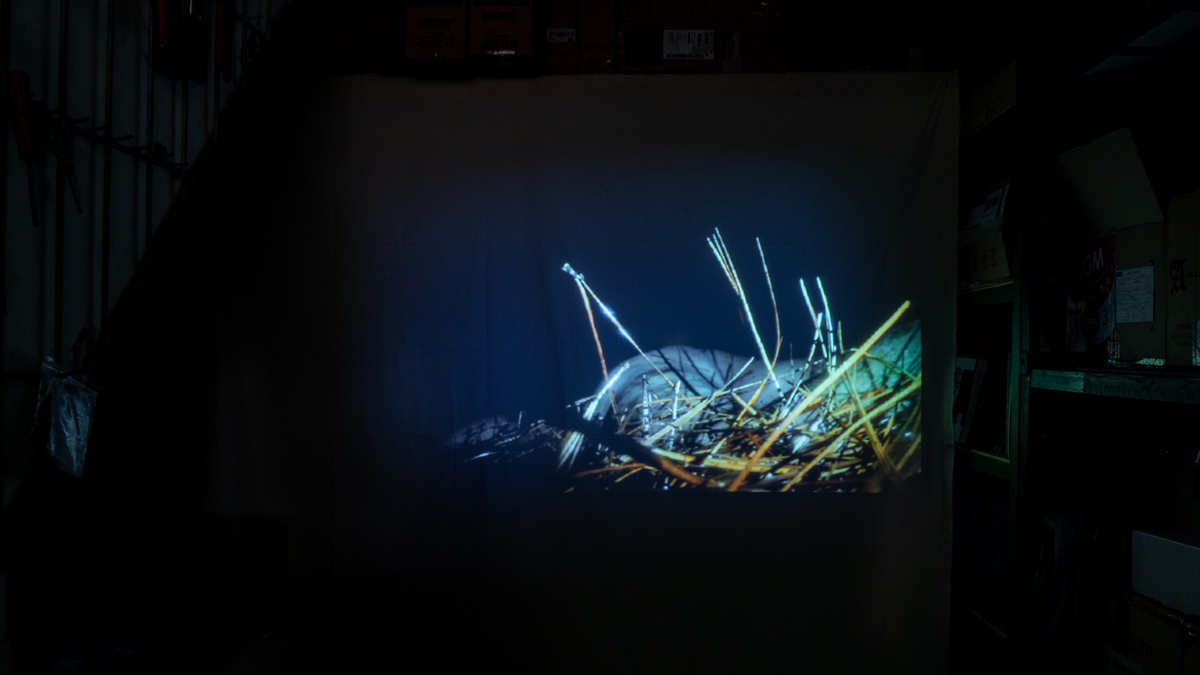
Experimental video resulting from a residency in performance by Proyecto Ensayo y Error in El Salvador
ARIA XYX
Video performance
3 min 25 sec
2022
Whenever I think about the body, I do it outside of a clean and sterile perception, for me the body is beautiful, liquid, smells and above all sensory. Regarding the sensory, I decided to enter a cold forest at midnight to connect and be frontal with my reality, my traumas and connections, in the night soldiers, it was then that in a cathartic process I connected with the inheritance of my name and with my father as a point of friction with masculinity. The record of the action showed me an inert body, a corpse, which at the time I could not process. Today, after a year, I connect with the action as the process of early rupture of the inheritance that I did not fulfill, with the masculine role that I did not play and with the concept of the body that I did not inhabit. The deafening sound coincides with the uncertainty of who I am, what I do and where I am going.
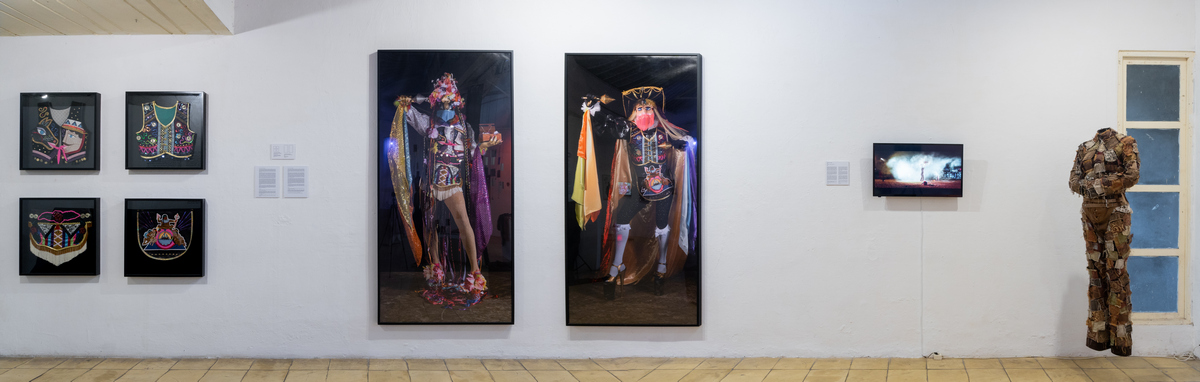
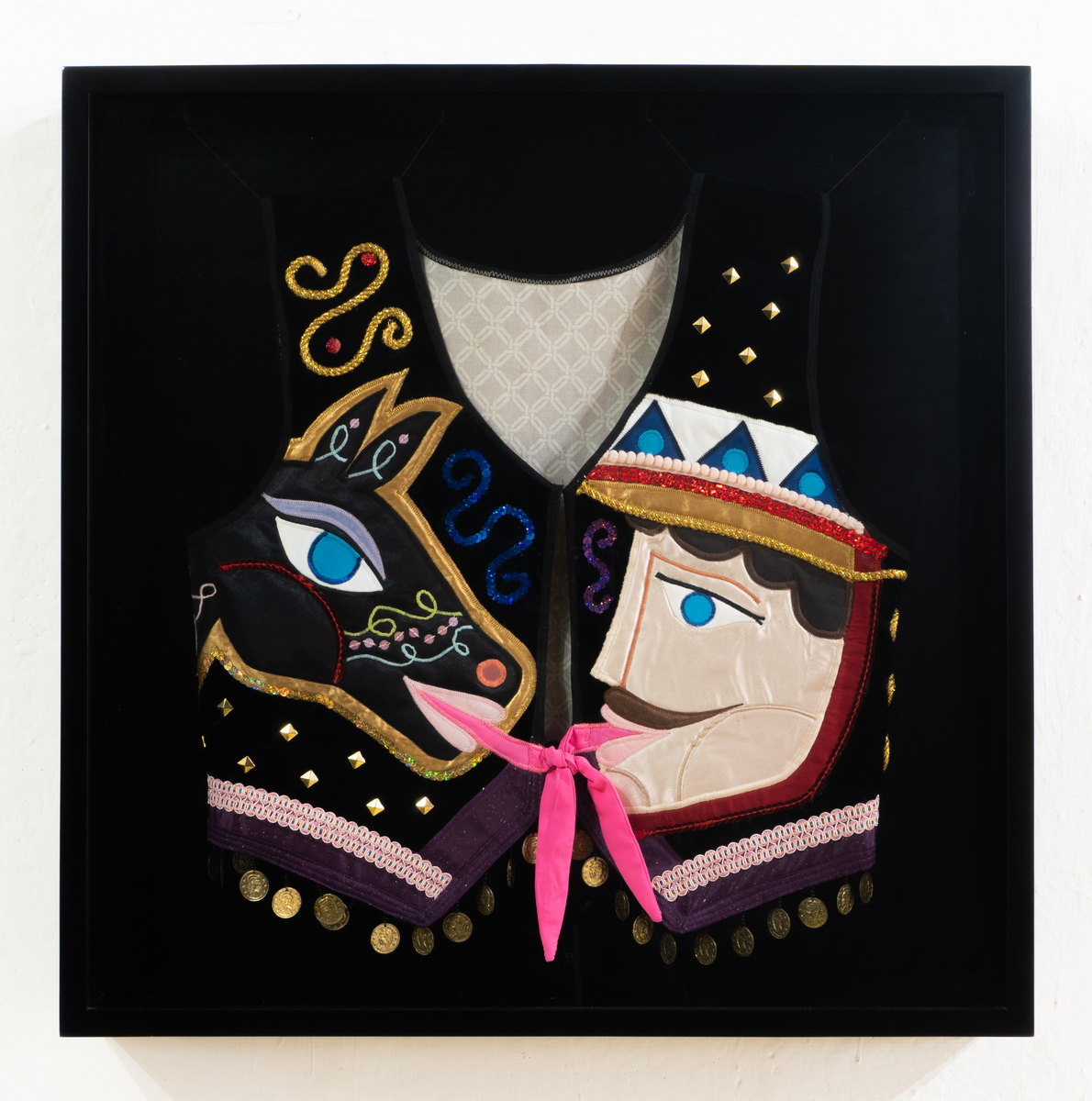
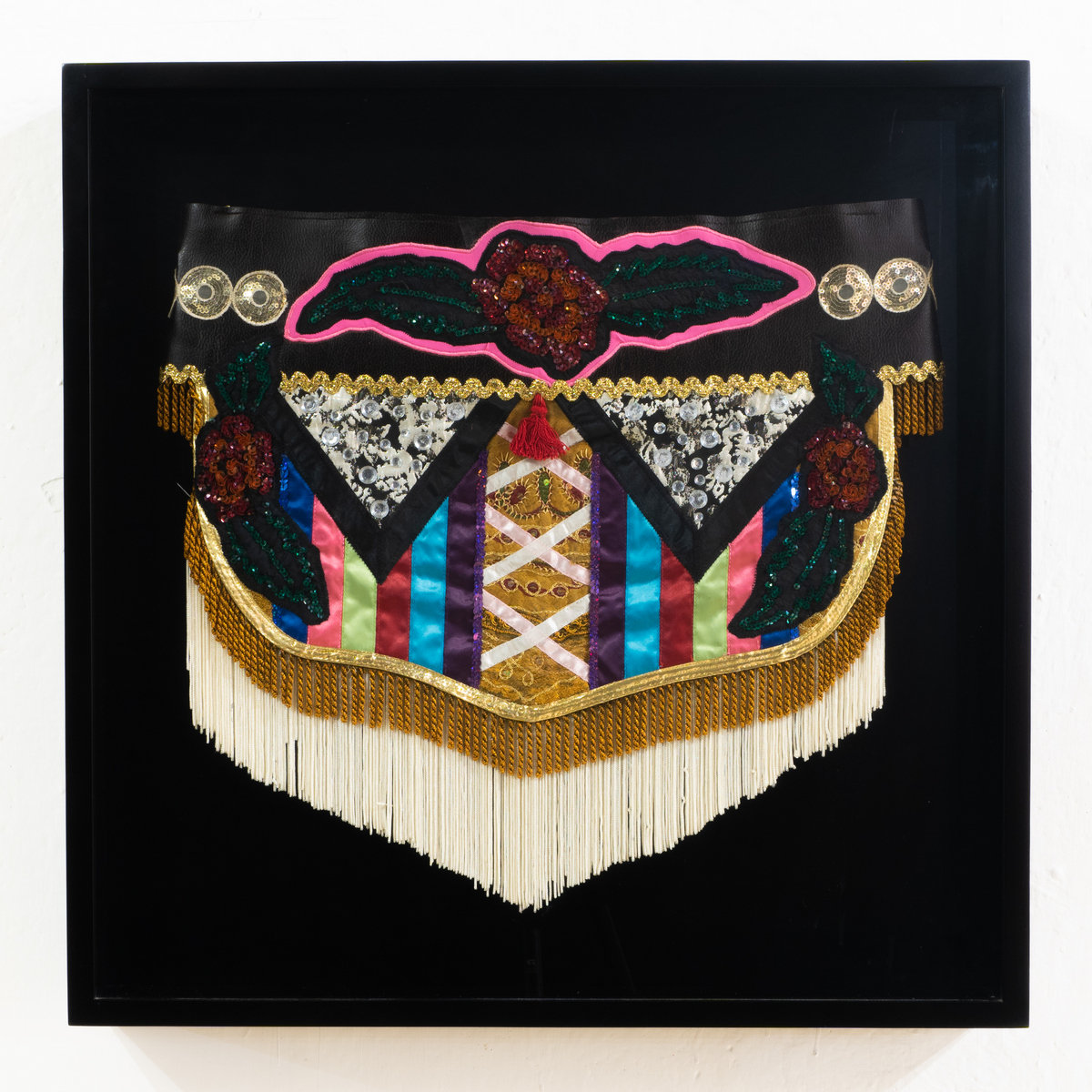
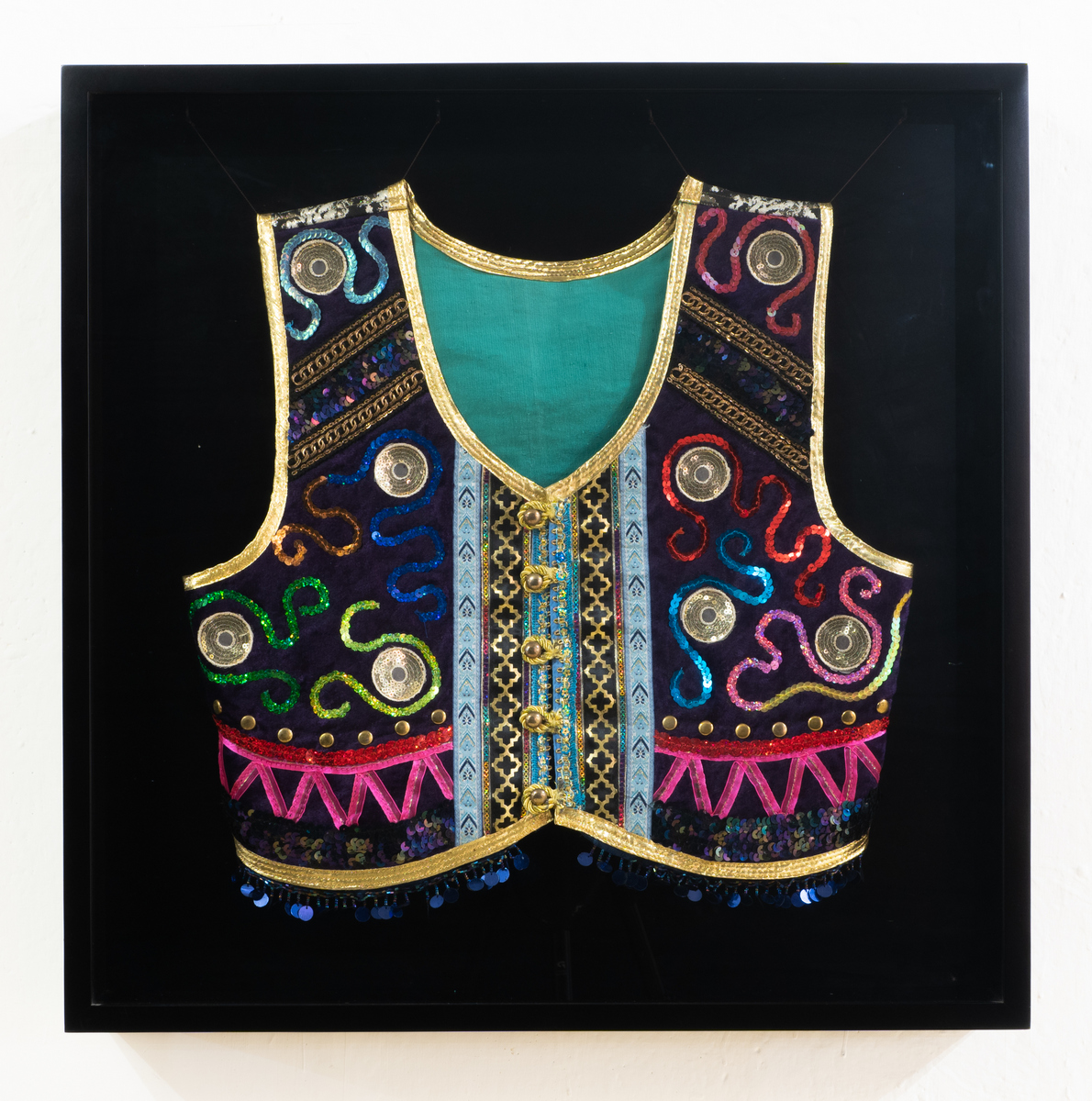
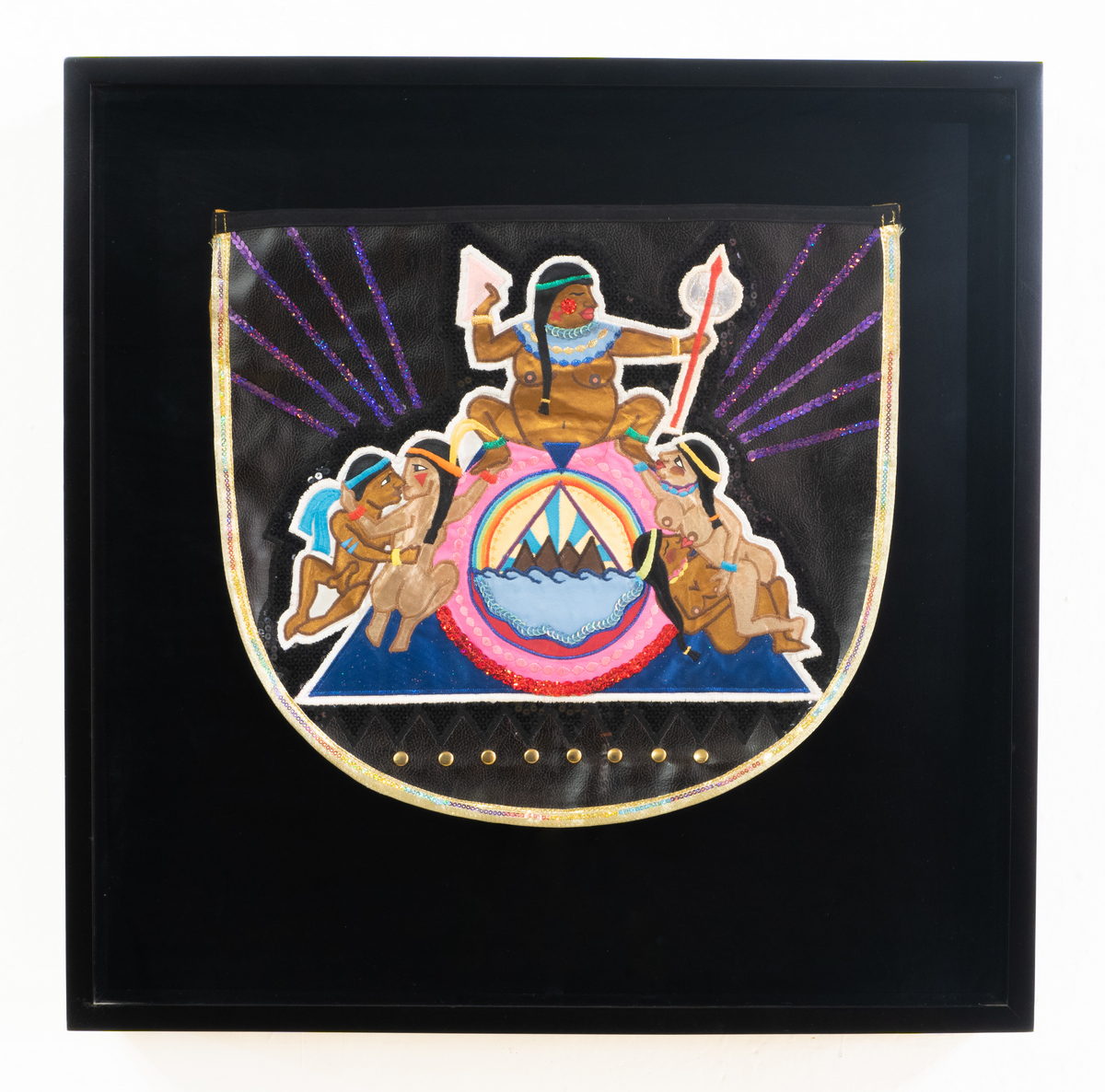
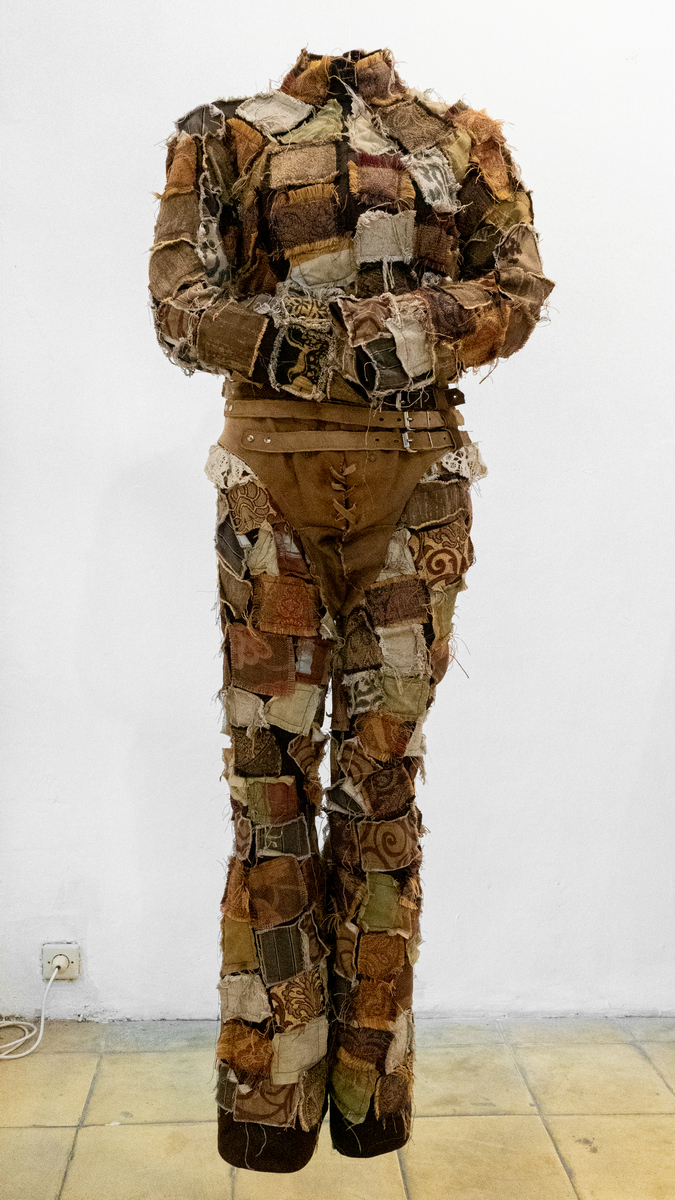
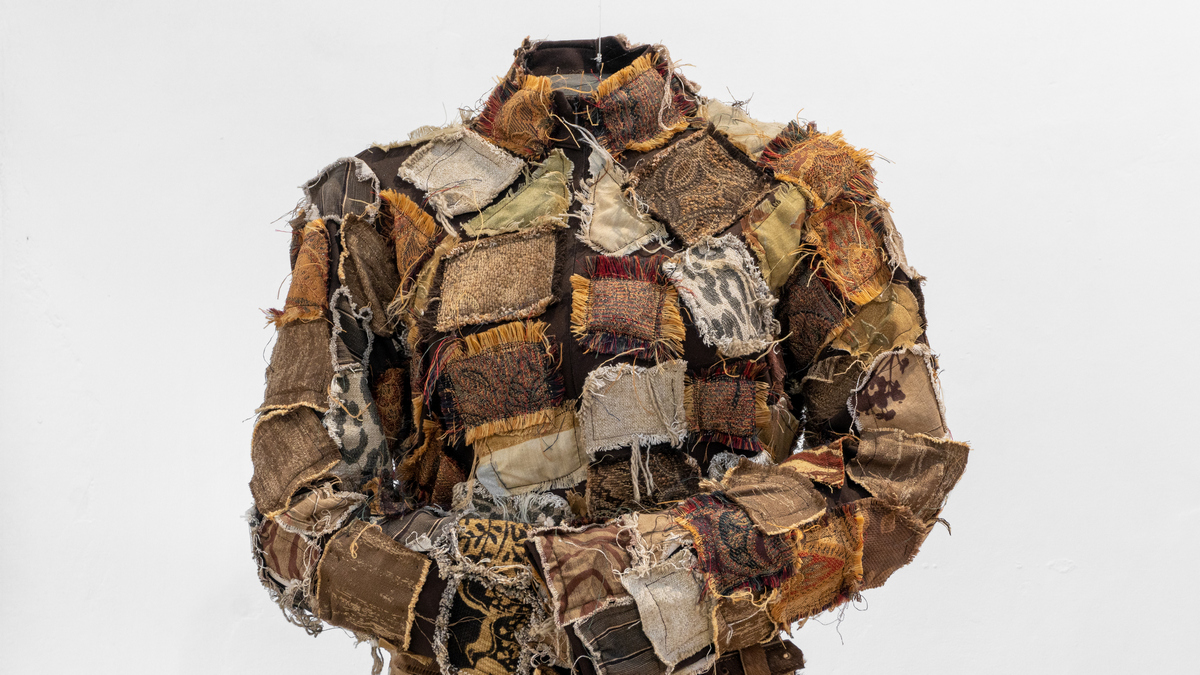
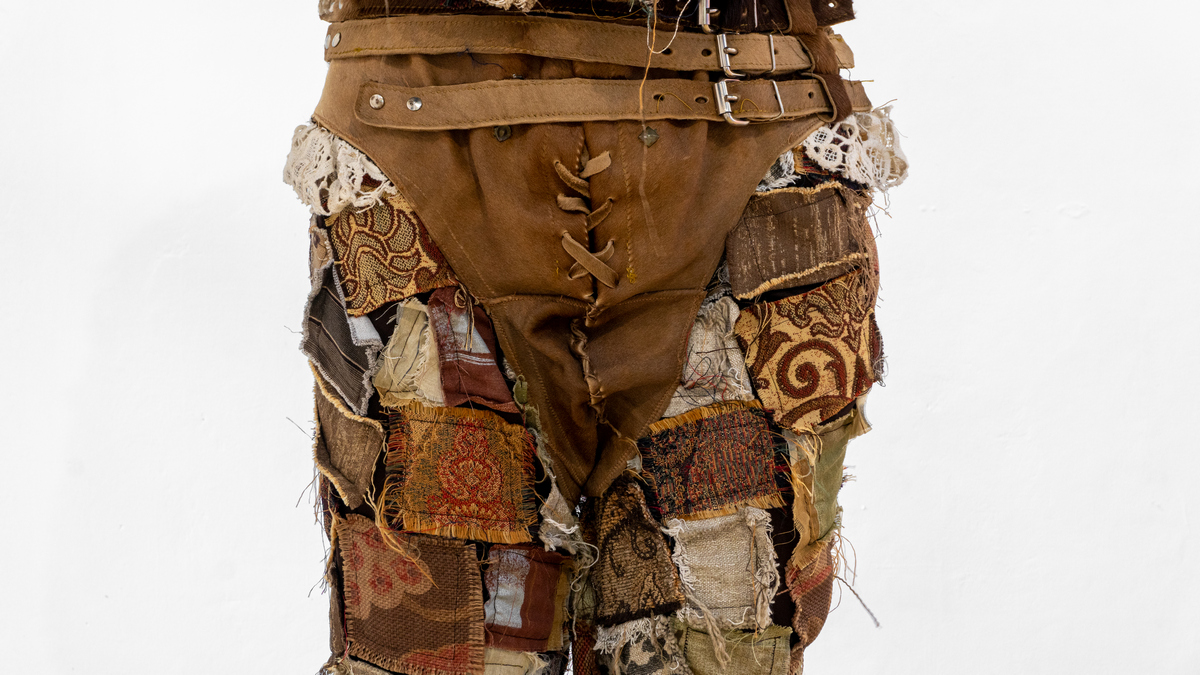
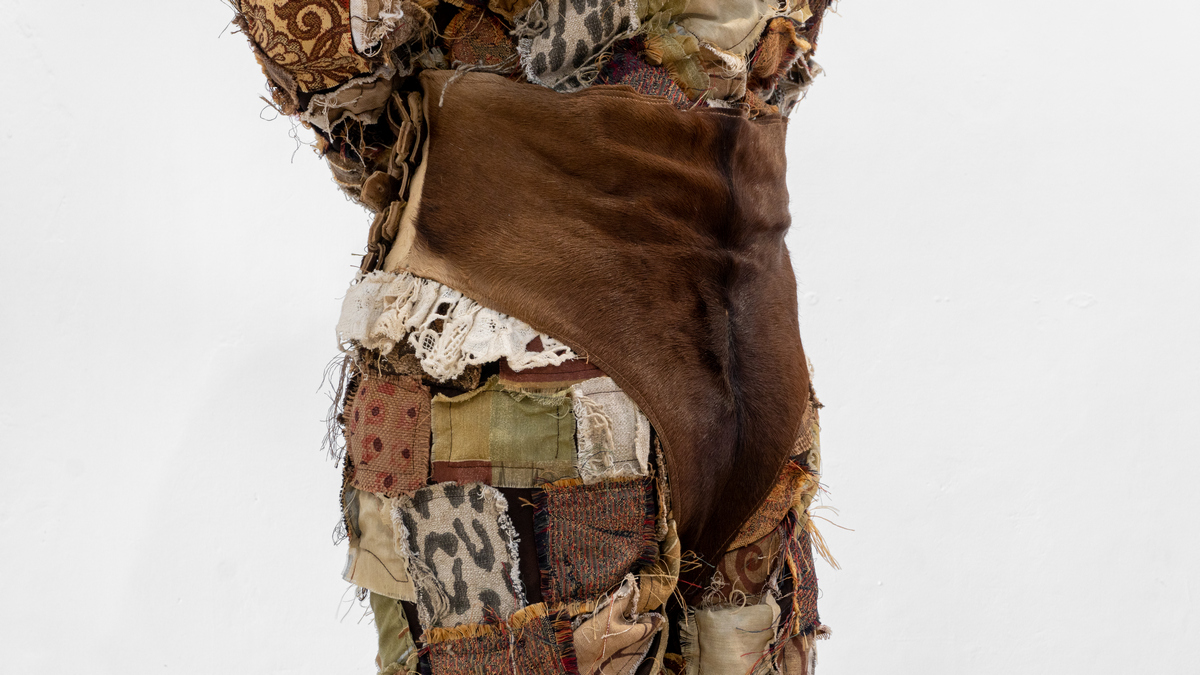
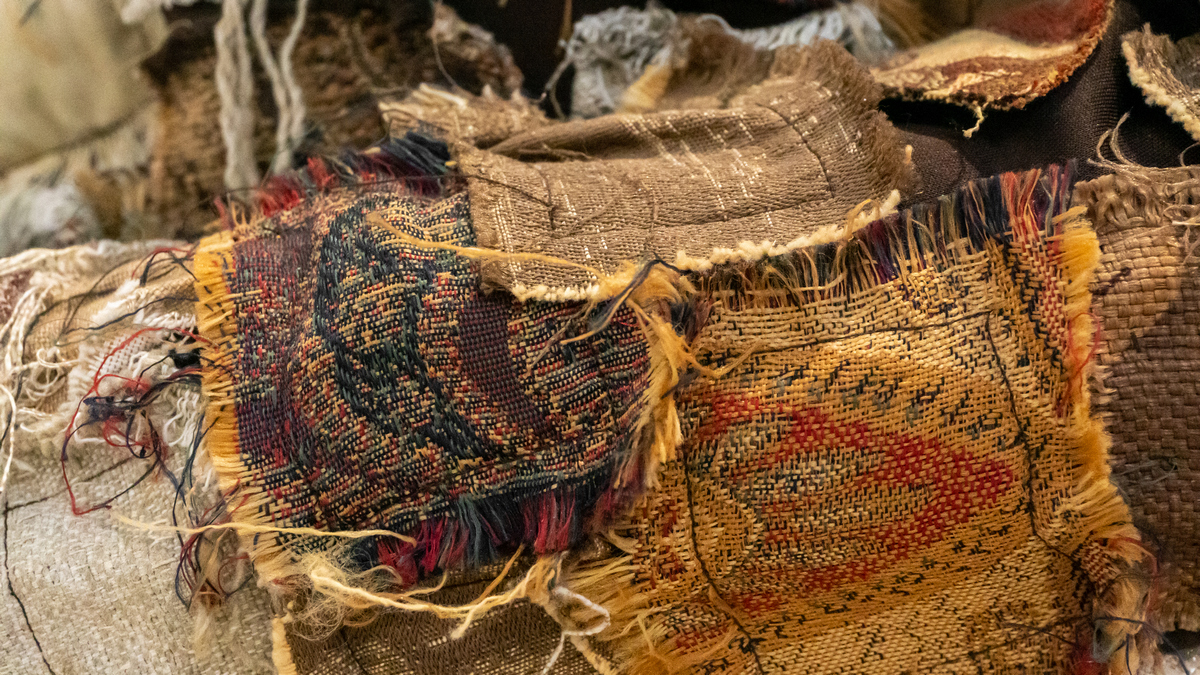
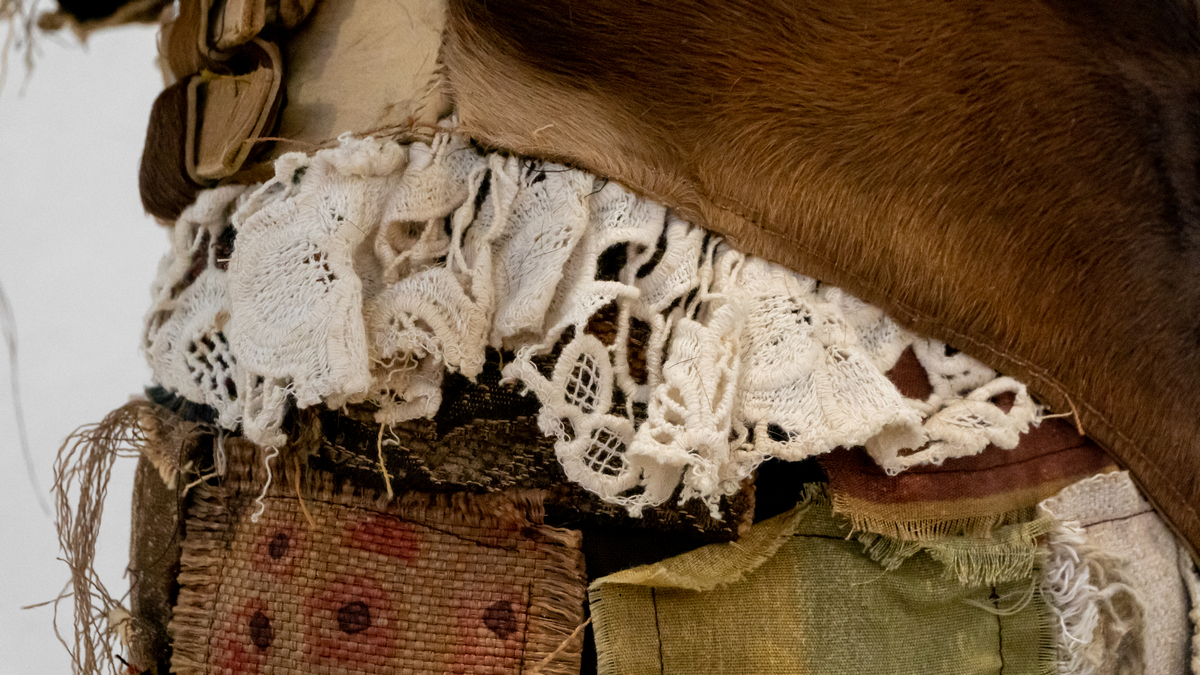
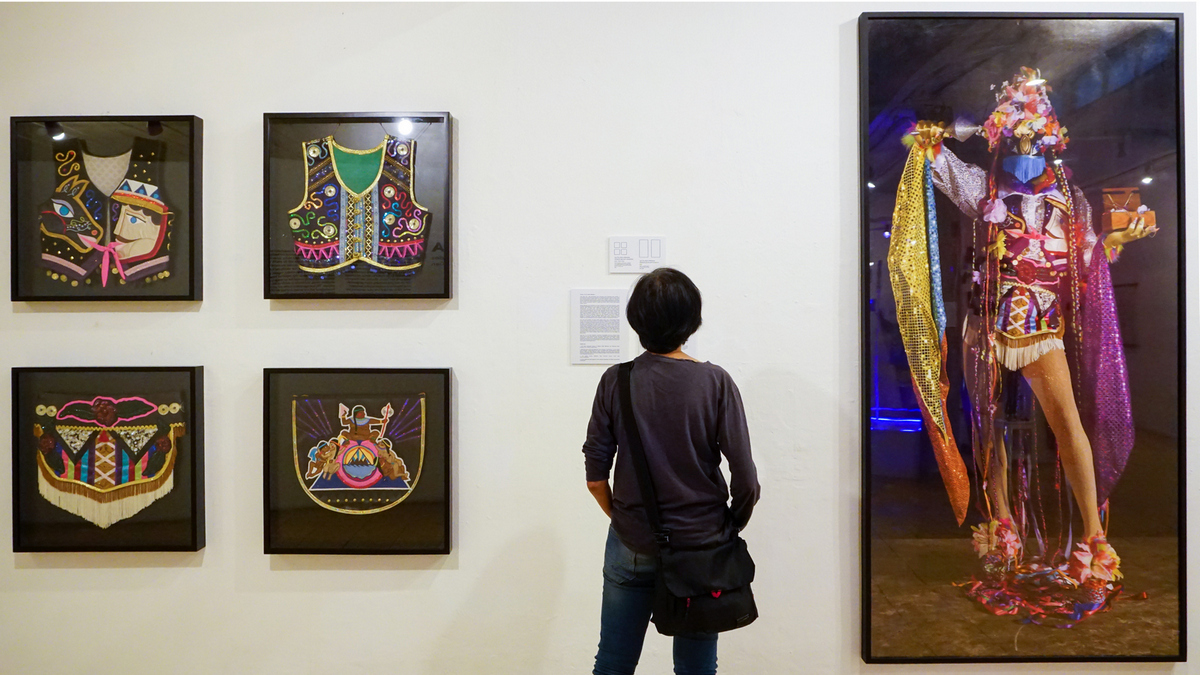
Las Dos Barro-Mestizas (Original garment ensamble)
Elyla
Various fabrics, acrylic paint, sequins – four original pieces and full garments (clothing shown in Photo-performance)
50 cm x 50 cm each
2021
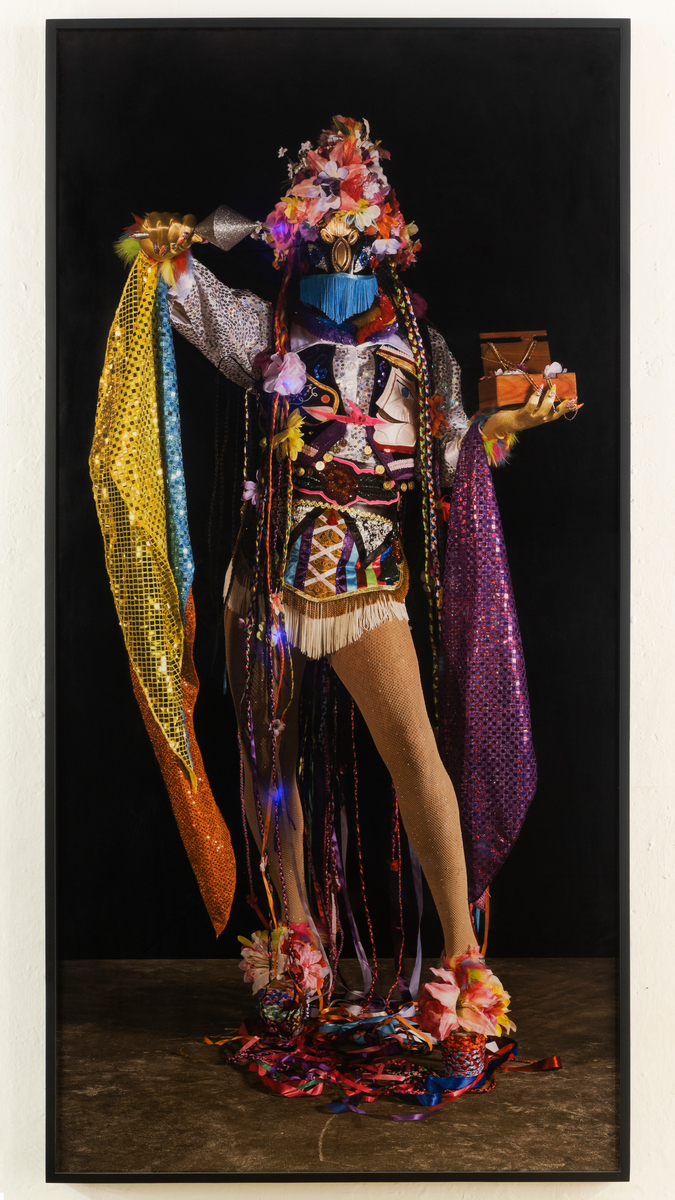
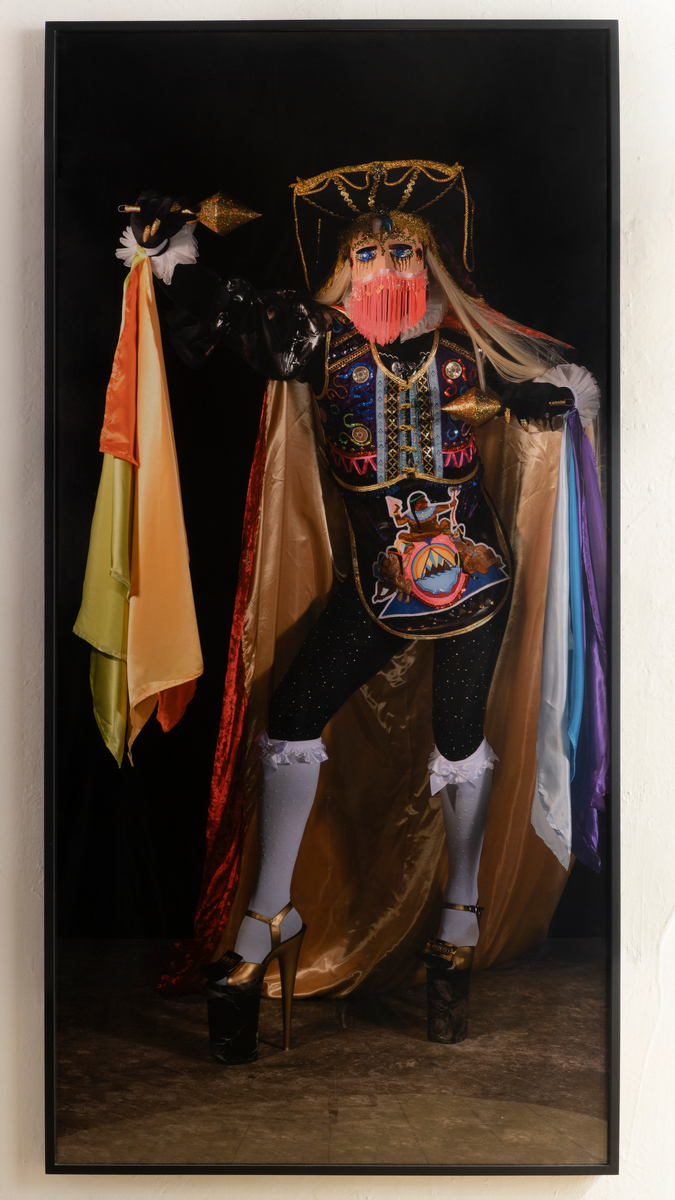
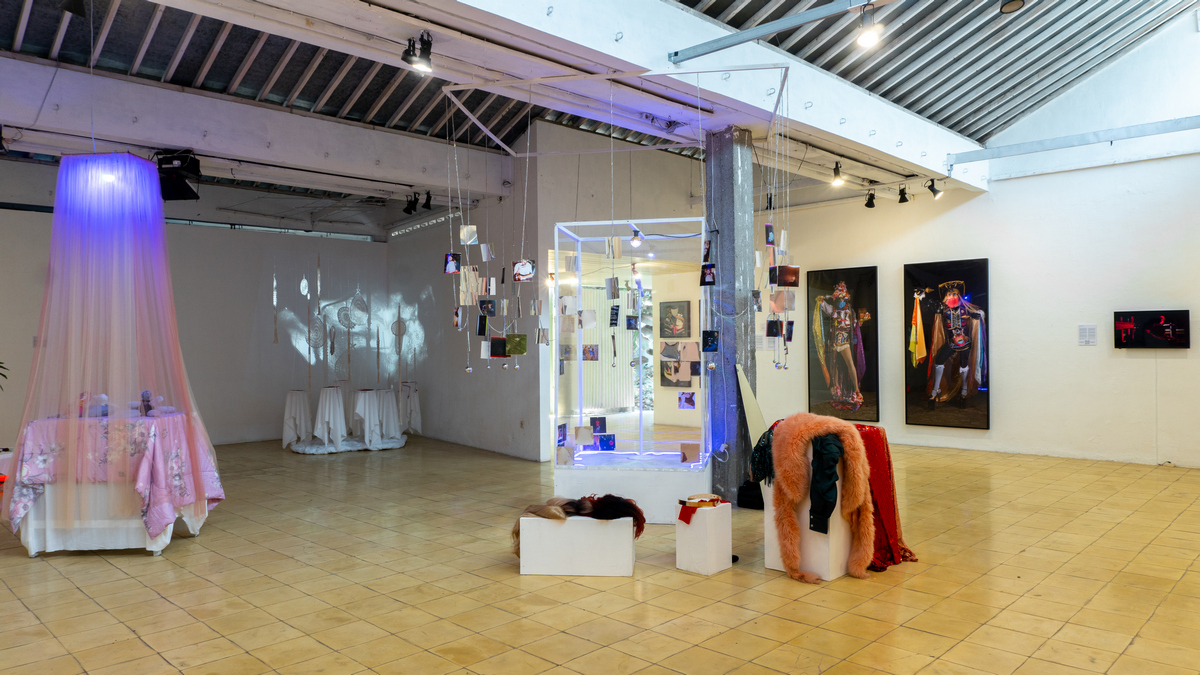
Las Dos Barro-Mestizas (Diptych photo-performance)
Elyla
Inkjet on photo paper
107 cm x 218 cm each
2021-2022
In 2021, Elyla was awarded an Artist Protection Fund Fellowship by the Institute of International Education (IIE) supported by Bucknell University, USA. The four piece original garment ensembles for Las Dos Barro Mestizas were produced when the artist was in exile due to political persecution in their home country. These pieces are the result of a relational art process in collaboration with Diné (Navajo) indigenous artist Sierra Pete. The photo-performances were shot back in their home country once they were able to return safely.
Nicaraguan history told from the colonial hegemonic narrative has erased the realities of dissident sexualities outside the gender binary and at the same time the nationalist liberation processes have marked them as bourgeois deviations or inventions of internationalists from the global north1 with no place in the territory. These processes are supported by the myth of the mestizaje2 that is used by the rulers of passage to cement the identity of being Nicaraguan. The greatest cultural expression of this nationalist Nicaraguan mestizo identity can be observed in the theatre play El Güegüense (XVII), which tells us a synthesis of the “fusion” of Spanish and native cultures. This work is a satirical drama and was the first play of Nicaraguan literature from the colonial era, and it’s also thought to be the first ever theatre play in the Americas, thus El Güegüense was appointed in 2005 as Oral and Intangible Heritage of Humanity by UNESCO.
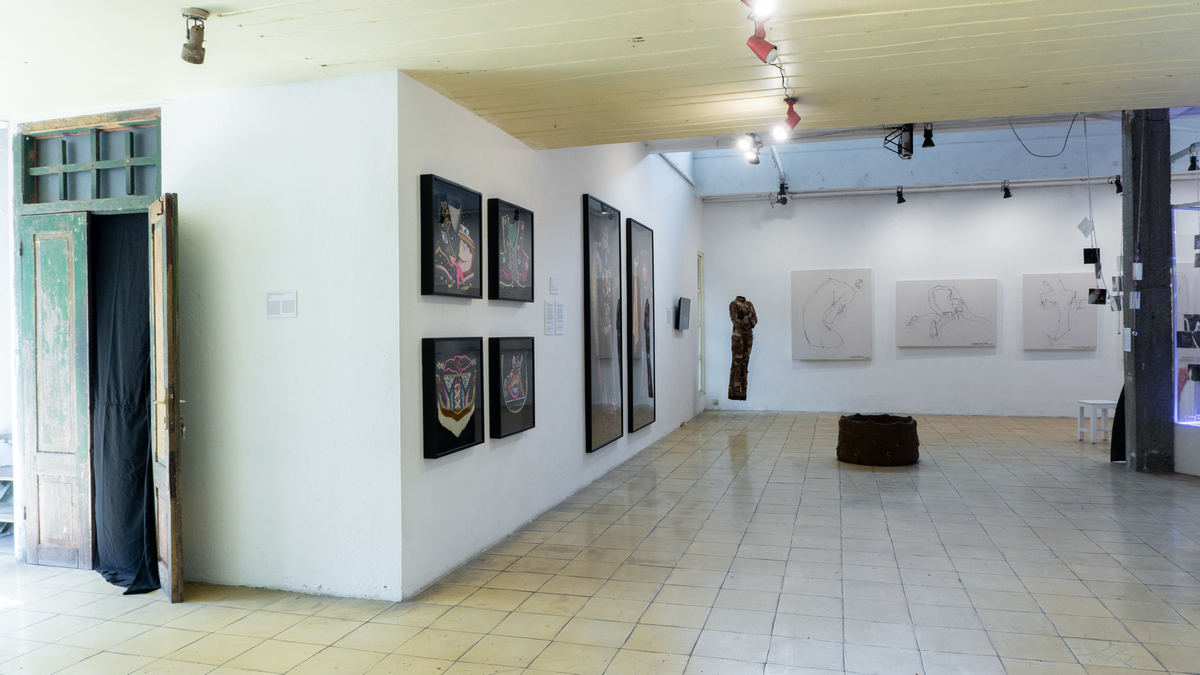
The art piece proposed by Elyla was an invitation to re-imagine alongside Sierra Pete the traditional Güegüense3 costumes through a cochón4 (queer) lens, in order to honor the memory of LGBTIQ+ artists and activists in Nicaraguan recent history. The vest of the Macho Ratón (display right) outfit shows Güegüense and Macho masks that intertwine their tongues in a passionate kiss inspired by the artistic work of the Nicaraguan indigenous sexual dissident painter Leoncio Sáenz (1935-2008). The apron of the Güegüense outfit (display left) shows the first mural to honor dissident sexualities in Nicaragua before Spanish colonization made by queer revolutionaries at Fundación Nimehuatzin, CEP-SIDA (Circa 1990). This mural was made in order to respond to the accusations of the FSLN Sandinista Political Party against LGBTIQ+ activists, making it clear that sexual dissidence was not a bourgeois disease or invention of the Global North Internationalist, but rather a reality originating within our indigenous Mesoamerican roots.
“Las Dos Barro Mestizas” art pieces address the complexity of indigenous ancestry through colonial history for queer bodies, one that can be traced in contemporary cultural practices. The costumes are trans-ancestral resistance, they celebrate corporeal divinities and they reclaim the spiritual power that sexual diversity peoples had before the colonial wound and that we still possess until this day.
Footnote:
1. 500 Years of Sexual Diversity in the Pacific Region of Nicaragua by Historians Karen Kampwrith and Victoria Gonzales-Rivera
2. Mestizaje is a term used to refer to the racial and cultural “mixing” of natives Mesoamericans and Europeans. In Latin America, mestizaje/mestizx is a political identity that can be understood as an ethno-cultural syncretism that emerges from colonization imposition. This term serves as a neocolonial violent cultural paradigm to erase indigenous ancestry.
3. From náhuatl: Wewentsé ‘Venerable Anciano’ (Honorable/Wise Elder)
4. Cochón is a word used to refer to dissident sexualities and genders in Nicaragua.
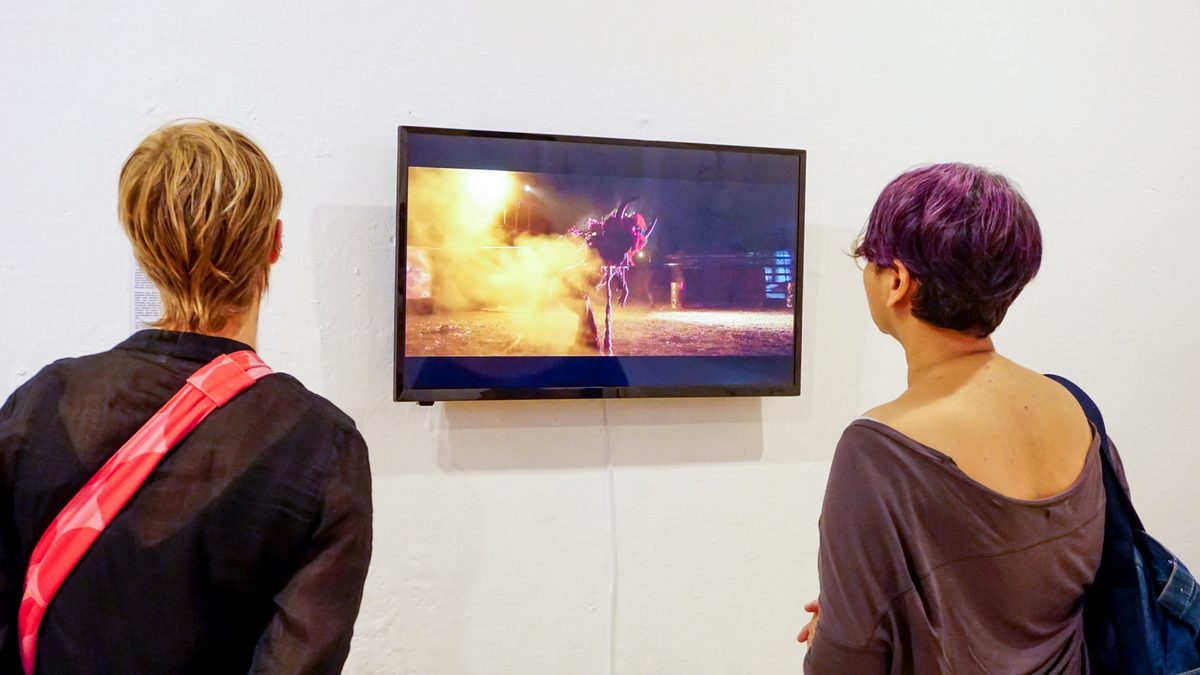
Torita-encuetada
Elyla
Performance – Single Channel Video
11 min 54 sec
2021
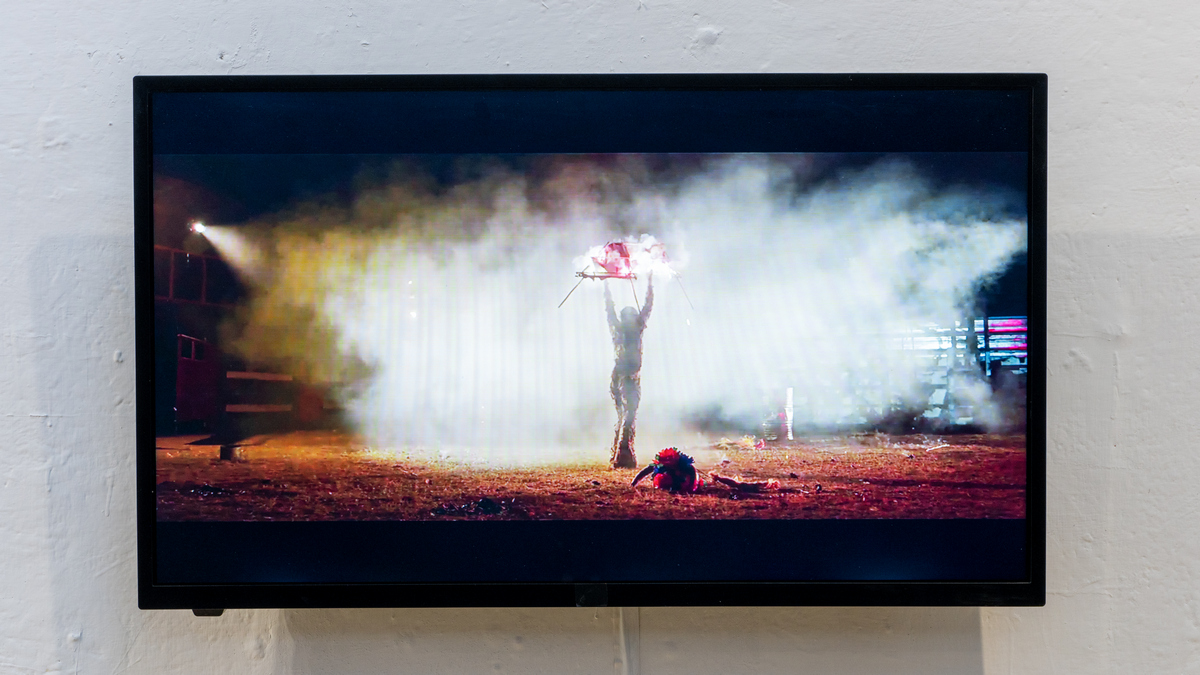
The mestizo body wounded by the sharp colonial spear that traverses history for generations has been blinded to its own indigenous ancestry. Their spirit has been denied a deep connection to their land, body and culture. This fire ritual is an explorative ceremony of the return to Mother Earth, an act of rematriation, a spiritual approach to the indigenous worldview of the Nikanhanawak (Nicaraguan) territory.
“Torita-encuetada” is a ritual art piece based on a Nicaraguan cultural practice called Toro-encuetado, which I resignify from my exploration in order to propose an encounter between a corporality built from the mestizo paradigm (myself) and another from indigeneity (my friend and traditional dance teacher from the indigenous people of Monimbó, Gustavo Herrera).
The bull brough to the Americas during the colonization process is charged with fireworks and maneuver by a body carrying the ancestral fight. During the ritual I ask my friend and teacher to set me on fire so that I can be learn from the ashes, holding wisdom of the grandfather fire; memories that are held by our elders, those whose name we know and the unnamed ones, to whom I ask to give me the opportunity to continue with building my path.
*The performance “Torita-encuetada” was created by Elyla and recorded during the filming of the project “My Skin and I” by the Filmmaker Milton Guillen.
Song credits: “Mariquita Linda” and “Torita Suelta” by Susy Shock
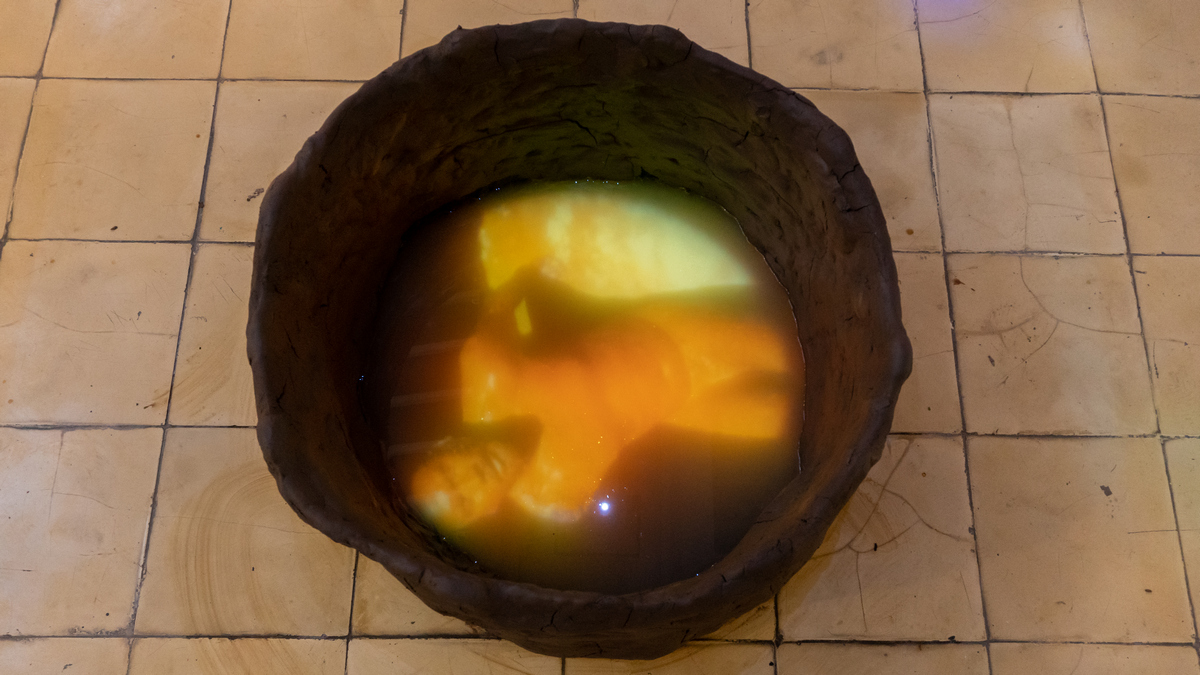
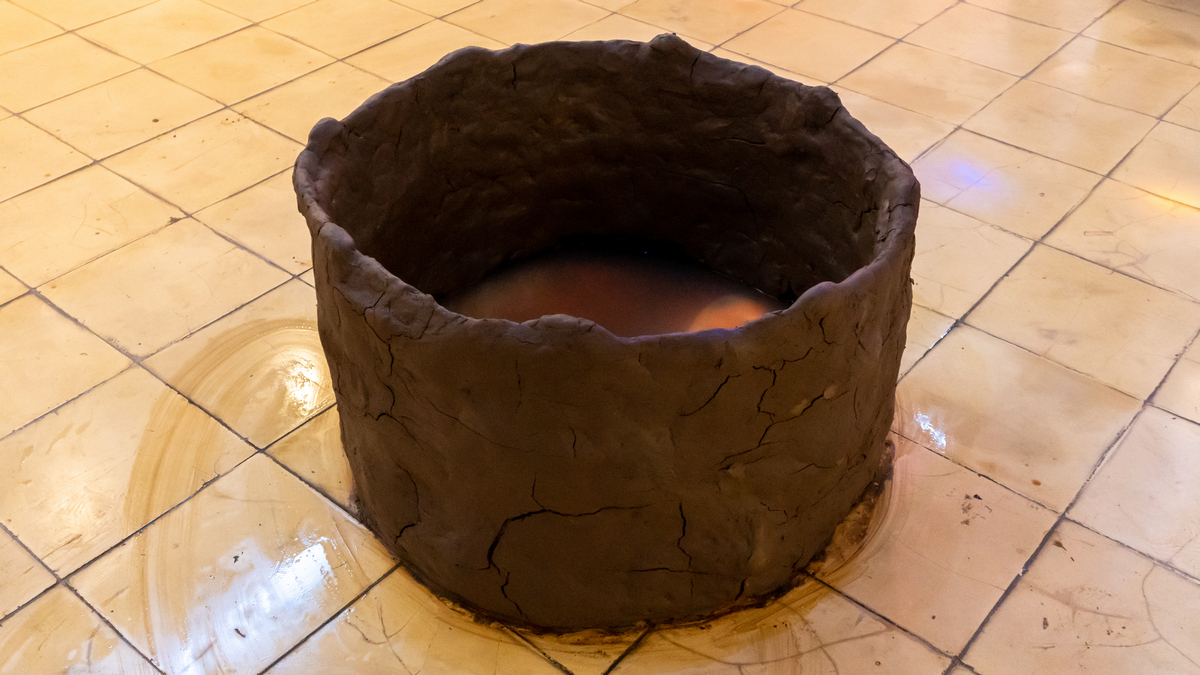
Experimentation during the residency process
Elyla
2023
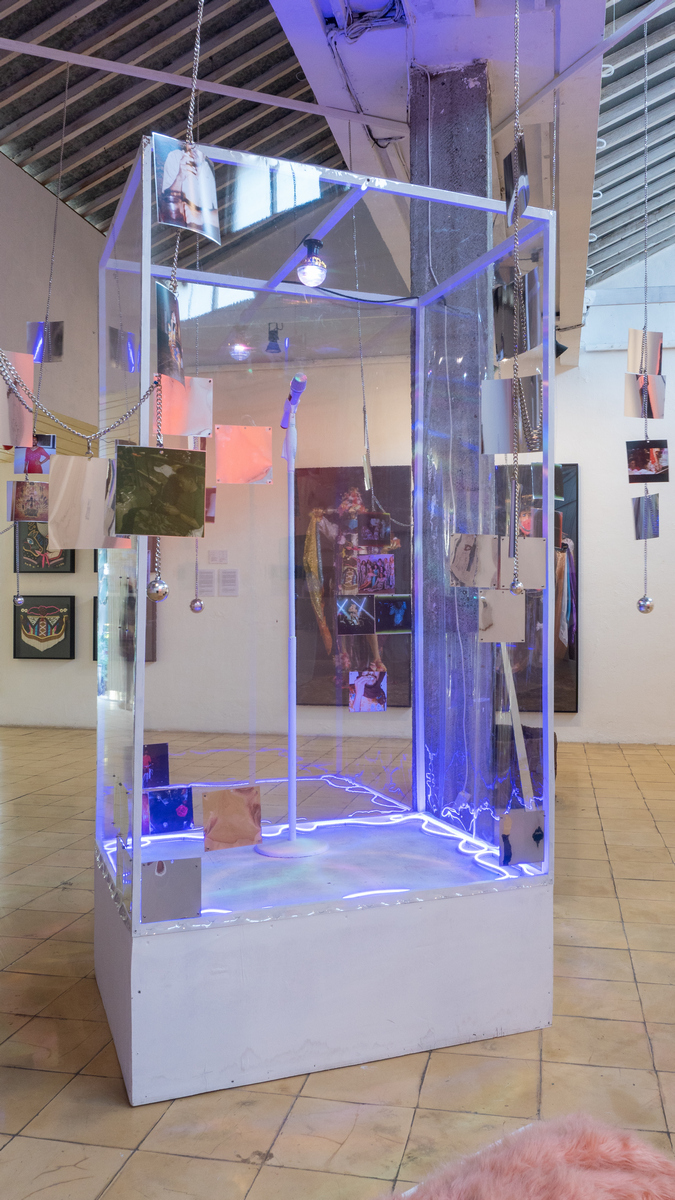
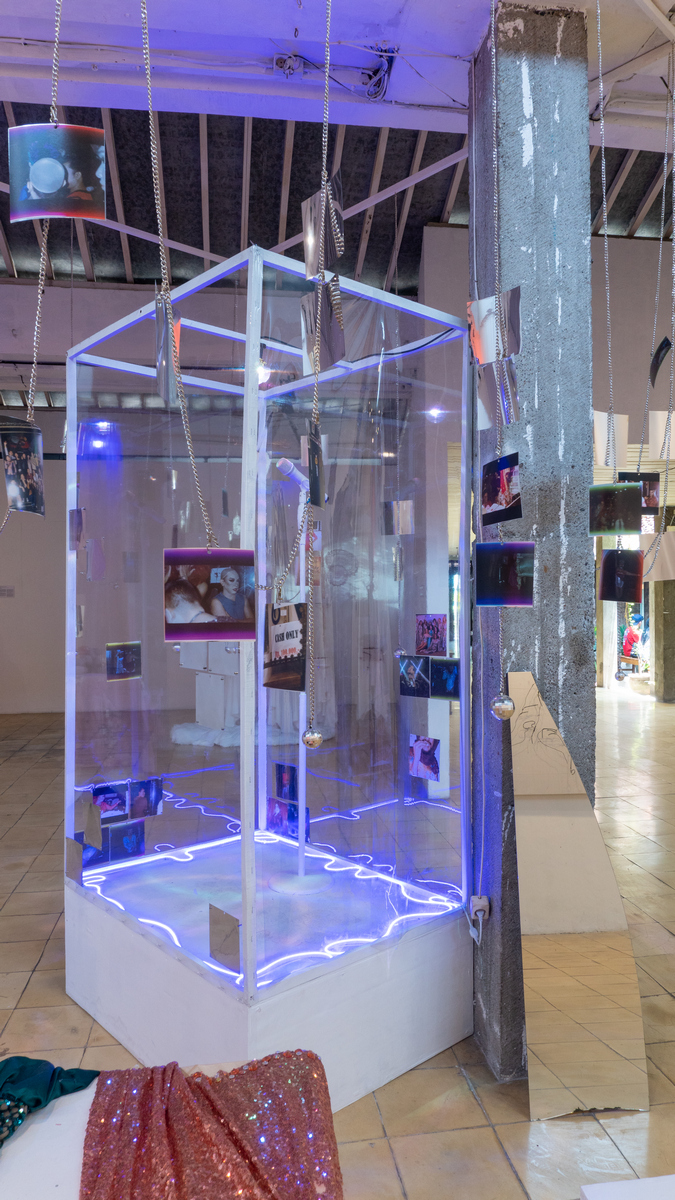
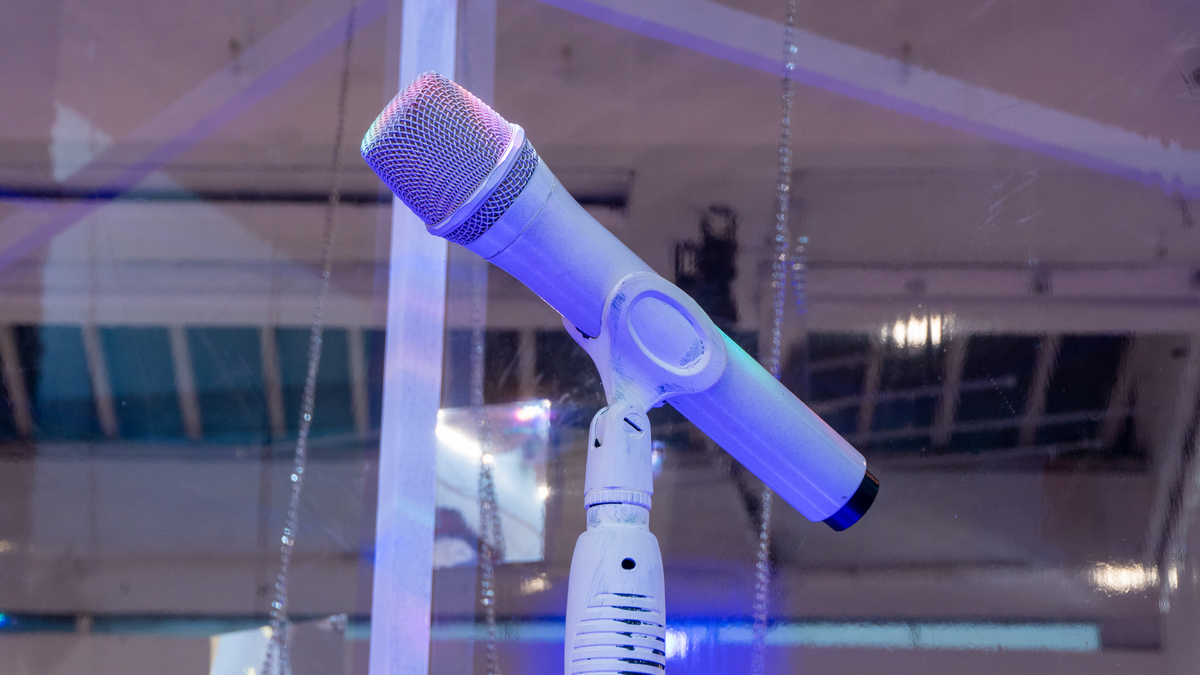
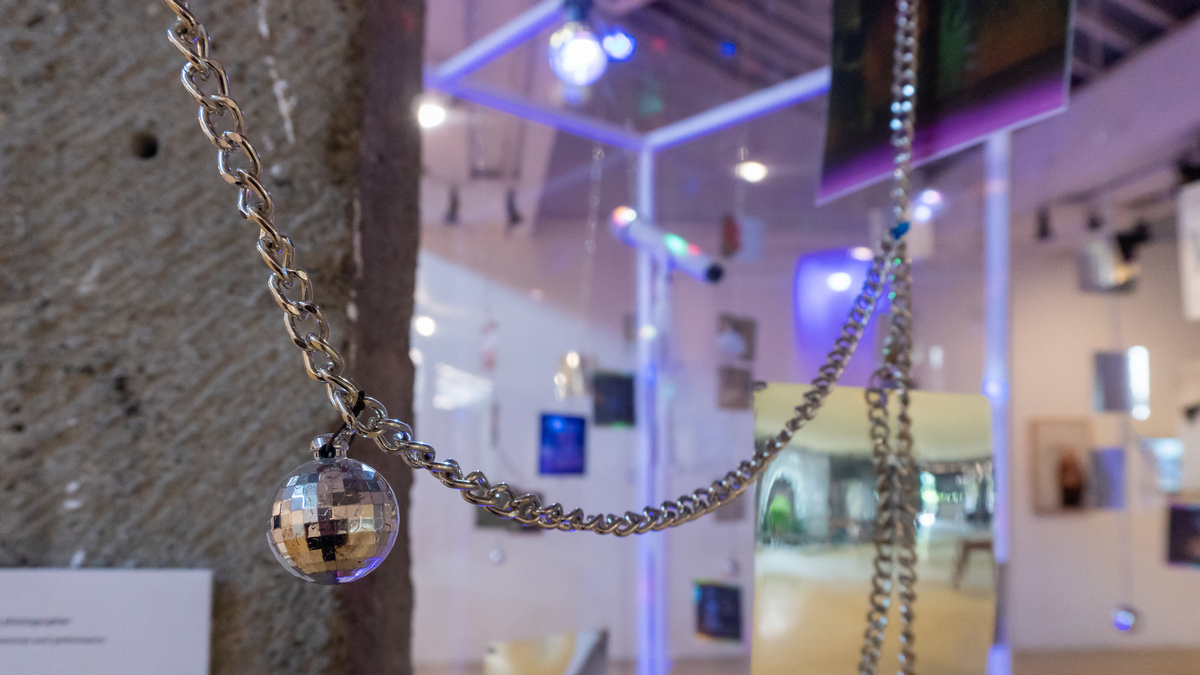
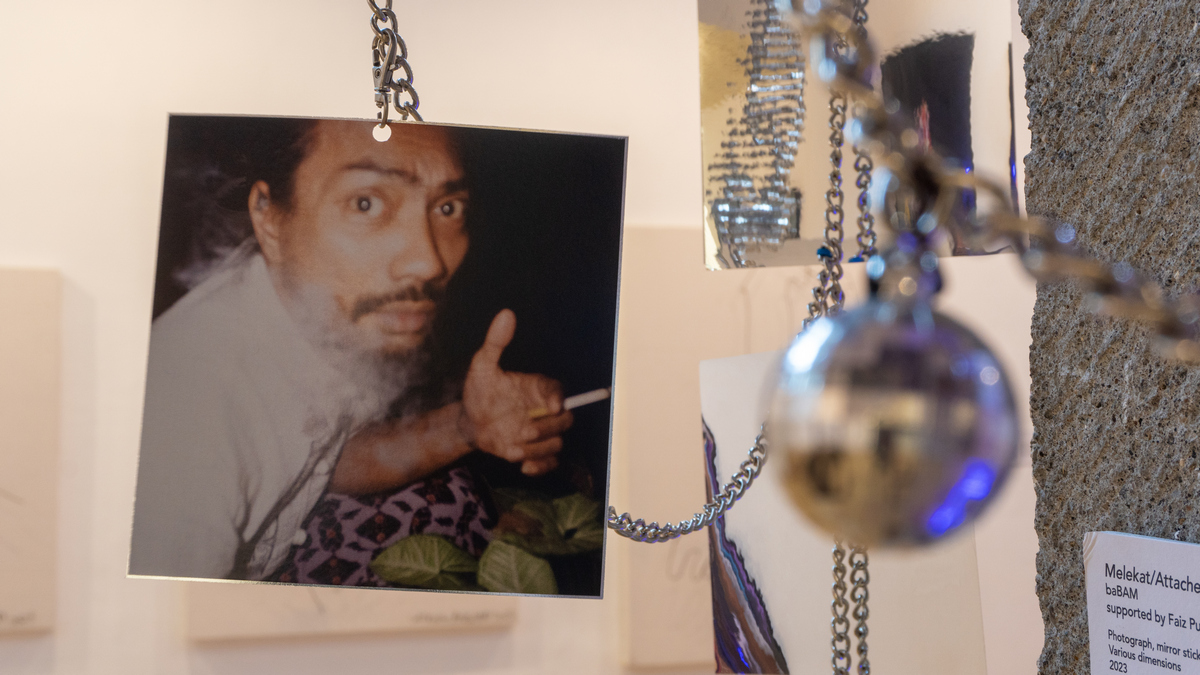
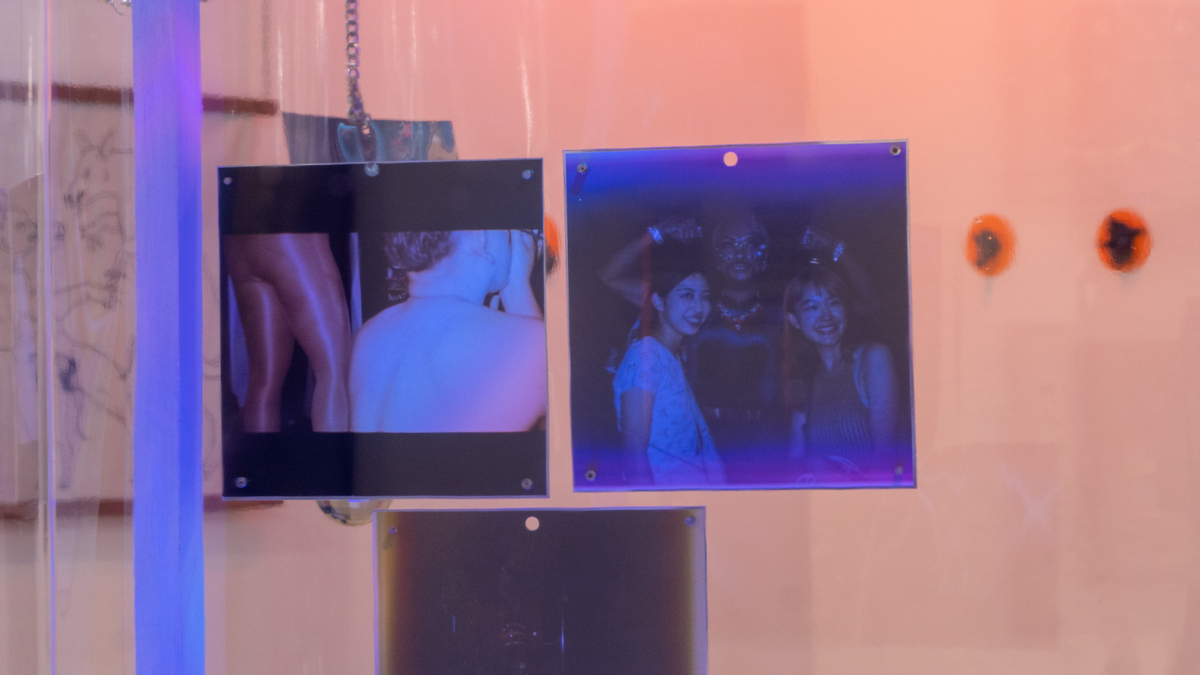
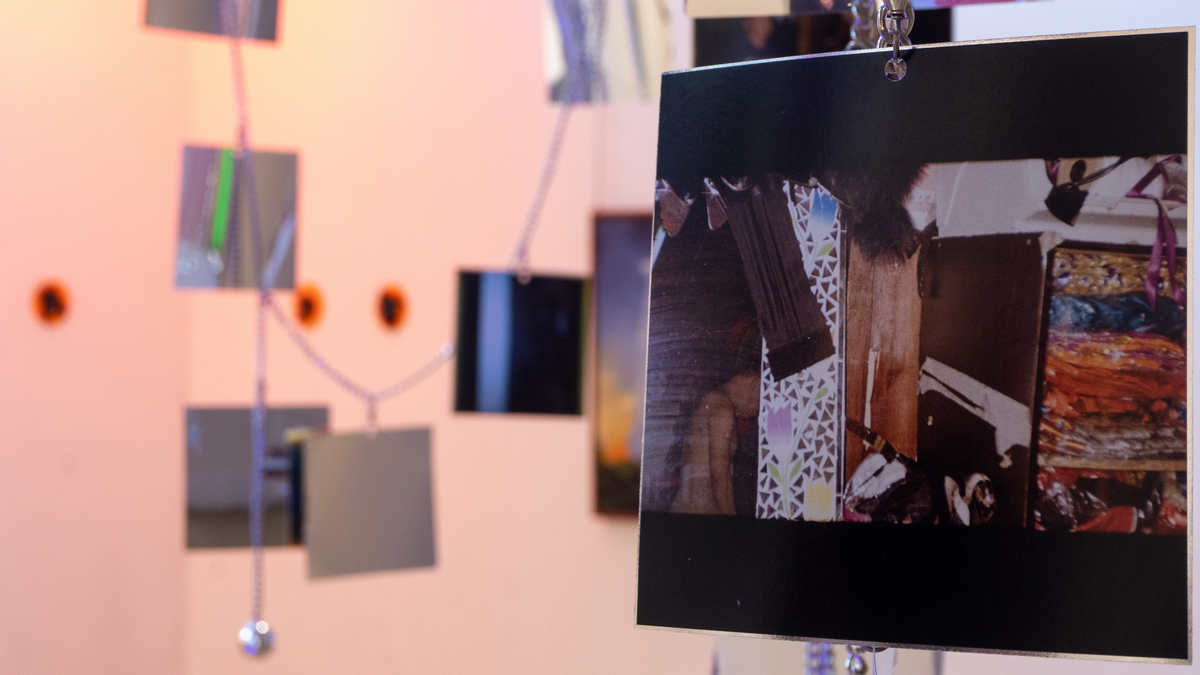
Attached
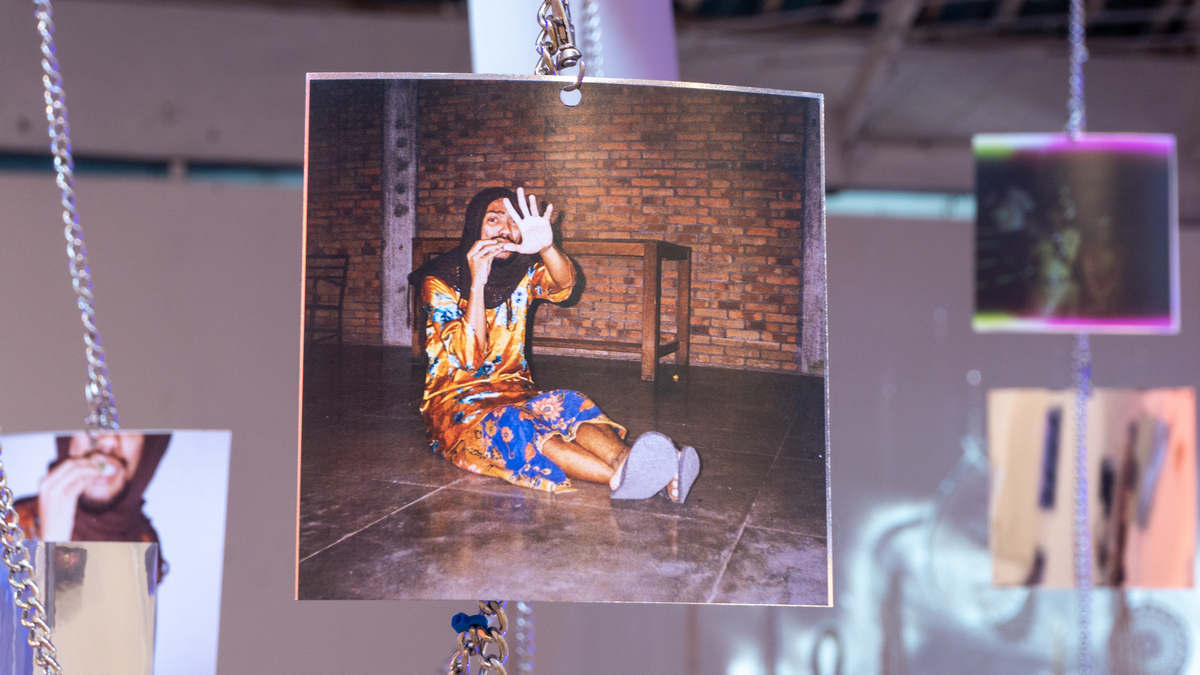
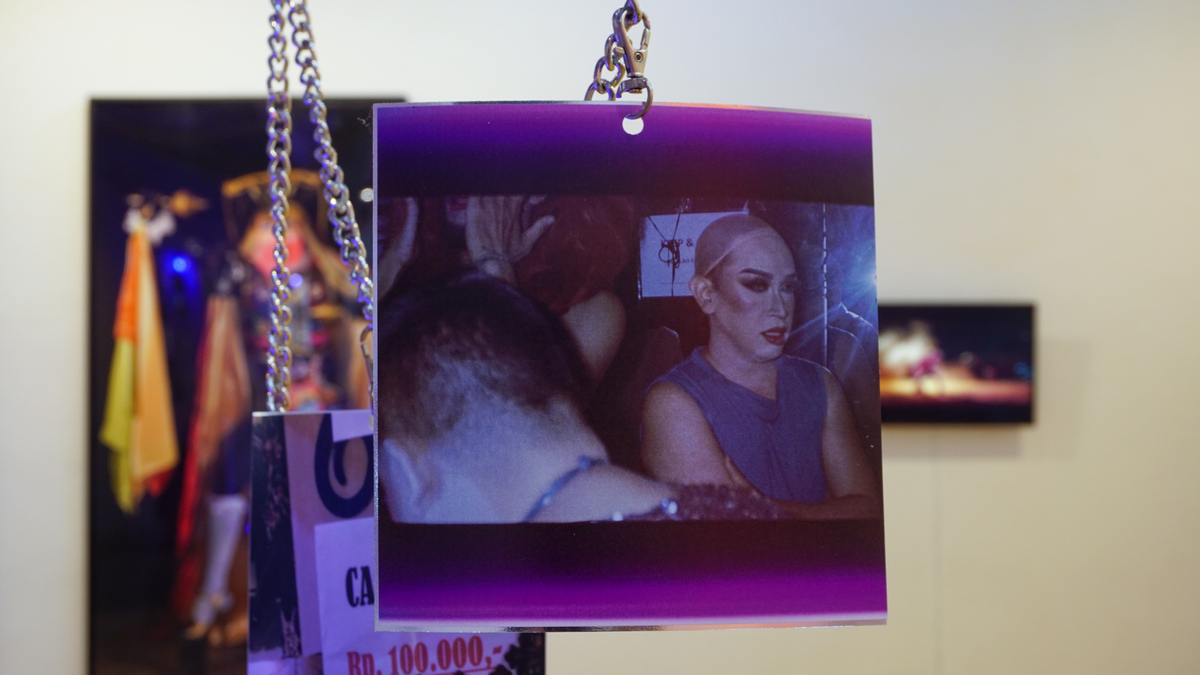
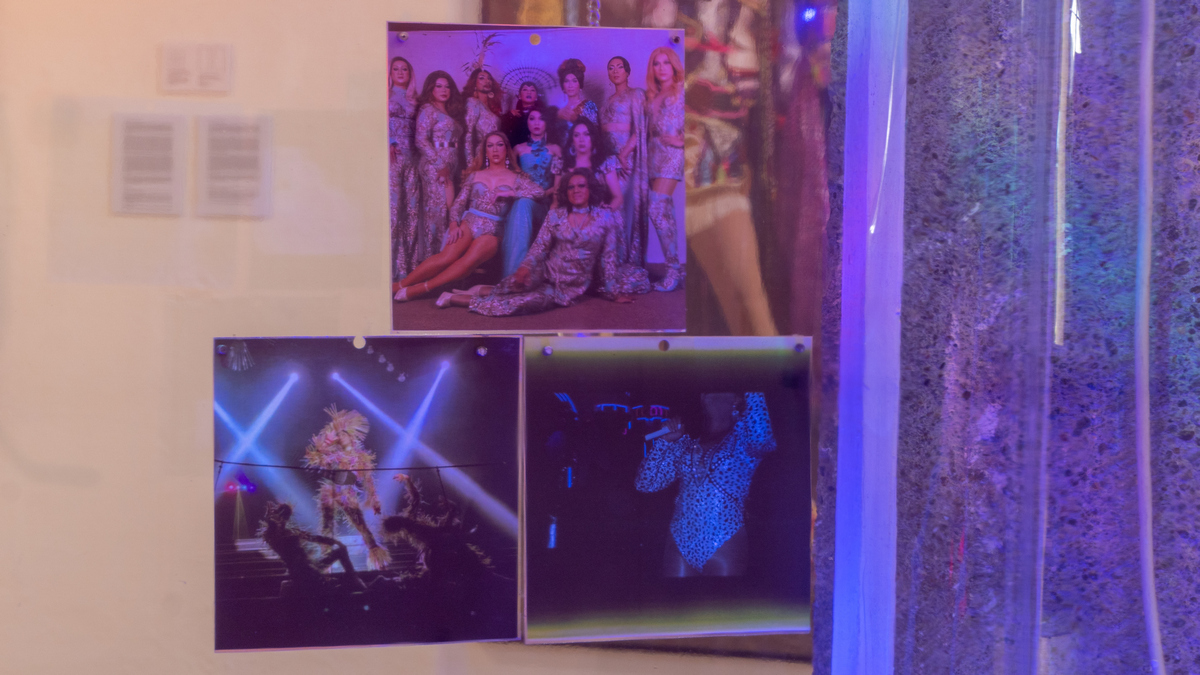
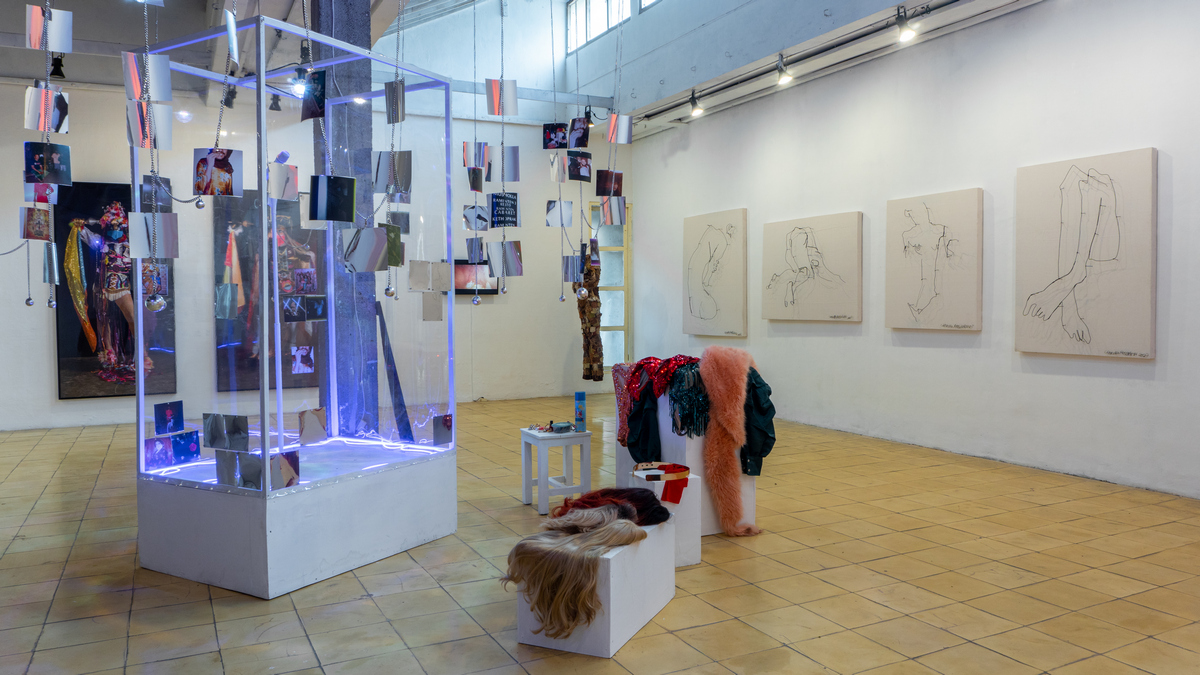
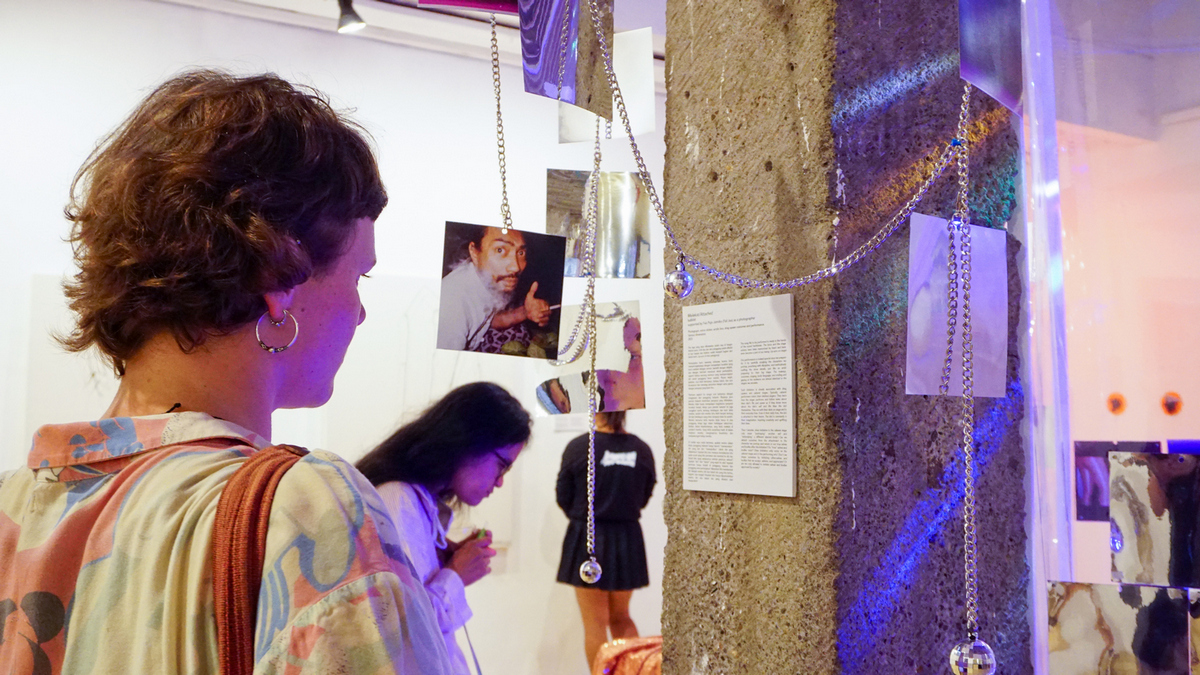
baBAM
supported by Faiz Pujo Jatmiko (Faii Joo) as a photographer
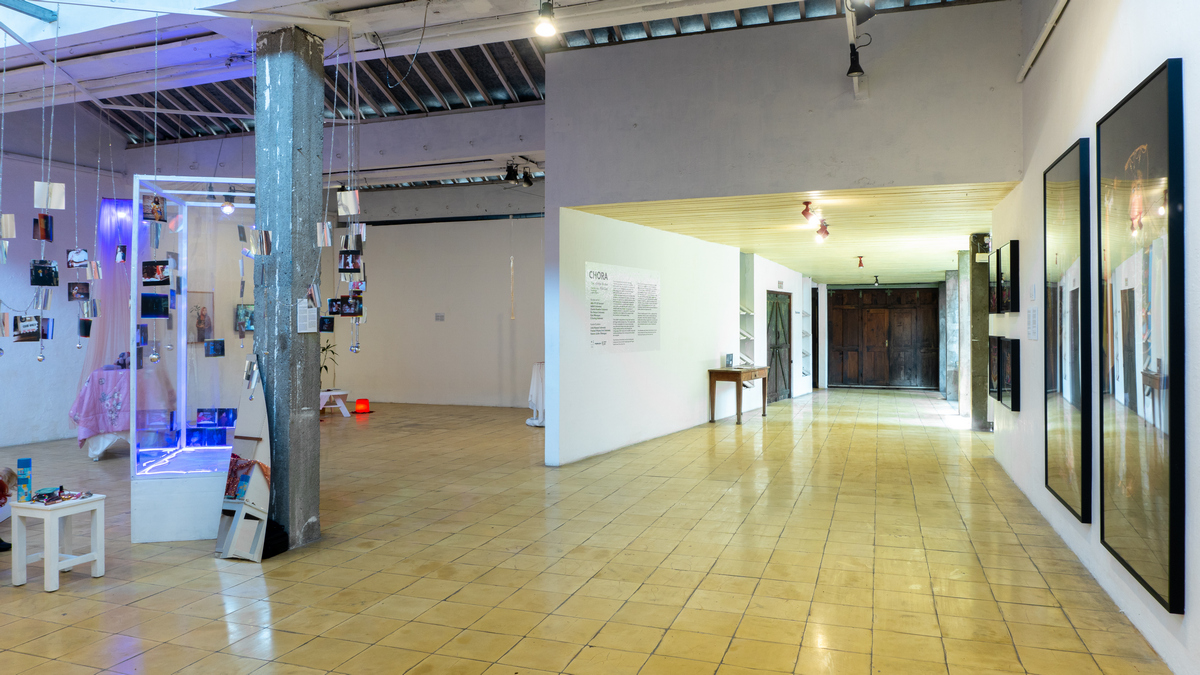
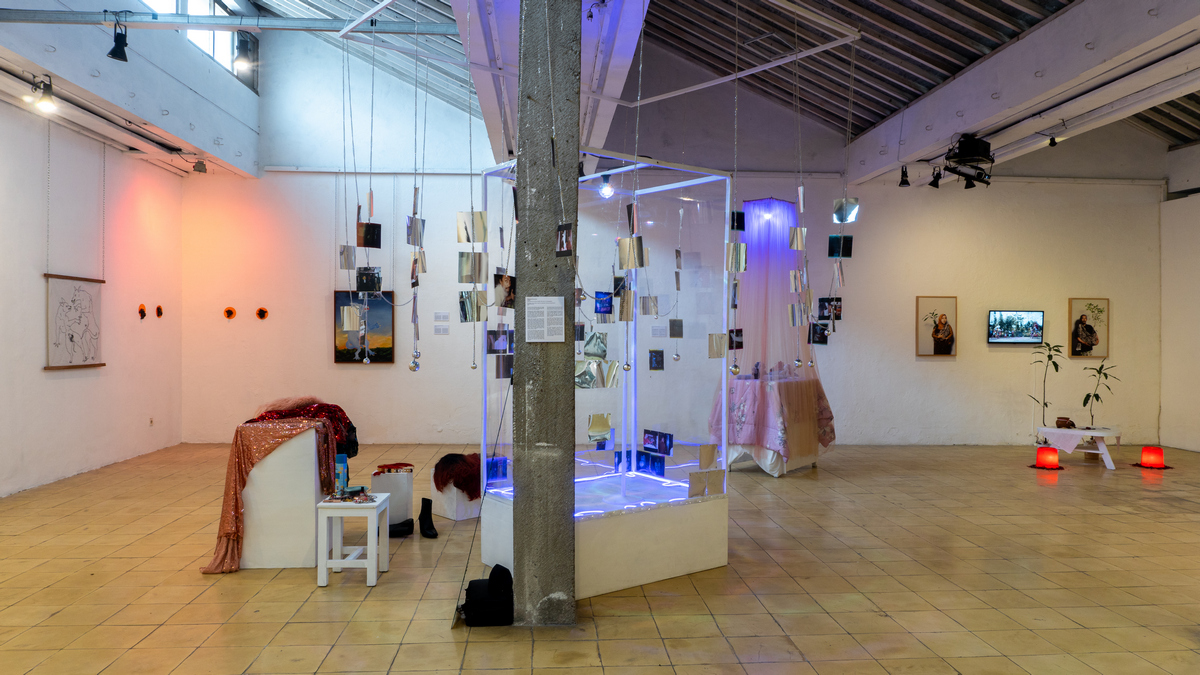
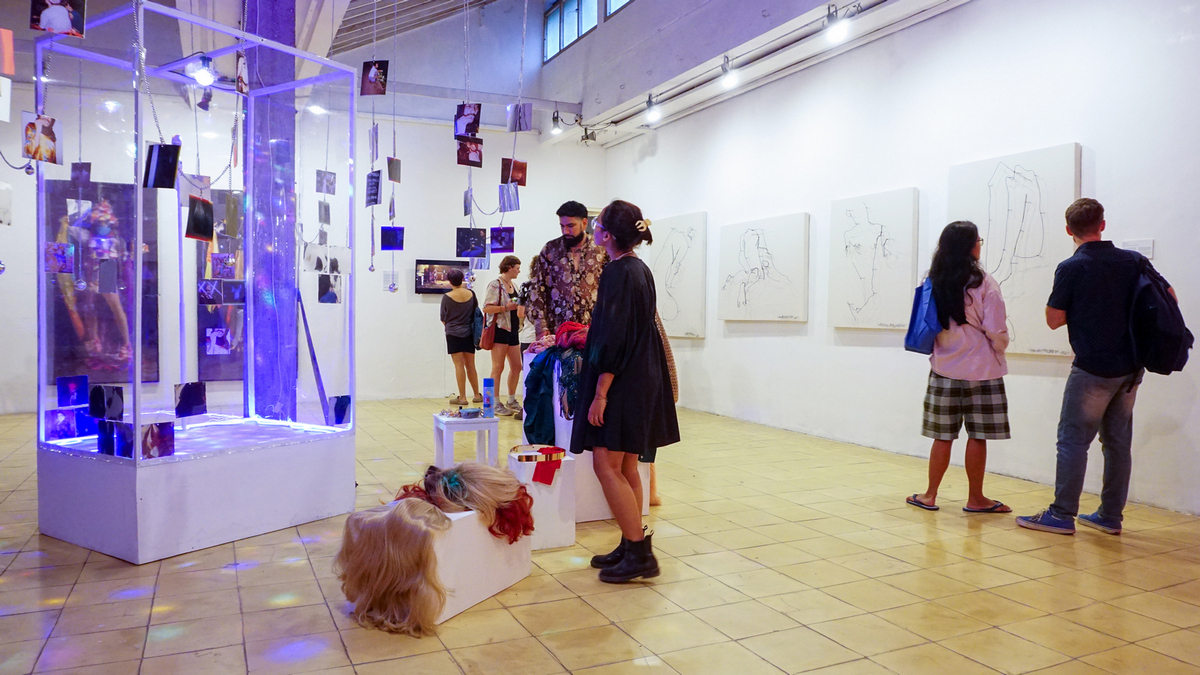
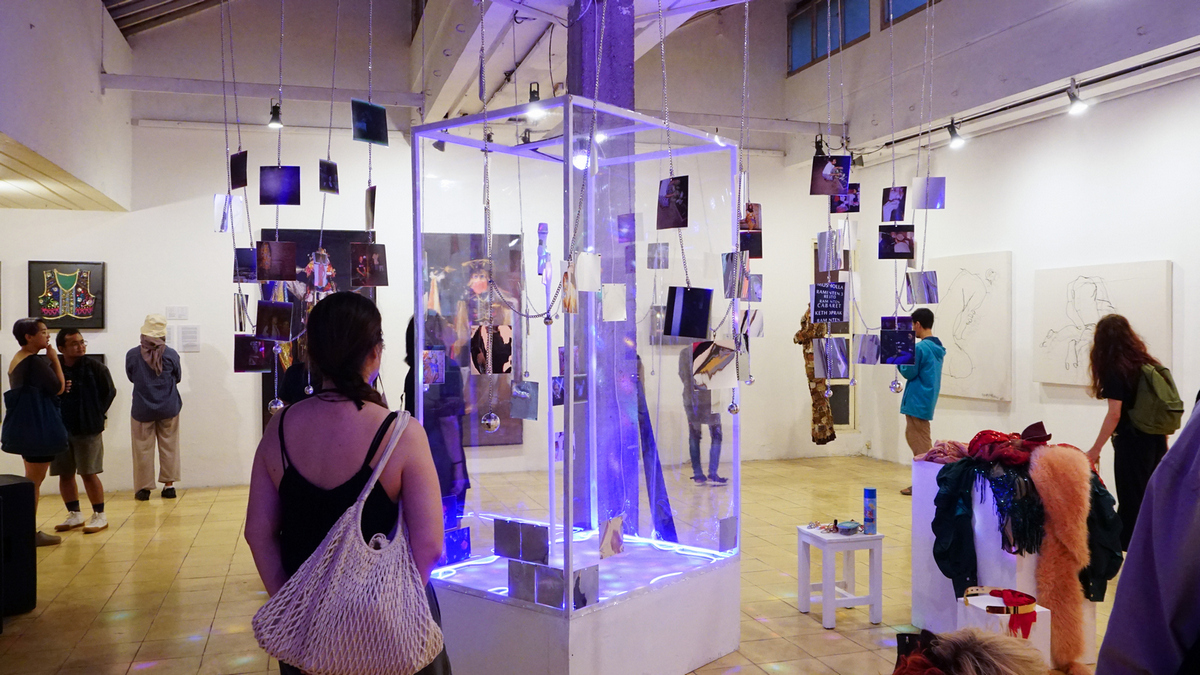
Photograph, mirror sticker, acrylic box, drag queen costumes and performance
Various dimensions
2023
The song file to be performed is ready in the hands of the sound technician. The lyrics and the stage actions have been memorized by heart and have even become a part of our being. Lip-sync on stage!
Our performance is indeed special since we prepare for it by carefully studying the characters we portray, practising with discipline, and meticulously crafting the show details, just like an artist preparing for their big stage. The makeup, costumes, singing, body language, and smiling and gazing at the audience are almost identical to the singers we emulate.
Such imitation is closely associated with drag queens and cabaret stages. Typically, cabaret performers mimic their idolized singers. They learn how the singer performs and follow news about their idol’s life and career as if they know more about the idol’s self and life than the idol themselves. They are with their idols on stage and in their everyday lives. Even in their daily lives, the idol is attached to their hearts. The idol is constantly in their imagination, inspiring creativity and uplifting their lives.
Then I wonder, does imitation in the cabaret stage only mean “portraying” another self and “embodying” a different desired body? Can we detach ourselves from the attachment to the character we portray and return to our true selves and bodies after the imitation? Do “true” selves and bodies exist? Does imitation only occur on the cabaret stage and in the performing arts? Don’t we shape ourselves by imitating other-selves and bodies that we accept, admire, and appreciate? Or are we only allowed to imitate selves and bodies approved by society?
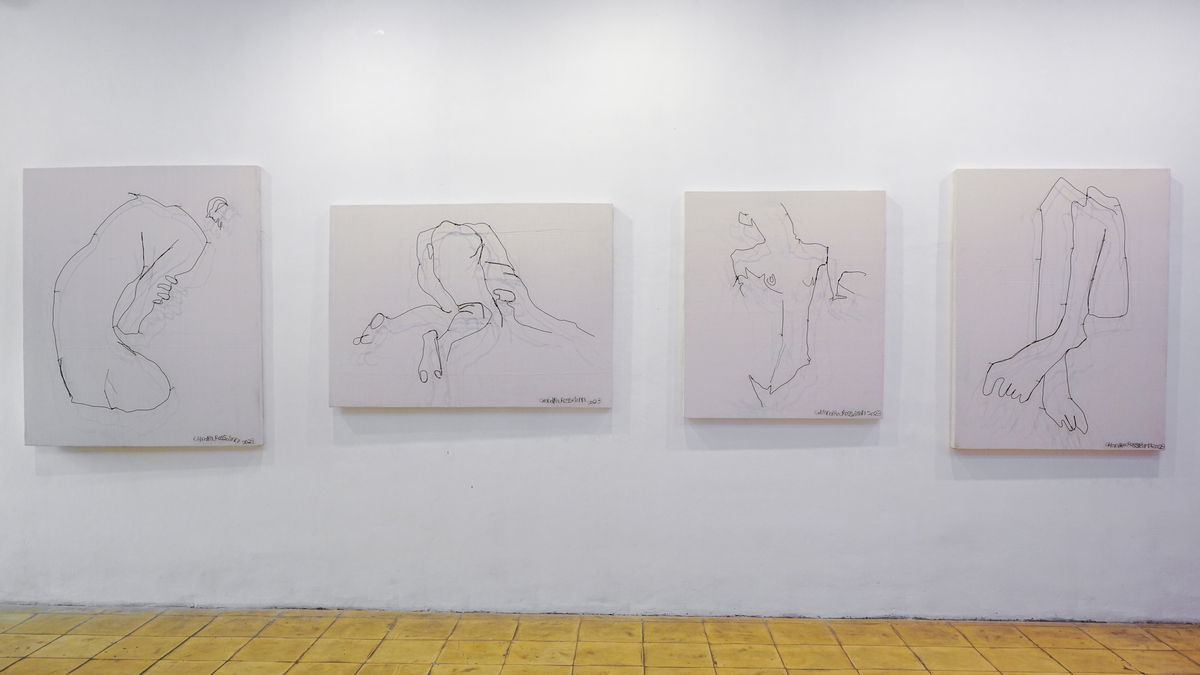
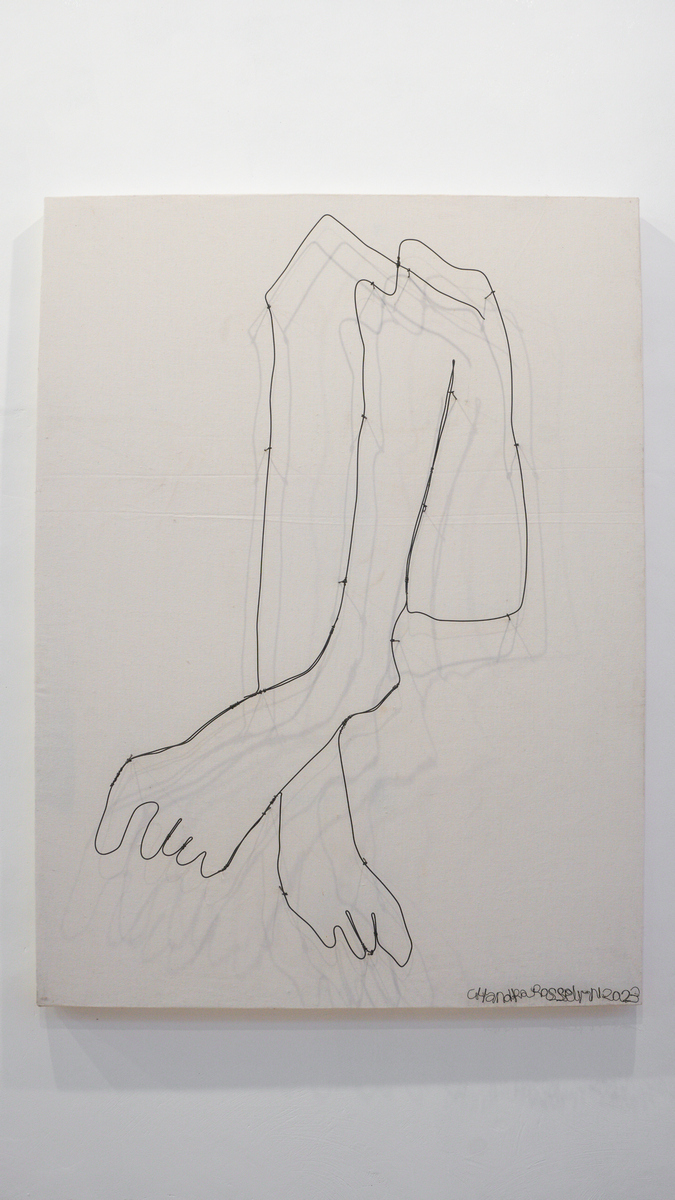
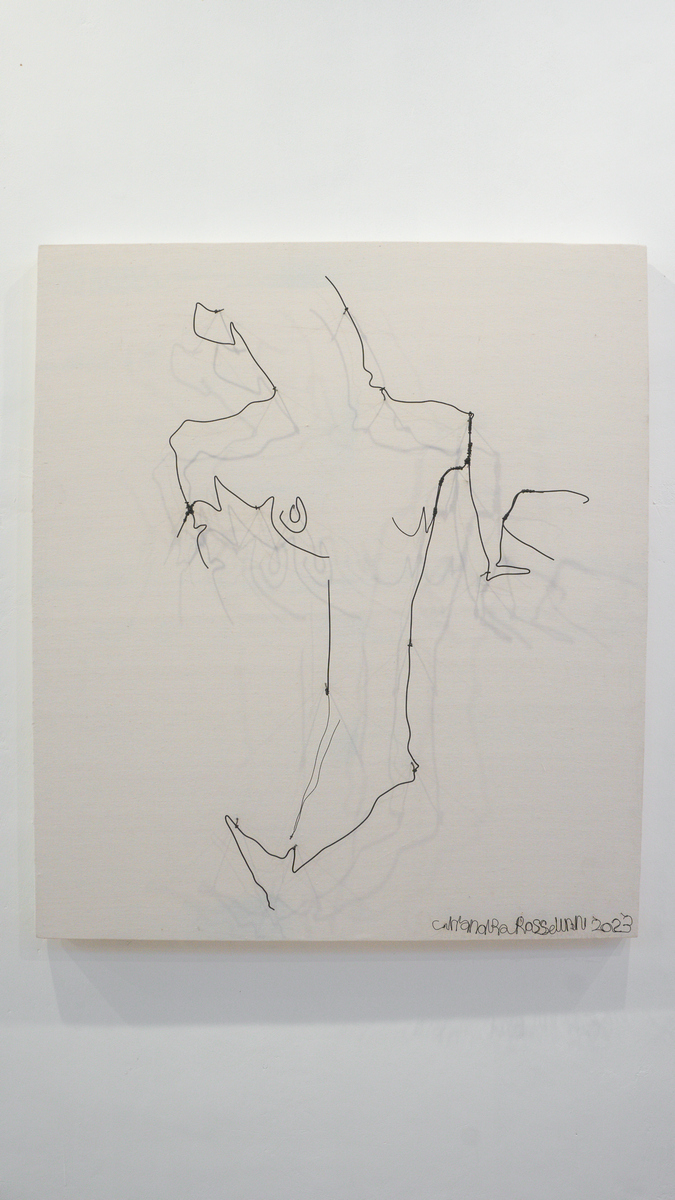
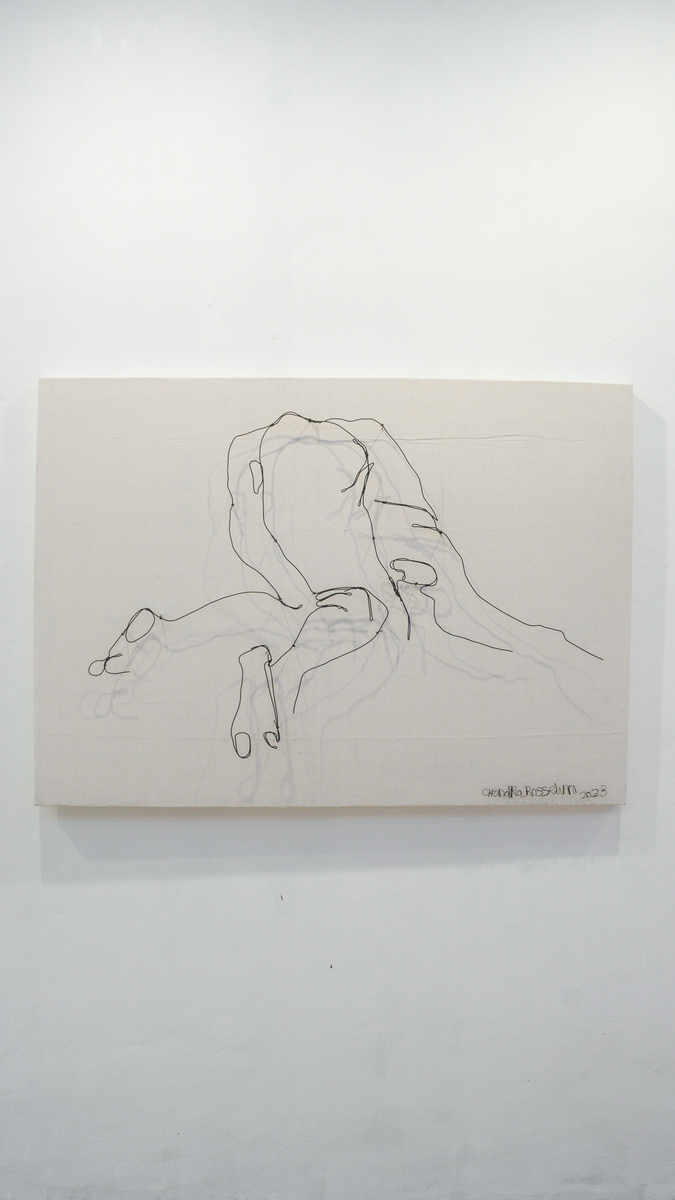
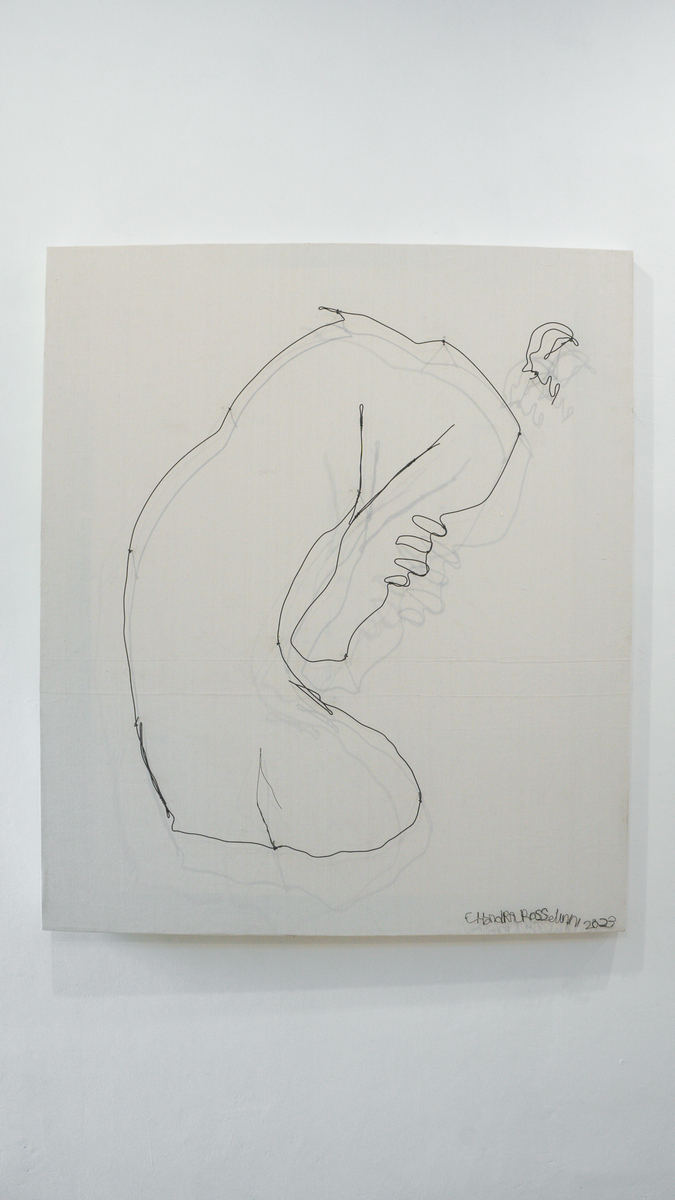
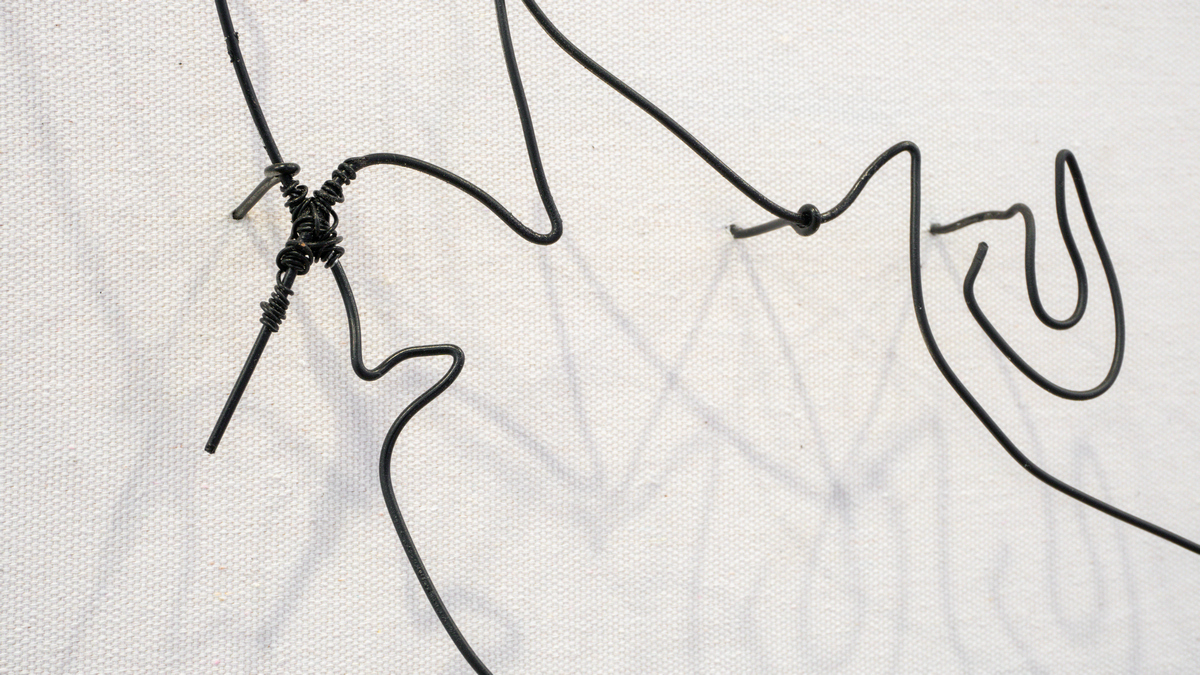
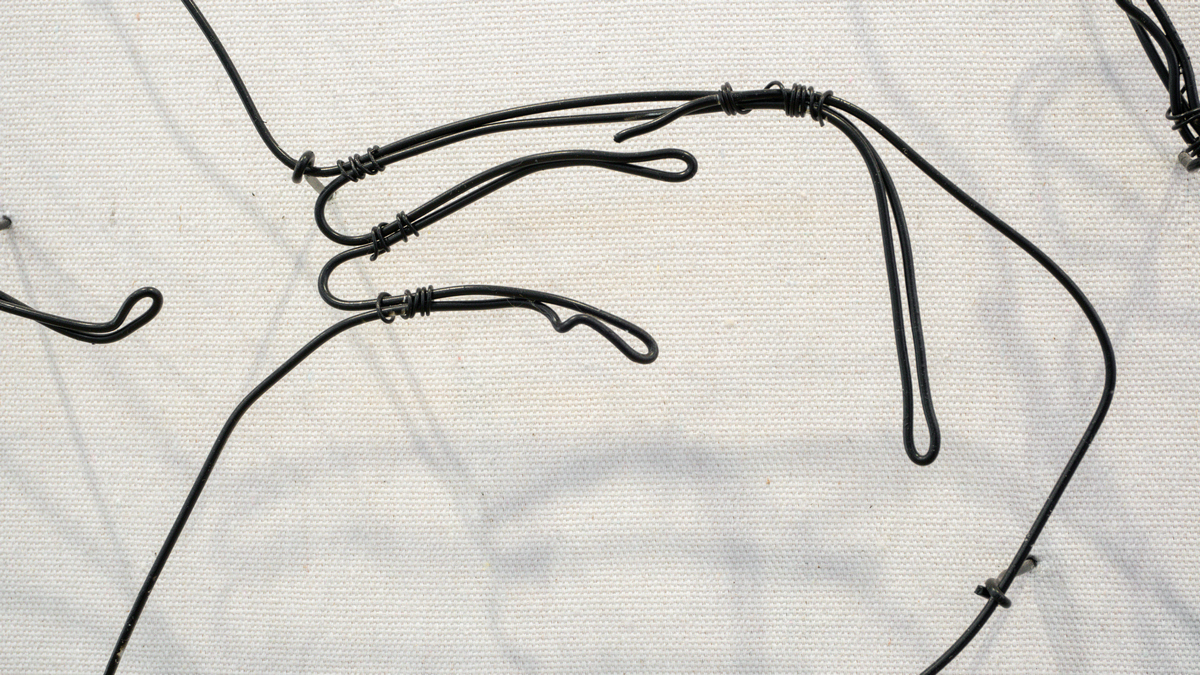
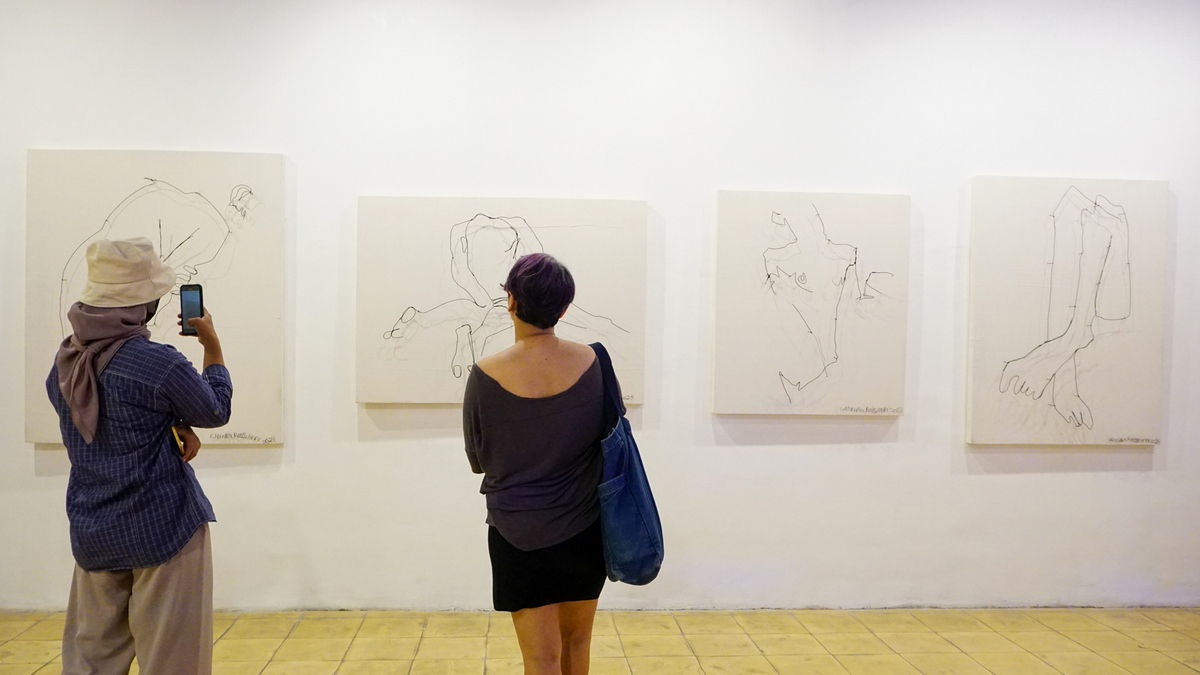
Atma
Chandra Rosselinni
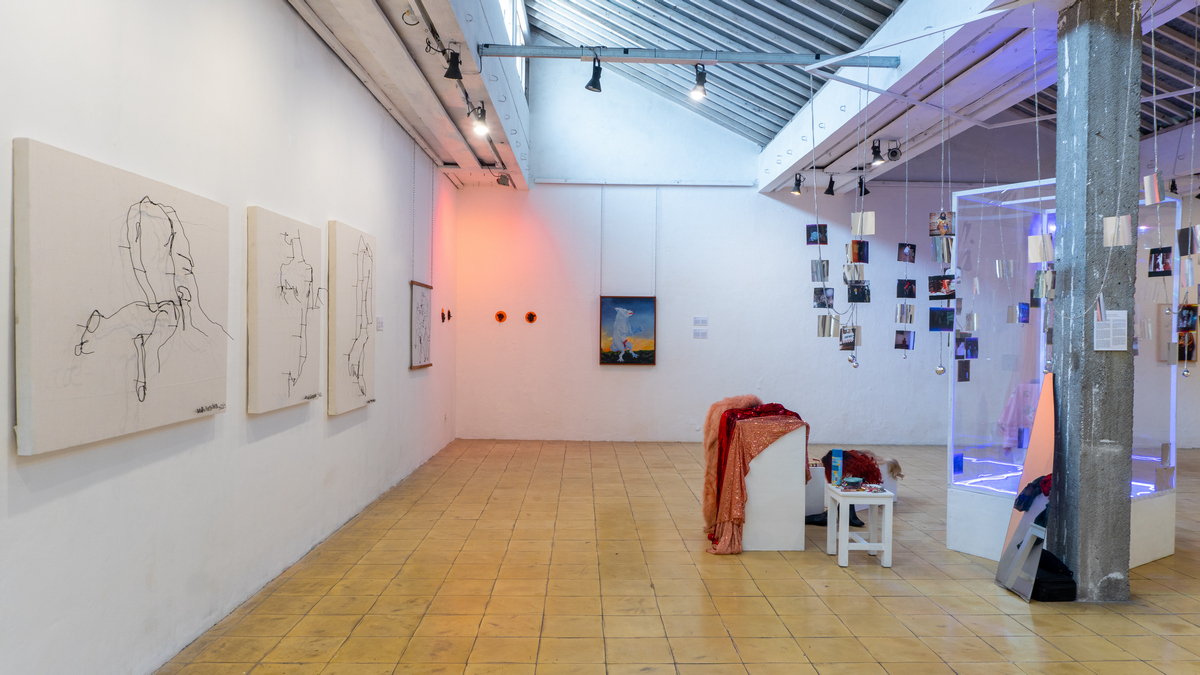
Wire, canvas
110 x 97 cm, 135 x100 cm , 140 x 100 cm , 140 x120 cm
2023
This work comes from my habit of observing shapes, both geometric shapes and organic (biomorphic) shapes. Lines serve as the framework for shapes. We can see ourselves through lines. Each person’s lines are different because they are a response of each body. Lines store the body’s memories.
I work with wire that I bend myself to look back at myself. I strive to straighten and bend the wire, which does not precisely match the sketch I create on paper. I simplify the body gestures that emerge when facing oneself; capturing the essence of intimate gestures. The core of the body is the line itself.
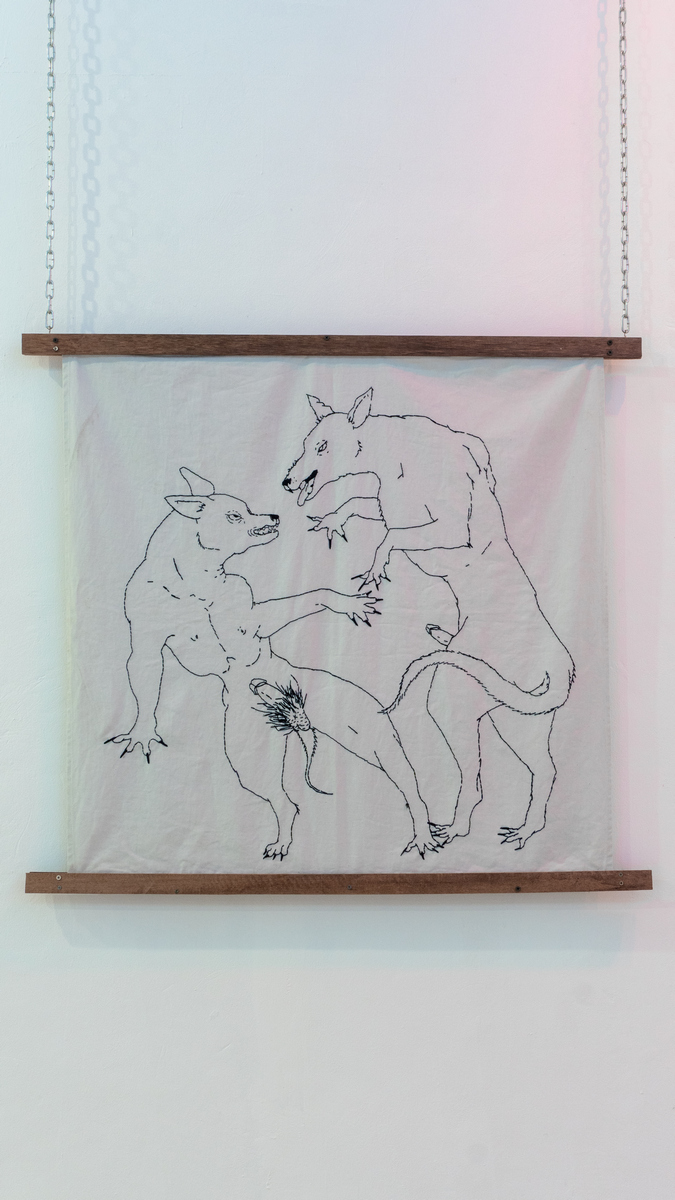
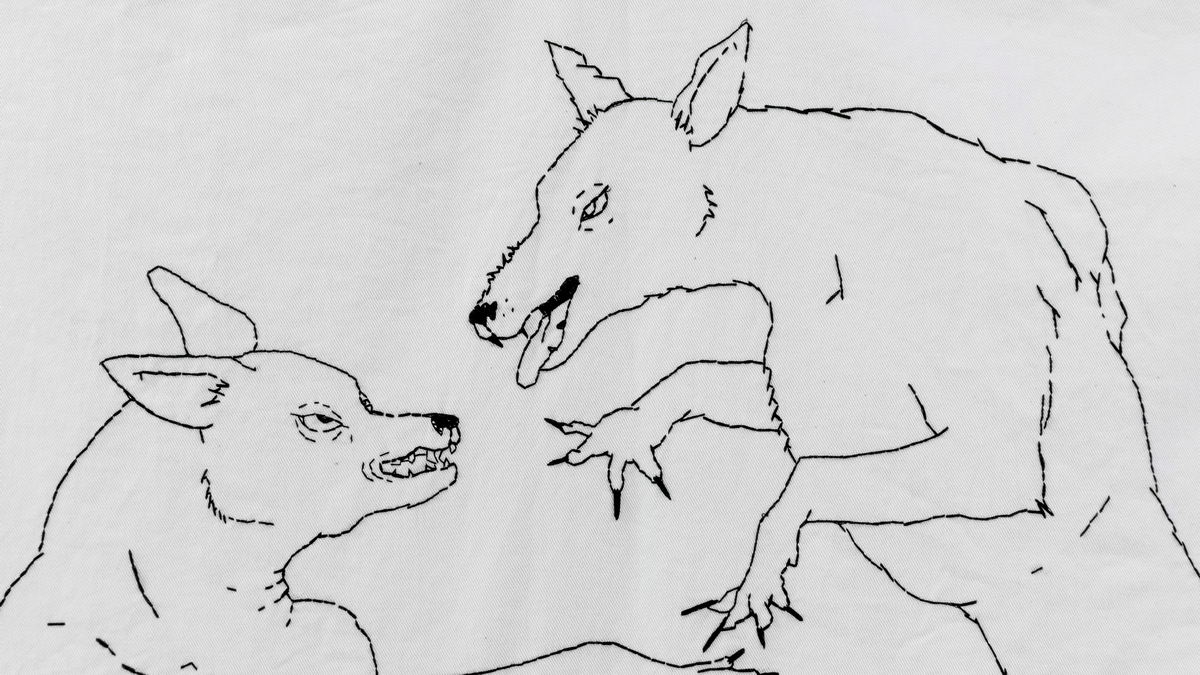
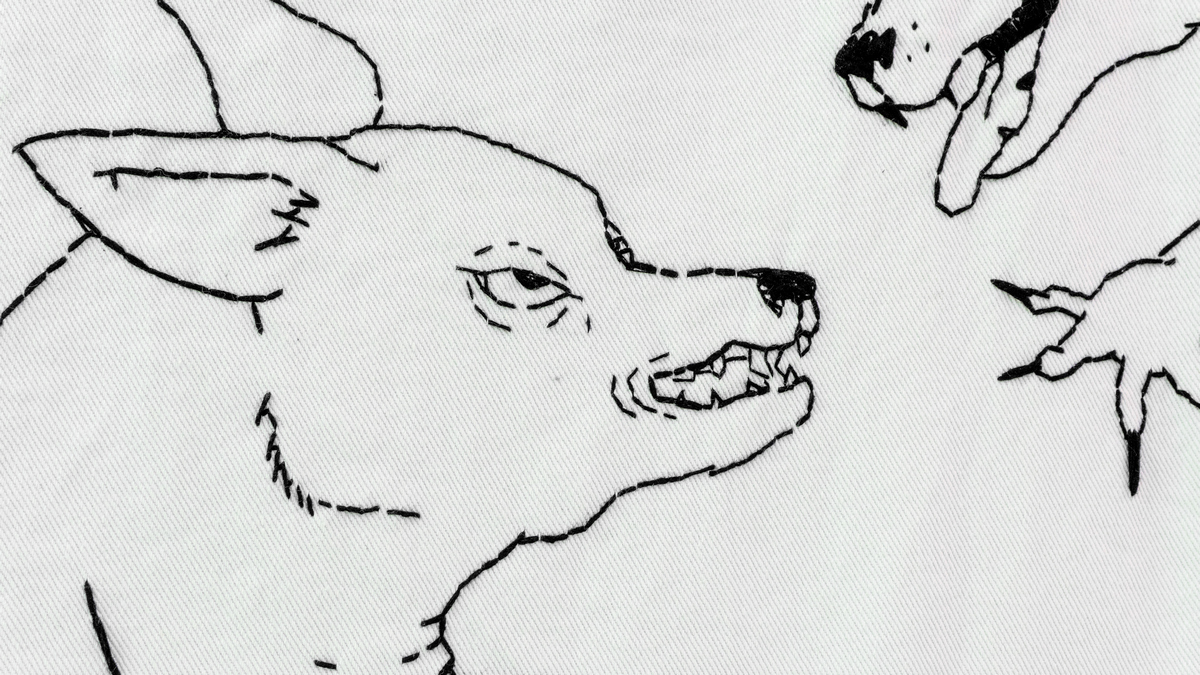
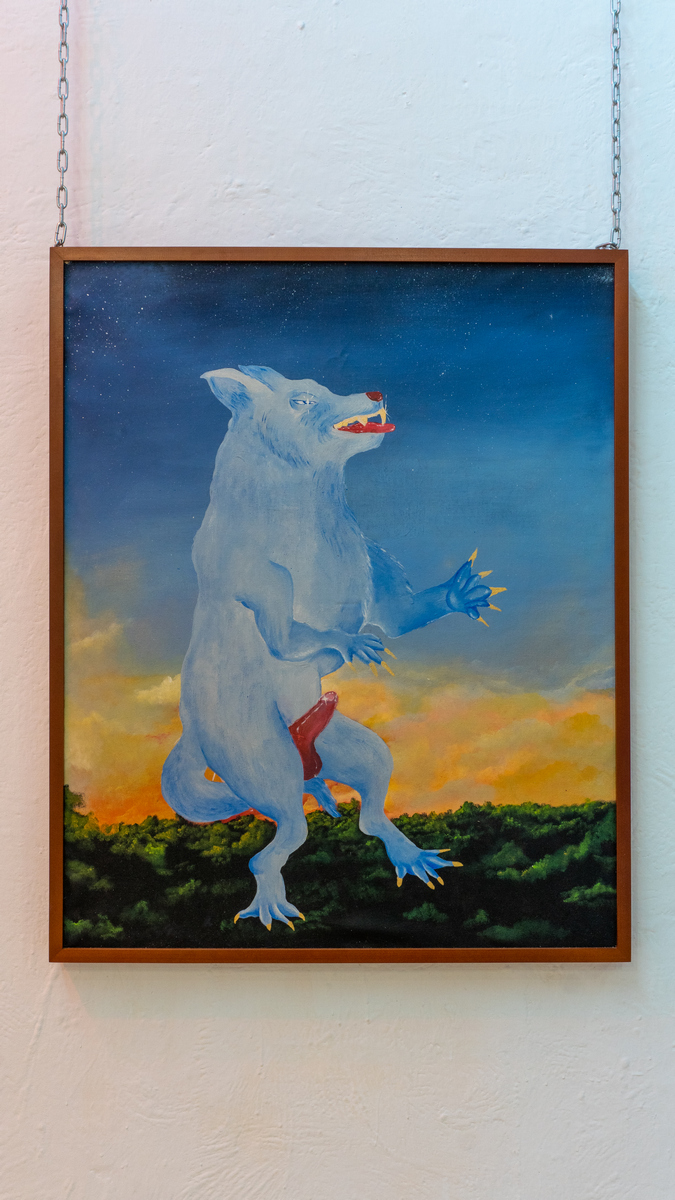
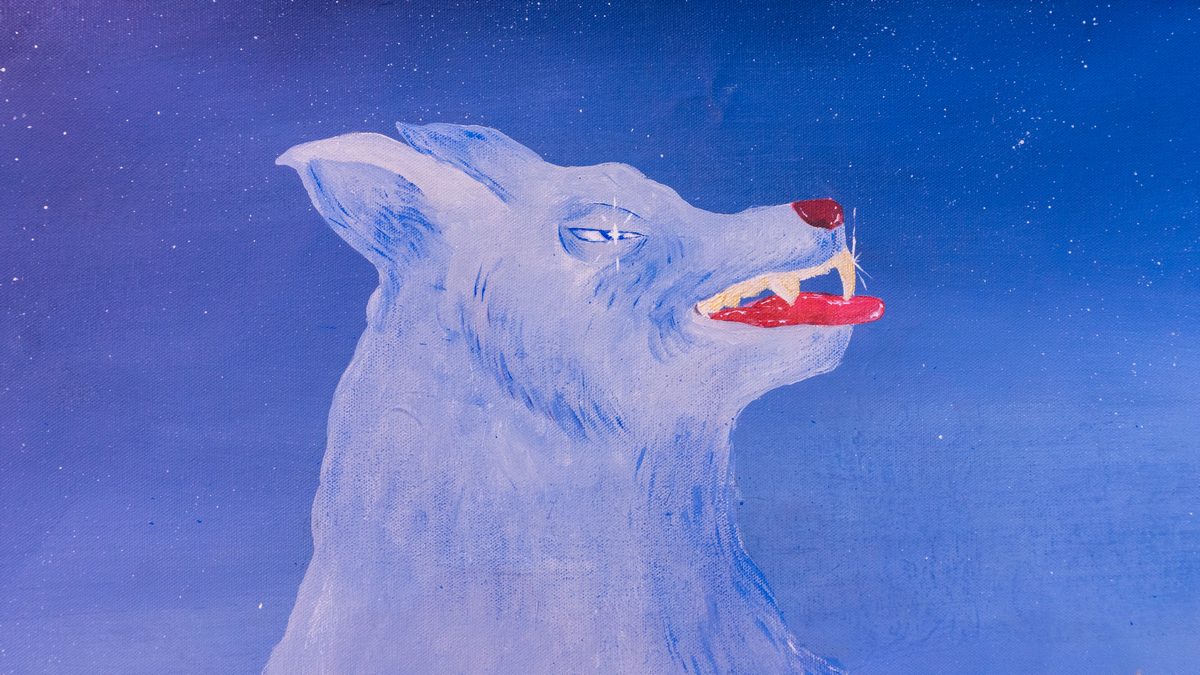
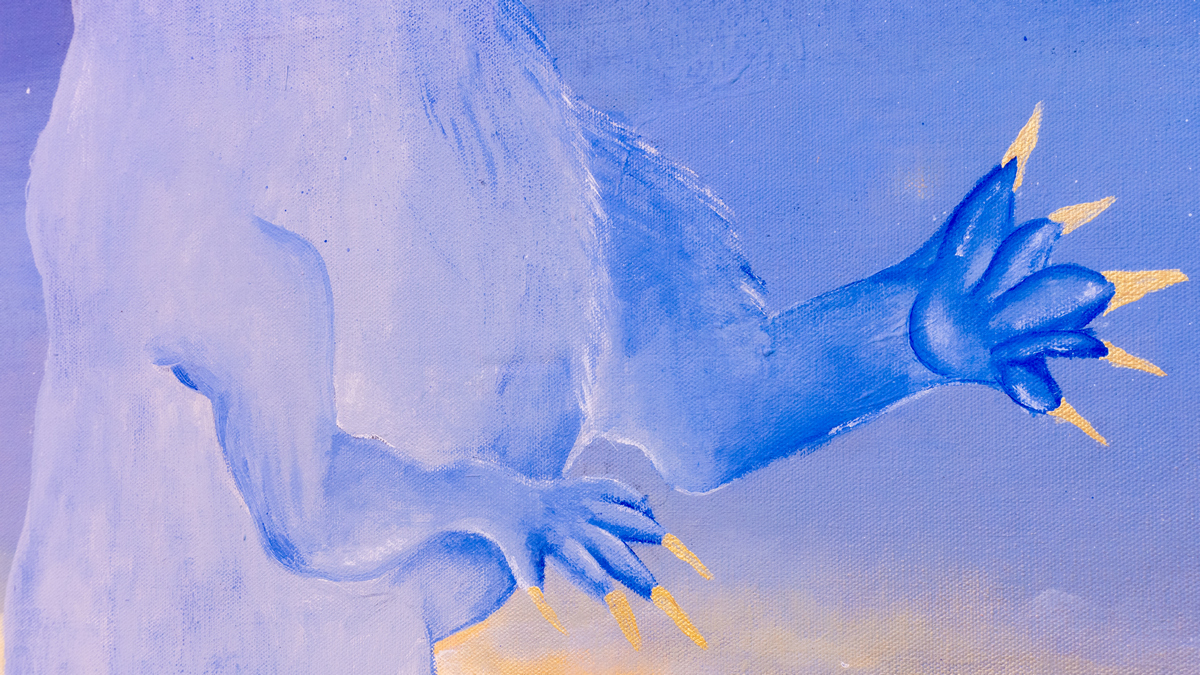
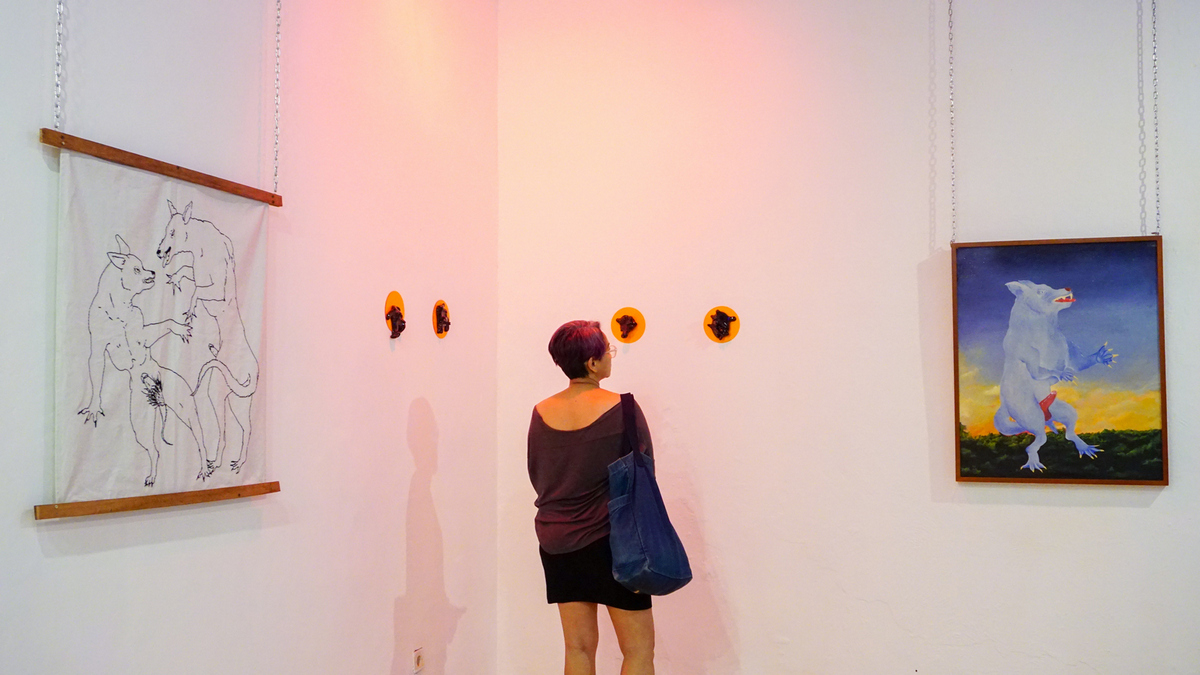
From the serie Apology to post humanism
ARIA XYX
Embroidery and Acrylic on Canvas
Various dimensions
2023
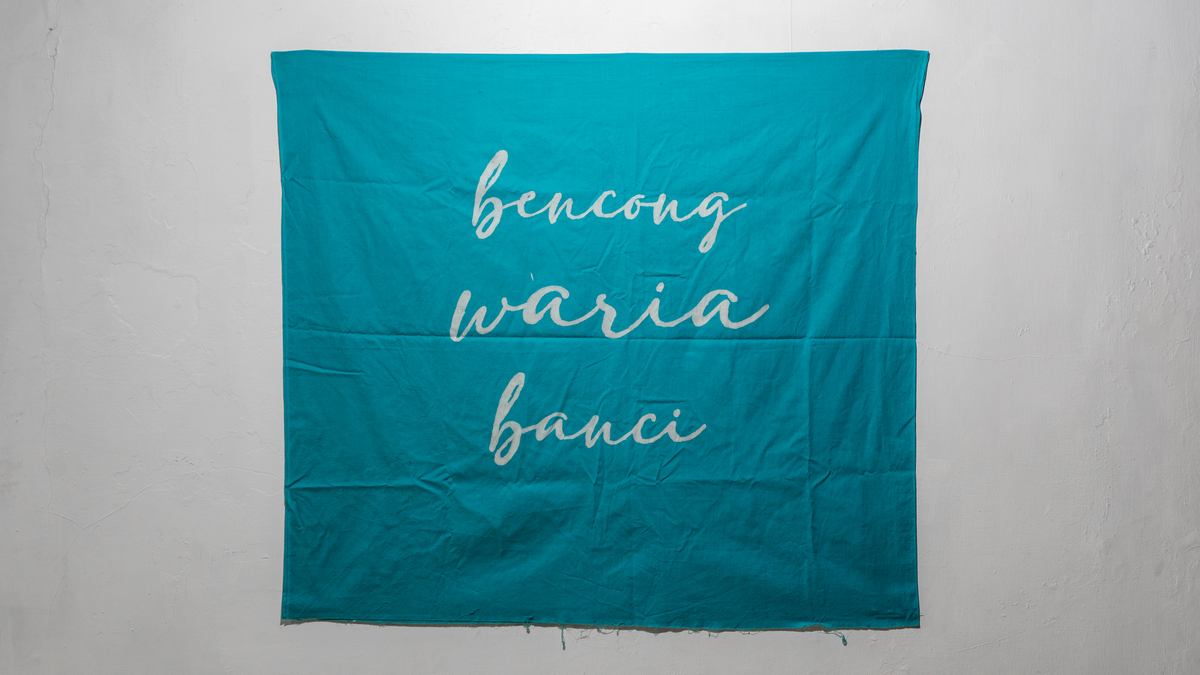
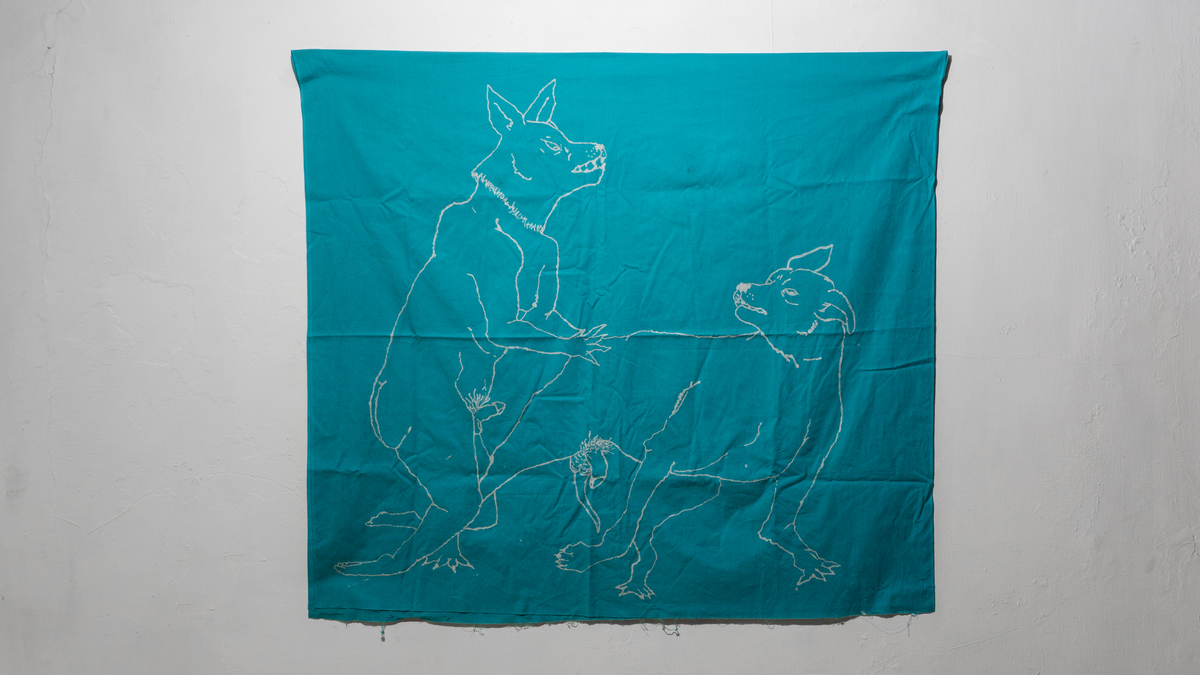
This series deals with the questioning of the origin of masculinity and its construction. I approach this series from the circular perspective that allows me to move at various points and not from the linear perspective of going from point A to point B. I have started this series investigating the relationship between man and animal. I consider that much of the masculine construction is based in the theft of animal nature to validate what is or is not masculine. The force of the lion is masculine, the power of the horse is virile, the faithful and protective, the qualities of the dog are attributed as masculine force. In the first works for the series, I work on the figure of the dog that is aggressive, which makes me wonder at what point the human had a real connection with the animal and at what point he stole its behavior to build the idea of what it is male.
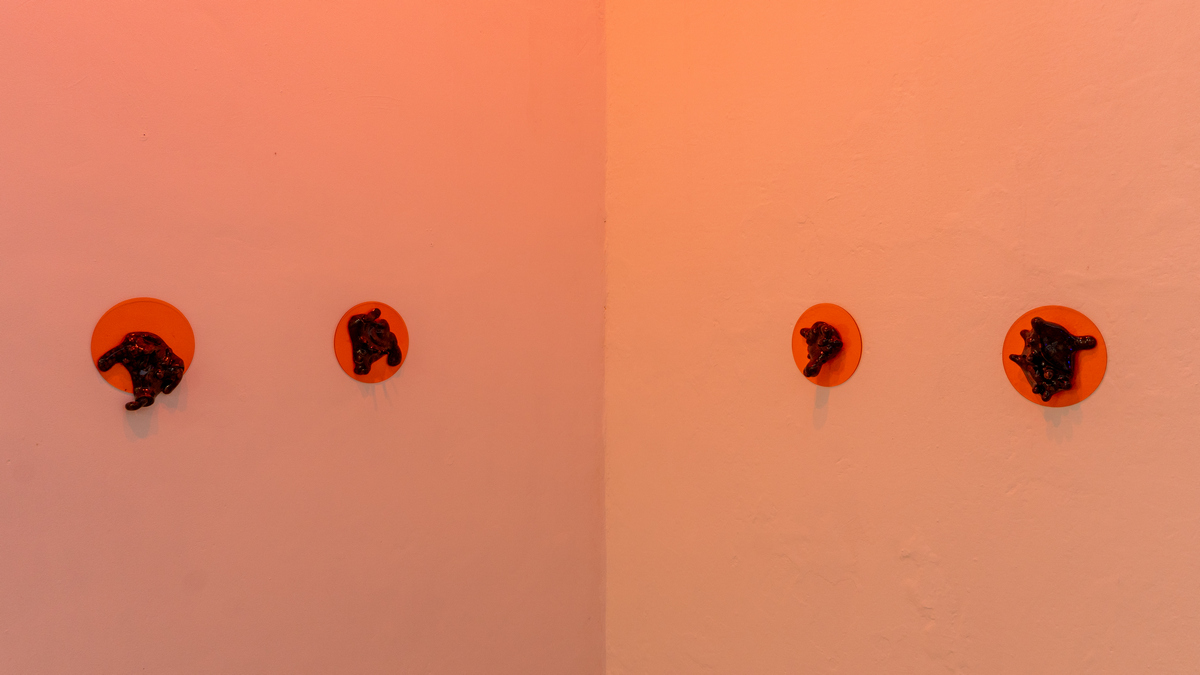
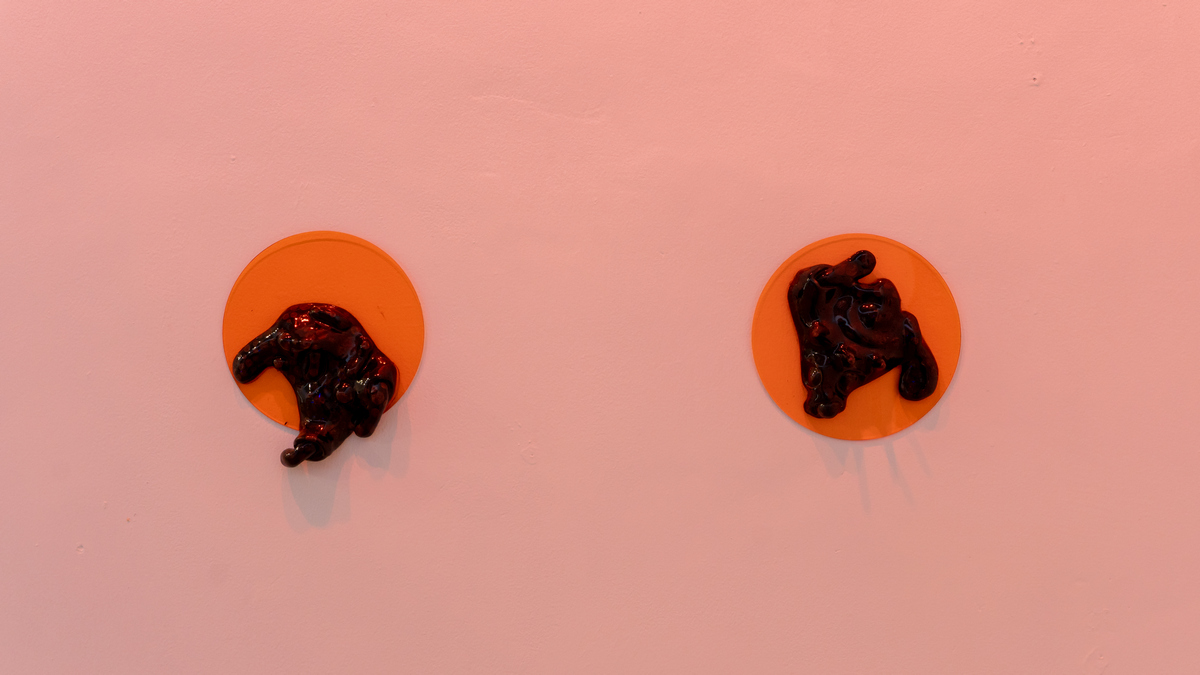
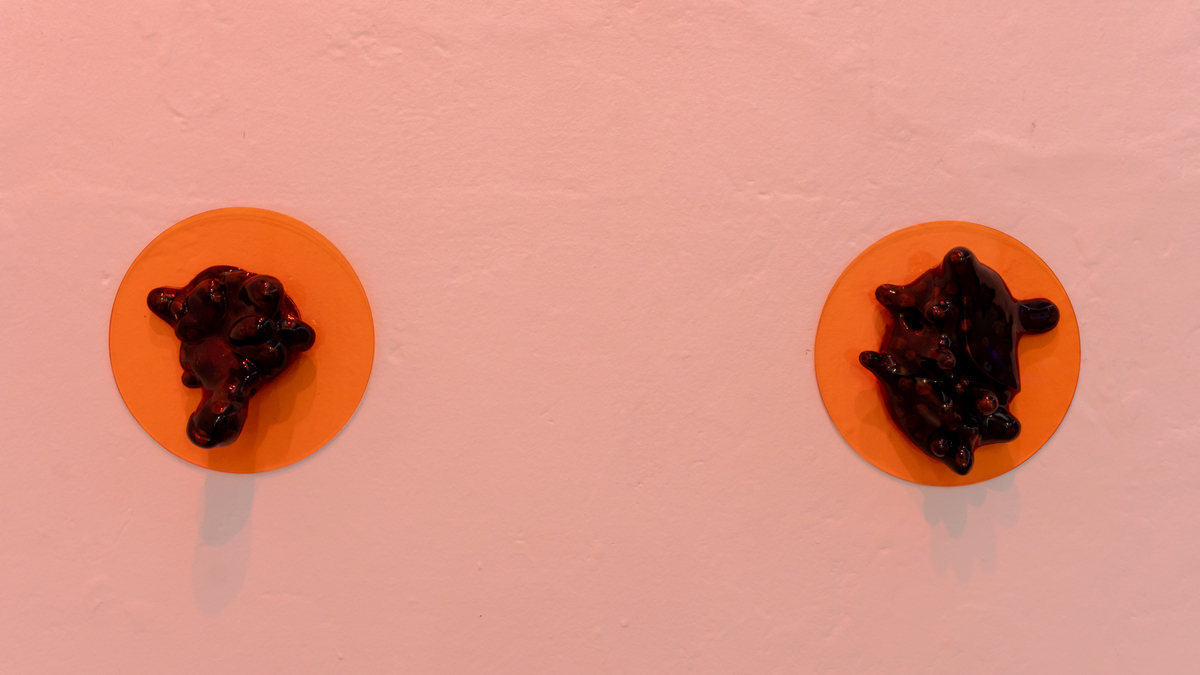
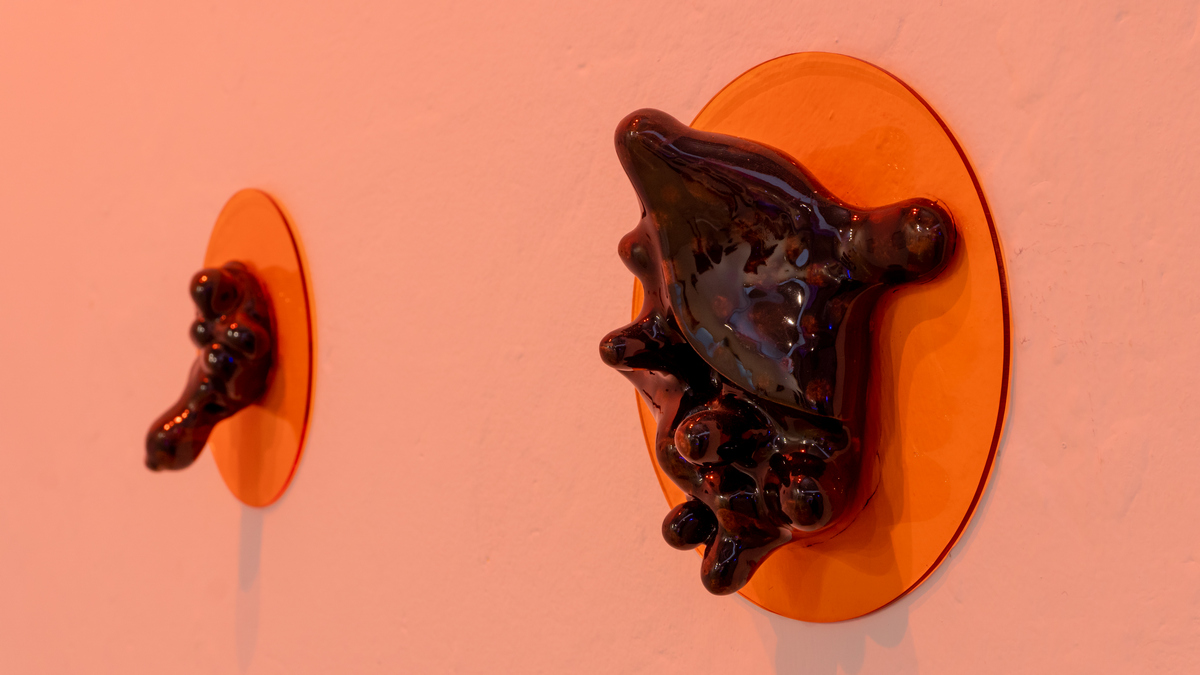
Warm bodies (self portrait)
ARIA XYX
Ceramic glazed on methacrylate
Various dimensions
2023
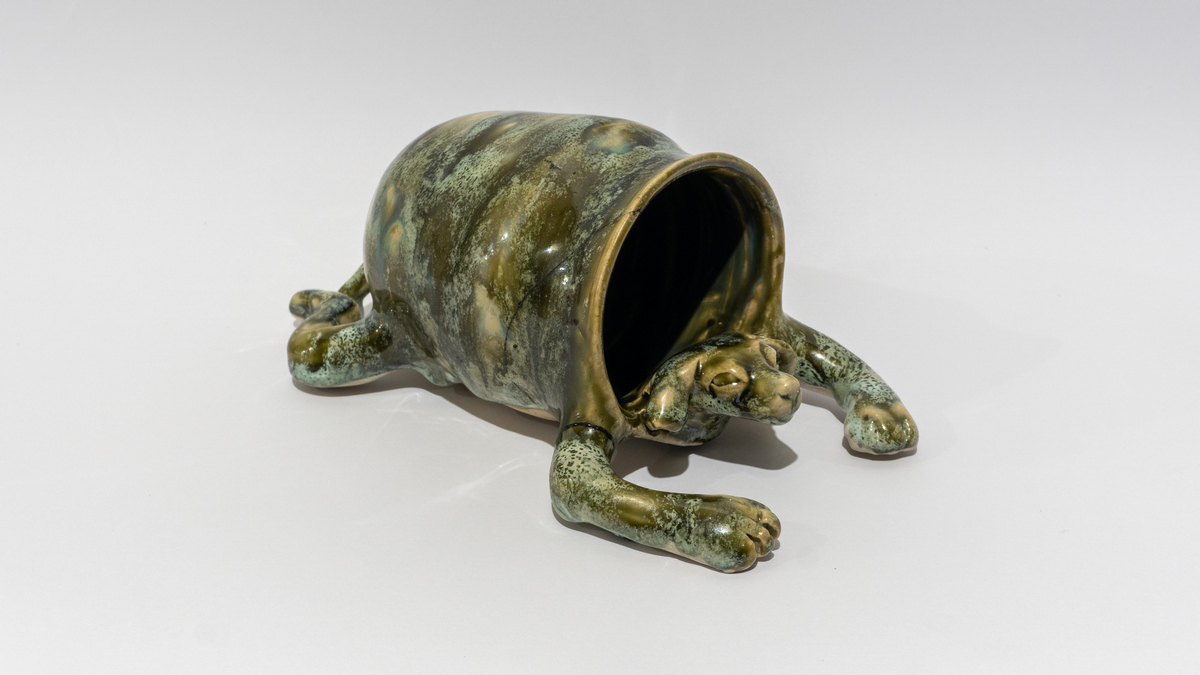
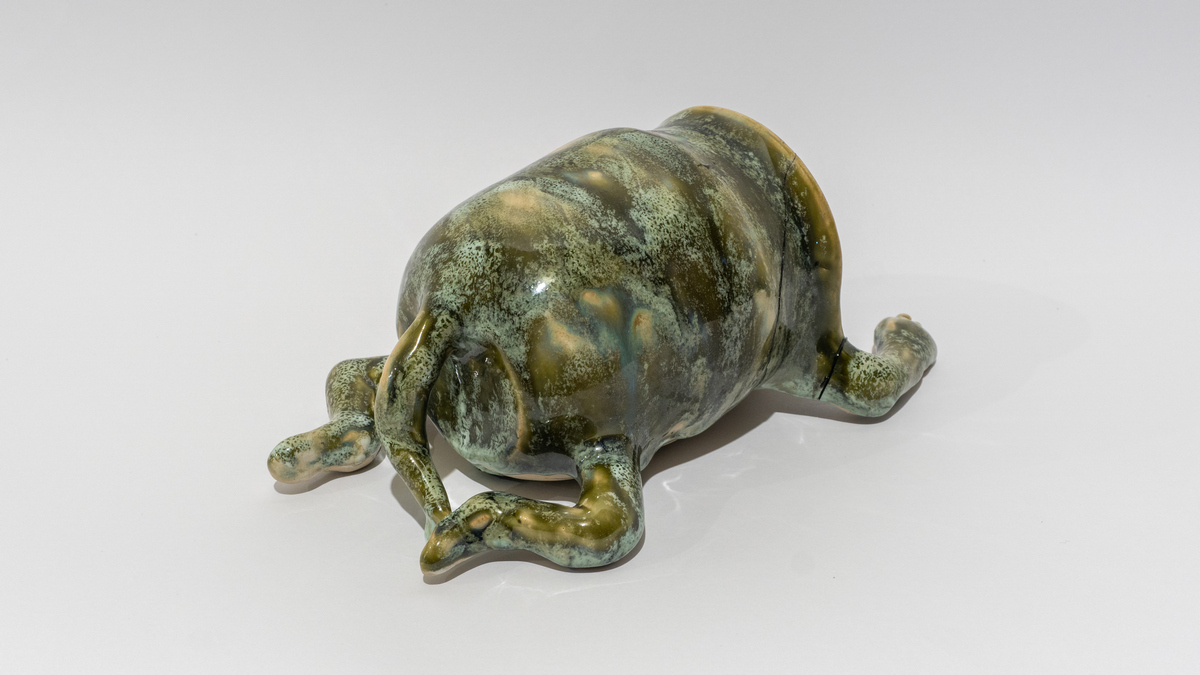
Parallel to the questioning about the construction of masculinity and its representation, I think about how in a context where the binary gender is diluted and the body mutated, what will be the ways to represent the body in the present and in the future? I have always thought of the mutant, transmutant, post-humanist body not as the cyborg with electronic alloys within the futuristic vision, rather as a pulsating and amorphous mass of fluids that seeks to connect with the beginning, the cell. These pieces are thought of as an amorphous mass, from histology, from the warm colour that contextualizes the Central American body, with the aim of thinking about how the context transforms the body and its way of imagining and constructing it.
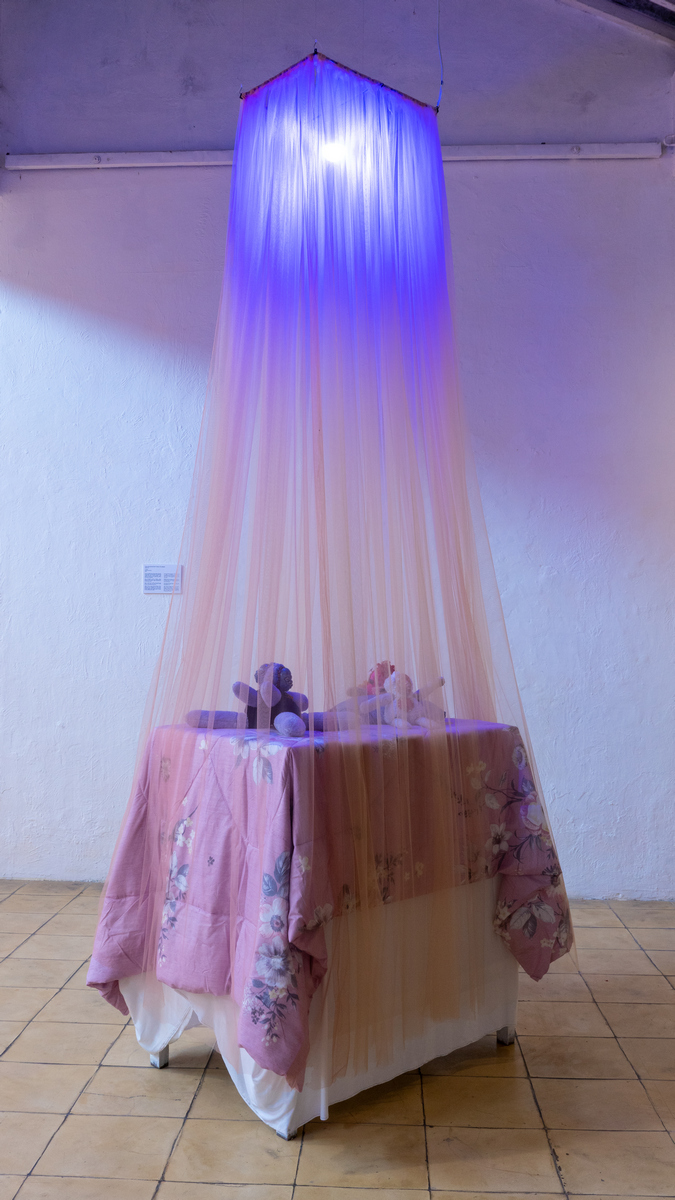
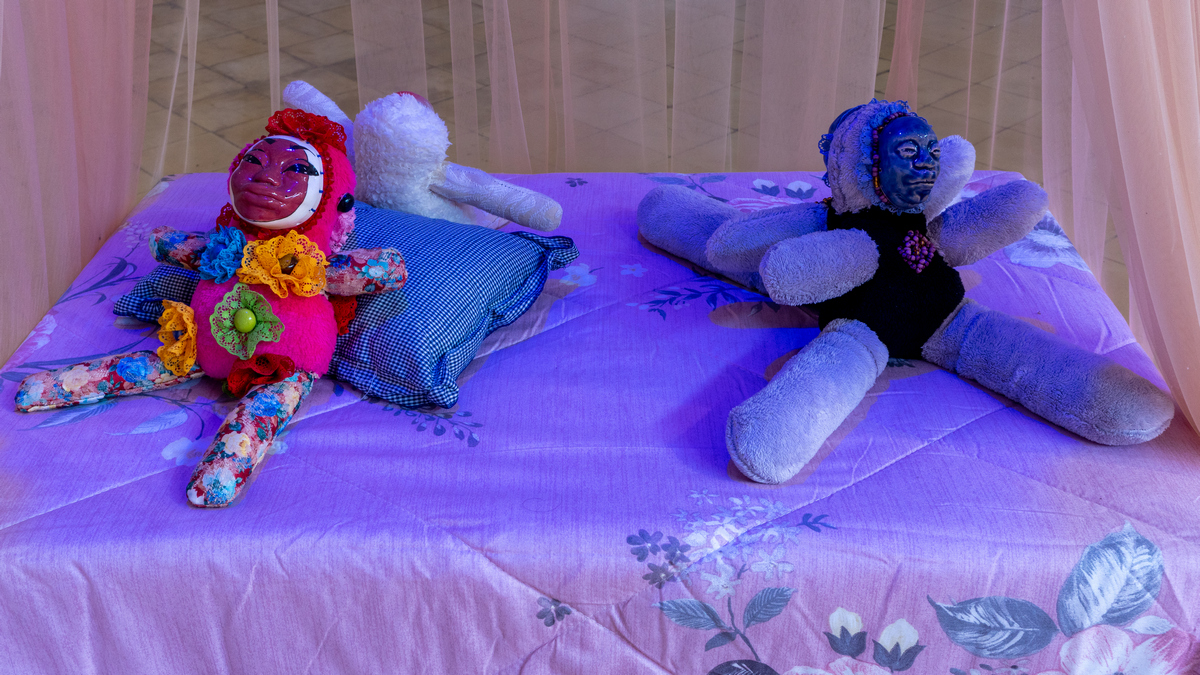
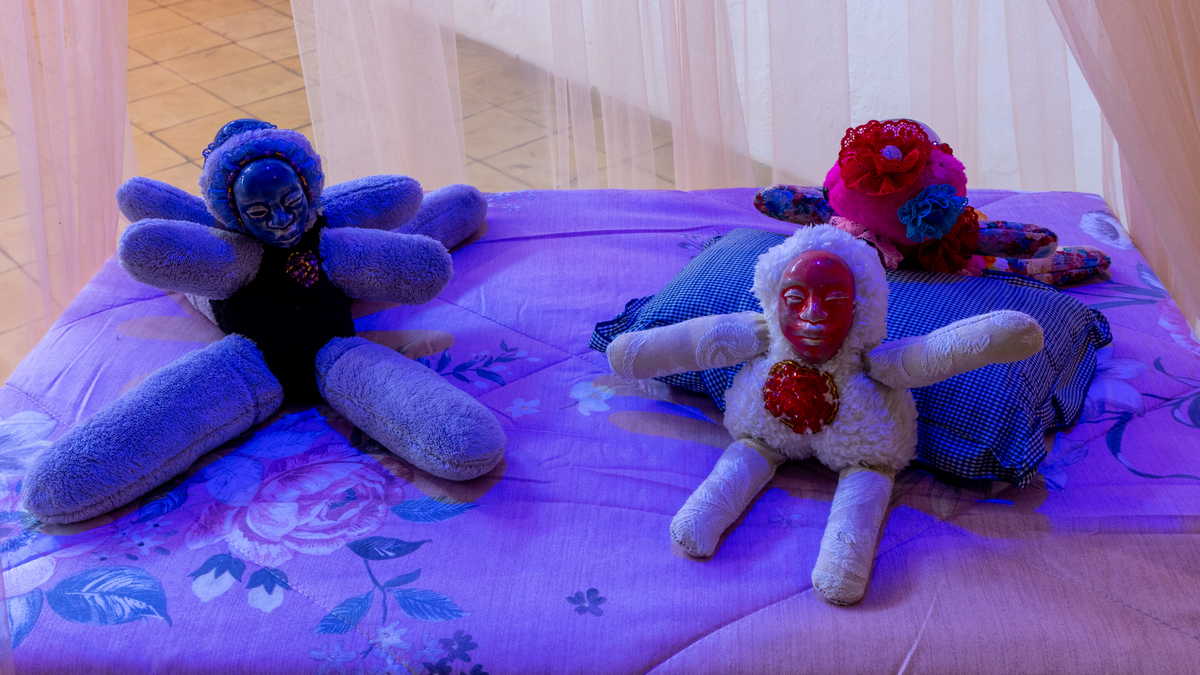
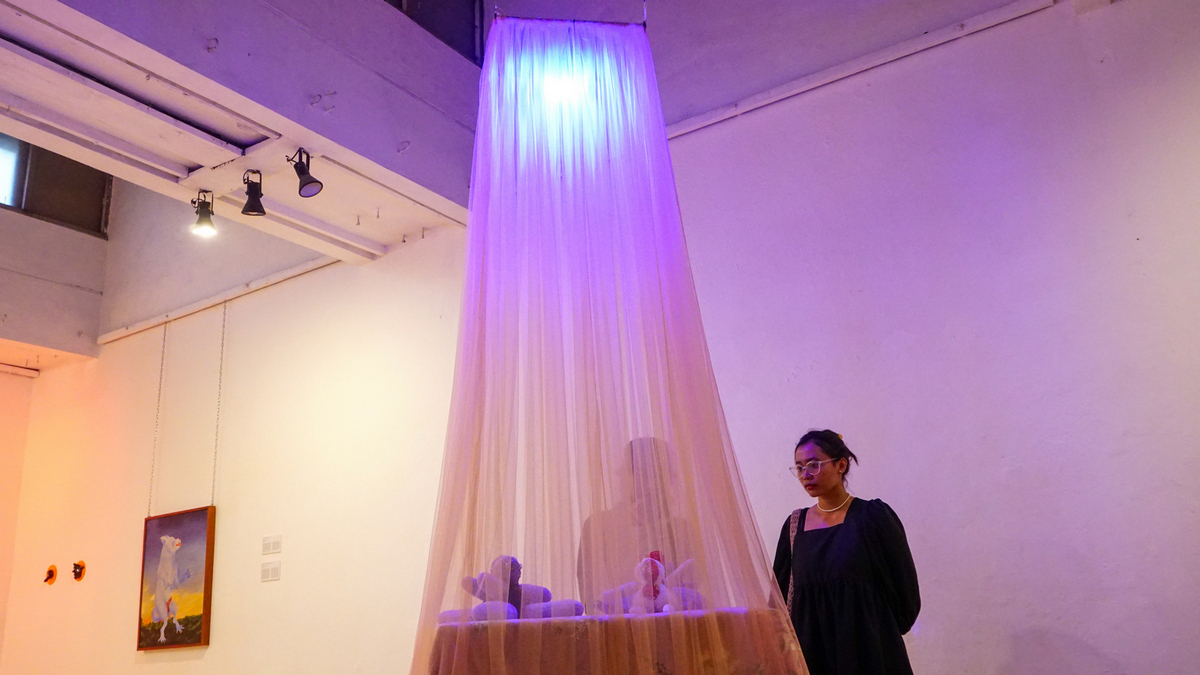
From the series Don’t leave me please
ARIA XYX
Tie dolls
Various dimensions
2023
The series addresses the body as a territory that can be transit or permanent, of affective and sexual-affective ties, on the human need to possess, dominate and conquer territories; but at the same time seeks to be possessed, dominated and conquered.
Making use of mooring dolls as an approximation to popular practices to retain the body and emotions of another person, as a desperate product of affective deficiencies.
The series is made up of 27 pieces that refer to the same number of people with whom I have had sexual/affective ties.
These 3 dolls correspond to Idealization, a practice where personal affective deficiencies can be projected and that result in a romantic idea or perception towards the other person without the latter having to bear an affective responsibility, since it is about our ways of bonding from belonging and possession.
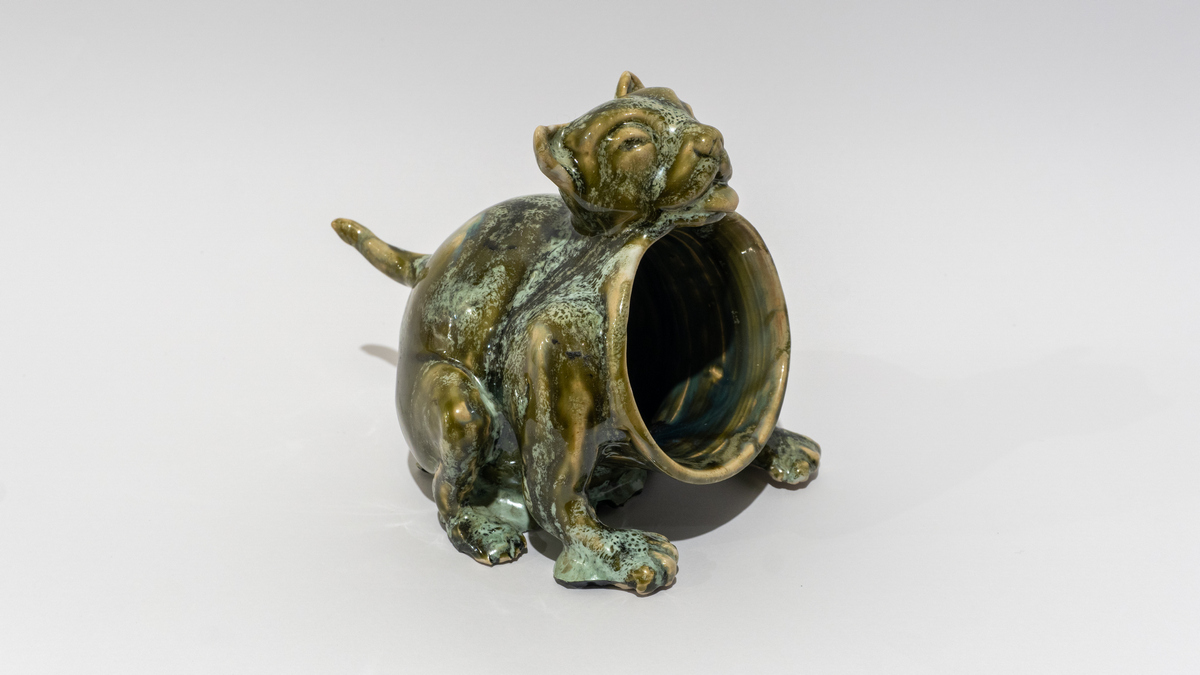
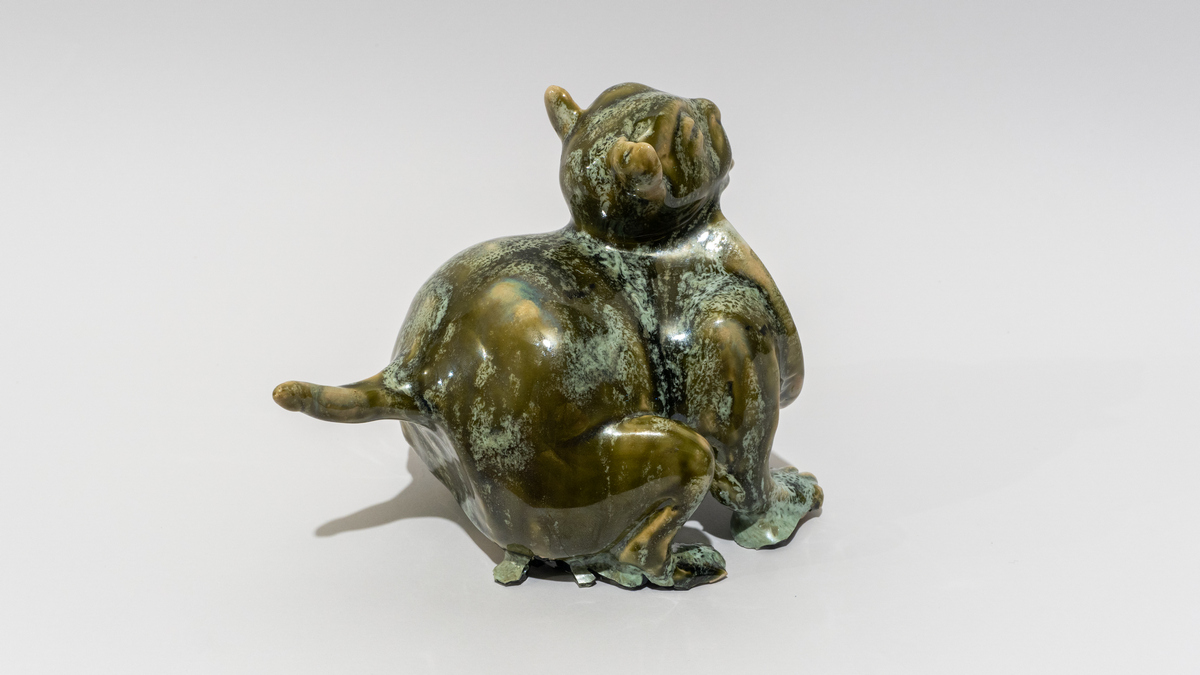
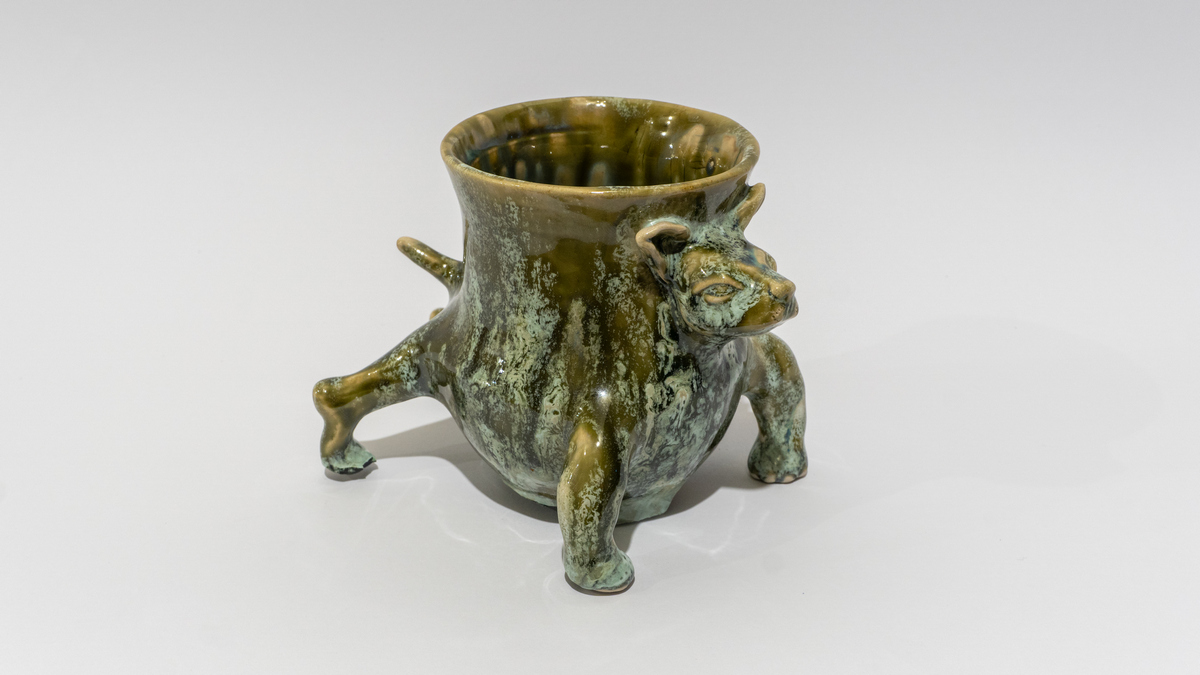
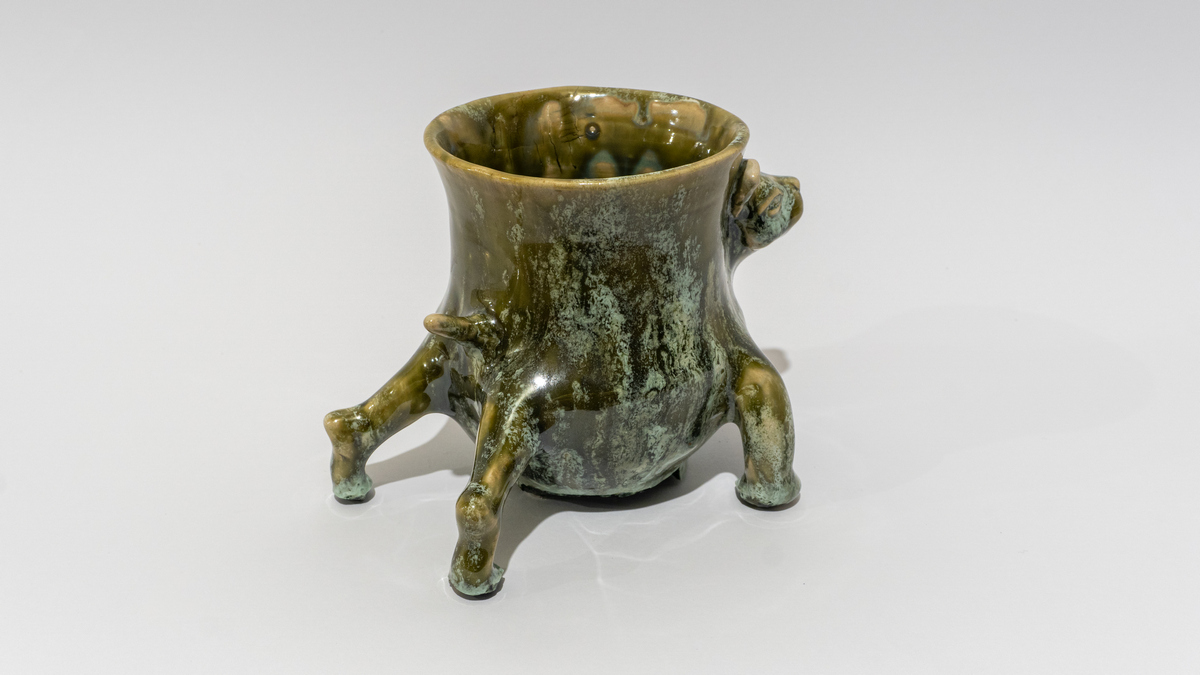
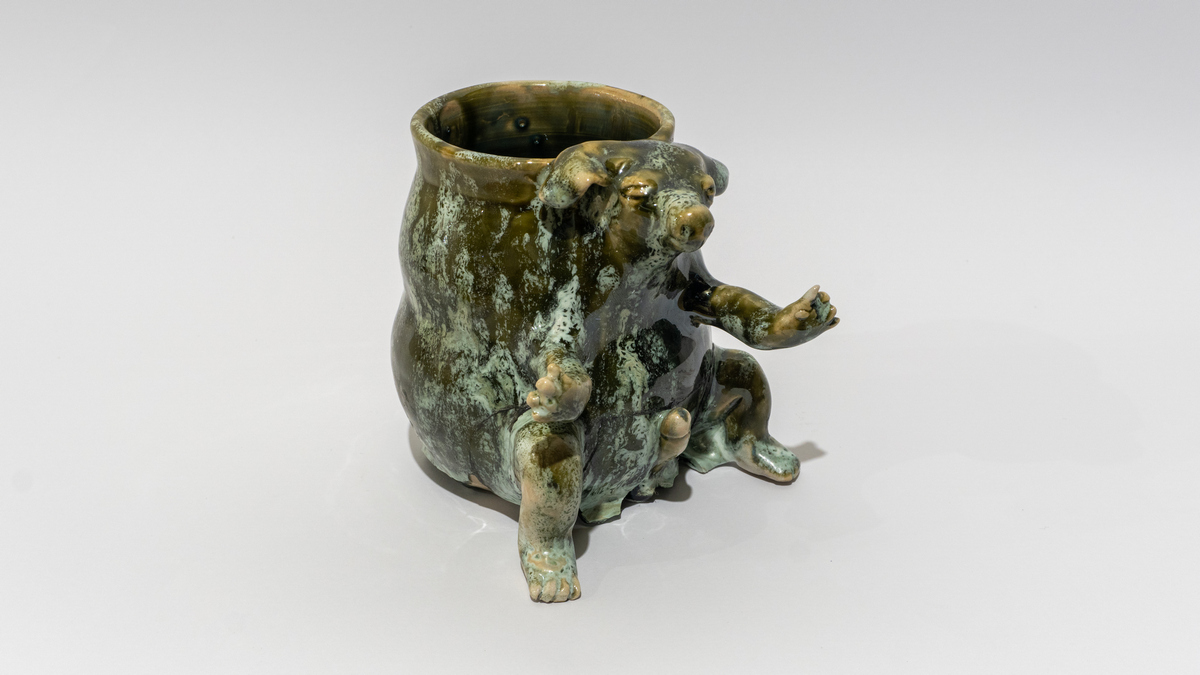
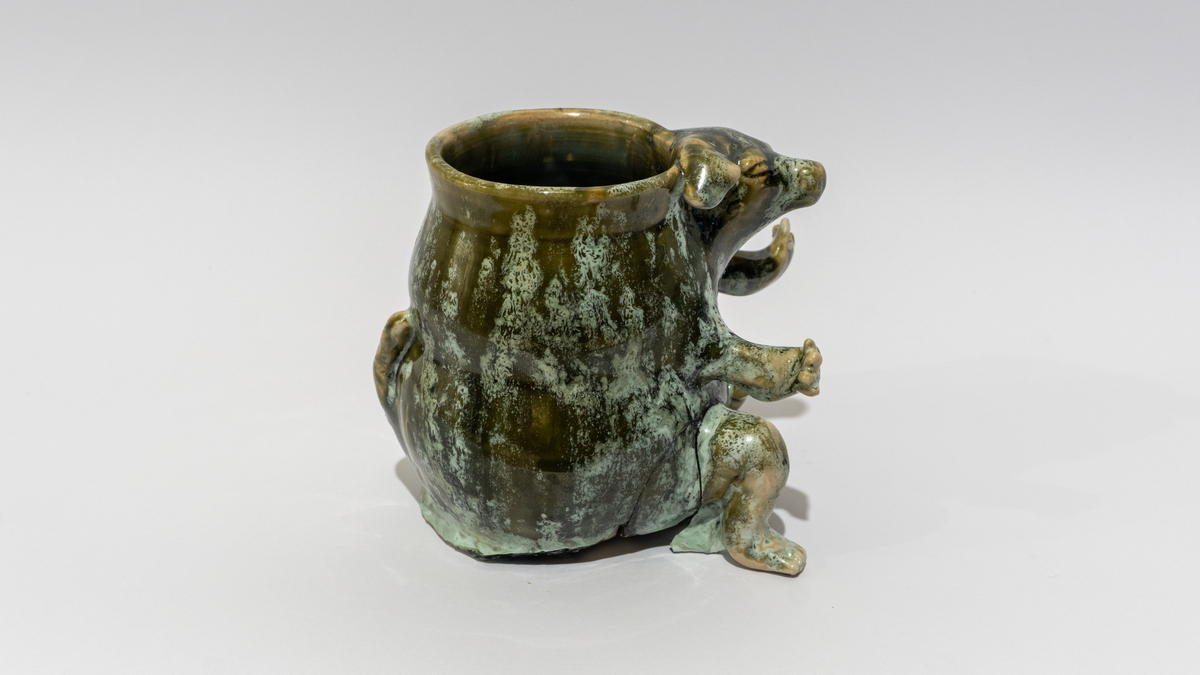
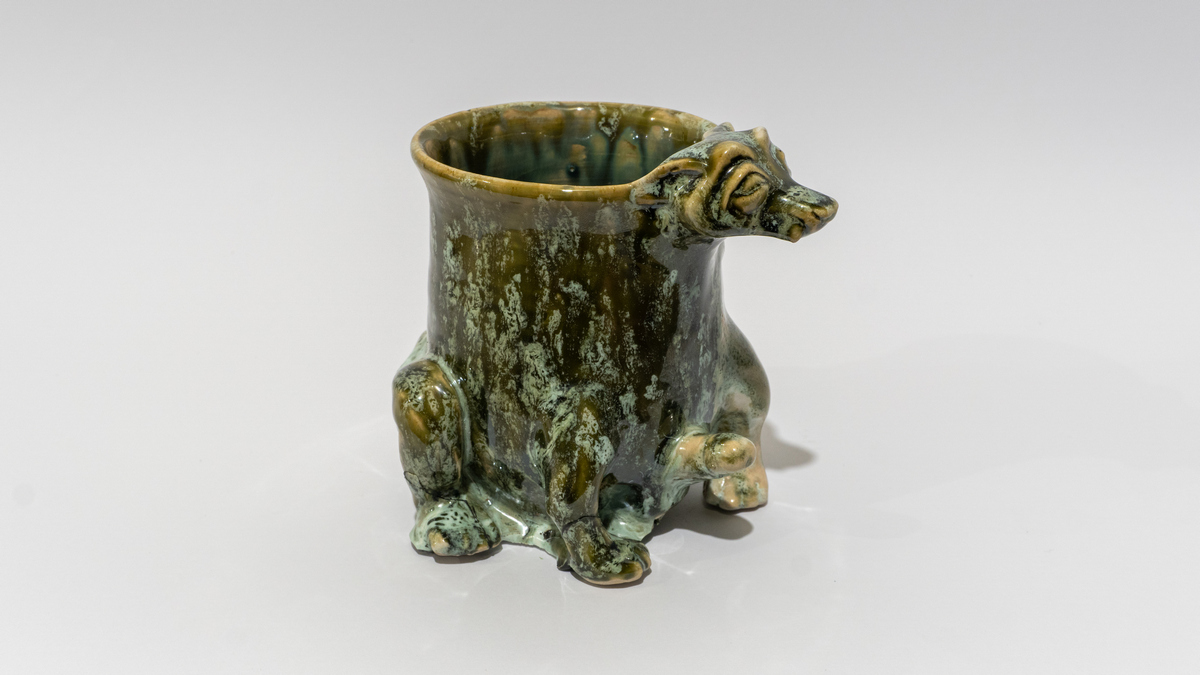
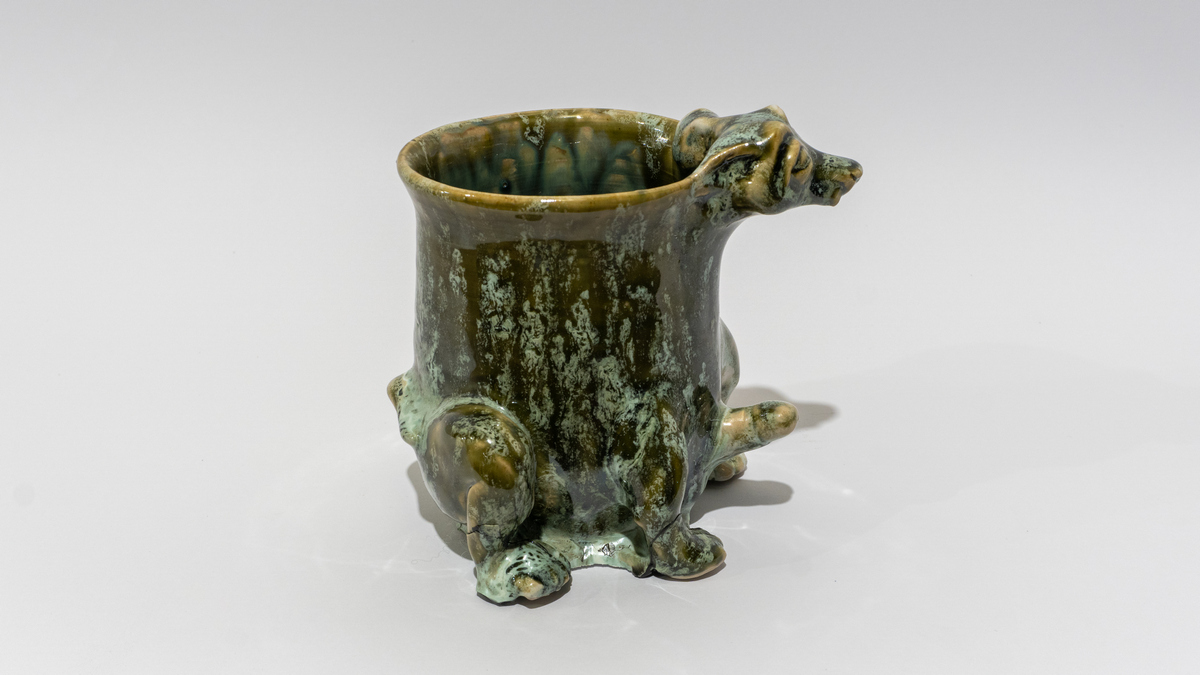
Experimentation during the residency process
ARIA XYX
2023
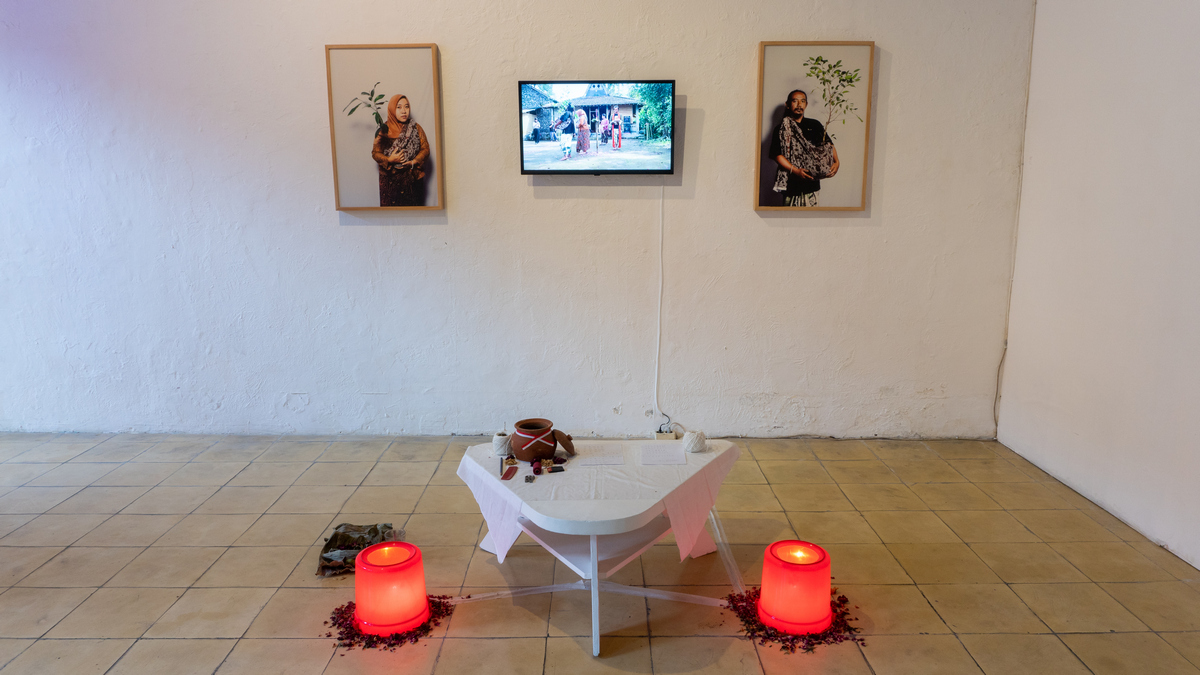
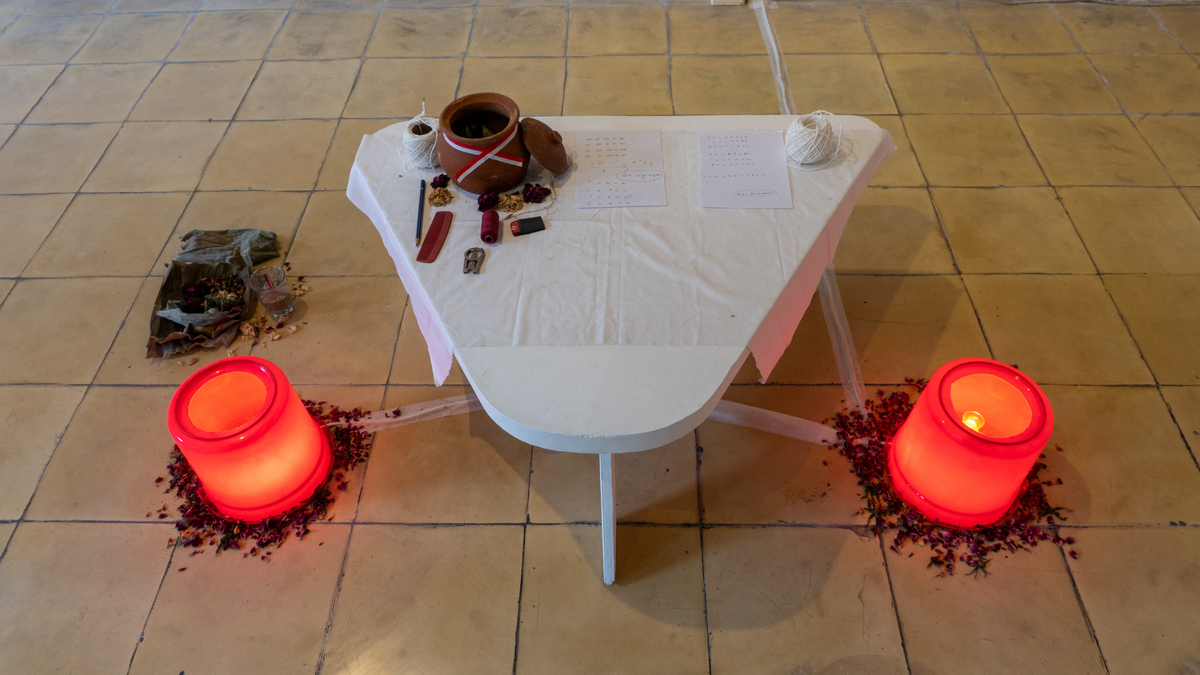
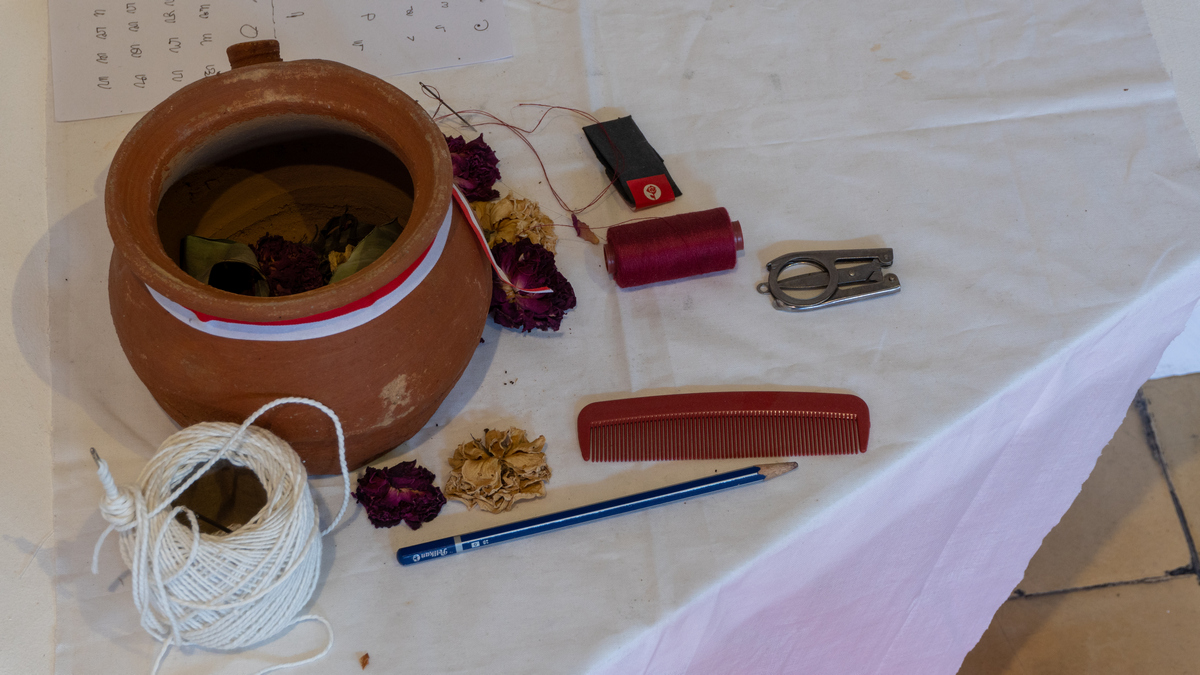
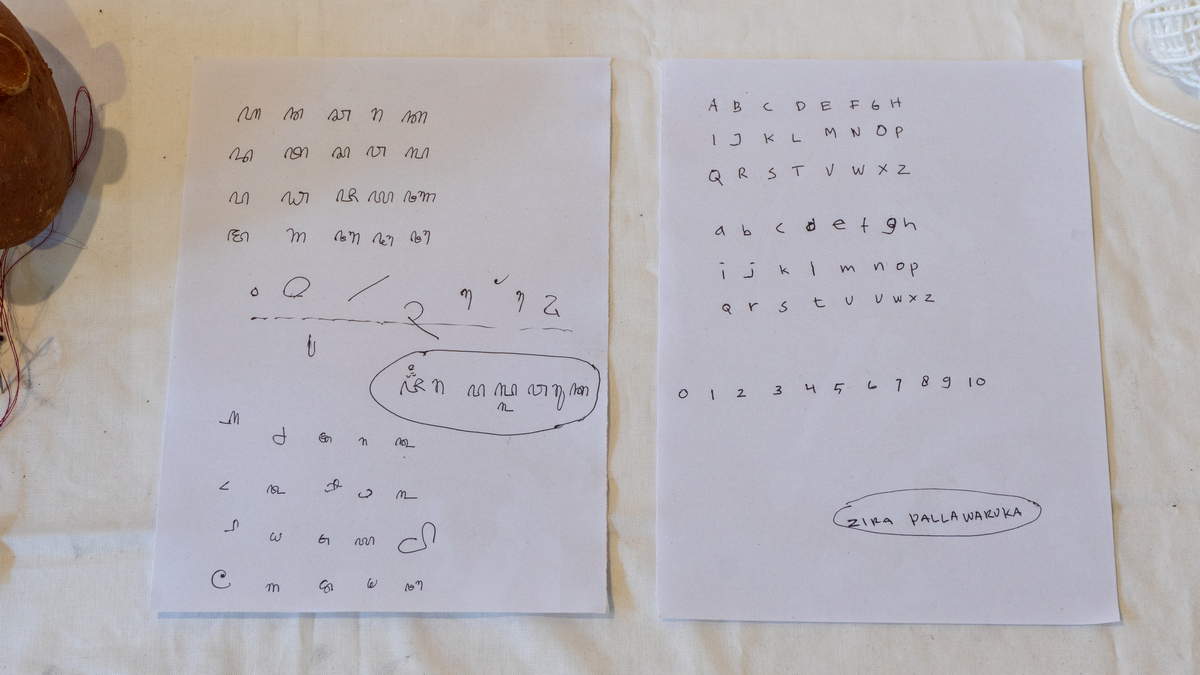
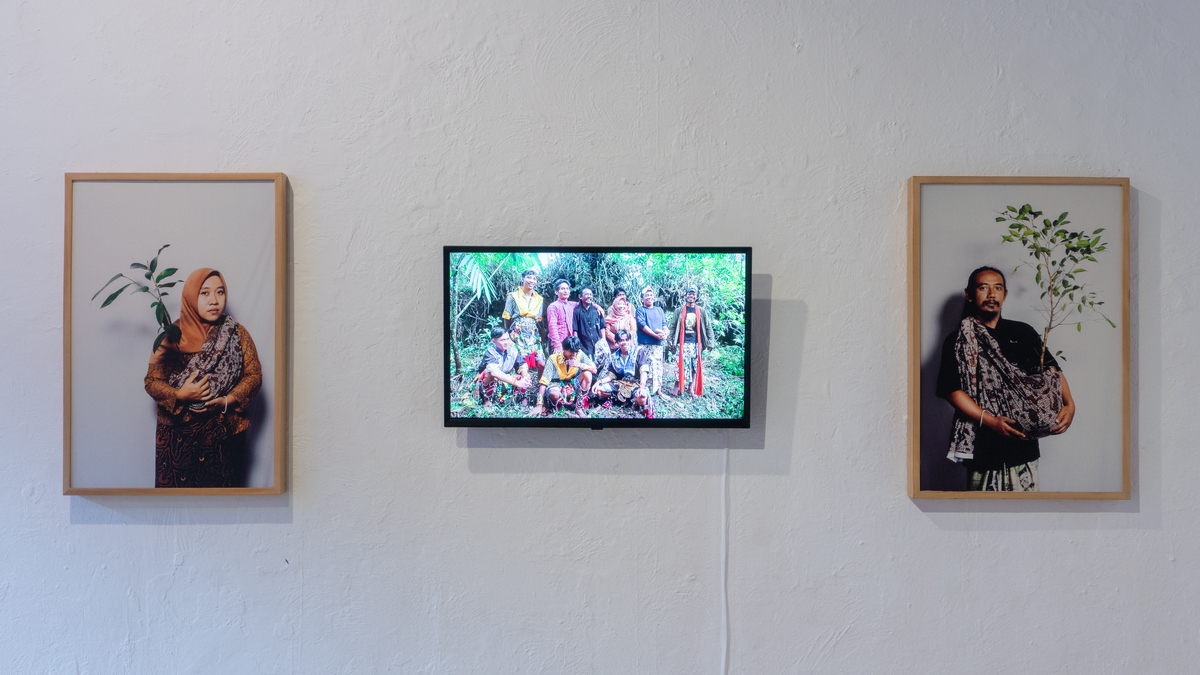
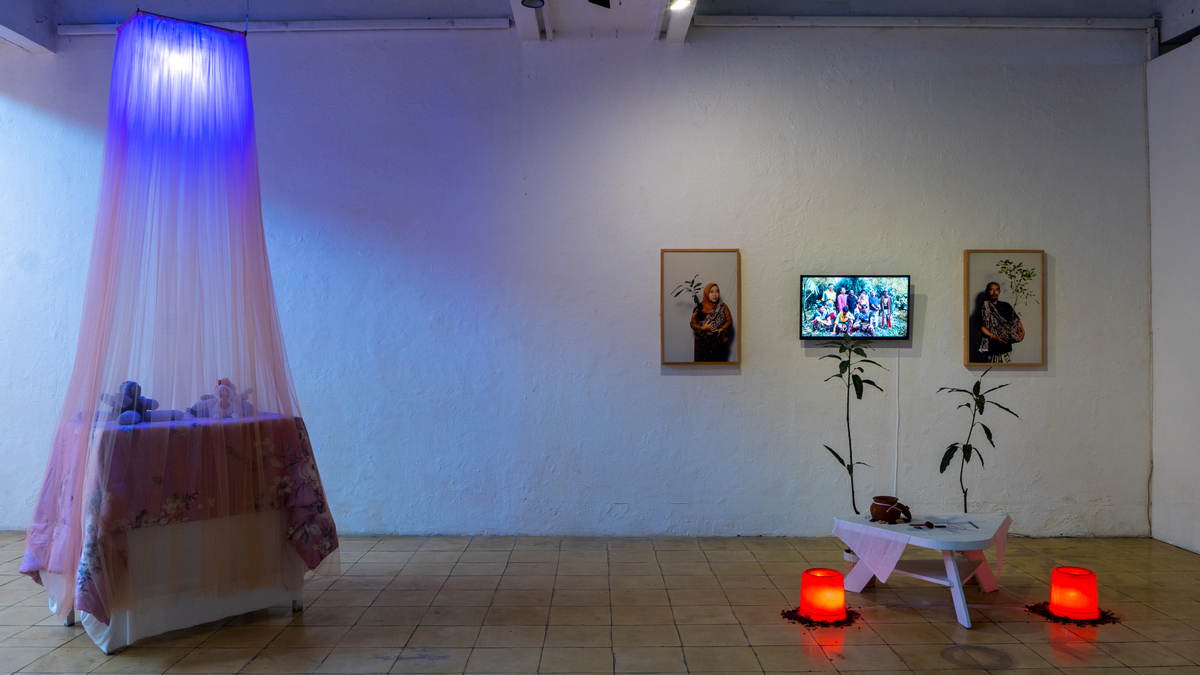
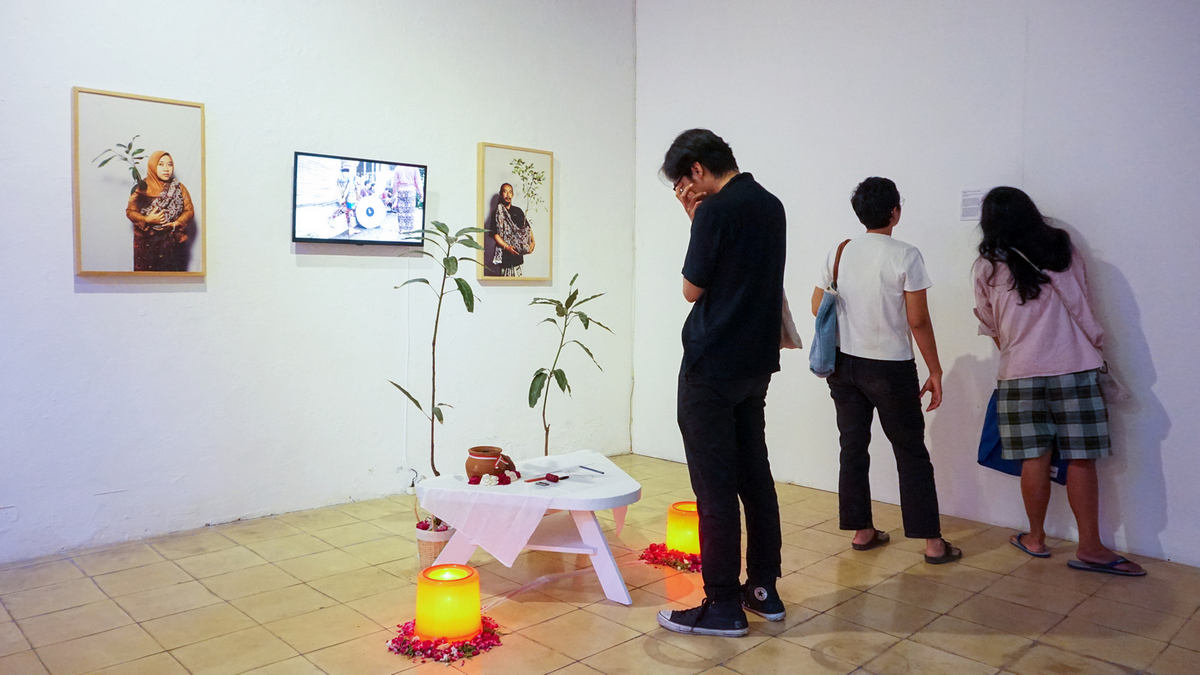
Ringin Gendong (1 Anak 2 Pohon)
Fj Kunting
Performance, video, photograph, artifacts of previous performance
Various dimensions
2018—present
Starting from questioning human birth rituals in Javanese-Islamic culture that differentiate between baby girls and baby boys, FJ Kunting invited families to plant two trees whenever a baby is born into the world, regardless of their gender. This ritual has been practiced since 2018 in Semarang, Makassar, Sumber, Tutupngisor, Yogyakarta and Kediri. The ritual consists of two parts: the first involves collective prayers and tumpengan (‘Tumpeng’ is a mountain-shaped dish consisting of cooked rice accompanied by the side dishes served during ritual offerings in Javanese tradition) in the evening, and the second part involves the tree-planting ceremony in the morning.
The act of Ringin Gendong is interpreted as a way to commemorate and take responsibility for the birth of the body. FJ Kunting uses performance art to celebrate the birth of the body, and also as a small effort to be responsible towards nature. Apart from that, he uses performance art to cultivate life in re-thinking the status, role and identities of individuals born into the world. Thus, “Ringin Gendong (1 Anak 2 Pohon)” (literally translated as “Carrying Banyan Tree (1 Child 2 Trees)” can be interpreted as an alternative approach to investigate the culture of selametan (feast ritual) and efforts to give new meaning to that culture.
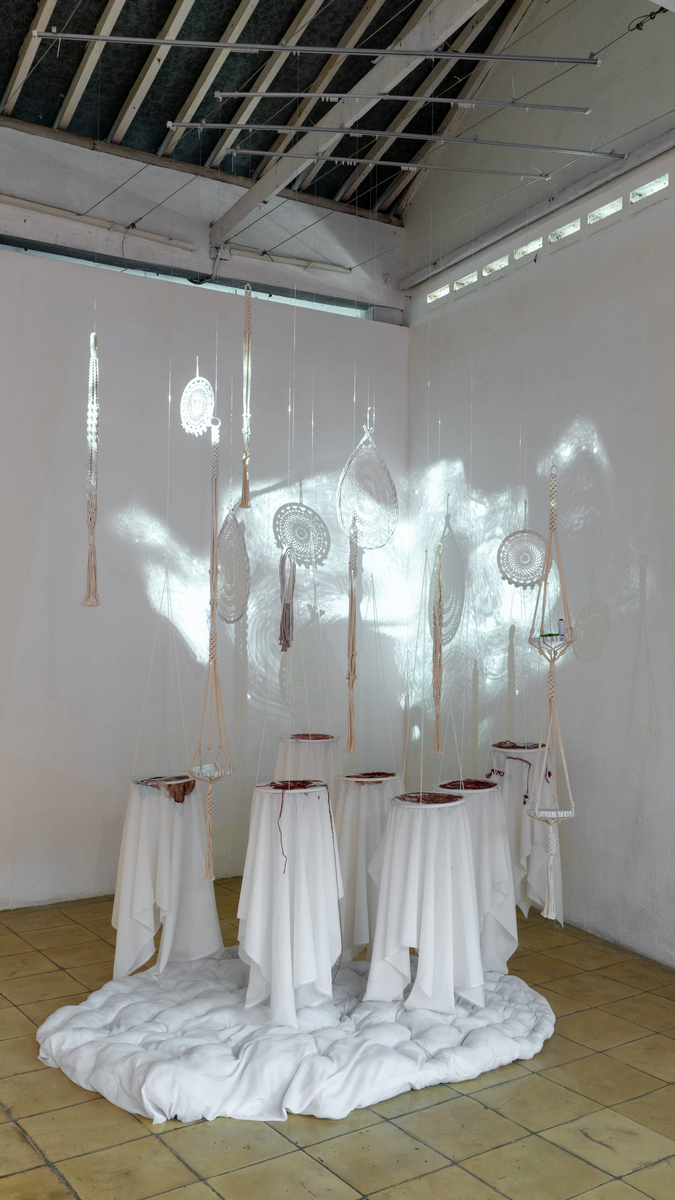
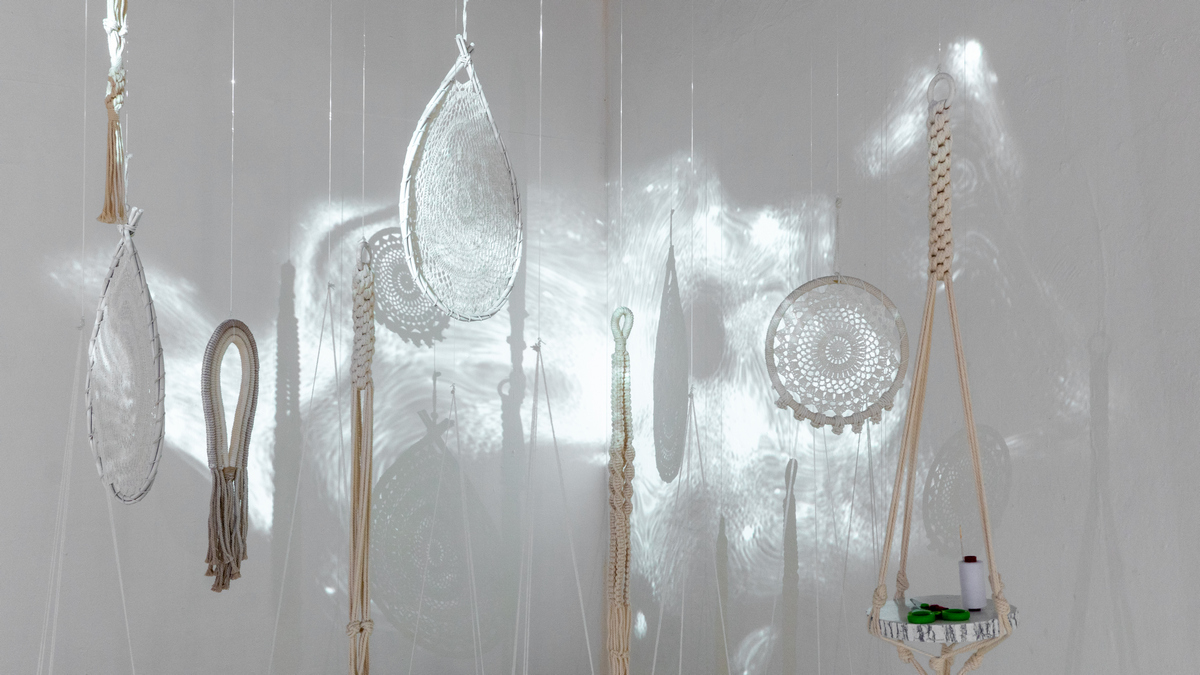
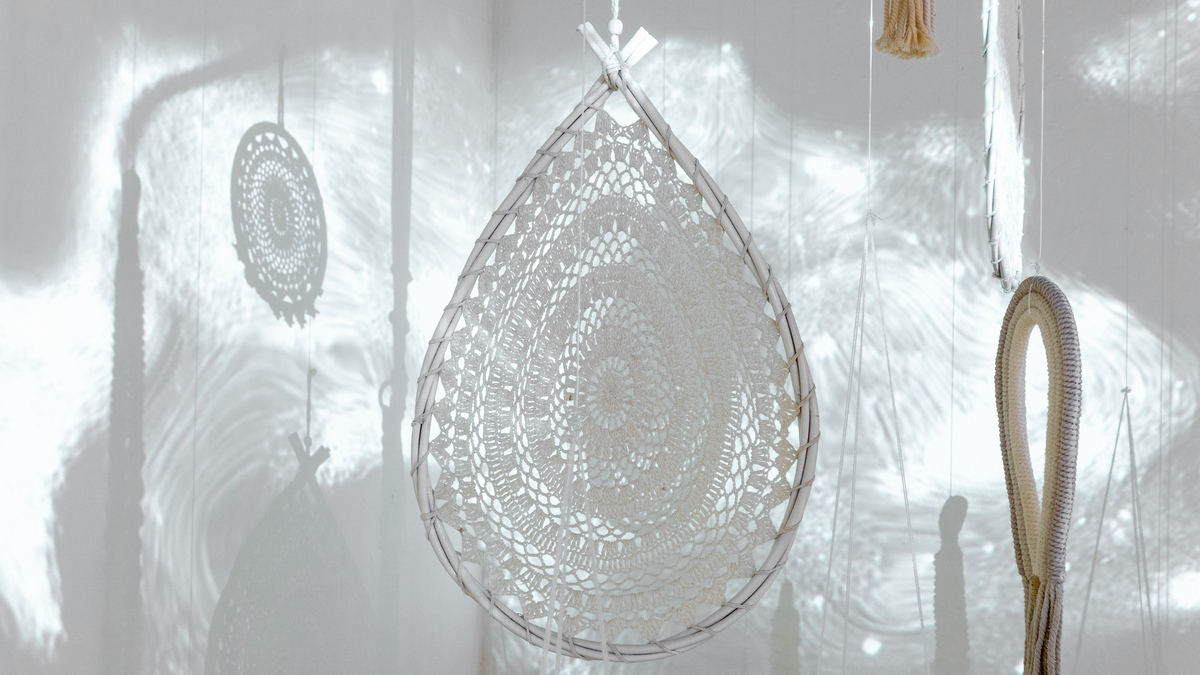
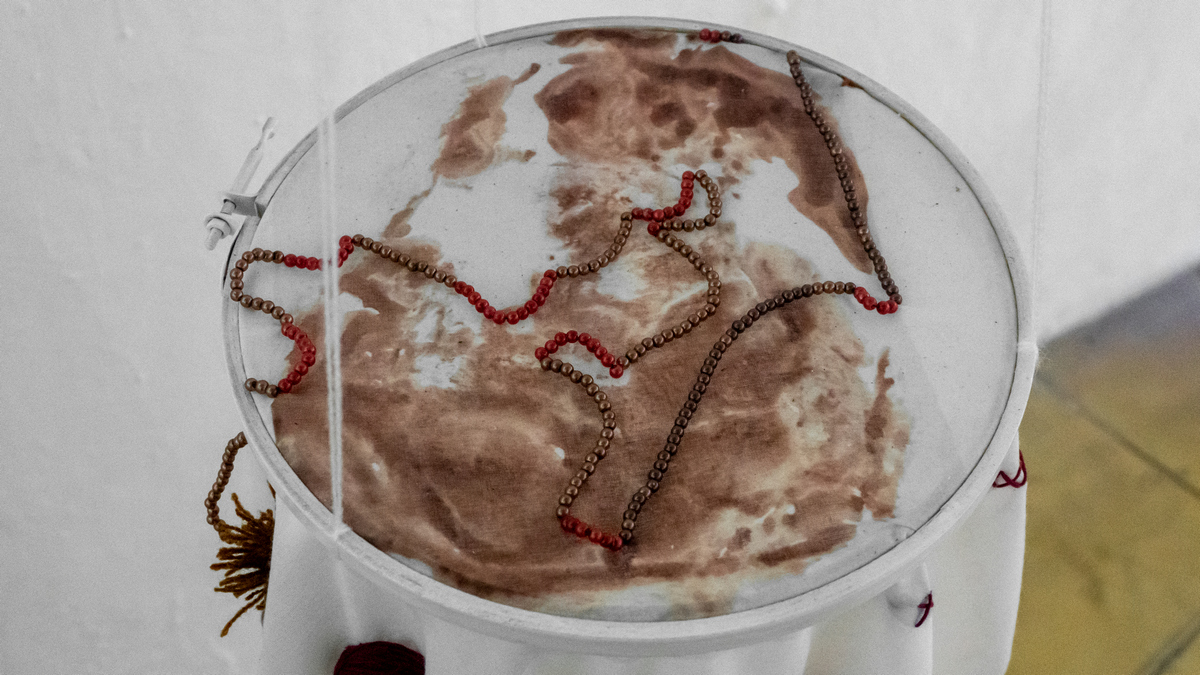
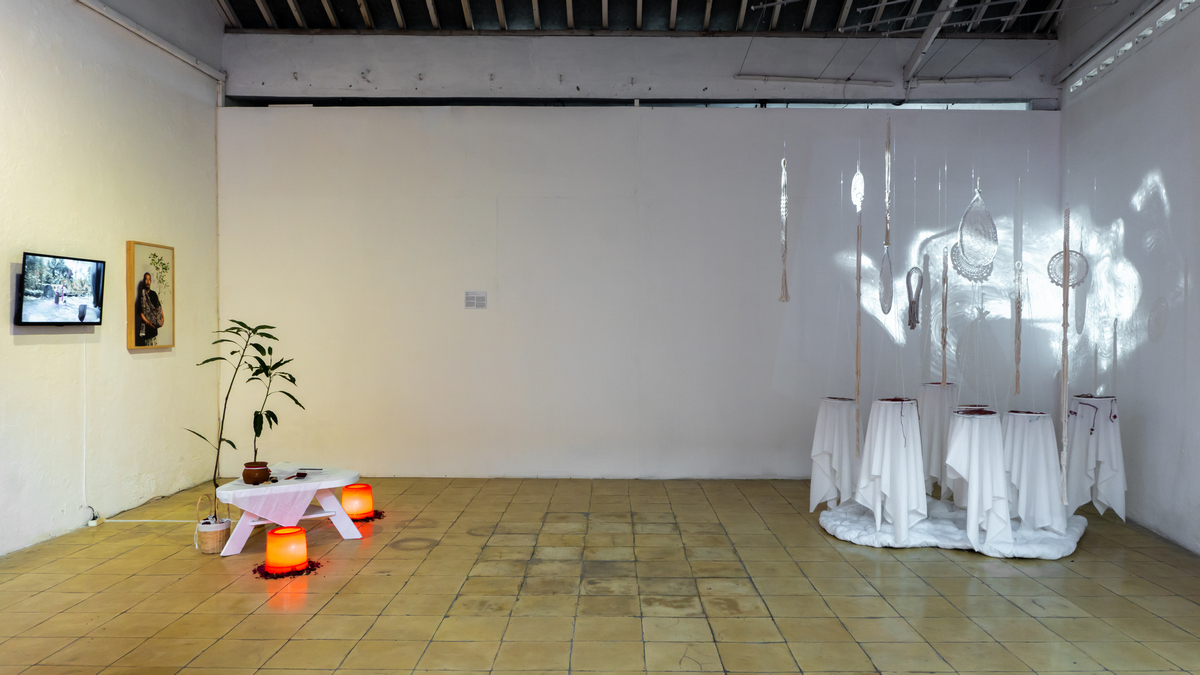
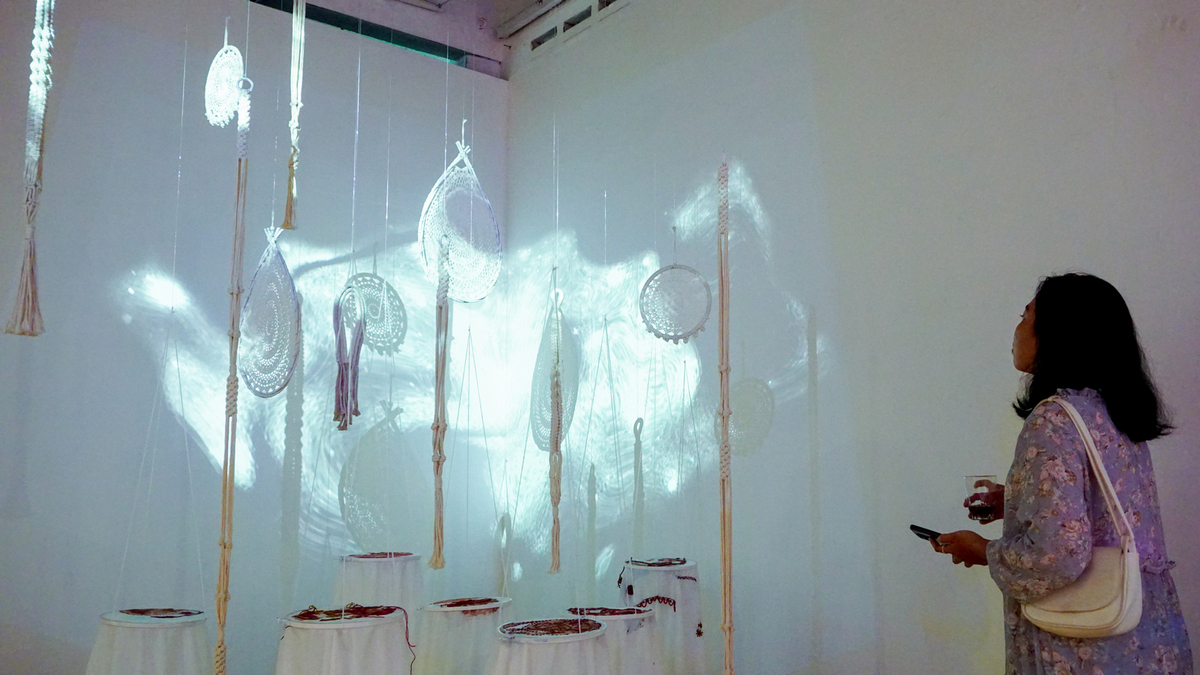
Joyous Vessel #1: Embroidering for the Beginningless Time
Eka Wahyuni
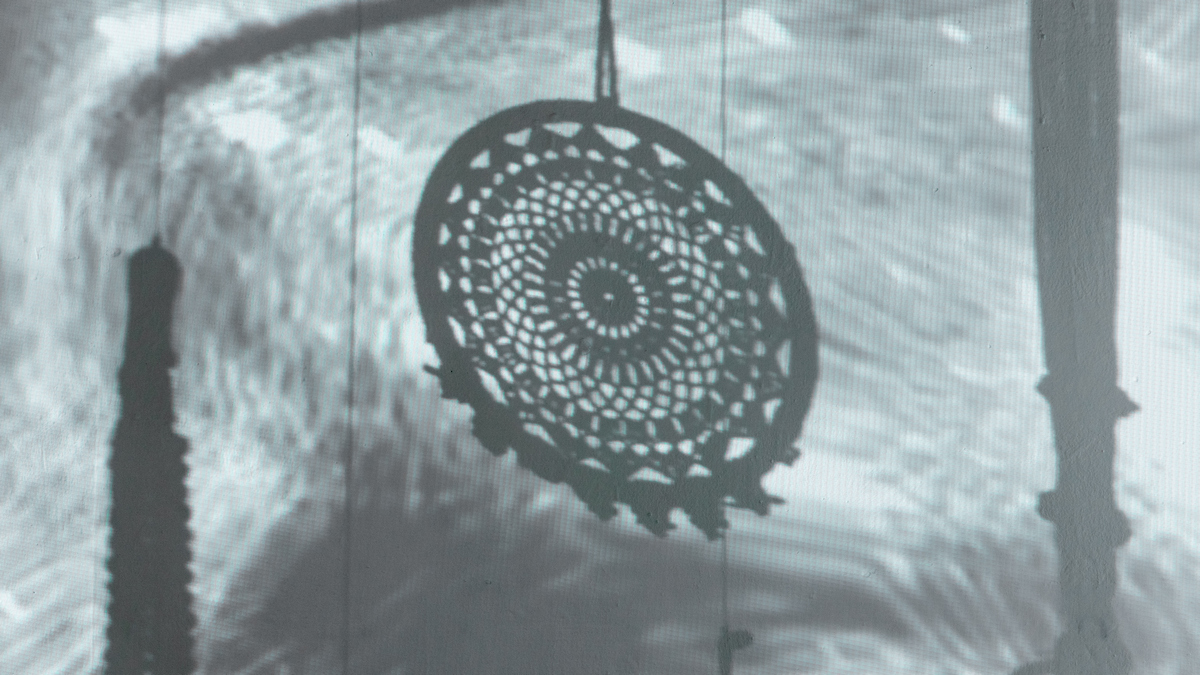
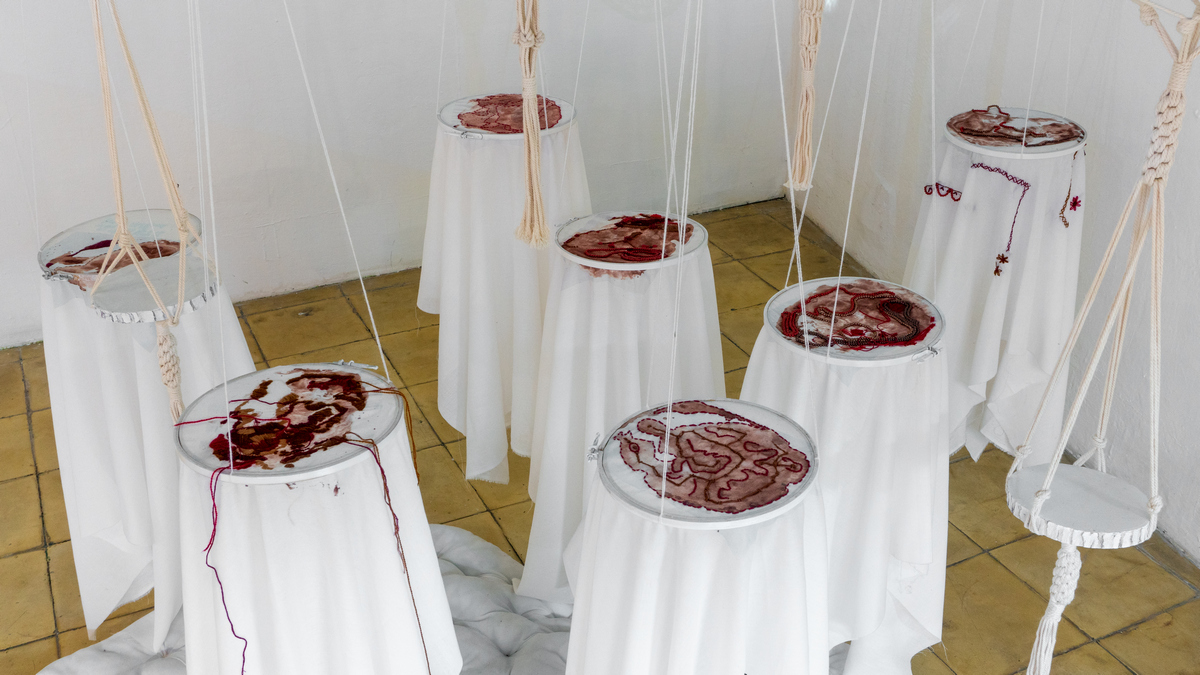
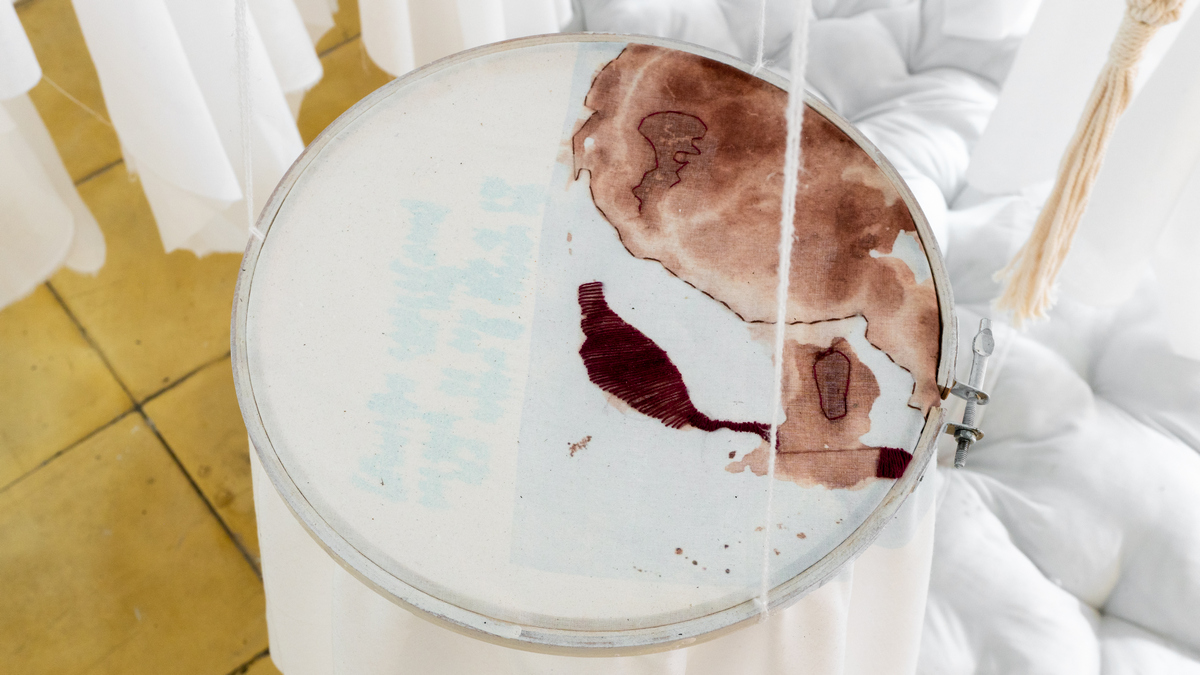
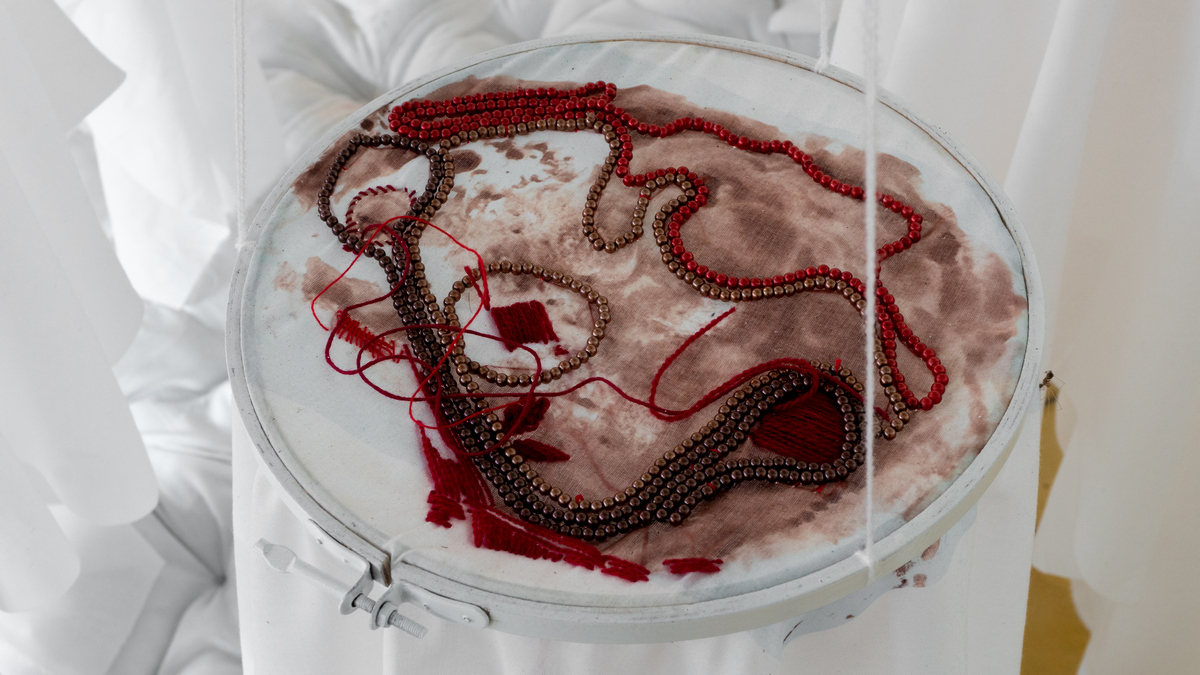
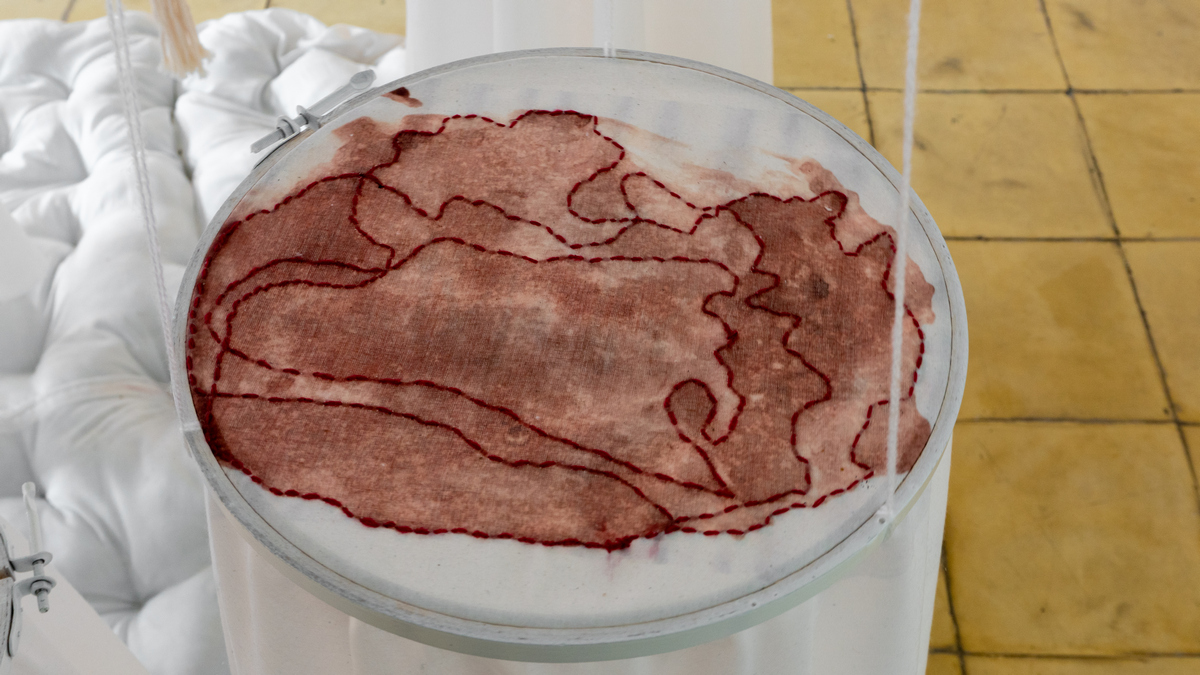
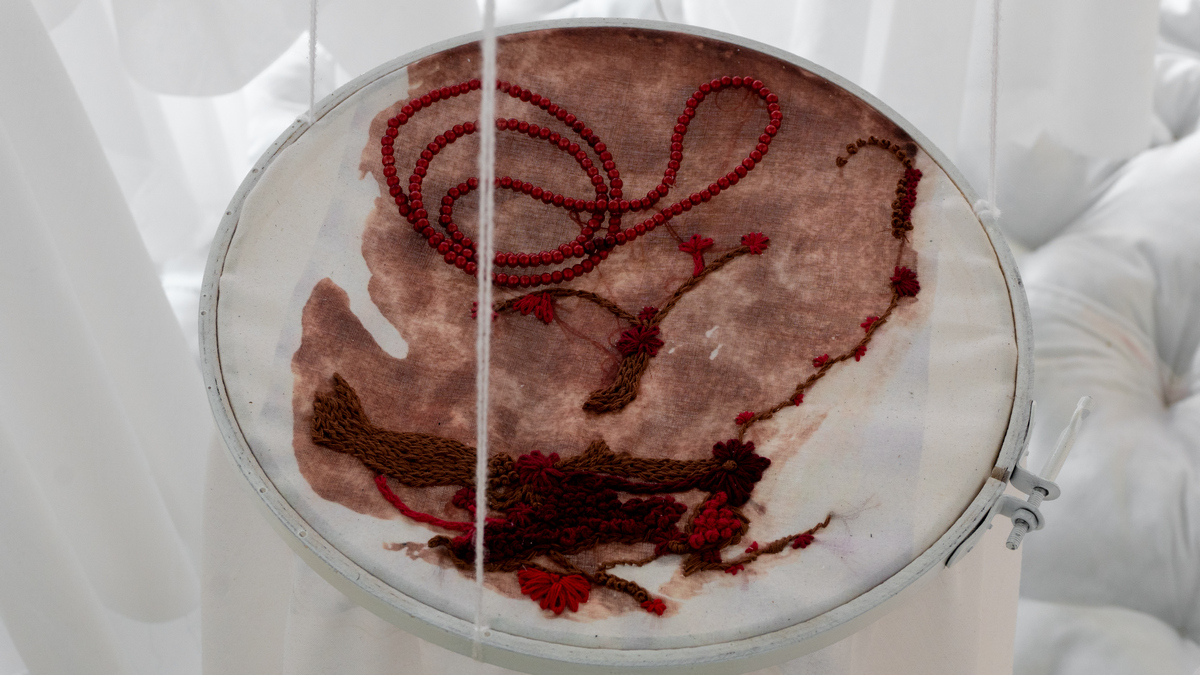
supported by Azwar Ahmad (video), Novelia Hadiarti (macrame), 7 friends of Eka (embroidery)
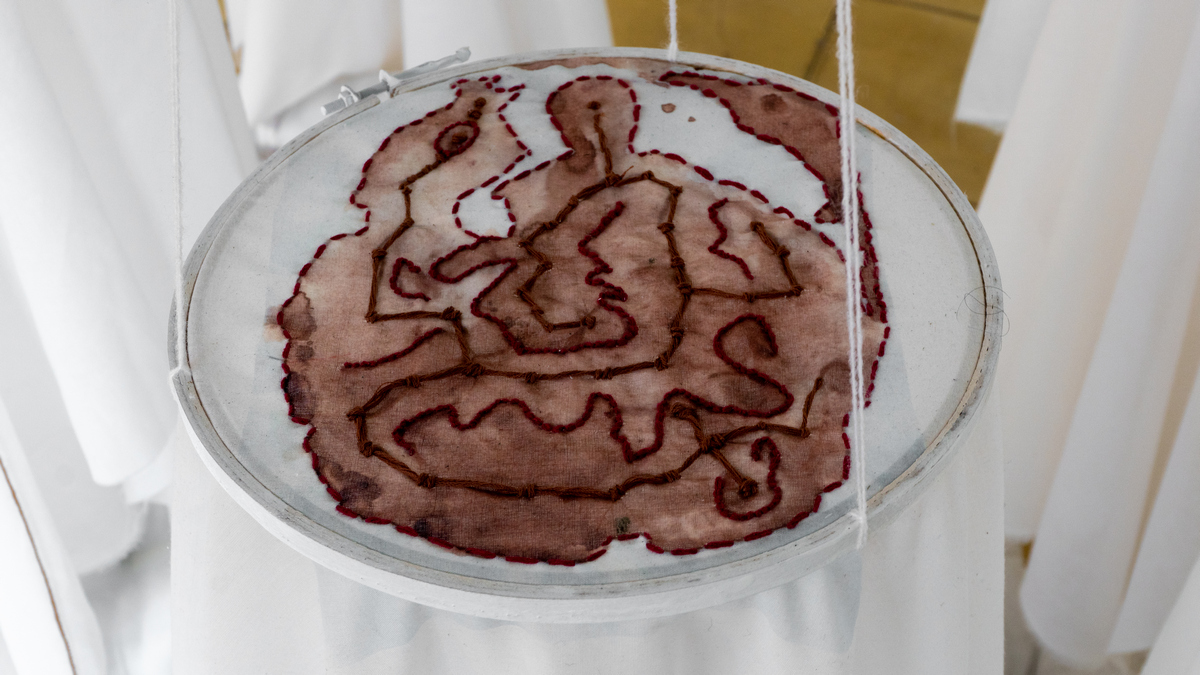
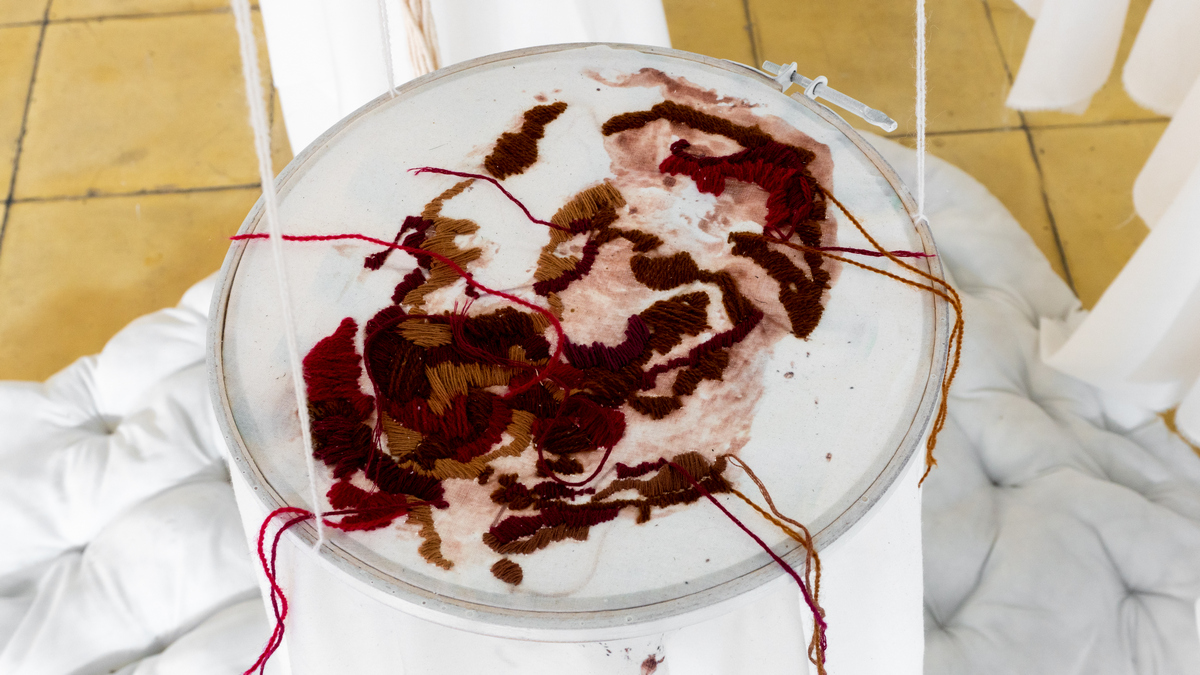
Performance, print of the baby’s placenta, embroidery, fabric, macrame
Various dimensions
2023
In Java, the land and cosmology of Eka’s child’s birth, the number 7, which means ‘pitu’ in Javanese, symbolizes ‘pitulungan’ meaning assistance, support, and guidance. The number 7 is also believed to bring qualities of reasoning, intellectuality, awareness, and spirituality. Eka used this number to determine the number of prints of the placenta, which were then scanned and printed to create an embroidery pattern. Eka asked seven people she trusted to support in caring for her baby to embroider threads onto the placenta pattern printed on the fabric, much like embroidering prayers for the newborn.
The placenta itself is an organ that grows alongside the fetus in the womb during pregnancy. It is a crucial organ for supporting the fetus’s growth. This is why, in Javanese society, the placenta is believed to be the sibling of the newborn baby. Eka chose the placenta (ari-ari in Javanese) to symbolize the gateway of birth that leads a person into an ‘existence’ woven from various complex and unpredictable ‘becoming’ experiences. At this point, she realizes that the baby will grow up as an individual who will be involved in a much wider universe than its family.
This artwork is a long-term artistic project that Eka began in the early stages of pregnancy. On the Instagram account @joyous.vessel, Eka archived the choreography of bodies: her own body movements, her baby’s movements, and their movements together. The expanding belly is one of many bodily signs indicating that the body has undergone specific experiences, such as pregnancy and birth.
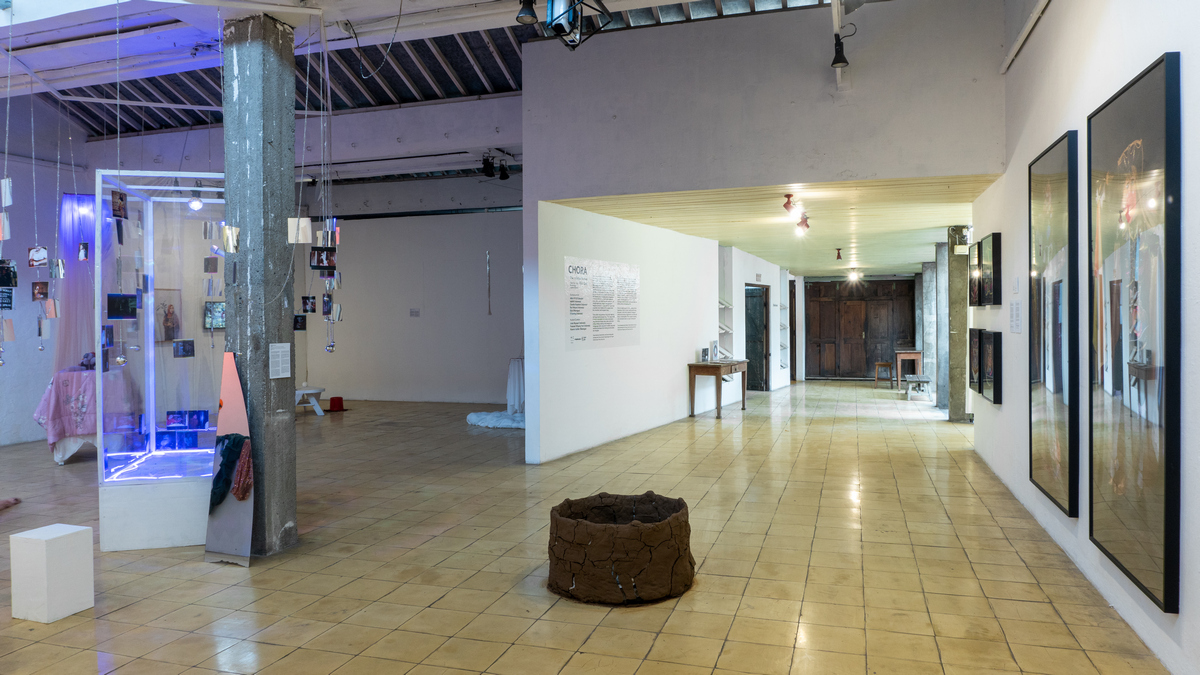
Gallery
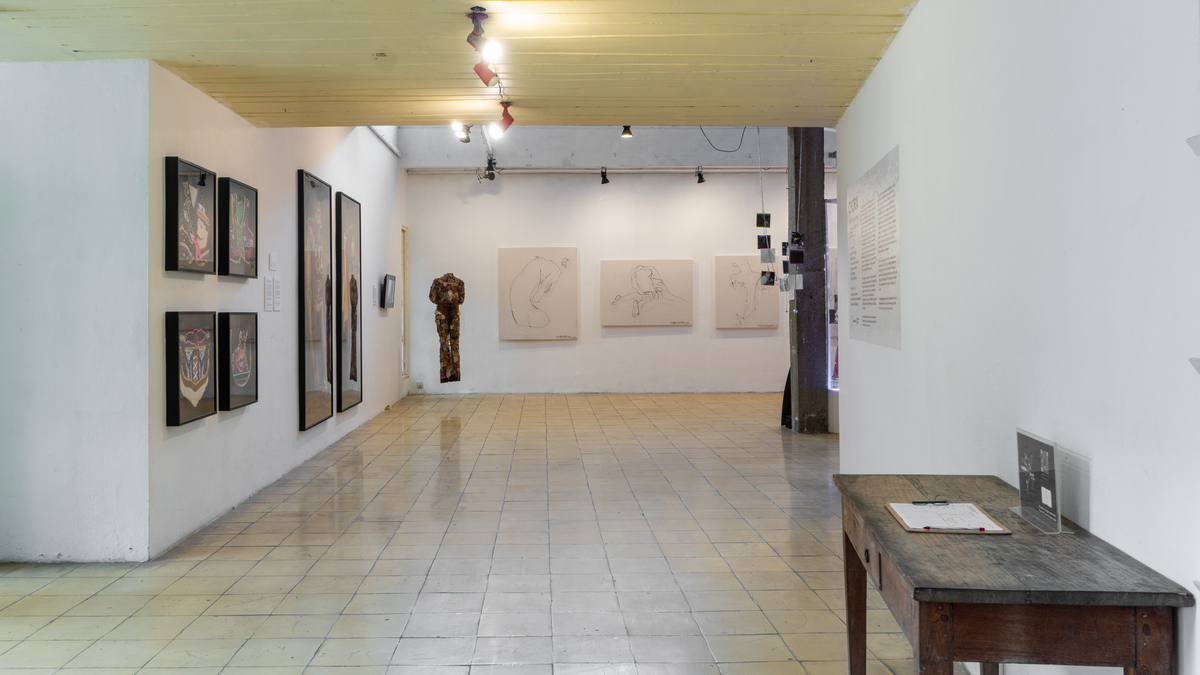
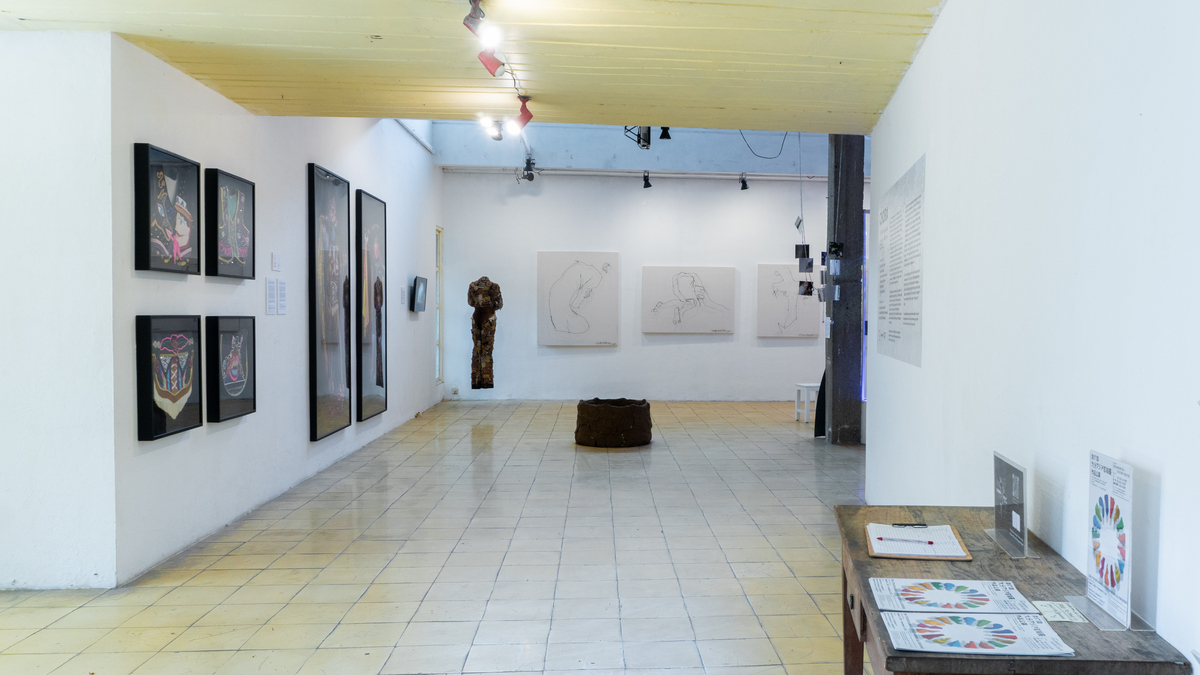
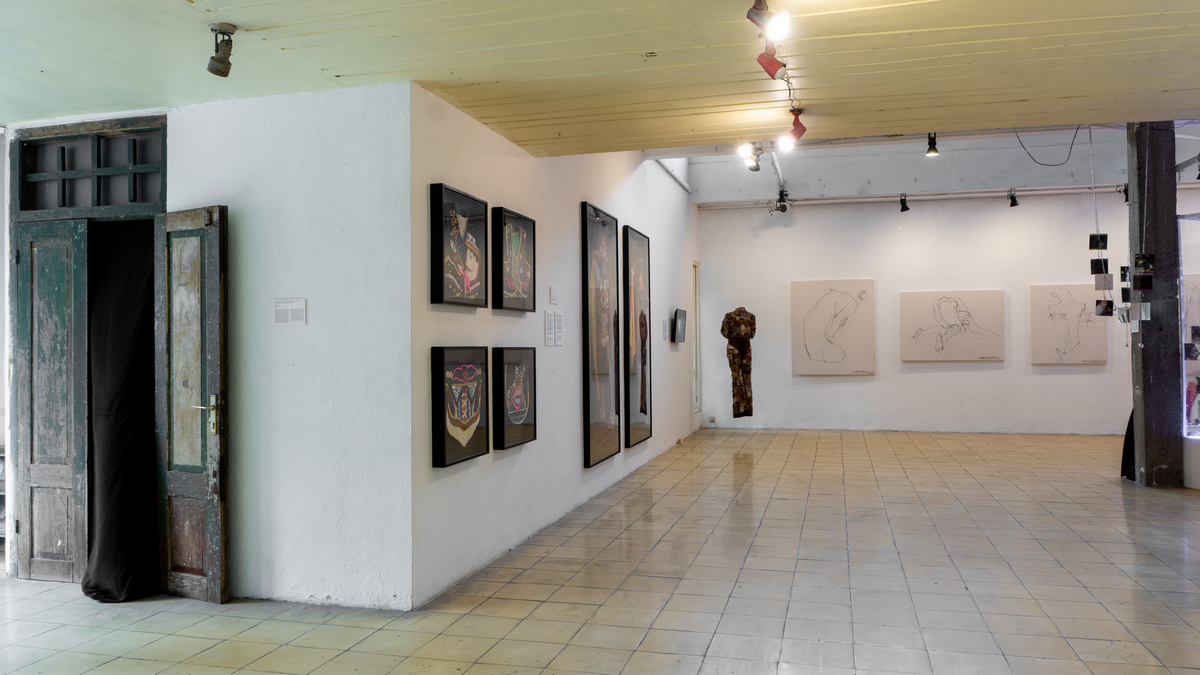
Documentation
Biography
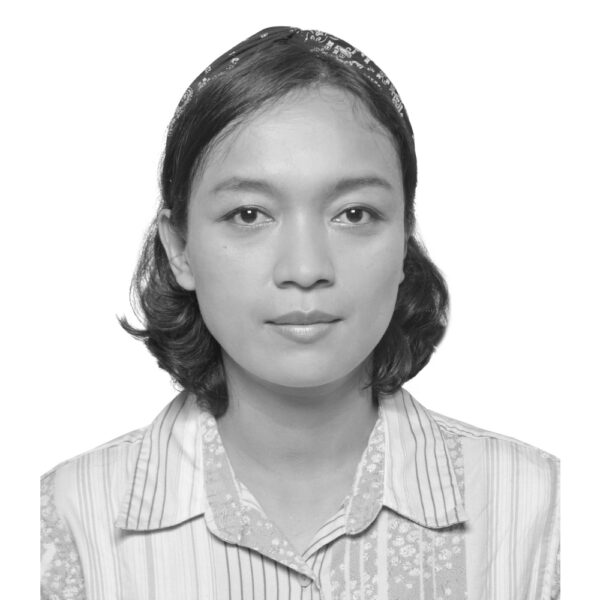
Linda Mayasari is Director at Cemeti - Institute for Art and Society, where she has worked since 2010, as well as in-house curator for the Indonesia Dance Festival. She is currently pursuing a Master's degree in Cultural Studies at Sanata Dharma University while pursuing personal research and writing, exploring the intersections of art, politics, and post-colonialism within Indonesia's cultural and historical context. Occasionally she works collaboratively with artists from various fields (particularly dance and visual art) to produce independent research-based projects. She worked on a research project with Muhammad AB, and Suluh Senja Romana called "Peeping the Dance Archive: Drunk with Anything American vis-a-vis National Identity Jogja Dance Trajectory". The research was presented in an archive exhibition as part of the "Jejak-旅 Tabi Exchange: Wandering Asian Contemporary Performance" in Yogyakarta in 2018. In 2022, she received the 2022 Nusantara Academic Writing Award (NAWA) for writing a master's thesis for the Masters's program in Cultural Studies Sanata Dharma University entitled “Bagong Kussudiardja: Javanese Aesthetics, American Drunk, and New Order Heroism”.
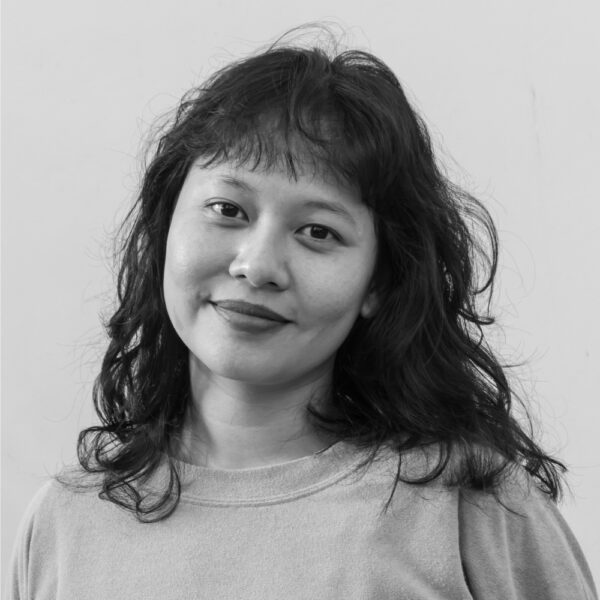
Prashasti Wilujeng Putri is an artist and art programmer. She started her own artistic process in 2016, when she joined 69 Performance Club. She was part of the festival programmer at ARKIPEL – Jakarta International Documentary and Experimental Film Festival in 2016-2021. Since 2019 until now she has managed muarasuara.id with her fellow artists. Many of her works are in the form of performance art, video, and drawing. She did a residency at the Silek Art Festival in Gubuak Kopi, Solok, West Sumatra in 2018, conducting research on silek (silat) in contemporary bodily life. The results of his residency were then developed into a performance work entitled "Good Code" which was presented at the Ilmin Museum of Art, Seoul in 2018, and became an article in one of the chapters of a book titled "Harimau Tjampa'' together with the Kultursinema Team which was published in 2021. In 2021 she took part in the Rotten TV residency held by Daniel Lie and Cemeti - Institute for Arts and Society. Then in 2021-2022 she took part in the Indonesia and Southeast Asia Choreographer Network program held by the Kelola Foundation and the Dance Committee of the Jakarta Arts Council. Then in 2023, her video work titled “The Allegory of The Bla Bla Bla (Video Edition)” was exhibited at the Jogja Fotografis Festival 2023.
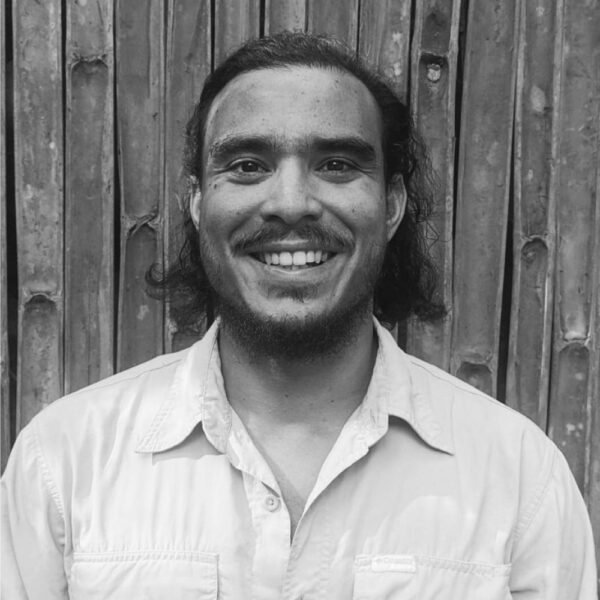
Roberto Guillén is a cultural manager and film producer. With studies in theatre, contemporary art, sustainable project management and development of communication strategies, Guillen has developed his professional career in the management of projects with a high social impact. Founder in 2014 and co-director of the Managua Furiosa social initiative, a cultural management platform in Nicaragua with which he won the Digital Innovation Award for Public Freedom of the FVBCH, Video category in 2020, The National Digital Communication Award by UNICEF in 2018 and the Conchita Palacios National Award, Best Journalistic Piece in 2018. Director, co writer and producer of the web series Managua Furiosa la Serie, a serial project produced in Nicaragua. Producer and co-writer of the web series Niña Furia, launched on HBO MAX United States. Co-executive producer of the documentary El Mito Blanco directed by Gabriel Serra and producer of the trilogy of short documentaries about young Nicaraguans in exile, Let Us Fly directed by Francisco Soza, Sangre Nueva directed by Gabriel Serra and Madelaine, directed by Leonor Zúniga. He is currently co-director and founder of the Central American platform FURIACA, a virtual/offline space for promotion, dissemination and cultural management in the region. He is interested in revindicating the politicisation of identities, cultural practices, and social or political movements that question heterosexuality as the hegemonic social norm.
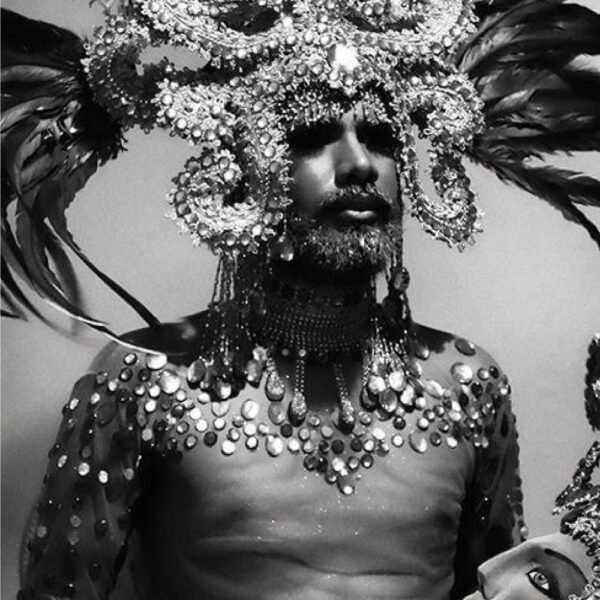
Elyla (Nicaragua) is a performance artist and activist from Chontales, Nicaragua. Land of the ancestral Chontal indigenous people. Their work deals with creating resistance to colonial, imperialist and western ideologies around the construction of identity politics and nation-state cultural narratives, specifically as it relates to mestizaje, queerness and indigenous ancestry. Elyla is committed to research how decolonial reflections can lead to a transborder community based anti-colonial artistic praxis. In 2013, Elyla co-founded Operación Queer, a collective that blurred the limits between academia, art, and activism creating interventions in Mesoamerica. The artist coined the term barro-mestiza to take distance from the traditional and colonial understanding of mestizaje during their ongoing process of decolonization, their work creates dialogue with divine nature of sexual dissidence people, the reclaiming of memory/knowledge of the barro (land and soil), embodiment of spiritual richness and access to connection to their ancestors.
They’ve presented their work for New York University at The Hemispheric Institute of Performance and Politics Encuentros in 2014, 2016, and 2019. Biennials include the IX, X Biennial of Nicaragua, IX, X Central America Biennials and the XII Biennial of Havana, Cuba. Elyla is an Artist Protection Fund Fellow by the Institute of International Education (IIE) at Bucknell University supported by the Samek Art Museum. Elyla is also a Seed Awardee for the Prince Claus Fund 2021. Their work is part of the permanent collection at the Cisneros Fontanals Art Foundation, the Ortiz-Gurdian Art Foundation, KADIST collection and private collectors around the world. Their work has been shown through-out Latin America, North America, Canada, Europe, Asia. They currently live and work in Masaya, Nicaragua.
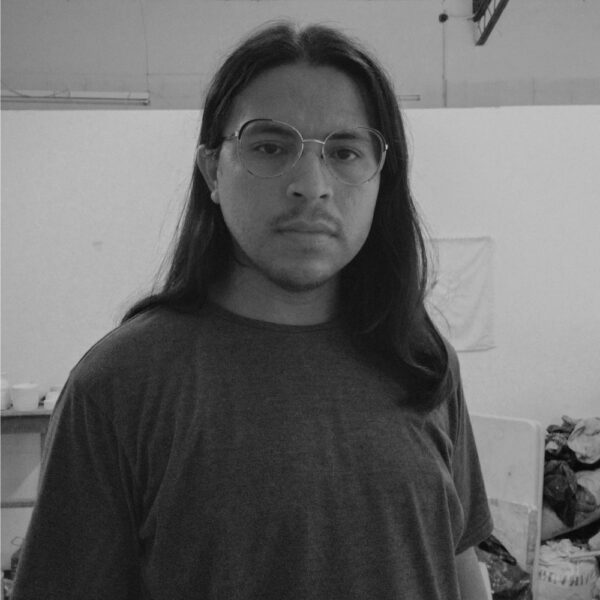
ARIA XYX (El Salvador) art work starts from introspection to address the construction of masculinity, gender roles, power dynamics that are exercised around the body and sex Affectivities. Ceramics is a metaphor for the human body, with the possibility of being sensory, of expansion and contraction according to the stimuli provided by the social, political and emotional context in which it is immersed, trying to be and to build and rebuild itself, a point from which allows me to link with others, recognizing our experiences as a result of the social system in which we find ourselves.
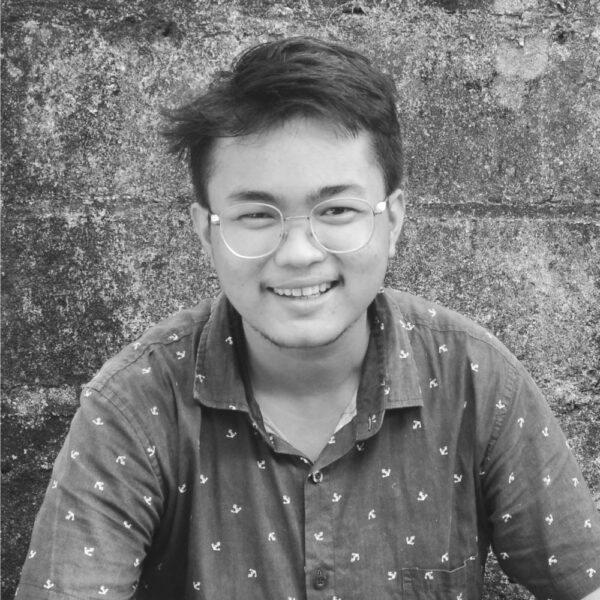
Chandra Rosselinni (Yogyakarta, Indonesia) is a drawing artist and tentor at Chandlie Art Academy. His thesis at Postgraduate ISI Yogyakarta entitled “XXY Journey: Problems of Intersex Individuals in Visualization of Drawing'' marked the start of Chandra’s explorations to his social and medical demands while considering his cultural, familial, beliefs, and bodily experiences background. Chandra uses art to help educate the public about intersex/DSD (Difference of Sex Development) through monochromatic drawing and printmaking works. He uses lines and choice of objects to tell his experiences exploring themes around gender, body, and inclusivity. Chandra's works have been exhibited at the National Gallery, OHD Museum, Festival Kebudayaan Yogyakarta, etc.
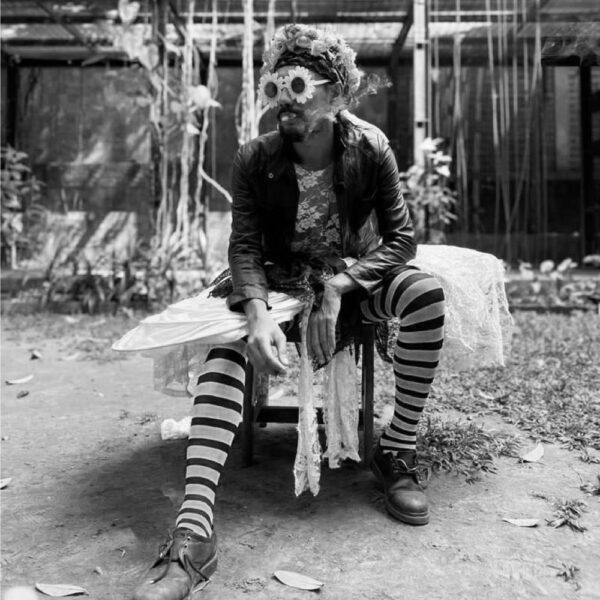
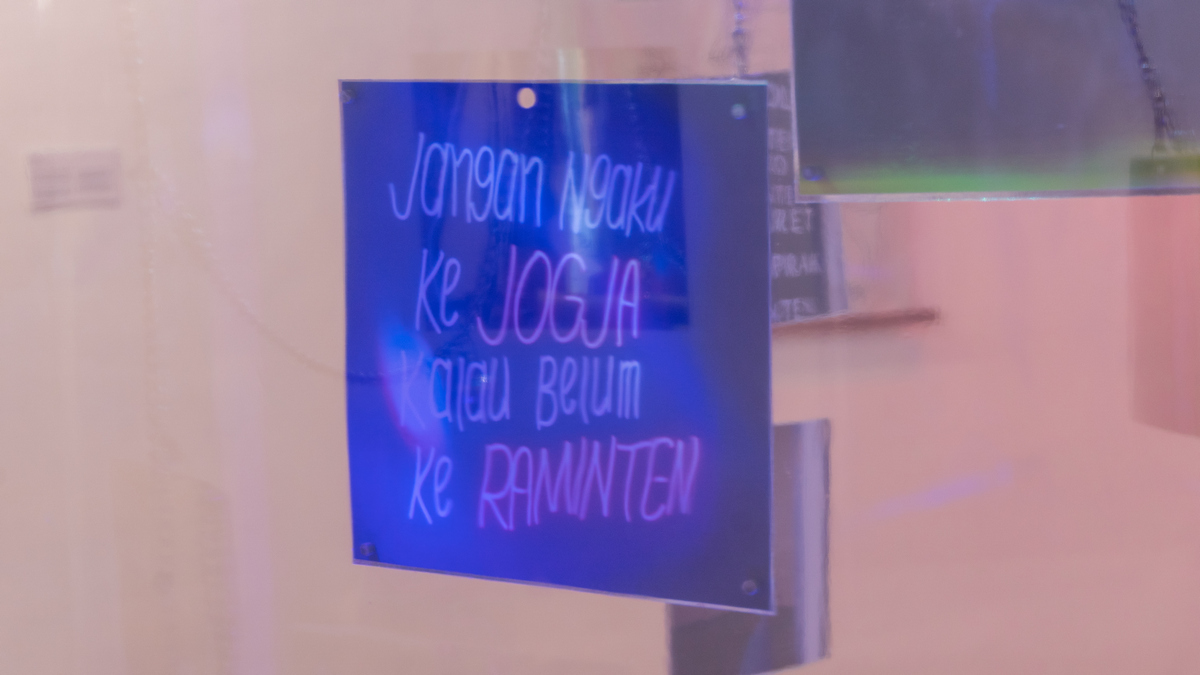
baBAM (Yogyakarta, Indonesia) is originally from the Riau Islands. He studied fine arts at the Indonesian Institute of Arts in Yogyakarta. Feeling that learning art does not have to be in one field, he explored other horizons, including dance, theatre and photography. Currently, besides practising performing arts, he is experimenting with fashion style. In addition, baBAM is also a member of several art groups, including the Raminten Cabaret Show since 2009 as a Drag Queen, the collective Sudah Pekak Sakit Lagi since 2013, then formed a personal project called The Freak Show starting in 2018. He is now working at Ada SaRanG.
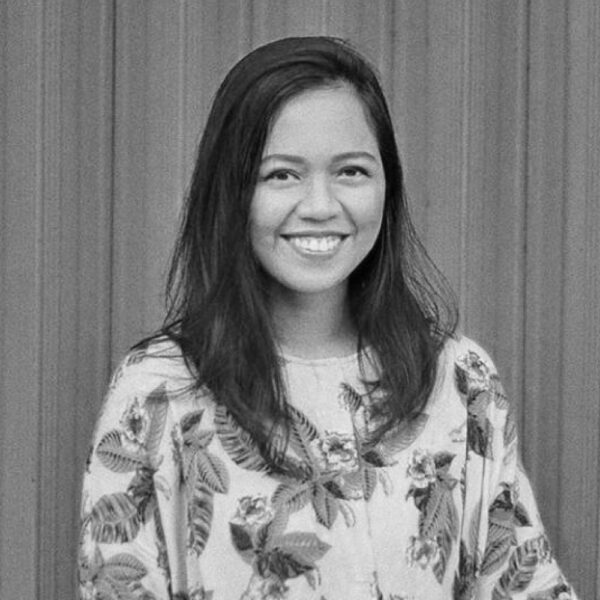
Eka Wahyuni (Berau-Yogyakarta, Indonesia) started as a dancer trained in East Kalimantan traditional form, then focused on becoming a contemporary dance choreographer in 2016. As a choreographer, Eka focuses on archives and body politics, especially on issues around orientalism/otherness, modernism and modernity, and gender. She uses and explores digital media as well as deploy the method of the participatory audience in artistic practice not only as a supporting medium but also as a medium for exchanging perspectives. All of them are rooted in the understanding of dance as knowledge.
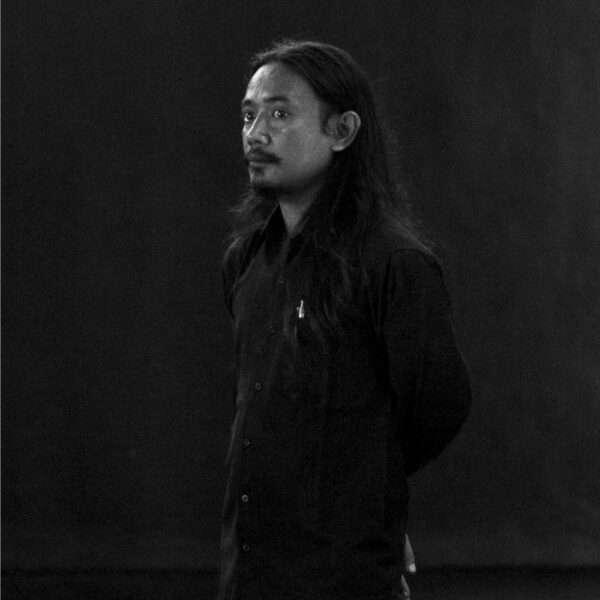
Fj Kunting (Kediri, Indonesia) active in the visual arts since 2002, Fajar Susanto or more widely known as Fj Kunting is an artist from Yogyakarta, and now lives in Kediri running Susuhan Art Farm (SAF) with his beloved wife. His work includes painting, installation and performance art. Fj Kunting combines art and agriculture. Many of his works talk about farming life, such as his paintings which he exhibited in his solo exhibition entitled "Matahari ke-14994 'Anomali Juli'", and his performance work "Berasmu Sudah Habis Belum?". He also talks a lot about nature and humans, human relations, and domestic space.