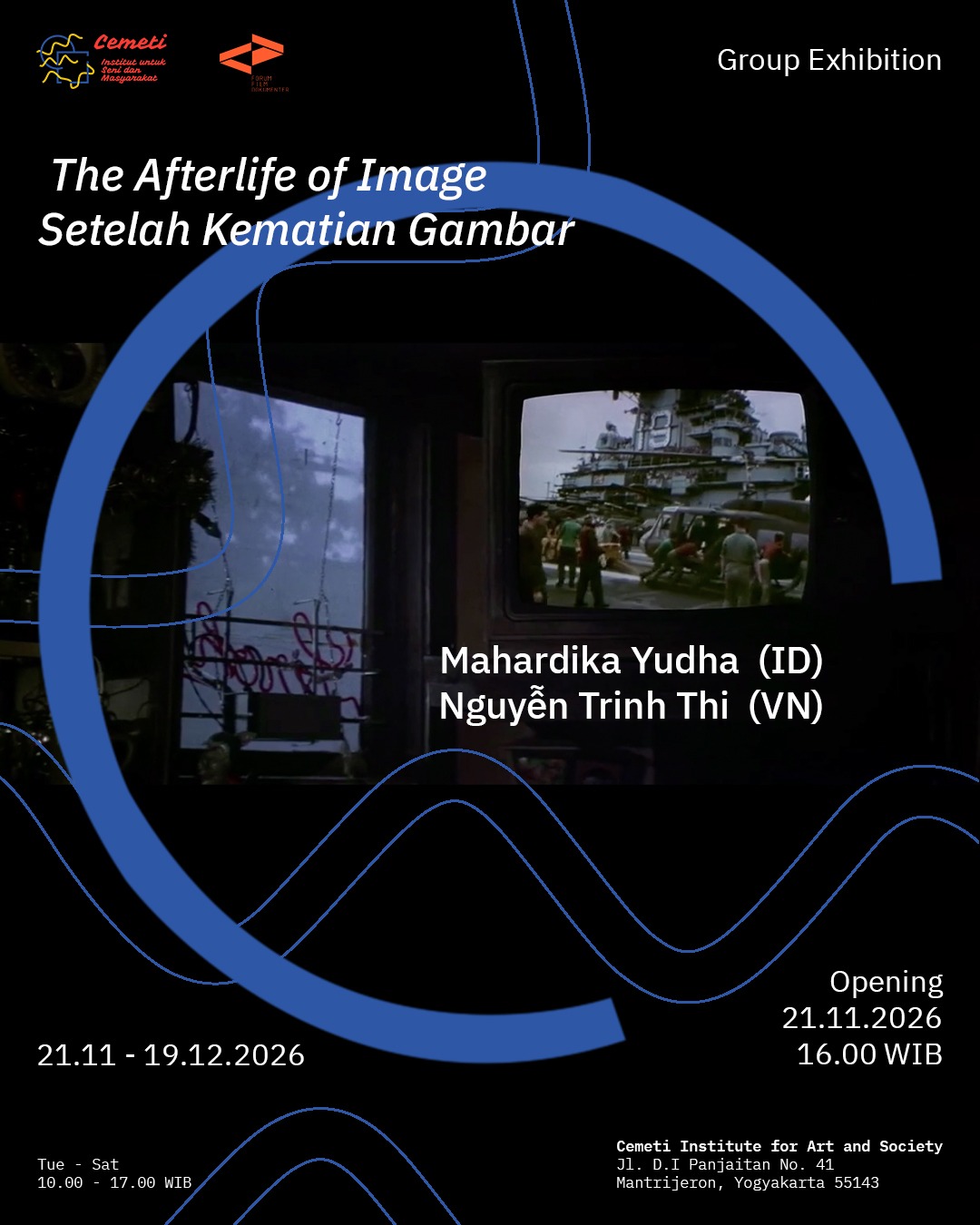
Group Exhibition: The Afterlife of Image
21 November – 19 December 2026
Mahardika Yudha
Nguyễn Trinh Thi
Opening:
21 November 2026 | 16.00 WIB
This exhibition brings together Mahardika Yudha and Nguyễn Trinh Thi, two artists who interrogate the enduring power of the colonial and imperial gaze by reworking archival images and cinematic materials. Together, the artists demonstrate that the archive is not a neutral repository of facts, but an active site of contestation and memory. Their works invite viewers to challenge hegemonic narratives, illuminating the possibilities of forging alternative modes of seeing, remembering, and understanding histories that have long been shaped by imperial and state power.
Yudha’s video examines how Dutch colonial photography in Indonesia manufactured myths of order and benevolence, while systematically erasing violence and indigenous presence. Meanwhile, Nguyễn Trinh Thi’s videos turn a critical lens on how global cinema and state-sponsored media have reduced Vietnam to a mere backdrop for foreign anxieties or nationalist narratives. Through montage, détournement, and recontextualization, Thi destabilizes dominant representations and recovers obscured histories and identities.
*This exhibition program is in collaboration with Festival Film Dokumenter 2026.
Biography
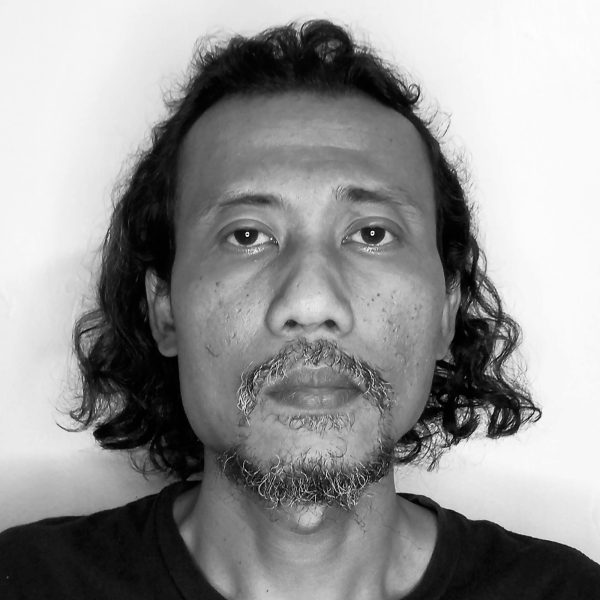
Mahardika Yudha (Jakarta, 1981) is an artist, researcher, curator, and writer based in Jakarta, Indonesia. In 2003, he joined the Massroom Project and later co-founded Forum Lenteng, where he currently coordinates the Research and Development Division.
From 2013 to 2017, he served as Festival Director of OK. Video – Indonesia Media Arts Festival and has organized numerous art and film exhibitions. His international engagements include the Periferry [1.0] residency at KHOJ Guwahati, India (2008), the JENESYS Program in Japan (2011–2012), and the INFLUX-Riverspace art project (2011–2012).
Since 2014, he has curated the Kultursinema Exhibition Program at the Jakarta International ARKIPEL Documentary and Experimental Film Festival.
His notable works include Sunrise Jive (2005), exhibited at SeMA Biacity Medi Seoul in South Korea (2014), Suara Putra Brahma (2012), The Face of the Black River (2013), Why Didn’t Ernest Dezentje Come to Wamena? (2014), rangjebor (2014, with Mohammad Fauzi), and Golden Memories: petite histoire of Indonesian cinema (2018, with Afrian Purnama and Syaiful Anwar).
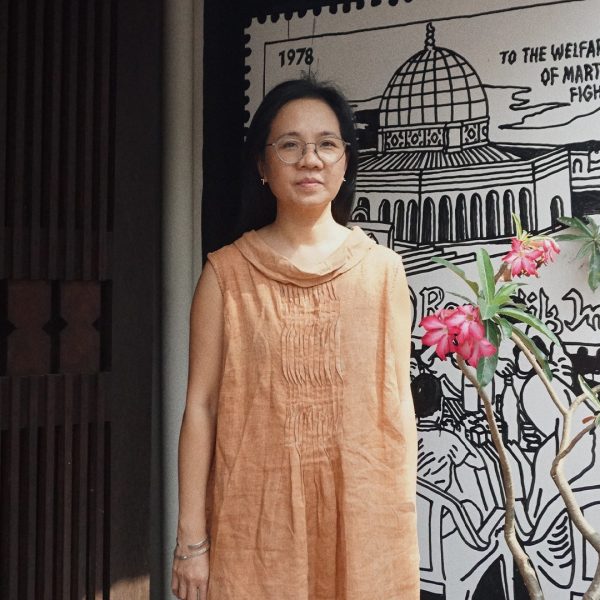
Nguyễn Trinh Thi is a Hanoi-based filmmaker and artist. Traversing boundaries between film and video art, installation and performance, her practice currently explores the power of sound and listening, and the multiple relations between image, sound, and space, with ongoing interests in history, memory, representation, ecology, and the unknown.
Thi uses montage to compose her work, drawing on different image media, from her own audio and visual recordings to found footage and still images from postcards, photography, newsreels, Hollywood films and ethnographic footage. She is also interested in incorporating new media into current works, including organic materials and natural forces.
Thi’s works have been shown at international festivals and exhibitions including the Bienal de São Paulo, documenta, Artes Mundi, Lyon Biennale, the Asia Pacific Triennale of Contempory Art, Sydney Biennale, Singapore Biennale, Thailand Biennale, and Fukuoka Asian Art Triennial. In 2009, Thi founded and directs Hanoi DocLab, a center and lab for documentary filmmaking and video art in Hanoi.